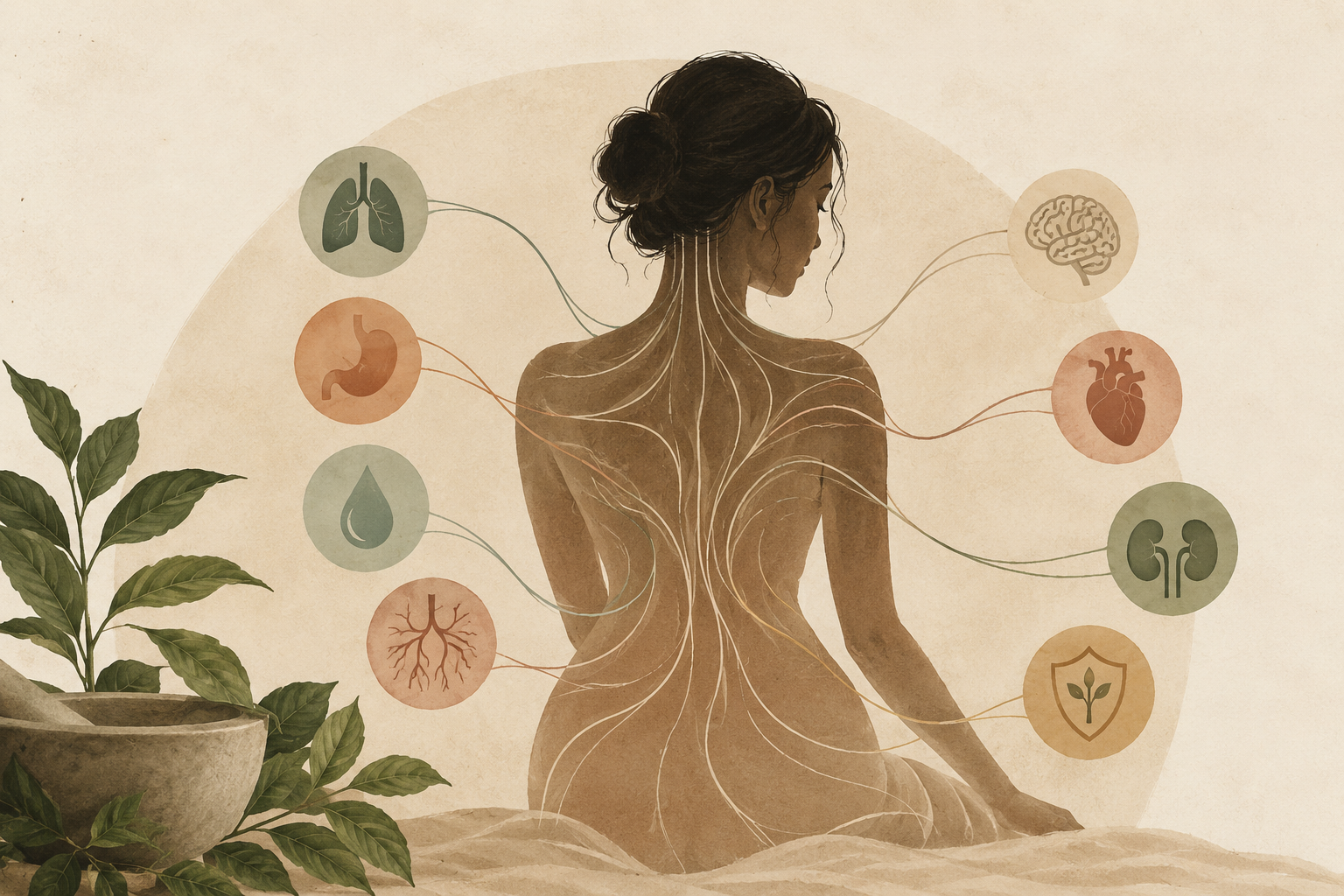
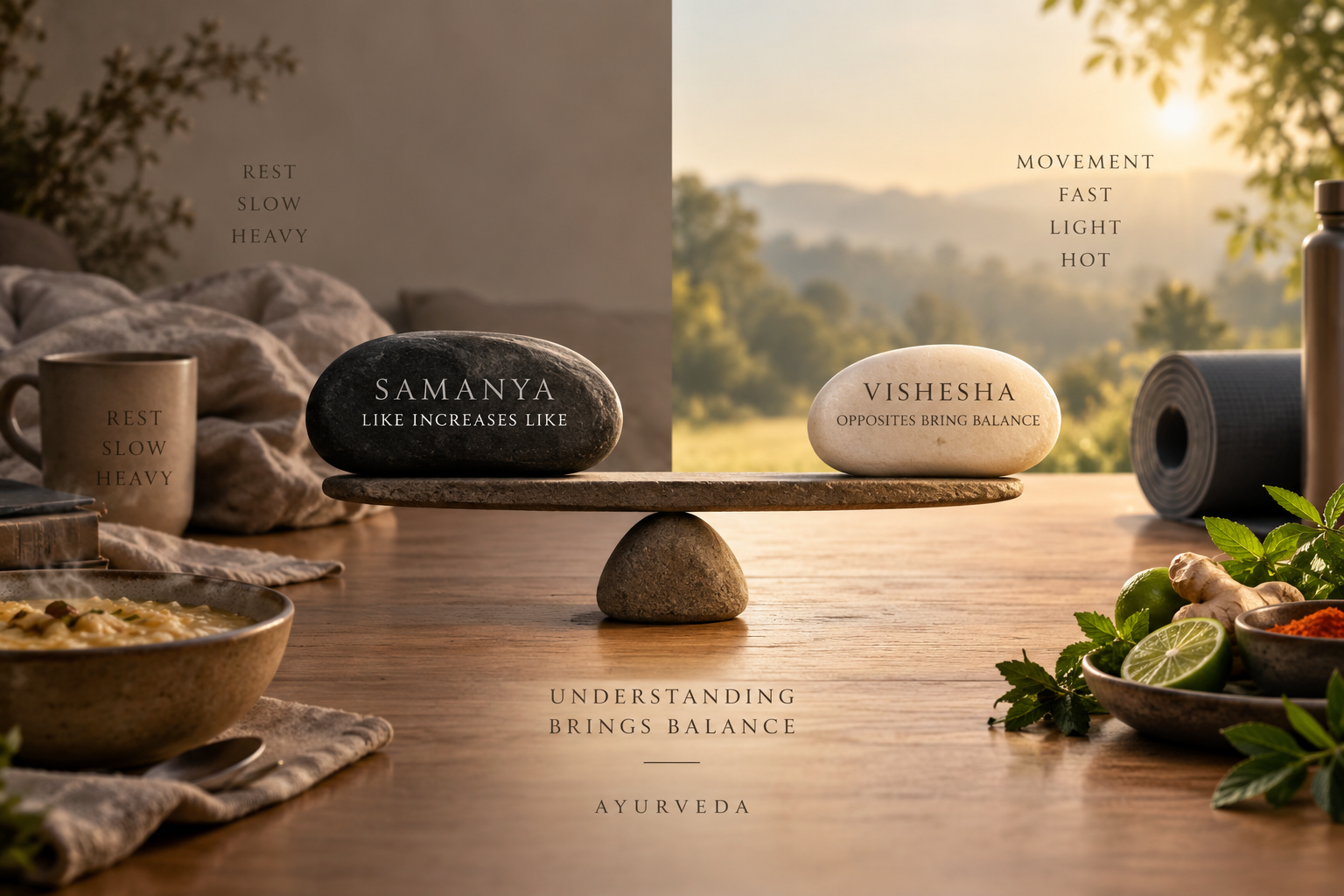
Ayurveda Is An Alternative Medicine. Alternative To WHAT!?

Ayurveda is often called “alternative medicine”.   But alternative to what?   The word “alternative” suggests that Ayurveda came later, as another option after modern medicine. That is simply not true.   Ayurveda is one of the oldest systems of medicine in the world. It has been helping people understand health, disease, and the human body for thousands of years. It did not begin as an alternative. It existed long before modern medicine as we know it today.   What Ayurveda Actually Does   Ayu means life, and Veda means knowledge. Together, Ayurveda is commonly understood as “the science of life.”   Ayurveda is not just about treating disease.   At its core, Ayurveda looks at both the outer world and our inner world. It teaches us that good health comes from understanding ourselves and living in harmony with nature. It is about understanding how the body functions, what keeps it healthy, and what causes it to lose balance.   Instead of looking at one symptom on its own, Ayurveda looks at the whole person.   It asks simple questions.   Why did this problem develop?   What changed in the person’s lifestyle?   How can balance be restored naturally?   The goal is not only to help someone feel better today but also to support long-term health.   This is one of the biggest differences in the way Ayurveda approaches healthcare.   Rather than waiting for illness to develop, Ayurveda encourages us to recognize subtle changes in the body before they progress into larger problems. It teaches that health is something we care for every day, not something we think about only when we are sick.   That is why Ayurveda places so much importance on daily habits, food, sleep, movement, mental wellbeing, and living according to the seasons. These are not isolated aspects of health. They all influence one another.   When one area is out of balance, it often affects the others as well.   The Importance of Daily Living   One of the most beautiful ideas in Ayurveda is that health is created through our everyday choices.   The way we wake up.   The food we eat.   The time we sleep.   How we manage stress.   How we move our bodies.   These may seem like ordinary parts of life, but Ayurveda considers them the foundation of good health.   This is why Ayurveda places great importance on Dinacharya, or a healthy daily routine, and Ritucharya, living according to the changing seasons.   These are not complicated rules.   They are practical ways of helping the body function in harmony with nature.   Is Ayurveda Against Modern Medicine?   Not at all.   Modern medicine has transformed healthcare. It is essential for emergencies, surgeries, infections, and life-threatening conditions. It has saved countless lives, and it continues to save lives every single day.   Nobody serious about health denies this.   But Ayurveda was never trying to do that job. It was never built for emergency intervention. It was built to place particular emphasis on understanding why health declines in the first place, often before disease becomes advanced or requires emergency care.   Ayurveda was never intended to compete with modern medicine, nor was it meant to serve merely as a backup option.   It is one of the oldest and most complete systems for understanding the human body, built on the simple idea that health is something we build every single day, not something we only think about once it is already gone.   Perhaps it is time to stop asking whether Ayurveda is an alternative.   Instead, ask a different question.   What is Ayurveda trying to achieve?   Its purpose has always been clear.   To help us understand the body.   To maintain balance.   To support health through daily living.   To recognize imbalance early.   And to help people live healthier, more fulfilling lives.   The goals have remained the same for thousands of years.   The world around us has changed dramatically. The way we live, work, eat, and interact with our environment is very different from how our ancestors lived.   Medical science has advanced in extraordinary ways, and our understanding of disease continues to evolve. Yet the basic needs of the human body have remained remarkably consistent.   We still need nourishing food, regular sleep, movement, emotional balance, and a lifestyle that supports our physical and mental wellbeing. These are not modern discoveries.   This is why Ayurveda is often described as a way of life rather than simply a system of medicine. Its teachings extend beyond treating illness.   Ayurveda is far more than the labels often attached to it today.   If you want to understand Ayurveda as it was originally taught, explore our courses and learn directly from the timeless wisdom of the Charaka Samhita and Ashtanga Hridayam.

The World’s Healthiest Man Just Got an Autoimmune Disease. Here’s What Ayurveda Saw Coming.

By now, you’ve probably seen the headlines. Bryan Johnson, the man who spends $2 million a year trying not to die, who calls himself the healthiest person on Earth, whose entire movement is built around the slogan “Don’t Die,” has been diagnosed with a chronic autoimmune condition called autoimmune gastritis.   I want to walk you through this properly.   Not to mock him, there’s nothing funny about watching your own body turn against you.   But because his story is, painfully, one of the clearest modern illustrations I’ve seen of something Ayurveda has been saying for three thousand years: disease does not begin on the day it is diagnosed. It begins long before, quietly, in the digestion.   What Actually Happened Inside His Body   Here’s what we know from his own account.   For years, his medical team noticed his ferritin, the protein that stores iron in the body, was persistently low. They couldn’t explain it. He wasn’t anemic. He wasn’t bleeding. He simply wasn’t holding onto iron the way he should have been.   Eventually, that unresolved clue led to further testing: a colonoscopy, an endoscopy, biopsies of the stomach lining.   What they found was early-stage autoimmune gastritis.   His own immune system had begun attacking the acid-producing cells of his stomach lining. Left unaddressed, this kind of damage is progressive. It can impair the body’s ability to absorb vitamin B12 and iron, and over time, it raises the risk of stomach cancer.   He’s also spoken about the fact that this didn’t emerge on its own. He was diagnosed with hypothyroidism at 21.   He describes a childhood of sugar, soda, and fast food, followed by a stretch in his 20s marked by heavy stress, weight gain, and a deep depression while he was building his business.   What he now calls “thyrogastric syndrome,” his thyroid and his stomach’s autoimmunity feeding off each other, didn’t arrive out of nowhere. It had been building for decades.   Why Low Ferritin Was the Clue, Not the Cause   This is the part I want you to sit with, because it matters far beyond one man’s diagnosis.   Low ferritin wasn’t the disease. It was the smoke, not the fire. It was the first visible signal of something that had already been happening for years, invisible to every panel, every scan, every biomarker his team was tracking.   He had, by his own description, more data on his body than almost any human alive, and none of it caught this until the damage had already begun.   This is precisely where modern diagnostics and Ayurveda part ways. Modern medicine is extraordinary at identifying disease once it has a name, once there is a lesion, an antibody, a measurable marker.   But by the time something is measurable, it has usually already gone through years, sometimes decades, of a much quieter process. Ayurveda was built to look upstream of that, to ask not “what is wrong,” but “how long has something been going wrong.”   The Ayurvedic View: Where This Condition Actually Begins   In Ayurveda, a condition like this is never understood as a sudden immune malfunction. It is understood as a deeper disturbance, one where undigested metabolic waste (Ama), disturbed doshas, and a weakened Agni come together in the Amashaya, the stomach, and begin to block the body’s channels of circulation and elimination.   This is the real story behind autoimmune gastritis, from an Ayurvedic lens.   Agni, your digestive fire, is not just about breaking down food. It governs how well every tissue in your body is nourished, and how efficiently waste is cleared. When Agni weakens over years of poor digestive habits, food is no longer fully metabolized. What remains is Ama, a sticky, toxic residue that Ayurveda has described for millennia, long before the language of “inflammation” or “autoimmunity” existed.   This Ama doesn’t stay put. It circulates. It aggravates the doshas. And eventually, it lodges in a specific site of weakness, in this case, the lining of the stomach itself, the Amashaya, where it blocks the subtle channels (srotas) responsible for healthy tissue function. Over time, this is what creates the conditions for the body to begin attacking its own tissue.   So when Ayurveda looks at disease, it does not only ask what the diagnosis is.   It asks: how long has your Agni been struggling before the diagnosis finally appeared?   The Causes, And Why They Are Painfully Relevant Today   What causes Agni to weaken to this point?   Ayurveda is remarkably specific about this, and honestly, reading through these causes today feels less like ancient scripture and more like a description of how most of us are actually living.   Ajirna and Adhyashana: eating before the previous meal has been digested. Layering meal on top of meal, snack on top of snack, without ever letting Agni complete its work.   Viruddha, Guru, Sheeta, Ruksha, Ashuchi, and Vidahi Ahara: food that is incompatible in combination, heavy to digest, cold, dry, impure, or inflammatory in nature. This is your ice-cold smoothie after a heavy meal, your reheated leftovers eaten mindlessly, your ultra-processed food with no living Prana left in it.   Vishamashana and Samashana: eating at the wrong time, in the wrong quantity, or mixing suitable and unsuitable foods together in the same meal, so that Agni is asked to process contradictory signals at once.   Manasika factors while eating: eating while gripped by grief, anger, stress, or emotional exhaustion. Ayurveda has always understood that the mind digests the meal as much as the stomach does.   Vagbhata, one of the great classical authorities of Ayurveda, was explicit about this. He describes food that is unsuitable to the individual, heavy, dry, cold, unclean, or inflammatory to the system as a direct cause of digestive breakdown.   He also names the patterns around eating as equally dangerous: eating again before the previous meal is digested, eating at the wrong time, eating… Continue reading The World’s Healthiest Man Just Got an Autoimmune Disease. Here’s What Ayurveda Saw Coming.

Why Ayurveda Needs Evidence, Not Excuses!

Some people believe asking Ayurveda for evidence is disrespectful.   I disagree.   Evidence does not weaken Ayurveda. It protects Ayurveda.   It separates real practice from misinformation. It helps the world understand what our teachers preserved for centuries.   The Question of Evidence   Like any other traditional system of medicine, Ayurveda has also faced this criticism and scrutiny over the question of evidence.   As modern healthcare has become increasingly evidence driven, Ayurveda has often been judged against standards developed for the biomedical framework.   This has led many people to dismiss it as unscientific, not because of a lack of knowledge, but because the knowledge has been traditionally generated, preserved, and communicated in a different way from the standards of modern medicine.   To understand this, we need to look at how Ayurvedic knowledge has evolved.   For centuries, Ayurveda was taught through the gurukula system, where learning was transferred from the guru to the disciple.   Students did not simply memorize texts. They observed patients alongside their teachers. Most of the knowledge was practical rather than purely theoretical, and knowledge was often refined through observation and experience.   Ayurveda therefore had its own framework for validating knowledge. It relied on its own set of parameters. What it did not develop was the kind of biomedical research framework that has formed the foundation of modern healthcare today, and this is important.   Ayurveda is one of the world’s most extensively documented traditional medical systems. Classical texts like the Charaka Samhita, Sushruta Samhita, and Ashtanga Hridayam have preserved its principles for centuries.   However, while the core philosophy and knowledge have been documented, clinical practice was never recorded in the systematic manner expected today. Individual case studies, long-term treatment outcomes, and standardized datasets are all part of modern clinical culture.   Where the Gap Actually Comes From   As a result, this historical gap explains why Ayurveda has entered the modern scientific era with a wealth of classical wisdom but comparatively limited research documentation. In recent decades, significant efforts have been made to bridge this gap. Institutions working under the AYUSH framework have invested in research on Ayurvedic formulations, therapies, and clinical practices.   This brings us to another challenge.   Much of this research has been expected to conform to the language and methodology of biomedical science, including its full set of protocols. These are valuable tools, but they were never part of the traditional system of Ayurveda.   Presenting Ayurveda through this different scientific language is not just a challenge; it can lead to gaps in both evidence and translation.   Hence, to address this gap, significant efforts are being made.   Addressing The Gap   In May 2025, the World Health Assembly adopted the WHO Global Traditional Medicine Strategy 2025 to 2034, a ten-year roadmap built specifically to strengthen the evidence base for traditional medicine systems including Ayurveda.   India’s Ministry of Ayush has signed a three-million-dollar agreement with WHO to bring Ayurveda into the International Classification of Health Interventions, the same global data framework biomedicine uses to track treatment outcomes worldwide.   WHO is also building a Traditional Medicine Global Library, already holding over 1.5 million records of evidence maps, clinical journals, and policy documents.   None of this happens for a system that has nothing to prove. It happens because global health authorities have recognized that Ayurveda’s outcomes are real and worth documenting properly.   The medicine was never the problem. The documentation was.   And documentation is not a threat to Ayurveda. It is its greatest opportunity.   Evidence does not exist to replace classical knowledge. It exists to preserve it, strengthen it, and make it accessible to a healthcare system that increasingly relies on measurable outcomes. If Ayurveda is to serve future generations across the world, its principles must be communicated in a language that researchers, physicians, policymakers, and patients can understand.   Authentic knowledge should never be afraid of scrutiny. If a treatment consistently produces positive outcomes, documenting those outcomes only strengthens confidence in that practice.   At the same time, we must also recognise that not every aspect of Ayurveda fits neatly into conventional biomedical research models.   Ayurveda is fundamentally personalised. Two patients with the same diagnosis may receive different treatment plans because their constitution, digestive capacity, lifestyle, stage of disease, and overall health are different. Standardised clinical trial designs often attempt to minimise variation between patients, whereas Ayurveda intentionally incorporates individual variation into treatment decisions.   This means Ayurveda deserves research methods that respect the complexity of whole-system, personalised care rather than forcing every principle into a framework originally designed for modern healthcare standards.   The goal should never be to make Ayurveda imitate modern medicine.   The goal should be to develop rigorous methods that can evaluate Ayurveda on its own principles while maintaining the scientific standards expected in global healthcare.   This is where the future lies.   After treating thousands of patients across the world, one thing has become clear to me. I do not see evidence and tradition as competitors. I see them as two generations of the same commitment: the commitment to helping the person in front of you and being honest about what works.   Our teachers built Ayurveda on direct observation of patients over centuries. Evidence based research is simply the modern language for continuing that same observation, at a scale and rigor our teachers never had access to.   The future of Ayurveda needs both. The wisdom of our ancient texts. And the language of modern validation. One without the other is incomplete.  

The Future Doctor Will Not Just Treat Disease

For a long time, healthcare has always been about this one question: How do we treat disease? It learned to spot symptoms and diagnose problems. That is how it worked.   But today, a new question has emerged because of the lifestyle changes people have experienced over the past 50 years due to technological advancement.   That question is: How do we keep ourselves healthy and prevent disease from developing?   The focus is no longer on waiting for a diagnosis or for disease to strike. It is about asking how we can keep a person well in the first place so they don’t get a disease.   This big shift has changed the healthcare industry. And Ayurveda, from the start, has always been about preventive care rather than treating disease.   This also changes how we look at the role of a doctor.   A doctor is not only someone who steps in when something goes wrong. A doctor also helps a person understand what is happening inside the body long before disease develops.   Looking Beyond Symptoms   Symptoms are important. They tell us that something needs attention. Modern medicine has made remarkable progress in diagnosing and treating diseases.   But Ayurveda looks at another part of the picture. It asks what may have disturbed the body’s natural balance before those symptoms appeared.   Was it irregular eating? Poor sleep? Too much stress? A lack of movement?   Or was it a combination of small daily habits that slowly added up over time?   Understanding these patterns helps us understand the person, not just the disease.   Disease does not appear overnight   One of the most important ideas in Ayurveda is that disease rarely appears all at once. The body usually gives small signals before a larger problem develops. They are often easy to ignore because they do not stop us from carrying on with our day.   It may begin with poor digestion after meals. It may be feeling tired even after a full night’s sleep. Some people notice changes in their appetite.   On their own, these may not seem like major concerns. Most people learn to live with them. They become part of the daily routine.   Health Is Built Every Day   Most of our health is shaped by the choices we repeat every day.   The time we wake up.   The food we eat.   How well we digest it.   How much we rest.   How we respond to stress.   These may seem like small things, but together they influence how the body functions over time.   What Prevention Is Not About   Sometimes people think preventive care means never getting sick. That is not realistic.   Anyone can fall ill despite taking good care of themselves.   Prevention is about giving the body the best possible support so it can function well. It is about recognising small changes early and making simple corrections before they become bigger concerns.   It is a practical way of caring for health.   Why This Matters More Than Ever   The reason this feels urgent right now is not a coincidence. Lifestyles have changed dramatically over the past few decades. Sleep schedules have become irregular. Food is more processed than it used to be. Screens keep people sitting still for most of the day. Stress has become a constant.   These changes did not happen suddenly. They built up slowly, year after year, the same way disease often builds up slowly in the body. This is exactly why the question of prevention matters so much today. The conditions that create imbalance are far more common today than they once were, which means the need to understand those patterns is more important now too.   The Future Doctor   If this shift continues, and there is every sign that it will, the doctor of the future will look a little different. That doctor will still treat disease well. That part of the job does not go away. But that doctor will also sit with deeper questions regularly. Why did this imbalance begin? What daily pattern led here? What small change can prevent it from happening again?   Ayurveda has trained doctors to think this way for a very long time. As modern medicine slowly moves toward prevention, it is really just walking a path Ayurveda walked long before it. This is not Ayurveda changing to catch up with medicine. It is medicine finding its way back to a question Ayurveda never stopped asking.   If this got you thinking about your own health, your daily habits, or why your body responds the way it does, our Charaka Samhita and Ashtanga Hridayam courses are a great place to start. They take you back to the foundations of Ayurveda, helping you understand its principles directly from the classical texts and how they can be applied to everyday health.

Ayurveda Does Not Need Modernization. It Needs to Be Understood.

Biology concept with retro science cartoon icons set vector illustration

People often ask me if Ayurveda is finally catching up with modern science. I understand why they ask this. But the question itself is backwards.   Ayurveda was never behind. It has always offered its own framework for understanding health. What has changed is the way we explain those principles today.   What we are seeing now, across nutrition science, sleep research, and gut health, is not Ayurveda catching up to modern medicine. It is modern research increasingly exploring ideas that Ayurveda has emphasized for centuries.   Ayurveda has spent generations being misunderstood, explained badly, or not explained at all, which left people assuming it was outdated. And that is really the whole problem.   Before going into the specifics, we need to understand why this has happened. Modern medicine, especially over the last century, has often focused on identifying specific biological mechanisms and treating individual disease processes.   This approach has led to remarkable advances. But it can sometimes overlook the broader interactions between systems that shape overall health.   When research focuses on one mechanism at a time, it can sometimes miss the larger patterns connecting multiple systems.   Ayurveda approached the body from the opposite direction.   Instead of isolating single mechanisms, it observed the whole person, their digestion, their sleep, their energy, their mood, and looked for patterns across all of it. This is why Ayurveda often sounds broad or general when compared to the extensive tests and diagnosis of modern medicine.   It was never trying to explain one molecule. It was trying to explain a whole living person.   Let’s start with food, for example, because this is where the pattern is easiest to see.   Personalized Nutrition Is Not a New Idea   Right now, precision nutrition is one of the fastest growing fields in medical research. Scientists have found that two people can eat the exact same meal and have completely different reactions to it.   This has led to a shift away from generic diet advice and toward plans built around a person’s genetics, metabolism, and gut bacteria.   One of the most important principles of Ayurveda is built on this very idea, and it is called Prakriti.   Prakriti describes a person’s unique constitution, the combination of physical and mental characteristics that influences how they respond to food, environment, and disease. And this is not just a philosophical idea.   Researchers have also explored possible biological correlates of Prakriti including genes associated with metabolism and immune function.   Much of this research is still developing. But it does show that the idea behind Prakriti reflects something real in human biology.   Circadian Rhythm and the Ayurvedic Daily Routine   Another area getting a lot of attention in medicine today is circadian rhythm, the internal body clock that controls sleep, digestion, hormone release, and energy levels throughout the day. Researchers have found that eating late at night, sleeping at irregular hours, or ignoring the body’s natural rhythm can affect metabolism and long term health.   Though this field of study is fairly young in modern medicine, Ayurveda addressed this through Dinacharya, a daily routine built around the sun, the seasons, and the body’s natural rhythm.   I think this is one of the easiest ideas for people to test in their own lives.   Most people already know, from personal experience, that eating dinner very late at night leaves them feeling heavier and sleeping worse than eating dinner a few hours earlier.   You can also notice how waking up at a different time every day affects your energy levels. You feel more tired than waking up at a consistent time, even if the total hours of sleep are the same.   Ayurveda took these everyday observations seriously enough to build them into a structured daily practice, long before modern science had language like circadian rhythm or clock genes to describe what was happening.   The value here is not that Ayurveda predicted modern chronobiology in exact scientific terms. It did not. But it recognized that timing matters just as much as what you eat or how you move.   Gut Health and the Concept of Agni   Gut health has become one of the most talked about topics in wellness and medicine today. Scientists are studying how the trillions of bacteria living in our digestive system affect everything from immunity to mood.   There is a lot we do not yet understand about how food interacts with the body at this level.   Ayurveda approached digestion differently, through the concept of Agni, often translated as digestive fire. Agni refers to the body’s ability to break down food, absorb nutrients, and convert them into energy. When Agni is weak, Ayurveda considers it a root cause of many health problems, not just digestive ones. This idea predates any understanding of gut bacteria or the microbiome. It came from observing how people responded to food, and how digestion connected to their overall health.   Where the Real Gap Actually Is   None of this means Ayurveda has all the answers or that it should replace modern medicine. It has its own limits. But it needs better understanding.   Ayurveda has always encouraged us to observe ourselves. It asks us to pay attention to how we eat, how we sleep, how we respond to the seasons, and how our daily choices shape our health over time. These are not complicated ideas. They are practical ones.   Ayurveda does not need to become modern. It needs to be understood.

Why Ayurveda Is More Relevant Than Ever in Modern Medicine

Homeopathy abstract concept vector illustration. Homeopathic medicine, alternative treatment, holistic approach, homeopathy method, natural drug, naturopathic healthcare service abstract metaphor.

The healthcare industry today is trying to solve problems that are very different from what it was trying to solve fifty years ago.   Because of advancements in technology across every sector and equally rapid changes in lifestyle, the health challenges people face today are completely different from what they were decades ago.   People are now far more prone and susceptible to chronic diseases, lifestyle disorders, stress-related illnesses and metabolic conditions.   Healthcare is no longer just about treating disease after it appears. It is also about understanding why these conditions develop in the first place, who may be more susceptible to them, and how they can be prevented or managed in the long run.   In many ways, healthcare has moved from simply treating disease to understanding the person behind that disease.   This is where Ayurveda comes into the picture.   Although Ayurveda is over two thousand years old, it has always approached health differently. It has always believed in treating the root cause instead of waiting for disease to become the focus of treatment.   According to Ayurveda, our body constantly sends signals about its state of health, and disease is often the final stage of a long-term imbalance rather than the beginning of an illness.   Every individual is unique. Ayurveda had already described health as something very personal.   The basic principles of Ayurveda are built around Prakriti, Dosha and Agni.   The first step in Ayurveda, even before diagnosing or treating disease, is understanding a person’s Prakriti, or individual constitution.   It is believed that every individual has a unique constitution that affects how their body functions, how they respond to food, lifestyle and the environment, and even their tendency to develop certain health conditions.   Doshas, Vata, Pitta and Kapha, are the three functional principles that regulate movement, transformation and structure in the body. Every individual has all three Doshas, but in different proportions, making every person’s physiology unique.   Agni refers to the body’s metabolic fire. According to Ayurveda, healthy Agni is essential for digestion, nutrient absorption and overall health. When Agni becomes weak or disturbed, it can lead to the formation of Ama, or toxins, which accumulate in the body over time and eventually contribute to disease.   Through these concepts, Ayurveda tells us that even two people with the same condition may require completely different treatments because it is not only treating the disease, but also understanding the person, their constitution, what is happening inside their body, and what they may be more susceptible to.   This is why Ayurveda becomes even more relevant when we look at chronic diseases.   In Ayurveda, chronic diseases are known as Chirakari Vyadhi, which means conditions that develop gradually because of long-standing imbalances caused by improper diet, unhealthy lifestyle, disturbed metabolism and psychological factors.   Disease is not viewed as something that suddenly appears. It is understood as the result of imbalances that have been developing over time.   That is why Ayurveda places equal importance on both physical and mental health because it recognises both as contributing factors to a person’s overall well-being.   Treatment is therefore not limited to medicines alone. Depending on the individual’s condition, it may include dietary changes, lifestyle modifications, therapies, herbal medicines, yoga, meditation and Panchakarma.   In essence, Ayurveda looks at the body, the mind and the spirit as interconnected, rather than treating them separately.   If all these ideas sound familiar today, it is because modern healthcare is increasingly moving towards personalised medicine, preventive healthcare and long-term disease management.   Yet despite this comprehensive philosophy, Ayurveda is still viewed by many people as a system of herbs, detoxes and supplements.   How did that happen?   Part of the answer lies in history.   During the colonial period, when the British came to India, they brought Western medicine with them and favoured it within the colonial healthcare system. Ayurveda was gradually pushed to the margins. Ayurvedic practitioners were discredited, traditional institutions lost support, and Western medical education became the preferred system.   Even then, Ayurveda did not disappear completely. States like Kerala continued to preserve classical Ayurvedic knowledge, with generations of Vaidyas passing it down through practice and teaching.   But history is only one part of the story.   Over time, Ayurveda also became commercialised. Instead of being understood as a complete healthcare system, it gradually became associated with the products it prescribed.   Today, when most people hear the word Ayurveda, the first thing that comes to mind are herbs, turmeric, detoxes and supplements, rather than physician consultation, constitutional  diet, lifestyle and preventive healthcare.   Somewhere along the way, an entire healthcare system came to be viewed merely as a supplement industry.   That perception, however, is beginning to change.   The NITI Aayog–PwC report released earlier this week highlights both Ayurveda’s global reach and its biggest challenge. Ayurveda is now formally recognised in nearly 30 countries, and India has more than 355,000 trained Ayurvedic practitioners. Yet almost 95% of them never practise outside India.   The report also notes that Ayurvedic product exports have doubled from US$1.09 billion in 2014 to US$2.16 billion in 2023, reaching nearly 150 countries. However, most of these products are still classified internationally as dietary supplements rather than medicines because of regulatory gaps.   That single statistic explains a lot.   The world is buying Ayurveda as a supplement because Ayurveda has not yet fully entered the medicine category globally.   At the same time, research is also moving forward.   For years, Ayurvedic clinical trials have been criticised for methodological limitations such as small sample sizes, single-centre studies and inadequate reporting. A 2025 update to the international CONSORT reporting standards is now encouraging Ayurvedic clinical research to follow the same level of rigour expected in modern medical research.   New fields such as Ayurgenomics are exploring whether concepts like Prakriti have measurable biological and genetic correlations that may help explain why individuals respond differently… Continue reading Why Ayurveda Is More Relevant Than Ever in Modern Medicine

5 Signs Your Vata Is High and Your Body Needs Help

You know what’s interesting?   It’s easy to think of dry skin, constipation, feeling cold, and an overactive mind as completely different problems.   They’re not.   What if all of these are connected?   When I look at a combination of symptoms like these, one of the first things I think about is Vata.   Vata is the dosha responsible for movement in the body. It governs everything from your nervous system and circulation to your breathing, bowel movements, and even your thoughts. Because it carries qualities like dryness, lightness, coldness, and movement, an increase in Vata usually shows up in ways that reflect those same qualities.   In fact, Ayurveda places so much importance on Vata.   “Pittam pangu, Kapham pangu, Pangavo maladhatavah. Vayuna yaccha neeyante, Tatra gacchanti meghavat.”   It means that Pitta and Kapha cannot function on their own. Even the tissues and waste products of the body depend on Vata to move. Just as clouds move only because of the wind, every process in the body depends on Vata.   That’s why Vata is often considered the driving force behind all the doshas. When it is in balance, the body functions harmoniously. When it becomes aggravated, many different symptoms can begin to appear, even if they don’t seem related at first.   Let’s look at some of the signs.   Your skin and hair have become unusually dry   One of the easiest places to notice high Vata is on your skin.   If your skin constantly feels dry, flaky, or rough despite using creams, or your hair has become frizzy and lacks its usual softness, your body could simply be asking for more nourishment.   Vata carries the quality of dryness. So, when it increases, your body loses some of its natural moisture.   What Can Help?   One of the simplest things you can do for an aggravated Vata is Abhyanga, the practice of applying warm sesame oil to the body.   It helps replace the dryness that Vata creates, keeps the joints moisturized, and supports healthy circulation.   Even spending ten minutes massaging warm sesame oil into your skin can make a noticeable difference over time.   If you’ve never practised Abhyanga before, don’t worry. It’s much simpler than it sounds. I’ve created a step-by-step YouTube video where I show you exactly how to do it at home. Check it out here.   You always seem to feel cold   This is another common sign of aggravated Vata.   Since Vata itself is cold by nature, anything that adds more cold can make the imbalance worse. That includes cold weather, air conditioning, cold showers, and even regularly eating cold foods and drinks.   What Can Help?   Whenever possible, choose warmth.   Take warm showers instead of cold ones. Wear socks if your feet tend to get cold. Keep yourself covered when you’re exposed to cold winds or strong air conditioning.   Choose warm, cooked meals over raw salads.   These may sound like small habits, but Ayurveda has always believed that the little things we do every day have the greatest impact on our health.   Your bowel movements have become irregular   Constipation is one of the clearest signs that Vata has become aggravated.   If your stools have become hard, dry, or difficult to pass, your body may simply be reflecting the same dryness you’ve already noticed in your skin and hair.   What Can Help?   Make sure every meal contains some healthy fat.   Traditionally, Ayurveda recommends ghee because it nourishes the tissues and supports healthy digestion. If ghee isn’t suitable for you, healthy cooking fats like sesame oil, olive oil, coconut oil, or butter can also be included based on your individual needs.   Your mind is always racing   Not every sign of high Vata shows up in the body. Some of the most obvious signs appear in the mind.   If you constantly jump from one thought to another, lose interest quickly, or feel like your brain never really switches off, this could also be a sign that Vata is elevated.   Remember, Vata governs movement. That includes mental movement too.   What Can Help?   Simple practices like Pranayama, meditation, or even sitting quietly for a few minutes each day help slow the constant movement of the mind.   They don’t have to be complicated.   Consistency matters far more than duration.   You keep pushing yourself even when you’re tired   Many people with aggravated Vata have one thing in common. They find it difficult to slow down.   There is always one more task to finish.   Over time, this constant overexertion can leave the body feeling depleted.   What Can Help?   Ayurveda recommends exercising only to about half of your capacity, especially when Vata is already high.   This doesn’t mean avoiding movement altogether. Gentle walks, yoga, stretching, or moderate strength training can all be wonderful choices.   And don’t underestimate the power of rest.   Sometimes the most healing thing you can do isn’t adding another habit to your routine.   A Final Thought   Vata imbalances don’t usually appear overnight. They build up gradually, and thankfully, they can also be corrected.   The good news is that your body is constantly communicating with you. Dry skin, feeling cold, constipation, a restless mind, and exhaustion aren’t just random inconveniences. They may be gentle reminders that your body needs a little more warmth, nourishment, and rest.   The earlier you listen, the easier it becomes to bring yourself back into balance.  

Why Ayurveda Isn’t Just About Vata, Pitta, and Kapha

Macronutrients flat composition with woman cooking dishes with banana eggs oil milk and coconut with porridge vector illustration SSUCv3H4sIAAAAAAACA02RS0/DMAzHv4rlc8VD3HZmICEhTXDgMHHwEtNZTeMqSTvQ1O+O024I5eLH369fznigLA43Z5QQxlwSFdGIm/sG2UvRJBRwczc3mAuVMXM2rXmOCreWXfxrk/25xnGDT6oeKHp4TBI7tOLxYOFXyY5DoMg6Zpybq3zHOgT+k31ozxHnzwap5eh+6kQbmTgwLQvsLdWdCqf+ss0knnU1afRSTZzUUbD8Q93WLtO+RttEw1FckolT9T1nl+pq5JLGsdhFsWT4ClTAaT9olgoETlKOcNKeooW1k9iCl3zkvGYOFO0Bt20GlQC9hG4B4NTVtqtq0JTEtwwTO0ML/5HfwNZ40yEwbHfvS+0bR8+mivCye4YvTb3RarB8V2bYXOCtvfKtZ6e11VRBamdfOM/zL1jWrp3gAQAA

When most people hear the word Ayurveda, they think of herbs, oils, massages, or detox treatments. But Ayurveda is much more than that.   If you break the word down, “Ayu” means life and “Veda” means knowledge or science. So Ayurveda simply means “the science of life.”   At its core, Ayurveda looks at both the outer world and our inner world. It teaches that to stay healthy, understand ourselves, and live in harmony with nature.     Panchamahabhutas     One of the most important concepts in Ayurveda is the theory of the Panchamahabhutas.   “Pancha” means five, “Maha” means great, and “Bhutas” refers to the fundamental elements of existence. Just like modern science says everything is made of matter, Ayurveda explains the same idea using these five elements.   These five elements are: Prithvi (Earth) Ap (Water) Tejo or Tejas (Fire) Vayu (Air) Akasha (Space or Ether)   And this doesn’t just apply to the world around us; it applies to us too. Our body, mind, and all our functions are made from these same elements.   This is why Ayurveda says that every person is different. We are all made of the same elements, but in different proportions.     Understanding Your Prakriti     One of the most misunderstood concepts in Ayurveda is the idea of Doshas and Prakriti.   You’ve probably read or come across phrases on the internet like “know your dosha” or “find  your dosha.”   No. You cannot do that.   What you can do is instead is find your Prakriti, know your Prakriti, discover your Prakriti.   Prakriti means nature.   When a person is born, when the first cell of a person is formed by the coming together of the ovum and sperm, at that time Prakriti is fixed. It is given to the child by the parents.   This Prakriti or nature of that person does not change in the entire lifetime until that person dies.   Now what are these Prakritis?   For the ease of discussion, Ayurveda classifies people based on Prakriti.   There are seven Prakritis.   The three primary constitutions are: Vata Prakriti Pitta Prakriti Kapha Prakriti   Then there are three dual constitutions: Vata-Pitta Pitta-Kapha Vata-Kapha   Finally, there is: Vata-Pitta-Kapha, where all three doshas are present in equal proportions.   I have never found anybody having Vata-Pitta-Kapha Prakriti together. Maybe there is one person in the world who is lucky to be born with all these things put together in a single proportion, but it is very, very rare.   Most people are a mix of two doshas, with one being more dominant.   Understanding your Prakriti helps explain your personality, body type, habits, and even the kind of health issues you may be more prone to.     Vata: The Energy of Movement     It is made of air and space.   Vata people are people where vision means innovation. They are creative, innovative. These are the people who come up with ideas.   But because Vata is linked to movement, it can also bring restlessness, irregular routines, and anxiety when out of balance.   It’s important to remember being Vata by nature is not the same as having a Vata imbalance.     Pitta: The Energy of Transformation     Now we have the Pitta people.   Pitta people are the people who have another fire inside their body. That can cause a lot of issues. It can affect different systems in the body.   These are people who are driven. They are sharp. They are intense.     Kapha: The Energy of Stability     Now we have the Kapha people.   Kapha people are those loving, nurturing, loyal, lovable, very warm kind of people.   You just want to go and run to them and hug them. That kind of energy is the Kapha energy.   But they are very lazy. It is very difficult to move them.   They have the earth element and water element more in them.   These are people who tend to have oily skin. Kapha people are the people who have friends because they are very good with relationships.     Why Is Ayurveda Personalized?     One thing that you should understand is that Ayurveda is about individualized diet, individualized practices, individualized everything.   The body has different systems and different functions.   Sometimes there is dryness.   Sometimes there is coldness.   Digestion is involved.   Tissues are involved.   Sometimes other doshas are involved.   That is why Ayurveda is individualized. It is not just Vata, Pitta, and Kapha.   We have to understand which doshas are in imbalance and which systems are impacted.   What is health according to Ayurveda?   Every single thing in the system should be balanced.   The doshas should be balanced.   The tissues of the body should be balanced.   The digestive system should be balanced.   Not just that, the mind should be balanced.   When the body and the mind are working properly, when everything is having the best quality, when Atma, soul, Indriya, senses, and Mana, mind are all balanced, then you can call that person a healthy person.     The Truth About Panchakarma     In Ayurveda, Panchakarma is a purification technique actually meant for cleansing.   Only a very small percentage of diseases need Panchakarma.   The rest of the diseases do not require Panchakarma.   They require Ahara, Vihara, good diet, good lifestyle, good routine, and all of that.   Ayurveda does not start with detox. It starts with fixing your everyday habits.   Most health issues can actually be improved with:   Proper diet Daily routine Good sleep Stress management Simple lifestyle changes   The Real Message of Ayurveda   At the heart of Ayurveda is a simple idea: every person is unique.   There is no universal diet, no perfect routine for everyone.   The more you understand your own nature, the… Continue reading Why Ayurveda Isn’t Just About Vata, Pitta, and Kapha

6 Signs Your Agni Is Weak: What Ayurveda Says About Your Digestive Fire

In Ayurveda there is a saying,“Roga Sarvepi Mandagnau” it means, all diseases begin with a weakened digestive fire.   A strong Agni helps your body break down food efficiently, absorb nutrients properly, eliminate waste effectively, and maintain a healthy balance of the three Doshas: Vata, Pitta, and Kapha.   When Agni becomes weak, digestion slows down. Food is not processed efficiently, toxins begin to accumulate, and over time this can affect different systems in the body. This is why Ayurveda considers digestion to be the foundation of health.   So how do you know if your Agni needs attention? Here are 6 common signs of weak digestive fire according to Ayurveda.   Frequent Bloating and Gas   One of the most common signs of weak digestion is excessive gas and bloating.   Now, according to Ayurveda, gas and bloating are mainly associated with an imbalance of Vata in the body. And one of the biggest reasons for this is not eating at the right time.   Let me give you a simple example. Every day, you have your lunch at 12 o’clock. Your body gets used to this routine. It knows that food is going to arrive at that time, so your digestive system starts preparing itself. Your digestive juices, hydrochloric acid, and digestive enzymes are all ready and waiting.   But, instead of eating at 12, you have your lunch at 2 o’clock.   What happens then?   Your digestive system is already prepared for the meal, but the food never arrives. These digestive secretions continue to build up, creating discomfort in the stomach. Over time, this can show up as gas, bloating, heartburn, and acid reflux.   So, don’t just look at what you are eating. Also look at when you are eating. Sometimes, correcting your meal timings can make a huge difference to your digestive health.   Metallic taste in your mouth   I tell you, one of the easiest ways to find if your gut is in good shape is to wake up in the morning, go in front of the mirror, and smile. What do you see? Your teeth.   Your teeth can tell you a lot of things. Is your teeth yellow? Is it cracking? Sometimes you may feel that it is turning translucent and not really opaque, and you may have bad breath, and in the mouth, you may have a metallic taste. And when you open your mouth, you may feel that there is tendency for cavities. Your molars, teeth which is behind, they are getting affected slowly. They are not looking good.   And, and to be honest, all of this are actually huge signs your body is giving you about your gut, that you are having acid reflux, and your pitta in the body is really high.   Constipation or Irregular Bowel Movements   Our stool constitutes waste, not just from our food but also from the physiological processes in our body. If you are not defecating every day, a part of these get reabsorbed which causes toxin buildup.   Even a single day of not passing bowel movements is not advised for gut health.   There are a few simple Ayurvedic remedies that can help support regular bowel movements, which I’ve covered in detail here.   Your Skin Is Breaking Out   Your skin is often a reflection of what is happening inside your gut.   Another thing I look at is your diet. Are you eating foods that suit your body type, or Prakriti? Are you consuming a lot of processed and packaged foods?   Consuming foods that do not suit your body type or eating unhealthy processed foods can disrupt your body’s equilibrium and aggravate Dosha imbalances. Over time, this may contribute to skin problems such as acne, eczema, psoriasis, or unexplained breakouts.   So, if you are struggling with skin issues, don’t just look at your skin. Look at your gut as well. Sometimes the root cause is not on the outside, but inside your digestive system.   You Feel Heavy After Every Meal   Food is supposed to give you energy. It is not supposed to make you feel sleepy or sluggish.   People have become so used to feeling heavy after meals that they think it is normal. It is not.   If your meal leaves you feeling sluggish, uncomfortable, or ready to lie down, it may be a sign that your digestive fire is weak. Instead of efficiently digesting food and converting it into energy, your body is struggling to process what you eat.   A healthy Agni should leave you feeling satisfied and energized, not exhausted.   You Don’t Feel Hungry at Regular Times   One of the clearest signs of a healthy digestive fire is a healthy appetite.   Your body should naturally tell you when it is time to eat. If you frequently skip meals because you are not hungry, or if your appetite changes dramatically from one day to the next, it may indicate that your Agni is weak.   A healthy digestive system works like a well-maintained clock. It knows when to digest food and when to ask for more.   When those hunger signals become irregular, it is often one of the earliest signs that your digestive fire needs support.   Small Changes That Can Make a Big Difference   The good news is that Ayurveda offers simple ways to support your digestive fire.   One of the most important things you can do is maintain a routine. Try to eat your meals at roughly the same time every day. When your body knows when food is coming, digestion tends to work more efficiently.   Avoid skipping meals, overeating, or eating late at night. Give your body enough time to digest one meal before moving on to the next.   Pay attention to how different foods make you feel. Foods that suit one person may not suit another. Ayurveda always emphasizes eating according to your individual… Continue reading 6 Signs Your Agni Is Weak: What Ayurveda Says About Your Digestive Fire

5 Natural Supplements You Should Add To Your Diet Every Single Day

1. Turmeric   The number one supplement that you need in your life is nothing but turmeric.     You may have heard people saying, especially people in the west, talking about having turmeric in the form of teas, in the form of turmeric lattes, or sometimes even in the form of supplements.   You don’t need all of these pills and supplements to get your adequate amount of turmeric to help with all the benefits that it is going to give us.   Our traditional Indian way of cooking where we add the good fats and the spices, along with that we add turmeric, that is the most bioavailable form of turmeric and that helps with better digestion, better absorption, and better assimilation of all the good things that turmeric has to give us.   Now let us understand what turmeric does in our body. For this we have to understand what the properties of turmeric are as per Ayurveda.   Ayurveda says every food has certain properties, like there is a specific taste to a particular food item, a particular post-digestive taste.   Ayurveda also talks about a property called Prabhava or special characteristic.   One special characteristic or Prabhava of turmeric is that it is antimicrobial and anti-inflammatory.   For example, somebody is having a viral condition like chickenpox, we ask our patients to take shower with water boiled with turmeric because it is antimicrobial.   When it comes to food poisoning, if you consume more of turmeric paste throughout the day, you are helping your body to reduce inflammation.   Even if you have acne, you can use turmeric boiled water to wash your face because of its antimicrobial properties, you don’t need any antibacterial face washes.   All bitter tasting herbs are good for your liver. So, if you want to detoxify your liver, don’t go for supplements and medicines that detoxify your liver. Instead, just add a little bit more turmeric to your diet.   Adding turmeric to your dishes can help you improve your digestive fire, reduce gas, and bloating.   If you have children at home who constantly get bronchitis, cough, cold, fever, etc., turmeric helps you to improve their immunity. Make sure that you add turmeric to your cooking every day.   Even in traditional Indian cooking, we have so many dishes like haldi chawal, haldi doodh, haldi ka achar, turmeric lettuce soup. All of these are very good for improving your digestive system.     2. Dry Ginger     Number two is dry ginger.     I am talking about dry ginger and not wet ginger. Wet ginger is extremely heating, extremely pitta increasing. Dry ginger is also warm; it is much less heating compared to wet ginger.   When you buy ginger, make sure that you leave it outside and don’t keep it in the fridge so that it gets a little dry and then you can use it for cooking.   Just like how we said turmeric was anti-microbial and anti-inflammatory because of its prabhava, ginger also has a prabhava.   And what is that?   Dry ginger is anti-emetic. That means if somebody feels like vomiting, dry ginger is what we give.   It’s also good for improving digestion, absorption, and assimilation of food. It helps in reducing gas and bloating. It helps in subsiding Vata gently.   Just like how I told you about turmeric, don’t take dry ginger as a pill or a supplement. Instead, make sure that you have dry ginger in a cooked form along with other spices and good fats.   I personally add dry ginger every day to my cooking. However, one special indulgence that I really love doing is to have dry ginger wali masala chai.   After heavy meals, if for example, you had a biryani and you’re now feeling very heavy, very bloated, or you have this guilt feeling that you shouldn’t have had it because you can’t even think of the digestive problems that may come, then have dry ginger powder mixed with a little bit of rock salt, add a little bit of water and consume it.   That will help you subside the gas and bloating. It will also help you improve the digestion.   And if you’re somebody who feels constipation, you can have a glass of dry ginger water in the morning.   Make sure that you add two glasses of water, add one piece of dry ginger and reduce to one glass to get the maximum essence of dry ginger. And drink this water. This can ease your bowel movements.     3. Amla   This one is my favorite.     If you don’t want to have any supplement at all in this world, then one supplement that you need in your life is amla or amla powder.   This is something that you must include in your life.   Whether it is in the form of amla powder, amla juice, as amla murabba, amla candy, whatever it is, amla has to go into your system every single day.   Every house should have some form of amla ready to be served every day because amla helps in a lot of ways beyond what you can imagine.   There is a particular practice in Ayurveda. We call it as Kuti Pravishika. It is for people who want to reverse aging. It is a complete process. And the one thing that is given to people who wants to reverse their aging is Amla.   Amla has rejuvenating or anti-aging properties which can actually reverse your aging.   It is amazing for your skin, amazing for your heart, amazing for your hair, amazing for your digestive system, your liver, your intestine, and it’s good for your eyes.   So, if you want to take that one supplement every day, take Amla.   How can you consume Amla?   You can have Amla juice. Again, Amla juice, don’t have it as a… Continue reading 5 Natural Supplements You Should Add To Your Diet Every Single Day