Ayurveda Is An Alternative Medicine. Alternative To WHAT!?

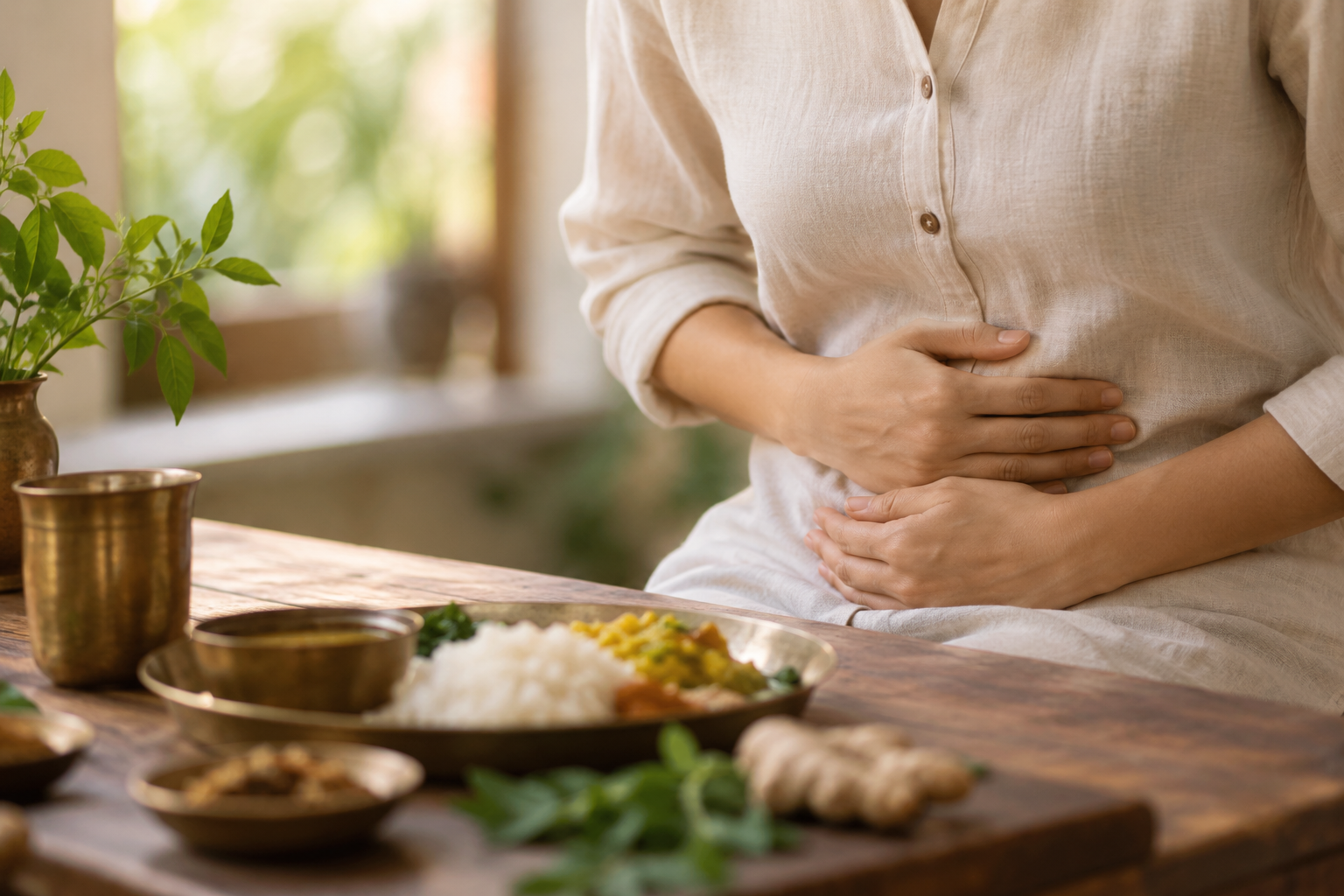
Ayurveda is often called “alternative medicine”.   But alternative to what?   The word “alternative” suggests that Ayurveda came later, as another option after modern medicine. That is simply not true.   Ayurveda is one of the oldest systems of medicine in the world. It has been helping people understand health, disease, and the human body for thousands of years. It did not begin as an alternative. It existed long before modern medicine as we know it today.   What Ayurveda Actually Does   Ayu means life, and Veda means knowledge. Together, Ayurveda is commonly understood as “the science of life.”   Ayurveda is not just about treating disease.   At its core, Ayurveda looks at both the outer world and our inner world. It teaches us that good health comes from understanding ourselves and living in harmony with nature. It is about understanding how the body functions, what keeps it healthy, and what causes it to lose balance.   Instead of looking at one symptom on its own, Ayurveda looks at the whole person.   It asks simple questions.   Why did this problem develop?   What changed in the person’s lifestyle?   How can balance be restored naturally?   The goal is not only to help someone feel better today but also to support long-term health.   This is one of the biggest differences in the way Ayurveda approaches healthcare.   Rather than waiting for illness to develop, Ayurveda encourages us to recognize subtle changes in the body before they progress into larger problems. It teaches that health is something we care for every day, not something we think about only when we are sick.   That is why Ayurveda places so much importance on daily habits, food, sleep, movement, mental wellbeing, and living according to the seasons. These are not isolated aspects of health. They all influence one another.   When one area is out of balance, it often affects the others as well.   The Importance of Daily Living   One of the most beautiful ideas in Ayurveda is that health is created through our everyday choices.   The way we wake up.   The food we eat.   The time we sleep.   How we manage stress.   How we move our bodies.   These may seem like ordinary parts of life, but Ayurveda considers them the foundation of good health.   This is why Ayurveda places great importance on Dinacharya, or a healthy daily routine, and Ritucharya, living according to the changing seasons.   These are not complicated rules.   They are practical ways of helping the body function in harmony with nature.   Is Ayurveda Against Modern Medicine?   Not at all.   Modern medicine has transformed healthcare. It is essential for emergencies, surgeries, infections, and life-threatening conditions. It has saved countless lives, and it continues to save lives every single day.   Nobody serious about health denies this.   But Ayurveda was never trying to do that job. It was never built for emergency intervention. It was built to place particular emphasis on understanding why health declines in the first place, often before disease becomes advanced or requires emergency care.   Ayurveda was never intended to compete with modern medicine, nor was it meant to serve merely as a backup option.   It is one of the oldest and most complete systems for understanding the human body, built on the simple idea that health is something we build every single day, not something we only think about once it is already gone.   Perhaps it is time to stop asking whether Ayurveda is an alternative.   Instead, ask a different question.   What is Ayurveda trying to achieve?   Its purpose has always been clear.   To help us understand the body.   To maintain balance.   To support health through daily living.   To recognize imbalance early.   And to help people live healthier, more fulfilling lives.   The goals have remained the same for thousands of years.   The world around us has changed dramatically. The way we live, work, eat, and interact with our environment is very different from how our ancestors lived.   Medical science has advanced in extraordinary ways, and our understanding of disease continues to evolve. Yet the basic needs of the human body have remained remarkably consistent.   We still need nourishing food, regular sleep, movement, emotional balance, and a lifestyle that supports our physical and mental wellbeing. These are not modern discoveries.   This is why Ayurveda is often described as a way of life rather than simply a system of medicine. Its teachings extend beyond treating illness.   Ayurveda is far more than the labels often attached to it today.   If you want to understand Ayurveda as it was originally taught, explore our courses and learn directly from the timeless wisdom of the Charaka Samhita and Ashtanga Hridayam.

The Future Doctor Will Not Just Treat Disease

For a long time, healthcare has always been about this one question: How do we treat disease? It learned to spot symptoms and diagnose problems. That is how it worked.   But today, a new question has emerged because of the lifestyle changes people have experienced over the past 50 years due to technological advancement.   That question is: How do we keep ourselves healthy and prevent disease from developing?   The focus is no longer on waiting for a diagnosis or for disease to strike. It is about asking how we can keep a person well in the first place so they don’t get a disease.   This big shift has changed the healthcare industry. And Ayurveda, from the start, has always been about preventive care rather than treating disease.   This also changes how we look at the role of a doctor.   A doctor is not only someone who steps in when something goes wrong. A doctor also helps a person understand what is happening inside the body long before disease develops.   Looking Beyond Symptoms   Symptoms are important. They tell us that something needs attention. Modern medicine has made remarkable progress in diagnosing and treating diseases.   But Ayurveda looks at another part of the picture. It asks what may have disturbed the body’s natural balance before those symptoms appeared.   Was it irregular eating? Poor sleep? Too much stress? A lack of movement?   Or was it a combination of small daily habits that slowly added up over time?   Understanding these patterns helps us understand the person, not just the disease.   Disease does not appear overnight   One of the most important ideas in Ayurveda is that disease rarely appears all at once. The body usually gives small signals before a larger problem develops. They are often easy to ignore because they do not stop us from carrying on with our day.   It may begin with poor digestion after meals. It may be feeling tired even after a full night’s sleep. Some people notice changes in their appetite.   On their own, these may not seem like major concerns. Most people learn to live with them. They become part of the daily routine.   Health Is Built Every Day   Most of our health is shaped by the choices we repeat every day.   The time we wake up.   The food we eat.   How well we digest it.   How much we rest.   How we respond to stress.   These may seem like small things, but together they influence how the body functions over time.   What Prevention Is Not About   Sometimes people think preventive care means never getting sick. That is not realistic.   Anyone can fall ill despite taking good care of themselves.   Prevention is about giving the body the best possible support so it can function well. It is about recognising small changes early and making simple corrections before they become bigger concerns.   It is a practical way of caring for health.   Why This Matters More Than Ever   The reason this feels urgent right now is not a coincidence. Lifestyles have changed dramatically over the past few decades. Sleep schedules have become irregular. Food is more processed than it used to be. Screens keep people sitting still for most of the day. Stress has become a constant.   These changes did not happen suddenly. They built up slowly, year after year, the same way disease often builds up slowly in the body. This is exactly why the question of prevention matters so much today. The conditions that create imbalance are far more common today than they once were, which means the need to understand those patterns is more important now too.   The Future Doctor   If this shift continues, and there is every sign that it will, the doctor of the future will look a little different. That doctor will still treat disease well. That part of the job does not go away. But that doctor will also sit with deeper questions regularly. Why did this imbalance begin? What daily pattern led here? What small change can prevent it from happening again?   Ayurveda has trained doctors to think this way for a very long time. As modern medicine slowly moves toward prevention, it is really just walking a path Ayurveda walked long before it. This is not Ayurveda changing to catch up with medicine. It is medicine finding its way back to a question Ayurveda never stopped asking.   If this got you thinking about your own health, your daily habits, or why your body responds the way it does, our Charaka Samhita and Ashtanga Hridayam courses are a great place to start. They take you back to the foundations of Ayurveda, helping you understand its principles directly from the classical texts and how they can be applied to everyday health.

Ayurveda Does Not Need Modernization. It Needs to Be Understood.

Biology concept with retro science cartoon icons set vector illustration

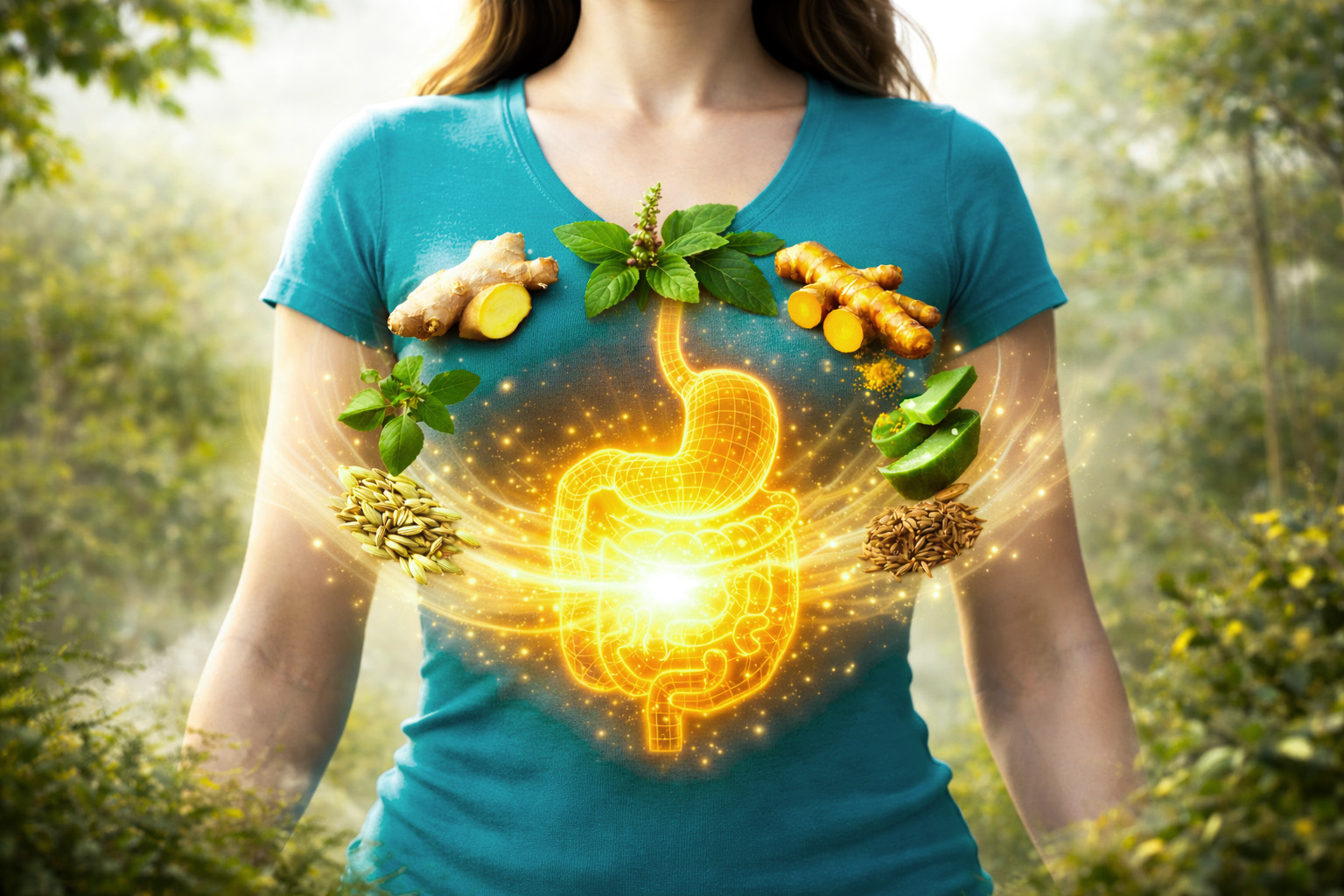
People often ask me if Ayurveda is finally catching up with modern science. I understand why they ask this. But the question itself is backwards.   Ayurveda was never behind. It has always offered its own framework for understanding health. What has changed is the way we explain those principles today.   What we are seeing now, across nutrition science, sleep research, and gut health, is not Ayurveda catching up to modern medicine. It is modern research increasingly exploring ideas that Ayurveda has emphasized for centuries.   Ayurveda has spent generations being misunderstood, explained badly, or not explained at all, which left people assuming it was outdated. And that is really the whole problem.   Before going into the specifics, we need to understand why this has happened. Modern medicine, especially over the last century, has often focused on identifying specific biological mechanisms and treating individual disease processes.   This approach has led to remarkable advances. But it can sometimes overlook the broader interactions between systems that shape overall health.   When research focuses on one mechanism at a time, it can sometimes miss the larger patterns connecting multiple systems.   Ayurveda approached the body from the opposite direction.   Instead of isolating single mechanisms, it observed the whole person, their digestion, their sleep, their energy, their mood, and looked for patterns across all of it. This is why Ayurveda often sounds broad or general when compared to the extensive tests and diagnosis of modern medicine.   It was never trying to explain one molecule. It was trying to explain a whole living person.   Let’s start with food, for example, because this is where the pattern is easiest to see.   Personalized Nutrition Is Not a New Idea   Right now, precision nutrition is one of the fastest growing fields in medical research. Scientists have found that two people can eat the exact same meal and have completely different reactions to it.   This has led to a shift away from generic diet advice and toward plans built around a person’s genetics, metabolism, and gut bacteria.   One of the most important principles of Ayurveda is built on this very idea, and it is called Prakriti.   Prakriti describes a person’s unique constitution, the combination of physical and mental characteristics that influences how they respond to food, environment, and disease. And this is not just a philosophical idea.   Researchers have also explored possible biological correlates of Prakriti including genes associated with metabolism and immune function.   Much of this research is still developing. But it does show that the idea behind Prakriti reflects something real in human biology.   Circadian Rhythm and the Ayurvedic Daily Routine   Another area getting a lot of attention in medicine today is circadian rhythm, the internal body clock that controls sleep, digestion, hormone release, and energy levels throughout the day. Researchers have found that eating late at night, sleeping at irregular hours, or ignoring the body’s natural rhythm can affect metabolism and long term health.   Though this field of study is fairly young in modern medicine, Ayurveda addressed this through Dinacharya, a daily routine built around the sun, the seasons, and the body’s natural rhythm.   I think this is one of the easiest ideas for people to test in their own lives.   Most people already know, from personal experience, that eating dinner very late at night leaves them feeling heavier and sleeping worse than eating dinner a few hours earlier.   You can also notice how waking up at a different time every day affects your energy levels. You feel more tired than waking up at a consistent time, even if the total hours of sleep are the same.   Ayurveda took these everyday observations seriously enough to build them into a structured daily practice, long before modern science had language like circadian rhythm or clock genes to describe what was happening.   The value here is not that Ayurveda predicted modern chronobiology in exact scientific terms. It did not. But it recognized that timing matters just as much as what you eat or how you move.   Gut Health and the Concept of Agni   Gut health has become one of the most talked about topics in wellness and medicine today. Scientists are studying how the trillions of bacteria living in our digestive system affect everything from immunity to mood.   There is a lot we do not yet understand about how food interacts with the body at this level.   Ayurveda approached digestion differently, through the concept of Agni, often translated as digestive fire. Agni refers to the body’s ability to break down food, absorb nutrients, and convert them into energy. When Agni is weak, Ayurveda considers it a root cause of many health problems, not just digestive ones. This idea predates any understanding of gut bacteria or the microbiome. It came from observing how people responded to food, and how digestion connected to their overall health.   Where the Real Gap Actually Is   None of this means Ayurveda has all the answers or that it should replace modern medicine. It has its own limits. But it needs better understanding.   Ayurveda has always encouraged us to observe ourselves. It asks us to pay attention to how we eat, how we sleep, how we respond to the seasons, and how our daily choices shape our health over time. These are not complicated ideas. They are practical ones.   Ayurveda does not need to become modern. It needs to be understood.

Onam: Celebrating Tradition with Ayurvedic Wisdom

In the Indian state of Kerala, it’s Onam festival in a few days.    Onam is one of the festivals that everyone in Kerala anticipates.   The festival celebrates harvest, mythology and tradition.    Beyond that, it is also when many Ayurvedic practices hold significance and go hand in hand with the traditions.    Let us learn more about it in this blog.    Tradition and Mythology   Onam festival is a mixture of traditions and mythology.    Celebrations are held to commemorate the legendary Asura king, King Mahabali, who is believed to have ruled Kerala.   The time of his reign was believed to be of unity, happiness, truthfulness, peace and prosperity.    It is believed that King Mahabali returns to Kerala to meet his subjects every year on Thiruvonam (the 10th day of Onam celebrations).    His return is celebrated with grand festivities, highlighting Kerala’s culture and traditions.    Beyond that, Onam teaches us the importance of values that once prevailed during the rule of King Mahabali.    These values are essential to building a harmonious society, which impacts your physical and emotional health.   Onam also marks the end of the monsoon season and the start of harvest season in the state.    Hence, Onam is also known as a harvest festival. The festival is celebrated with many cultural rituals, like Pookalam or flower carpets and traditional games.    The best part is the elaborate feast or Sadhya which is a blend of many flavours and tastes.    Beyond all that, Onam is also a time when many Ayurvedic principles come to the forefront.    They play an important role in restoring your physical, mental and spiritual health. Also, considering how the climate is stable during Onam, it is the best time to seek Ayurvedic treatments.    You can try cleansing therapies like Panchakarma to detoxify your body. Also, Ayurvedic diet and lifestyle practices help balance your Doshas and Agni (digestive fire).   When Ayurveda Aligns with Tradition   Kerala’s culture and lifestyle have incorporated Ayurvedic practices for a long time without intention.   Ayurveda believes in maintaining the harmony between body and nature.    That’s the same principle that Onam follows. The festival encourages us to live in alliance with nature.    The pookalam or flower carpet is one example. It is one ritual that honours the soil that sustains us and reminds us of our connection with nature.      Onam and Ayurveda   Many of Onam’s practices naturally align with Ayurvedic principles.    Sadhya   Sadhya or feast is a major part of Onam.    It consists of rice, side dishes, curries and pickles – all that form a potpourri of flavours.    We use natural and seasonal ingredients to prepare sadhya dishes.   Also, Sadhya satisfies all six tastes (sweet, sour, salty, bitter, pungent, and astringent).    This is essential in maintaining a balanced diet according to Ayurveda.    Ayurveda recommends having foods that are warm, freshly cooked and easy to digest.  This holds true for Onam Sadhya.    The ingredients and spices used in the dishes are not only delicious, but they also have medicinal properties.    They help improve your digestion and boost your immunity.    Also, the sadhya is served in banana leaves, which is a sign of connection with nature.   Pookalam   Pookalam or the designs made of flowers on the ground is an important part of Onam.  People use ten varieties of flowers to make a pookalam. .    They include the following: Ceylon slitwort (Thumba) Little tree plant (Mukutti) Holy Basil (Tulsi) Hibiscus Ixora (Thechi) Butterfly pea (Shankhapushpi) Pagoda flower (Krishnakireedam) Golden trumpet flower (Kolambi poovu) White Orchid tree flower (Mandaram) Common Lantana (Aripoo)   Before,people used freshly plucked flowers to create pookalam. But now, most people buy them from the market.    The fresh flowers are rich in fragrance and colour, which is a way to connect us with nature.    Also, as you spend time creating pookalam, it makes you feel calm and mindful. This, in turn, helps your mental health.    Onam and Spirituality   Ayurveda is deeply rooted in spirituality.    The rituals of Onam have a spiritual connection and promote the messages of unity, love and balance. These qualities are all part of Ayurvedic philosophy.    Unity and harmony   Onam is a festival that is beyond the boundaries of religion, caste or financial status.    On the occasion of Onam, people from different walks of life, be it family or friends, get together to celebrate.    This unity and friendship displayed during the festival is equivalent to the Ayurvedic principle of Sattva which is the synonym of purity and balance.    This brings a significant impact on your mental health.    Gratitude   Onam is a celebration of harvest.    It is when the farmers receive the outcome of their months-long hard work.    Onam festival is, therefore, their way of expressing gratitude to nature.    The feeling of gratitude, therefore, stems from contentment. Consequently, this emotion reduces anxiety and stress.   Ayurvedic Principles in Modern Onam Celebrations   In today’s fast-paced world, Ayurvedic principles hold more significance than ever.    Onam has many Ayurvedic principles naturally integrated into its rituals.    Also, the festival being a symbol of unity, heritage and spirituality reminds us to live a balanced life in harmony with nature.    Consciously integrating Ayurvedic practices will help us further,    Going for Ayurvedic treatments around the time helps detoxify your body and strengthen your immune system.    It also helps boost your energy levels, which is very much needed during the festivities.    Onam is not just a festival that reflects Kerala’s culture, traditions and mythology, but also celebrates Ayurvedic principles.    The festival teaches us to experience a deeper connection with nature, harmony and togetherness.        If you are struggling with any health issues, you can either book a consultation with us or send us a message via WhatsApp to +91 79074 89839. We have… Continue reading Onam: Celebrating Tradition with Ayurvedic Wisdom