6 Signs Your Agni Is Weak: What Ayurveda Says About Your Digestive Fire

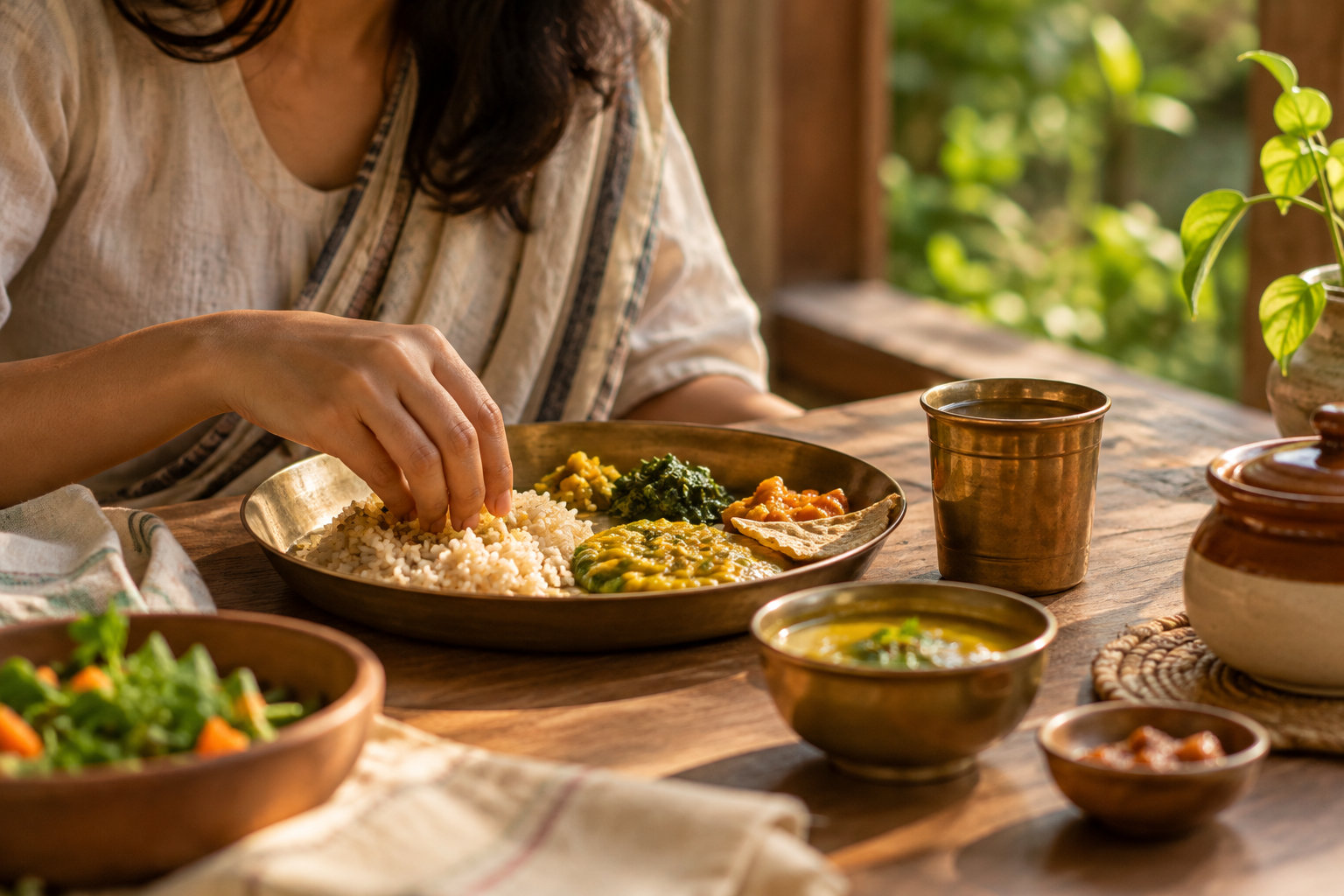
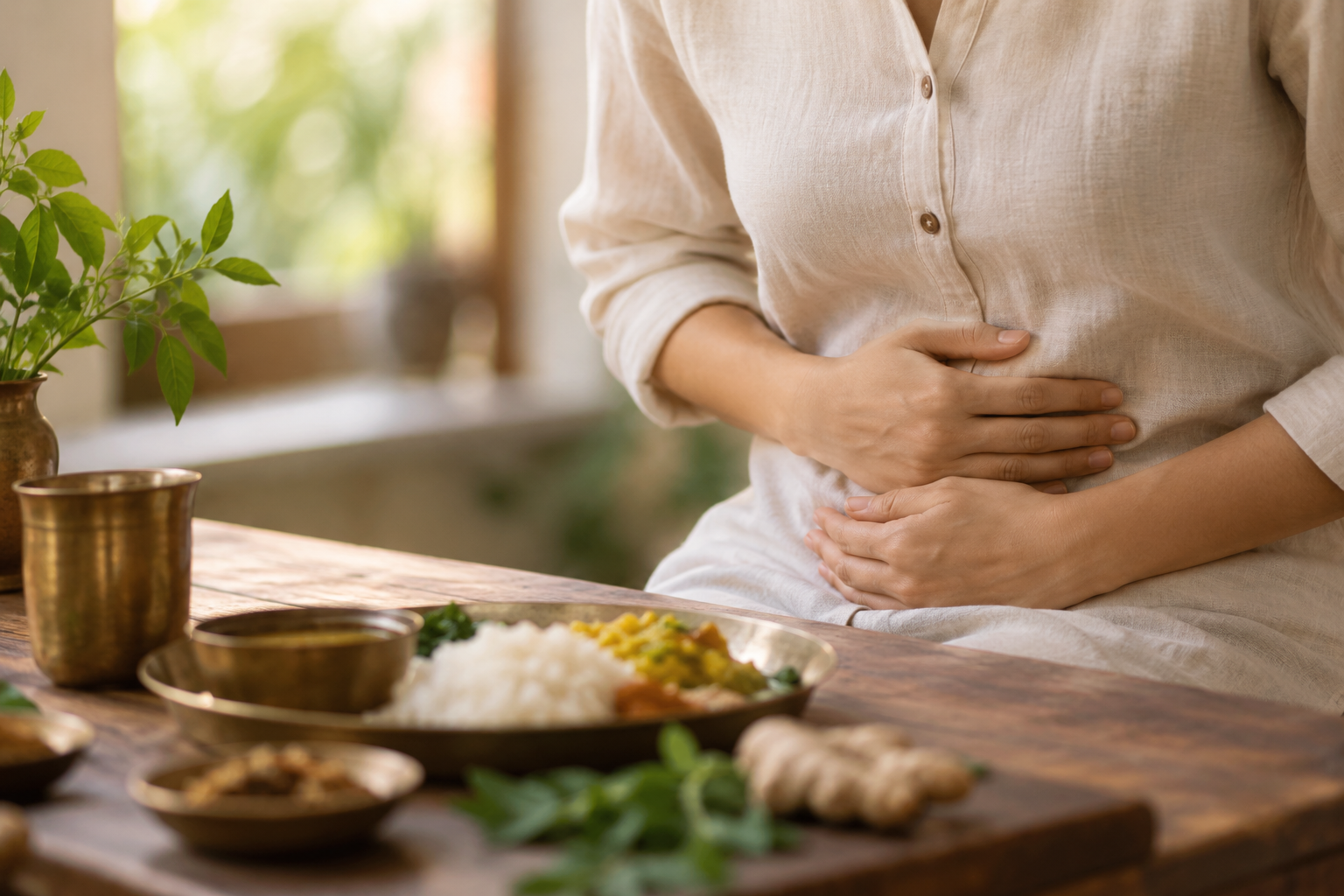
In Ayurveda there is a saying,“Roga Sarvepi Mandagnau” it means, all diseases begin with a weakened digestive fire.   A strong Agni helps your body break down food efficiently, absorb nutrients properly, eliminate waste effectively, and maintain a healthy balance of the three Doshas: Vata, Pitta, and Kapha.   When Agni becomes weak, digestion slows down. Food is not processed efficiently, toxins begin to accumulate, and over time this can affect different systems in the body. This is why Ayurveda considers digestion to be the foundation of health.   So how do you know if your Agni needs attention? Here are 6 common signs of weak digestive fire according to Ayurveda.   Frequent Bloating and Gas   One of the most common signs of weak digestion is excessive gas and bloating.   Now, according to Ayurveda, gas and bloating are mainly associated with an imbalance of Vata in the body. And one of the biggest reasons for this is not eating at the right time.   Let me give you a simple example. Every day, you have your lunch at 12 o’clock. Your body gets used to this routine. It knows that food is going to arrive at that time, so your digestive system starts preparing itself. Your digestive juices, hydrochloric acid, and digestive enzymes are all ready and waiting.   But, instead of eating at 12, you have your lunch at 2 o’clock.   What happens then?   Your digestive system is already prepared for the meal, but the food never arrives. These digestive secretions continue to build up, creating discomfort in the stomach. Over time, this can show up as gas, bloating, heartburn, and acid reflux.   So, don’t just look at what you are eating. Also look at when you are eating. Sometimes, correcting your meal timings can make a huge difference to your digestive health.   Metallic taste in your mouth   I tell you, one of the easiest ways to find if your gut is in good shape is to wake up in the morning, go in front of the mirror, and smile. What do you see? Your teeth.   Your teeth can tell you a lot of things. Is your teeth yellow? Is it cracking? Sometimes you may feel that it is turning translucent and not really opaque, and you may have bad breath, and in the mouth, you may have a metallic taste. And when you open your mouth, you may feel that there is tendency for cavities. Your molars, teeth which is behind, they are getting affected slowly. They are not looking good.   And, and to be honest, all of this are actually huge signs your body is giving you about your gut, that you are having acid reflux, and your pitta in the body is really high.   Constipation or Irregular Bowel Movements   Our stool constitutes waste, not just from our food but also from the physiological processes in our body. If you are not defecating every day, a part of these get reabsorbed which causes toxin buildup.   Even a single day of not passing bowel movements is not advised for gut health.   There are a few simple Ayurvedic remedies that can help support regular bowel movements, which I’ve covered in detail here.   Your Skin Is Breaking Out   Your skin is often a reflection of what is happening inside your gut.   Another thing I look at is your diet. Are you eating foods that suit your body type, or Prakriti? Are you consuming a lot of processed and packaged foods?   Consuming foods that do not suit your body type or eating unhealthy processed foods can disrupt your body’s equilibrium and aggravate Dosha imbalances. Over time, this may contribute to skin problems such as acne, eczema, psoriasis, or unexplained breakouts.   So, if you are struggling with skin issues, don’t just look at your skin. Look at your gut as well. Sometimes the root cause is not on the outside, but inside your digestive system.   You Feel Heavy After Every Meal   Food is supposed to give you energy. It is not supposed to make you feel sleepy or sluggish.   People have become so used to feeling heavy after meals that they think it is normal. It is not.   If your meal leaves you feeling sluggish, uncomfortable, or ready to lie down, it may be a sign that your digestive fire is weak. Instead of efficiently digesting food and converting it into energy, your body is struggling to process what you eat.   A healthy Agni should leave you feeling satisfied and energized, not exhausted.   You Don’t Feel Hungry at Regular Times   One of the clearest signs of a healthy digestive fire is a healthy appetite.   Your body should naturally tell you when it is time to eat. If you frequently skip meals because you are not hungry, or if your appetite changes dramatically from one day to the next, it may indicate that your Agni is weak.   A healthy digestive system works like a well-maintained clock. It knows when to digest food and when to ask for more.   When those hunger signals become irregular, it is often one of the earliest signs that your digestive fire needs support.   Small Changes That Can Make a Big Difference   The good news is that Ayurveda offers simple ways to support your digestive fire.   One of the most important things you can do is maintain a routine. Try to eat your meals at roughly the same time every day. When your body knows when food is coming, digestion tends to work more efficiently.   Avoid skipping meals, overeating, or eating late at night. Give your body enough time to digest one meal before moving on to the next.   Pay attention to how different foods make you feel. Foods that suit one person may not suit another. Ayurveda always emphasizes eating according to your individual… Continue reading 6 Signs Your Agni Is Weak: What Ayurveda Says About Your Digestive Fire

5 Natural Supplements You Should Add To Your Diet Every Single Day

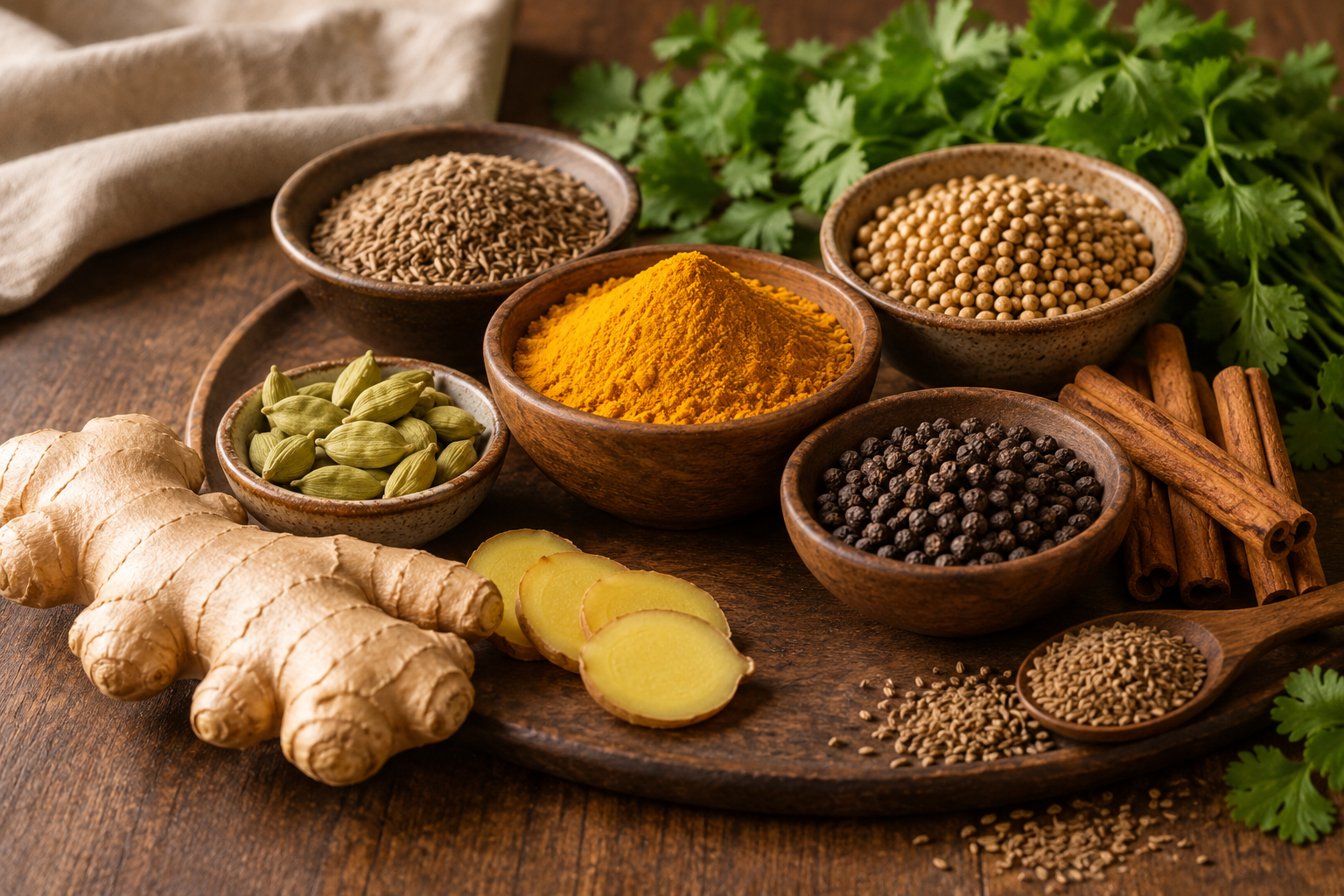
1. Turmeric   The number one supplement that you need in your life is nothing but turmeric.     You may have heard people saying, especially people in the west, talking about having turmeric in the form of teas, in the form of turmeric lattes, or sometimes even in the form of supplements.   You don’t need all of these pills and supplements to get your adequate amount of turmeric to help with all the benefits that it is going to give us.   Our traditional Indian way of cooking where we add the good fats and the spices, along with that we add turmeric, that is the most bioavailable form of turmeric and that helps with better digestion, better absorption, and better assimilation of all the good things that turmeric has to give us.   Now let us understand what turmeric does in our body. For this we have to understand what the properties of turmeric are as per Ayurveda.   Ayurveda says every food has certain properties, like there is a specific taste to a particular food item, a particular post-digestive taste.   Ayurveda also talks about a property called Prabhava or special characteristic.   One special characteristic or Prabhava of turmeric is that it is antimicrobial and anti-inflammatory.   For example, somebody is having a viral condition like chickenpox, we ask our patients to take shower with water boiled with turmeric because it is antimicrobial.   When it comes to food poisoning, if you consume more of turmeric paste throughout the day, you are helping your body to reduce inflammation.   Even if you have acne, you can use turmeric boiled water to wash your face because of its antimicrobial properties, you don’t need any antibacterial face washes.   All bitter tasting herbs are good for your liver. So, if you want to detoxify your liver, don’t go for supplements and medicines that detoxify your liver. Instead, just add a little bit more turmeric to your diet.   Adding turmeric to your dishes can help you improve your digestive fire, reduce gas, and bloating.   If you have children at home who constantly get bronchitis, cough, cold, fever, etc., turmeric helps you to improve their immunity. Make sure that you add turmeric to your cooking every day.   Even in traditional Indian cooking, we have so many dishes like haldi chawal, haldi doodh, haldi ka achar, turmeric lettuce soup. All of these are very good for improving your digestive system.     2. Dry Ginger     Number two is dry ginger.     I am talking about dry ginger and not wet ginger. Wet ginger is extremely heating, extremely pitta increasing. Dry ginger is also warm; it is much less heating compared to wet ginger.   When you buy ginger, make sure that you leave it outside and don’t keep it in the fridge so that it gets a little dry and then you can use it for cooking.   Just like how we said turmeric was anti-microbial and anti-inflammatory because of its prabhava, ginger also has a prabhava.   And what is that?   Dry ginger is anti-emetic. That means if somebody feels like vomiting, dry ginger is what we give.   It’s also good for improving digestion, absorption, and assimilation of food. It helps in reducing gas and bloating. It helps in subsiding Vata gently.   Just like how I told you about turmeric, don’t take dry ginger as a pill or a supplement. Instead, make sure that you have dry ginger in a cooked form along with other spices and good fats.   I personally add dry ginger every day to my cooking. However, one special indulgence that I really love doing is to have dry ginger wali masala chai.   After heavy meals, if for example, you had a biryani and you’re now feeling very heavy, very bloated, or you have this guilt feeling that you shouldn’t have had it because you can’t even think of the digestive problems that may come, then have dry ginger powder mixed with a little bit of rock salt, add a little bit of water and consume it.   That will help you subside the gas and bloating. It will also help you improve the digestion.   And if you’re somebody who feels constipation, you can have a glass of dry ginger water in the morning.   Make sure that you add two glasses of water, add one piece of dry ginger and reduce to one glass to get the maximum essence of dry ginger. And drink this water. This can ease your bowel movements.     3. Amla   This one is my favorite.     If you don’t want to have any supplement at all in this world, then one supplement that you need in your life is amla or amla powder.   This is something that you must include in your life.   Whether it is in the form of amla powder, amla juice, as amla murabba, amla candy, whatever it is, amla has to go into your system every single day.   Every house should have some form of amla ready to be served every day because amla helps in a lot of ways beyond what you can imagine.   There is a particular practice in Ayurveda. We call it as Kuti Pravishika. It is for people who want to reverse aging. It is a complete process. And the one thing that is given to people who wants to reverse their aging is Amla.   Amla has rejuvenating or anti-aging properties which can actually reverse your aging.   It is amazing for your skin, amazing for your heart, amazing for your hair, amazing for your digestive system, your liver, your intestine, and it’s good for your eyes.   So, if you want to take that one supplement every day, take Amla.   How can you consume Amla?   You can have Amla juice. Again, Amla juice, don’t have it as a… Continue reading 5 Natural Supplements You Should Add To Your Diet Every Single Day

What is Agni and Why Every Disease Starts Here?

Once you start understanding Ayurveda deeply, and spend enough time studying it, you slowly realize that Ayurveda considers disturbed Agni to be one of the foundational factors behind many chronic diseases.   Even if you are completely new to Ayurveda, you have probably heard this word before.   Most people know Agni as “digestive fire.”   Something related to the stomach. Something related to appetite. Something related to food.   But it is much bigger than that.   Agni is transformation itself. This is the simplest way to understand it.   The food we eat must transform into energy. Energy must transform into tissues. Tissues must transform into strength, immunity, and vitality.   This entire process depends on Agni.   And when this transformation starts becoming weak, disturbed, irregular, or excessive, disease slowly begins developing over time.   Ayurveda gives Agni such importance because digestion is not just about comfort after meals. It is about the body’s ability to process everything it receives.   If food is not properly transformed, it does not become proper nourishment. Instead, it can remain partially digested and create strain in the system.   Over time, this can weaken the tissues, disturb the doshas, and reduce vitality.   And honestly, many times the disturbance starts much before reports become abnormal.   The body always gives signals first.   Loss of appetite. Bloating. Brain fog. Heaviness. Fatigue. Coated tongue. Irregular bowel movements.   In Ayurveda, we do not ignore these small signs because these are often the earliest indications that Agni is struggling.   Ama   Ama is one of the most misunderstood concepts in Ayurveda.   People often translate Ama simply as “toxins.”   But honestly, Ama is much more complex than that.   Ama is anything that the body could not properly digest, process, or eliminate.   Improperly digested food can become Ama.   Poor lifestyle habits can contribute to Ama.   Even unresolved emotions and chronic stress can create imbalance in the system.   Ayurveda describes Ama as: heavy, sticky, obstructive, clouding.   And clinically, this description makes a lot of sense.   When digestion weakens, the body slowly loses efficiency.   Channels become blocked. Inflammation increases. Metabolism slows down. Energy decreases. Tissues stop functioning optimally.   Then disease begins expressing itself differently in different people.   In one person it may become a skin disorder.   In another, hormonal imbalance.   In someone else, autoimmune disease, chronic fatigue, joint pain, or metabolic disorders.   The disease names may change.   But internally, disturbed Agni and Ama are often present somewhere in the background.   This is one reason Ayurveda places so much importance on digestion.   One thing I find fascinating is that Ayurveda does not see digestion as only stomach digestion.   Even the mind digests.   Have you noticed how stress affects your stomach?   How anxiety changes appetite?   How grief can make digestion weak?   The Four States of Agni   According to Ayurveda, Agni does not become disturbed in the same way in every person.   Sometimes it becomes weak. Sometimes excessive. Sometimes irregular. And sometimes perfectly balanced.   Understanding these patterns is very important because they explain why different people experience digestion and disease differently.   The healthiest state is called Sama Agni.   People with Sama Agni usually have: good appetite, comfortable digestion, stable energy, clear mind, healthy bowel movements, and overall balance in the body.   Food nourishes them properly.   There is no heaviness after eating. No burning. No excessive gas or discomfort.   In Ayurveda, this is considered the ideal state because the body is transforming nourishment properly.   Then there is Manda Agni.   Weak or slow digestion.   This is extremely common today.   These individuals often feel: heavy, sluggish, sleepy after meals, bloated, and mentally dull.   Their appetite may feel low, but even small amounts of food can create discomfort.   Ayurveda says this state allows Ama to accumulate very easily because the digestive fire is not strong enough to process food properly.   This pattern is commonly associated with Kapha imbalance.   Then comes Tikshna Agni.   Excessively sharp digestion.   In these individuals, the digestive fire becomes too intense.   They may experience: very strong hunger, acidity, burning sensation, irritability, heat intolerance, loose stools, or inflammation.   Even though digestion appears “strong,” Ayurveda does not consider this healthy either.   Because excessive fire can slowly start damaging tissues over time.   This state is commonly associated with aggravated Pitta.   And then there is Vishama Agni.   Irregular digestion.   One day digestion feels completely normal. The next day there is bloating, constipation, gas, or discomfort.   Appetite becomes unpredictable.   This is very commonly seen in people with: stress, anxiety, irregular schedules, poor sleep, overthinking, excessive travel, and disturbed routines.   In Ayurveda, this is strongly connected with Vata imbalance.   There is also something called Dhatvagni, which refers to the metabolic activity present within each tissue.   According to Ayurveda, digestion does not stop after food leaves the stomach.   Transformation continues throughout the body.   Food must eventually nourish blood, muscle, fat, bone, marrow, and reproductive tissues properly.   This is an incredibly sophisticated way of understanding metabolism.   One thing I deeply appreciate about Ayurveda is that it never separates the mind from the body.   We can clearly observe how emotional states affect digestion.   Stress creates acidity.   Fear disturbs appetite.   Grief weakens digestion completely.   Anxiety creates irregular bowel patterns.   Modern medicine is now studying the gut-brain connection very seriously.   But Ayurveda recognized this relationship thousands of years ago.   Ojas   Ayurveda says that when Agni functions properly for a long time, the final refined essence created in the body is called Ojas.   Ojas is considered the essence of vitality.   It is what gives the body strength, stability, resilience, immunity, and even emotional steadiness.   When Agni works well, it helps create… Continue reading What is Agni and Why Every Disease Starts Here?

Have We Been Looking at Cancer the Wrong Way?

While the modern world is still trying to understand the many factors that contribute to cancer, I feel like I may have understood something important through my experience with Ayurveda.   I am not saying this is written in any ancient Ayurvedic textbook. In fact, it is not mentioned in any of the Samhitas or classical Ayurvedic texts in the exact way I am going to explain it.   Nobody taught me this directly.   This understanding has come from years of observing patients, studying Ayurveda deeply, and trying to correlate what I see in practice.   And honestly, I just want to share my learning.   Whenever I asked my professors about cancer, they would say that cancer can be understood as Ojakshaya, which means depletion of ojas, or reduction in vitality and immunity.   Yes, that explanation made some sense to me.   But still, I always felt that there was something missing. There was no clear explanation about why cancer develops in the first place. No direct cause that was fully satisfying to me.   Over time, I started connecting dots on my own.   Let me explain this in the simplest way possible so that even if you don’t know much about Ayurveda, you will still understand.   Most people have heard about Vata, Pitta, and Kapha. These are the three doshas in Ayurveda.   Vata is mainly associated with the air element. Pitta is associated with fire. Kapha is associated with earth and water.   Now think about this carefully.   People who naturally gain weight easily, people who accumulate fat, people whose bodies tend to “build up” tissues, in Ayurveda, these are considered Kapha-dominant people.   Conditions like:   Polycystic ovaries (PCOS), Thyroid swelling (Galagandha), Diabetes, Fibroids,   all have strong Kapha involvement mentioned in Ayurvedic texts.   Why?   Because Kapha is all about accumulation, growth, nourishment, and building tissues.   In diabetes too, Ayurveda explains that toxins accumulate because digestion is weak.   Food is eaten but not properly digested, and over time, undigested material starts accumulating in the body.   In Kapha individuals, this accumulation tendency is naturally higher because their system is already more prone to storing and building.   Now here is where my thinking started becoming very clear.   What is cancer, fundamentally?   Cancer involves uncontrolled cell growth and multiplication. From an Ayurvedic lens, I began wondering whether this process could also reflect a tendency toward excessive accumulation and tissue build-up.   So logically, shouldn’t cancer also have a strong Kapha component?   Nobody taught me this directly. I arrived at this understanding by observing patterns repeatedly in patients.   And then I looked at modern research.   Today, modern medicine is increasingly talking about:   fasting, calorie restriction, not feeding the cancer, metabolic therapies.   You may have come across phrases like “starve the cancer,” often discussed in conversations around metabolism and cancer research.   And suddenly, it made sense.   Because in Ayurveda, the number one treatment mentioned for aggravated Kapha is Langhana.   Langhana means fasting.   It is eating less, lightening the system and decreasing accumulation.   When Kapha increases excessively, Ayurveda says the body needs reduction, not more nourishment.   And honestly, when I saw this parallel between modern research and Ayurvedic principles, it made complete sense to me.   Of course, our ancestors may have understood something this profound a long time ago.   Sometimes we assume ancient systems are primitive, but often they observed the body in incredibly intelligent ways.   Now, I want to make something very clear here.   I do not believe Ayurveda should replace modern cancer treatment.   Modern medicine is extraordinary when it comes to managing rapidly proliferating cancer cells. Cancer can spread aggressively, and modern interventions like chemotherapy, radiation, surgery, immunotherapy, these are fast-acting and lifesaving in many cases.   We cannot ignore that.   What we do through Ayurveda is different.   We work alongside modern medicine.   While modern treatment targets and destroys the actively multiplying cancer cells, Ayurveda focuses on reducing the internal environment that may be supporting that growth.   In simple words:   while one side is treating the disease directly, the other side is trying to reduce the tendency for accumulation.   That is where Kapha reduction becomes important.   Through this, we try to:   reduce excessive accumulation, improve digestion and metabolism, reduce toxins, support immunity, decrease heaviness in the body, improve overall vitality.   And more importantly, we focus heavily on reducing recurrence, slowing progression, improving quality of life and helping recovery.   This is not about “curing cancer overnight.” This is about changing the terrain of the body.   I openly acknowledge that my understanding may still be limited. Maybe my logic is incomplete. Maybe there are aspects I still do not understand.   But at the same time, I cannot ignore what I am seeing clinically.   I am seeing patients improve. I am seeing recovery happen beautifully alongside treatment. I am seeing people feel stronger, lighter, healthier, and more hopeful.   And for that, I feel deeply grateful.   Honestly, I feel like this understanding was given to me by the universe as a blessing. And I do not want to take that for granted. I want to acknowledge it with gratitude.   Because when you spend years studying, observing, questioning, and genuinely trying to help people, sometimes insights come quietly.   And I felt this understanding was worth sharing.   Even if this perspective helps one person think differently about their health, their lifestyle, or their healing journey, I will be happy.   I also want people to understand something important: Ayurveda is not only about herbs. It is not only about medicines.   It is also about understanding the body’s tendencies.   If the body is constantly in a state of accumulation, heaviness, sluggish digestion, toxin build-up, and excessive growth tendencies, then naturally we must ask: “How do we reduce… Continue reading Have We Been Looking at Cancer the Wrong Way?

How I Treat PCOS Through the 3-Month Agni Awakening Program

Dr. Rekha explains her Ayurvedic approach to treating PCOS through digestion, Agni, food timing, and lifestyle correction.

One of the biggest mistakes I see today is that PCOS is treated as only an ovarian problem. I don’t see it that way. In Ayurveda, I primarily see PCOS as a disorder of Agni, your digestive and metabolic fire. And that is why in my practice, the treatment doesn’t begin with the ovaries. It begins with understanding your digestion, your lifestyle, your routine, your stress, your sleep, and your relationship with food. Before I tell you about my program, let me tell you what you can do starting today. Because healing doesn’t have to wait. Start Here, Right Now Sit down with a pen and paper. Write down everything you ate yesterday and when you ate it. Be completely honest with yourself. You will see it almost immediately. The skipped meals, the late dinners, the snacking, the chaos of it all. Now on the next page, write your ideal day. Make lunch your biggest meal. Make breakfast medium. Make dinner light. Assign actual times to each. And then commit to it. Find foods that don’t make you bloat, feel heavy, or give you gas after eating. You already know which foods those are. Your body has been telling you. Cook at home as much as you can. Keep the food warm, simple, and consistent. And move your body. Every single day. Walk, go to the gym, play a sport. Just move. Count your steps. At least six days a week, do some form of cardio. At least three days a week, build some muscle. Finish your dinner by 6:30 in the evening if possible, so your body has enough time to digest before you sleep. I always say discipline matters more than motivation. Motivation comes and goes. Discipline is what actually creates change. If you do just these things consistently, you will start seeing shifts. Your energy improves. Your cycles begin to regulate. Your body slowly starts remembering what it always knew. But if you want deeper support, if you want a structured plan, a team beside you, and three months of real transformation, that is where the Agni Awakening Program comes in. So What Is the Agni Awakening Program? It is a 3-month program built around one core belief: PCOS is a disorder of digestion, not just the ovaries. Because in Ayurveda, we say every disease begins with impaired digestion. When your Agni is weak, your body cannot process food, hormones, or even emotions properly. And PCOS is one of the ways that imbalance shows up. So everything we do in this program, every diet plan, every cleanse, every recommendation, is designed to rebuild your Agni from the ground up. The First Consultation It begins with a detailed consultation. Thirty minutes with me or one of my team doctors, and thirty minutes with my nutritionist. Before you arrive, I ask you to fill in a detailed medical history. And when we sit together, the very first thing I want to know is simple: What are you eating, and when? From there, we go deeper. How is your sleep? Your stress? Do you have bloating, gas, acidity? How are your periods? The flow, the timing, any spotting in between? As a doctor, I am also assessing your doshas, your saras, your malas, your indriyas. Everything is evaluated. Because in Ayurveda, nothing exists in isolation. Your digestion, your hormones, your emotions, they are all connected. And your diagnosis comes from seeing the full picture. The Diet and Why It’s Everything I want to be honest with you. 80 to 90% of managing PCOS is about the food you eat. Not medication. Not supplements. Food. But this is never a generic plan. In the first consultation, I give you initial guidelines. Then as the weeks go on, as my team gets to know you better, understands what you like, what your kitchen looks like, what’s realistic for your life, we build weekly menus specifically for you. We send recipes too. If I say eat biryani, I’ll show you how to make an Ayurvedic biryani. If you are craving something sweet, we make you a digestive brownie that is Ayurvedically compliant. Because I don’t believe in deprivation. I believe in transformation. And yes, my patients eat carbs at breakfast, lunch, and dinner and still get better. Because it was never just about carbs. It has always been about how well your body digests what you eat. What We Remove and Why Some foods look healthy but are deeply burdening for a weak Agni. Raw vegetables, cucumber juice, celery juice. They may seem light, but they can be very hard to digest. Buffalo milk is extremely heavy. Potatoes, capsicum, urad dal. These can be difficult to digest or highly inflammatory for some people. So we remove what is burdening your system. And when that burden lifts, something beautiful happens. It is not just your PCOS that improves. Your skin improves. Your energy returns. Your mood stabilises. Because you are coming back to baseline balance. You are coming back to yourself. Timing Is Medicine In Ayurveda, we say eat when you are hungry. But the truth is, most people today have lost touch with real hunger. Years of irregular meals, late-night eating, and constant snacking have confused the body’s signals. So for three months, I retrain your body. I want your hunger to be strongest at lunch, because that is when your digestive fire is at its peak. Medium at breakfast. Gentle at dinner. This is not punishment. It is your body being guided back to rhythm. And even the cleanses we do throughout the program are built around food. What you eat on day one of a cleanse is different from day two, which is different from day three. And we always end with Samsarjanakrama, a carefully structured post-cleanse diet that gradually takes your Agni back to strength. Movement, The Other 20% Insulin resistance is very real in PCOS. And one of the best ways to improve it is to build muscle.… Continue reading How I Treat PCOS Through the 3-Month Agni Awakening Program

From My Clinic to Your Kitchen

Why I am writing this to you…   I have spent decades sitting with people who are unwell.   Not just inconvenienced. Genuinely unwell. People with conditions that have names, diagnoses, years of medical history behind them.   Thyroid disorders, PCOS, IBS, chronic fatigue, autoimmune conditions, type 2 diabetes. People who have seen good doctors, taken their medications, followed the advice, and still wake up every morning not feeling like themselves. They come to me after all of that.   And the first thing I notice, almost every single time, is not their blood reports or their prescription history. It’s how they eat. When they eat. What they believe food is supposed to do for them.   Most of them have been told what not to eat. Very few have been taught how to eat. That distinction has taken me a long time to understand, and even longer to be able to explain. I trained in Ayurveda. I have practiced it across countries, across cultures, across very different kinds of suffering. What I keep coming back to, no matter where I am or who I am sitting with, is that the gut is where almost everything begins.   Not just digestion. Immunity. Hormones. Mood. Energy. Inflammation. It starts there.   Ayurveda has known this for over five thousand years. What we are only now beginning to confirm through modern research, Ayurvedic physicians observed through careful, sustained clinical practice across generations. The gut is not just a digestive organ. It is the foundation of health.   When I write a dietary protocol for my patients, I am not pulling from a wellness trend or a nutrition blog. I am drawing from classical texts, from thousands of hours of clinical observation, and from the humbling experience of watching very sick people get measurably better when they change the way they eat and live.   This document is a version of what I give my patients.   It is not a diet. It is a way of approaching food with knowledge rather than anxiety. Every instruction here has a reason behind it, grounded in how the body actually works, not how we wish it did.   If you are dealing with a chronic condition, if you have been struggling for a long time and feel like you have already tried everything, I want you to read this carefully. Not because it will fix everything overnight. But because in my clinical experience, this is where real recovery begins. Not in a hospital, not in a supplement, but in the kitchen, three times a day, consistently, over time.   That is the medicine I am offering you here.     Ayurvedic Healthy Eating — A Personal Guide     Let’s start with something simple.   Food is your daily medicine. Not a punishment, not a restriction, just a way to come back to balance. And I’m going to walk you through exactly how to do that, one step at a time.   First, let’s fix your meal times.   I want you to eat at the same time every day. Your body has a clock, and your digestion follows it. When you eat irregularly, your gut gets confused. You get bloating, acidity, that heavy sluggish feeling. Sound familiar? So here’s what I need you to do: don’t skip meals. Not breakfast, not lunch. Every skipped meal weakens your digestion a little more, and then you end up overeating later and wondering why you feel terrible. Let’s break that cycle.   Now, let’s talk about water.   I’m not asking you to force down three litres. Drink when you’re thirsty, that’s it. But please, switch to warm water. Cold water is one of the quiet things slowing your digestion down without you realising it. And during meals, just sip. Don’t flood your stomach. You’re trying to digest food, not dilute it.   Here’s what to cook with. For fats, use ghee, coconut oil, or black sesame oil. These nourish you. For sweetness, reach for jaggery or mishri instead of refined sugar. Small swaps, but they make a real difference over time.   Please cook your food.   I know raw salads feel healthy. They’re not, not for a gut that’s already struggling. Raw food is cold, hard to digest, and creates gas. Cook your vegetables with a lid on, add cumin and a pinch of asafoetida, and your body will thank you.   For pulses, dry roast them first, soak overnight, throw away that water, then boil fresh with ginger, turmeric, and cumin. This removes the gas-causing compounds. It’s a few extra steps, but it makes pulses so much easier on your system.   For now, let’s remove a few things.   Just temporarily. Maida, soy products, cow’s milk, curd are putting stress on your digestion right now. Cheese and paneer, once a week at most. No deep-fried food, no packaged food with more than five ingredients on the label.   This isn’t forever. It’s just long enough to let your gut heal.   When you eat out, keep it simple.   Go for grilled or baked over fried. Avoid anything heavy, creamy, or processed. Warm and freshly cooked is always the right call.   And walk. Every day.   Ten thousand steps. It sounds like a lot, but it’s really just being consistently on your feet. Walking supports your digestion, moves toxins out, and clears your head in ways no supplement can.   The last thing I’ll say is this.   None of this works if you do it three days and then stop.   Healing isn’t dramatic. It’s quiet and cumulative.   Every meal you eat on time, every warm glass of water, every freshly cooked dish, it adds up. That’s where the change lives.   You don’t need an extreme diet. You need consistent, aware, daily habits. That’s Ayurveda. And that’s what I’m asking you to try.     Love & Light, @DoctorRekha

Triphala and Its Benefits for Skin and Daily Care

Triphala holds a special place in Ayurveda because people have trusted it for centuries as a simple, powerful blend for overall wellness. It combines three fruits, Amla, Haritaki, and Bibhitaki, and each one brings its own skin loving qualities.   Today, many people look at Triphala not only as a traditional herbal formula but also as a helpful part of a clean and natural skincare routine.   When you understand Triphala better, you can see why it works so well in skincare. It supports balance, helps cleanse gently, and offers antioxidant support that many modern skin routines need.   That is one reason products like Triphala face wash have become popular with people who want a natural, simple, and effective option.   What is Triphala?   Triphala means three fruits. Ayurveda uses this blend as a time tested formula that supports cleansing, balance, and rejuvenation. The three fruits work together in harmony, and that balance makes Triphala such a valuable ingredient in wellness and skincare.   Amla brings vitamin C and antioxidants, Haritaki supports cleansing and skin clarity, and Bibhitaki helps with balance and gentle exfoliation. Together, they create a powerful herbal blend that can support skin from the outside and from within.   Why Triphala matters in skincare   Skin faces a lot every day. Dust, oil, pollution, stress, and poor routines can all leave skin looking dull or tired. Triphala helps because it supports cleansing without making the skin feel harsh or stripped.   Many people want that kind of care now because strong cleansers often remove too much and leave the skin uncomfortable.   A good Triphala face wash can fit beautifully into this need. It helps remove daily impurities, supports freshness, and gives the skin a clean feeling while still keeping the routine gentle. That balance makes it useful for everyday skincare.   Benefits of Triphala for skin 1. It supports clearer looking skin   Triphala has natural cleansing properties that help the skin feel fresh and look more refined. It can support people who deal with excess oil, congestion, or frequent breakouts. Because of that, Triphala often appears in skincare products made for clearer looking skin.   A Triphala face wash can become a helpful first step in the routine. It helps wash away dirt and oil that collect on the surface through the day. Over time, that gentle cleansing can support a cleaner and more balanced complexion.   2. It offers antioxidant support   One of the biggest reasons people value Triphala is its antioxidant strength. Antioxidants help protect the skin from free radical damage, which can make skin look older, duller, or less lively. Amla especially brings strong antioxidant support because it contains vitamin C and other helpful nutrients.   When skin gets more antioxidant support, it can look healthier and more vibrant. That is why a Triphala face wash can work well in a daily routine focused on long term skin care, not just quick cleansing.   3. It supports a brighter appearance   Many people use Triphala because they want skin that looks fresh and naturally radiant. Amla brings brightness support, and the whole blend helps remove buildup that can make skin appear dull. This makes Triphala useful for people who want a more awakened and even looking complexion.   A Triphala face wash can help start that process each morning and night. When you cleanse properly and regularly, your skin has a better chance to look clean, fresh, and naturally bright.   4. It helps with oil balance   Triphala can suit oily and combination skin because it helps keep the skin feeling clean without using harsh ingredients. Haritaki and Bibhitaki especially support balancing and clarifying care. This matters because excess oil often leads to shine, clogged pores, and breakouts.   A gentle Triphala face wash can help remove extra oil while still respecting the skin barrier. That makes it a practical option for people who want daily cleansing without that tight, squeaky clean feeling.   5. It supports gentle exfoliation   Triphala can help lift away dead skin cells and surface buildup. This matters because dead skin can make the face look rough, uneven, or tired. Gentle exfoliation also helps skincare products work better because they can reach the skin more effectively.   When a Triphala face wash includes this kind of support, it can help the skin feel smoother with regular use. You do not need a strong scrub every day. You need consistent, gentle cleansing that keeps the skin fresh.   6. It may help calm the look of redness   Triphala has traditional use in soothing and balancing care. Some sources mention its anti inflammatory qualities, which can support skin that looks irritated or stressed. This makes it appealing for people who want a cleaner routine with less harshness.   A Triphala face wash can fit well into that goal because it supports cleansing without overly drying the skin. That helps the face feel calm, comfortable, and cared for after washing.   7. It supports a healthier looking skin barrier   Healthy skin does not just look clear. It also needs to feel comfortable and well cared for. Antioxidants, vitamin C, and gentle herbal cleansing can all support skin that feels stronger and more resilient.   People often look for a Triphala face wash when they want a more natural option that respects the skin barrier. That kind of product can work especially well in a regular morning and evening routine.   How to use Triphala in a skincare routine   You can use Triphala in skincare in simple ways. Many people prefer a cleanser because it gives them an easy daily habit. A face wash fits into a busy routine much better than a mask or paste that needs extra time.   Use your Triphala face wash on damp skin. Massage it gently in circular motions, then rinse with lukewarm water. Follow with a toner or moisturizer that matches your skin type. This simple… Continue reading Triphala and Its Benefits for Skin and Daily Care

Doshas in Ayurveda: Vata, Pitta, Kapha, and Combination Types Explained

Ayurveda explains health through the balance of the three doshas in Ayurveda: Vata, Pitta, and Kapha.   These doshas are not just body types. They are the basic forces that influence your body, mind, energy, digestion, sleep, emotions, and even your habits. When the doshas stay in balance, you feel healthy and stable. When they go out of balance, discomfort and illness often begin to show.   The idea of doshas in Ayurveda is simple but powerful. It helps you understand why one person feels cold easily, why another gets angry quickly, and why someone else may move slowly but stay calm.   Ayurveda says each person is unique. That means your body type, food needs, emotional patterns, and energy levels all depend on your dosha pattern.   In this guide, we will look at all three doshas in Ayurveda in a simple way. We will also explore combination types, because many people do not fit into just one single dosha category.   Some people are Vata Pitta, some are Pitta Kapha, and some are Vata Kapha or even all three together. Understanding these combinations can help you know yourself better and make smarter choices for your health.     What are doshas in Ayurveda?   The doshas in Ayurveda are three biological energies that shape how the body and mind work. These are Vata, Pitta, and Kapha. Every person has all three doshas, but usually one or two of them are more dominant than the others. That dominant pattern becomes your natural constitution.   Ayurveda connects each dosha with the five elements of nature. Vata comes from air and space. Pitta comes from fire and water. Kapha comes from earth and water. These elements explain the qualities of each dosha. Vata feels light, mobile, dry, and cold. Pitta feels hot, sharp, intense, and fluid. Kapha feels heavy, slow, soft, stable, and oily.   When you understand doshas in Ayurveda, you begin to see health as balance. You stop asking only what is wrong and start asking what your body needs right now.   Vata dosha   Vata dosha controls movement. It manages breathing, circulation, nerve impulses, blinking, speaking, and all kinds of motion in the body. It also influences creativity, enthusiasm, quick thinking, and flexibility.   People with strong Vata often have a slender frame, dry skin, a light appetite, and irregular sleep patterns.   When Vata stays balanced, a person feels lively, imaginative, energetic, and curious. They often learn quickly and adapt easily to change. They may enjoy new ideas, travel, art, and communication.   When Vata becomes imbalanced, the person may feel anxious, fearful, restless, forgetful, or mentally scattered. The body may show signs like dry skin, gas, bloating, constipation, irregular hunger, light sleep, or joint stiffness.   Cold weather, irregular meals, lack of sleep, stress, too much travel, and too much screen time can increase Vata.   To balance Vata, Ayurveda recommends warmth, routine, nourishment, and rest. Warm cooked food, regular meal timing, enough oil in the diet, gentle exercise, and calm surroundings can help greatly. Vata loves stability, so even small routines can make a big difference.   Pitta dosha   Pitta dosha controls digestion, metabolism, intelligence, and transformation. It helps the body digest food and helps the mind process information clearly. People with a strong Pitta nature often have a medium build, strong digestion, warm body temperature, sharp memory, and a focused personality.   When Pitta stays balanced, a person feels smart, organized, confident, and productive. They often make decisions quickly and clearly. They may also have strong leadership qualities and a good sense of direction.   When Pitta goes out of balance, the person may become irritable, impatient, critical, angry, or perfectionistic. The body may show acidity, loose stools, excessive heat, skin rashes, burning sensations, or inflammation. Spicy food, hot weather, too much work pressure, skipped meals, and emotional frustration can all increase Pitta.   To balance Pitta, Ayurveda suggests cooling, soothing, and moderating habits. Fresh foods, enough water, less spicy meals, time in nature, rest, and emotional softness can help. Pitta does best when it avoids overexertion and constant intensity.   Kapha dosha   Kapha dosha gives structure, strength, stability, and nourishment. It supports the joints, immune system, skin, and body tissues. People with strong Kapha often have a solid build, smooth skin, calm mind, and steady energy. They are often kind, patient, loyal, and emotionally steady.   When Kapha stays balanced, a person feels grounded, peaceful, nurturing, and dependable. They usually have good stamina and a natural ability to support others.   When Kapha becomes imbalanced, the person may feel lazy, heavy, sleepy, dull, or emotionally stuck. They may gain weight easily, feel congested, or lose motivation. Too much sleep, heavy food, lack of exercise, and emotional attachment can increase Kapha.   To balance Kapha, Ayurveda recommends movement, light food, warmth, and stimulation. Regular exercise, less oily and heavy food, more variety, and active routines can help. Kapha needs momentum, because stillness can quickly turn into stagnation.     How the doshas work together   The doshas in Ayurveda never work in isolation. They support each other all the time. Vata creates movement. Pitta creates transformation. Kapha creates structure. Health depends on the right balance of all three.   For example, digestion needs Pitta to break down food, Vata to move it through the digestive tract, and Kapha to protect and lubricate the system. Sleep also depends on balance. Vata helps calm the nervous system, Pitta helps regulate body temperature, and Kapha supports deep rest.   When one dosha rises too much, the others get affected too. This is why Ayurveda pays close attention to the natural balance in each person. It does not treat every body the same way. It looks at the unique combination of doshas in Ayurveda and then gives support based on that pattern.   Combination types in Ayurveda   Most people do not have only one dosha. They often have a combination of two doshas,… Continue reading Doshas in Ayurveda: Vata, Pitta, Kapha, and Combination Types Explained

Diabetes in Ayurveda: Natural Ways to Manage Blood Sugar Effectively

What Is Diabetes?   You know diabetes as a modern health challenge with high blood sugar levels that lead to fatigue, thirst, and serious issues over time. Ayurveda calls it “Prameha,” a group of conditions where your body struggles to process sugar properly.   This happens mainly from Kapha dosha imbalance, the energy tied to earth and water in your system. Kapha builds up, clogs channels, and weakens your digestive fire, or Agni.   Ayurveda sees diabetes in Ayurveda not just as a sugar problem but as a sign your whole body needs harmony. Vata and Pitta doshas play roles too, especially in advanced stages.   For example, if you eat heavy, sweet foods too often or skip exercise, Kapha grows, and diabetes in Ayurveda takes hold. Unlike quick fixes, Ayurveda focuses on reversing this through personalized care.   Your doctor checks your pulse, tongue, and habits to tailor a plan. This approach strengthens your pancreas, boosts metabolism, and cuts toxins called Ama that block sugar use.   People with diabetes often feel better fast because treatments heal from inside out. They report steady energy without crashes.     Root Causes of Diabetes in Ayurveda   Your daily choices spark diabetes in Ayurveda. Processed foods, stress, and no movement raise Kapha. Think late nights, sugary drinks, or fried snacks, they dampen Agni and create sticky Ama. Genetics matter too, but lifestyle tips the scale.   Sedentary life worsens it. Sitting all day thickens Kapha, slowing sugar breakdown. Poor sleep stirs Vata, messing with insulin. Emotional eating or worry adds Pitta heat, speeding complications like nerve pain.   Ayurveda teaches balance prevents diabetes in Ayurveda. Strong Agni burns food right, keeping channels clear. Ignore this, and Prameha advances to Madhumeha, the tough type 2 form. Early signs include sweet breath, heavy limbs, or frequent urine. Catch it soon, and natural diabetes remedies reverse much of it.     Types of Diabetes in Ayurveda   Ayurveda splits Prameha into 20 types, but 10 stem from Kapha, four from Pitta, and six from Vata. Most modern diabetes in Ayurveda matches Kapha Prameha, with oily urine and obesity.   Pitta type brings burning urine and acidity from spicy foods. Vata shows dryness and pain from stress. Your Ayurvedic doctor diagnoses your type via symptoms and dosha test. This guides treatment, so you avoid one-size-fits-all traps. For instance, Kapha needs light foods, while Pitta craves cooling herbs.   Ayurvedic Diet for Diabetes Management   Food forms the base of diabetes in Ayurveda. You eat to kindle Agni and melt Kapha. Skip sweets, rice, and dairy; choose bitter, astringent tastes.   Start breakfast with fenugreek water. Soak one teaspoon seeds overnight, drink it empty stomach. It slows sugar absorption and boosts insulin.   Daily Meal Ideas:   Breakfast: Vegetable soup with barley or green gram. Add ginger for Agni. Lunch: Millet roti, bitter gourd sabzi, and horse gram dal. Millets like jowar stabilize sugar. Dinner: Light salad or moong dal khichdi by 7 PM. Snacks: Jamun fruit or cucumber.   Barley water cools and cleanses. Boil handful barley, strain, sip often. Avoid potatoes, bananas, and cold drinks. Spice with turmeric, cumin, or cinnamon; they fight inflammation.   Drink warm water all day to flush toxins. Tailor to your dosha: Kapha skips oil, Pitta adds coconut. Ayurveda blood sugar control thrives on consistency.     Powerful Herbs for Diabetes in Ayurveda   Herbs shine in Ayurvedic diabetes management. They mimic insulin, repair pancreas, and curb cravings.   Bitter gourd tops the list. Juice half fresh one daily; it lowers fasting sugar by 20 percent in weeks. Compounds like charantin act like insulin.   Fenugreek seeds come next. Chew soaked seeds or make tea with fennel and coriander. Boil half teaspoon each in two cups water, drink twice. It improves tolerance and cuts cholesterol.   Jamun seeds powder regulates pancreas. Take one teaspoon with water. Gudmar, the sugar destroyer, blocks sweet taste buds, killing cravings. Chew leaves or take powder.   Amla and turmeric blend fights oxidation. Mix juice, drink morning. Vijaysar heartwood regenerates beta cells. Soak twig in water overnight, drink.   Guduchi boosts immunity, Gokshura aids kidneys. Triphala at night cleans gut. Start low, consult doctor to avoid interactions. These natural diabetes remedies work best with diet.     Lifestyle Changes in Diabetes in Ayurveda   Move your body daily. Walk briskly 45 minutes post meals to burn Kapha. Yoga poses like Surya Namaskar and Paschimottanasana massage pancreas.   Pranayama calms mind, cuts stress cortisol that spikes sugar. Try Bhramari five minutes daily. Sleep by 10 PM; it heals Agni.   Daily oil massage with sesame warms channels. Steam baths sweat out toxins. Follow Dinacharya: tongue scrape, oil pull, warm water. These build resilience against diabetes in Ayurveda.     Panchakarma for Deep Healing     Panchakarma detoxes deeply for stubborn diabetes in Ayurveda. Virechana purges Pitta-Kapha via herbs. Basti enema balances Vata, protects nerves.   Udvartana powder massage breaks fat. Do under expert; one cycle drops sugar needs hugely. Patients often cut insulin significantly in weeks.   Always consult your doctor before trying these remedies or making big changes to your routine.   Yoga and Exercise for Blood Sugar Control   Yoga transforms diabetes in Ayurveda. Dhanurasana stimulates pancreas. Ardha Matsyendrasana twists detox channels. Practice 30 minutes morning.   Brisk walk or cycling fits Kapha. Aim 10,000 steps. Bhastrika pranayama oxygenates blood.     Preventing Diabetes in Ayurveda   Prevention beats cure. Balance doshas young: eat light, move often, manage stress. Screen family yearly. Herbs like turmeric daily ward off risks.   Teach kids bitter veggies. Ayurveda blood sugar control starts now.   Diabetes in Ayurveda empowers you with tools for lasting health. Diet, herbs, yoga, and detox tackle causes, not symptoms. You regain energy, cut meds, and live fully. Consult your Ayurvedic expert to start. Track progress, stay patient, results compound. Embrace these natural diabetes remedies for vibrant life.  

Rheumatoid Arthritis: Understanding Amavata and Natural Healing

If you are dealing with rheumatoid arthritis, you know how painful and frustrating it can be. Your joints hurt, they swell up, and sometimes you cannot even perform simple tasks. Many people turn to conventional medicines, but what if we told you that Ayurveda offers a completely different approach to managing this condition?   In Ayurveda, we call rheumatoid arthritis by the name Amavata, and the system has been treating this condition for thousands of years with remarkable results.   Understanding Rheumatoid Arthritis Through Ayurvedic Eyes   When we talk about rheumatoid arthritis in Ayurveda, we are looking at a condition that develops due to the accumulation of Ama in the body. Now, Ama is a term that might sound unfamiliar to you, but it simply means metabolic toxins or undigested waste products that build up in your body. Think of it like stagnant water that you do not clean from a vessel.   Over time, this stagnant water becomes murky and problematic. Similarly, when Ama accumulates in your joints, it causes the painful inflammation we associate with rheumatoid arthritis. The root cause of Amavata lies in weak digestion and imbalanced Vata dosha.   When your digestive fire becomes weak, your body cannot properly break down and eliminate what you eat. This undigested material becomes Ama. At the same time, when Vata dosha becomes aggravated, it carries this Ama throughout your body and deposits it in the joints, particularly in smaller joints like those in your fingers and wrists.   Unlike conventional medicine that focuses mainly on suppressing symptoms, the Ayurvedic treatment for rheumatoid arthritis works to address the root cause. We do not just want to reduce the pain and swelling. We want to strengthen your digestion, clear out the accumulated toxins, and restore balance to your doshas so that your body can heal itself from within.   How Ayurveda Views the Three Doshas in Rheumatoid Arthritis   The three doshas, Vata, Pitta, and Kapha, play important roles in how rheumatoid arthritis develops and how we can treat it. When we design an Ayurvedic treatment for rheumatoid arthritis, we need to understand which doshas are involved.   Vata dosha is almost always aggravated in Amavata. The light, dry, and moving qualities of Vata make it very easy for this dosha to carry toxins to different parts of the body. When Vata becomes unbalanced, it creates movement and pain in the joints. This is why people with rheumatoid arthritis often experience pain that moves from one joint to another.   Pitta dosha also plays a role, particularly in the inflammation aspect. The hot, sharp, and intense nature of Pitta creates the inflammation and swelling you experience in your joints. The burning sensation in the joints during flare-ups is often a sign of Pitta involvement.   Kapha dosha contributes to the heaviness and stiffness in your joints, especially when you wake up in the morning or after sitting for long periods. The cold and sticky qualities of Kapha combine with Ama to create that feeling of your joints being locked up.   The Role of Ama in Amavata   We cannot talk about the Ayurvedic treatment for rheumatoid arthritis without discussing Ama in detail. Ama is not just a theoretical concept. It is a real, sticky substance that accumulates in your body when digestion becomes weak. This substance blocks the channels through which nutrients flow, causing pain and inflammation.   The presence of Ama in your joints creates a perfect environment for chronic inflammation. Your body’s immune system becomes confused when it encounters this foreign substance, and it starts attacking your own joint tissues. This is why rheumatoid arthritis is an autoimmune condition, but Ayurveda sees it as a digestive problem that cascades into an immune problem.   The Ayurvedic treatment for rheumatoid arthritis focuses heavily on removing Ama from the body. Once we clear out these toxins, the inflammation often reduces significantly, and your body can begin to repair the damage to your joints.   Dietary Approach in Ayurvedic Treatment for Rheumatoid Arthritis   Your diet plays a massive role when you follow the Ayurvedic treatment for rheumatoid arthritis. In fact, many Ayurvedic practitioners believe that medicine and diet work together, and if your diet is not right, even the best herbs cannot help you completely.   The Ayurvedic treatment for rheumatoid arthritis recommends eating warm, cooked foods that are easy for your digestive system to process. Cold, raw foods and leftovers burden your weak digestion and create more Ama.   You should eat freshly cooked meals that contain plenty of warming spices like ginger, turmeric, cumin, and cinnamon. These spices do more than just add flavor. They actively support your digestion and help reduce inflammation. Include generous amounts of turmeric in your daily meals. This golden spice contains a compound called curcumin that has powerful anti-inflammatory properties.   Many people taking the Ayurvedic treatment for rheumatoid arthritis find that turmeric alone brings significant relief within a few weeks. Ginger is another essential ingredient in the Ayurvedic treatment for rheumatoid arthritis. Fresh ginger improves your digestive fire and reduces pain in your joints.   You can have fresh ginger tea every morning or add ginger to your meals. Avoid heavy, oily foods and foods that are difficult to digest. Skip raw salads, cold drinks, and foods that are hard to digest like heavy meats and processed items. These create more Ama in your system and aggravate your condition.   Instead, choose easily digestible foods like well-cooked grains, lentils, and vegetables. Herbs and Supplements in Ayurvedic Treatment for Rheumatoid Arthritis Several powerful herbs form the backbone of Ayurvedic treatment for rheumatoid arthritis.   These are not just remedies passed down through generations. Modern research now supports their effectiveness in reducing joint pain and inflammation.     Panchakarma: The Detoxification Therapy   When your rheumatoid arthritis is more severe or in an advanced stage, your Ayurvedic practitioner may recommend Panchakarma.   This is a comprehensive detoxification therapy that goes deeper than simple… Continue reading Rheumatoid Arthritis: Understanding Amavata and Natural Healing