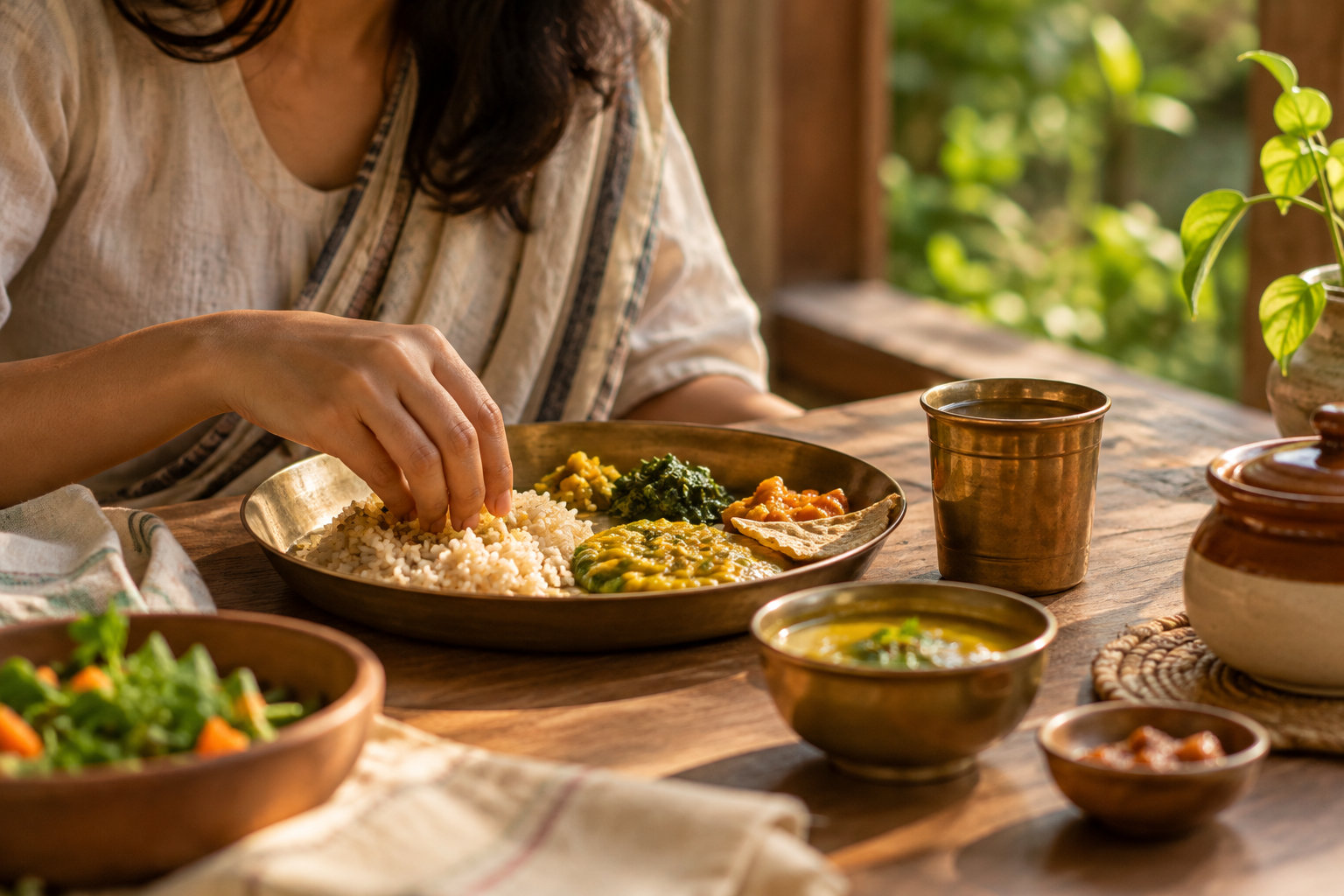
We have become very good at asking what we should eat. What is the healthiest breakfast? Which oil should we use? Is rice better than roti? Should we have more protein? What should we eat for good digestion? There is always another food to add, remove, replace or worry about. But there is one much simpler question that often gets lost: how much are you actually eating? Ayurveda has been asking this question for a very long time. In the Matrashiteeya chapter of the Charaka Samhita, the discussion begins with something remarkably straightforward: matrashī syāt, essentially, one should eat in the right quantity. And then comes the important part that quantity is not exactly the same for everyone. It depends on the strength of one’s digestion. That immediately makes the conversation about food a little more interesting. Because we often speak about food as though the food itself is the whole story. We label something “light” or “heavy” and assume that its effect will be the same every time we eat it. But even foods considered naturally light or heavy still depend on quantity. Something that is generally easy to digest can become difficult when eaten in excess, while a heavier food may be manageable in an appropriate amount depending on the person’s digestive capacity. In other words, there is no point in asking only, “Is this food healthy?” without also asking, “Is this the right amount for me, at this time?” Eat according to the proper measure; the proper measure of food depends on the strength of digestion. It sounds almost obvious when you hear it, but think about how rarely we actually apply this idea. We eat because it is lunchtime even when we are not hungry. We continue eating because the food tastes good even after we are full. We finish everything on the plate because that is what we were taught to do. We order more because we are out with friends. Sometimes we eat very little all day and then compensate with a huge dinner because we are exhausted and starving. The food may not necessarily be the problem. Sometimes it is simply the relationship we have with quantity. The chapter makes another interesting distinction between foods that are naturally lighter and those that are naturally heavier. It mentions foods such as rice, green gram and certain meats among the lighter foods, while describing things such as preparations made from flour, sesame, black gram, milk and certain meats like fish as heavier. But even here, food is not reduced to a simple good-food versus bad-food list. It repeatedly brings the discussion back to quantity and digestive strength. This is important because the idea is not to become afraid of foods that are described as heavy. It is to understand that the same food can behave differently depending on how much of it you eat, how strong your digestion is and what else is happening in your body. You do not have to create a permanent list of foods you are “allowed” to eat and foods you are not. You can instead become more attentive to what happens after you eat. Do you feel comfortable? Does the meal digest without leaving you excessively heavy or sluggish? Are you hungry again at an appropriate time? Do you feel energised or do you feel like you need to lie down immediately? These observations are not meant to turn eating into another thing to obsess over. They are simply a way of becoming familiar with your own body. The appropriate quantity of food often supports one’s strength, complexion, comfort and longevity. That is quite different from the way we often talk about food today, where every meal can start to feel like a calculation of calories, protein, carbohydrates, fats and restrictions. Ayurveda’s concern here is much more functional: what does this food, in this amount, do to the person eating it? And it does not just stop with food. Health is maintained through small acts of care repeated regularly. Take something as ordinary as brushing the teeth. Your body is something you maintain, not something you only attend to when something goes wrong. We have a strange relationship with self-care today. We can spend hundreds of rupees on a product marketed as a “self-care essential” and still forget the basics. We can have a complicated skincare routine but sleep four hours. We can buy supplements while eating at completely irregular times. We can spend an hour researching the perfect shampoo and then ignore the fact that we are exhausted all week. Sometimes care becomes another form of consumption instead of something we actually practise. The Matrashiteeya chapter offers a much quieter idea of care. Eat in the right quantity. Keep yourself clean. Take care of the senses. Pay attention to the body. Maintain routines. Do things regularly rather than waiting until a problem becomes severe. There is a sense of maintenance rather than constant correction. And perhaps that is the part of this chapter that feels most relevant now. Eating when we are actually hungry. Stopping before we have eaten far beyond what we need. Paying attention to how a meal makes us feel instead of blindly following a food trend. Keeping our bodies clean. Taking a few minutes to care for our skin, hair, feet and senses. Giving the body enough rest. Building routines that are sustainable rather than impressive for a week. There is also something important in the way the chapter describes the body: almost as something that deserves regular attention and respect. Maybe that is what we miss when we reduce healthy living to individual foods and isolated habits. Because sometimes the most useful change is not finding a better food. It is learning when enough is enough. Health does not always come from… Continue reading Maybe It Is Not Just What You Eat, But How Much