
6 Signs Your Agni Is Weak: What Ayurveda Says About Your Digestive Fire

In Ayurveda there is a saying,“Roga Sarvepi Mandagnau” it means, all diseases begin with a weakened digestive fire.   A strong Agni helps your body break down food efficiently, absorb nutrients properly, eliminate waste effectively, and maintain a healthy balance of the three Doshas: Vata, Pitta, and Kapha.   When Agni becomes weak, digestion slows down. Food is not processed efficiently, toxins begin to accumulate, and over time this can affect different systems in the body. This is why Ayurveda considers digestion to be the foundation of health.   So how do you know if your Agni needs attention? Here are 6 common signs of weak digestive fire according to Ayurveda.   Frequent Bloating and Gas   One of the most common signs of weak digestion is excessive gas and bloating.   Now, according to Ayurveda, gas and bloating are mainly associated with an imbalance of Vata in the body. And one of the biggest reasons for this is not eating at the right time.   Let me give you a simple example. Every day, you have your lunch at 12 o’clock. Your body gets used to this routine. It knows that food is going to arrive at that time, so your digestive system starts preparing itself. Your digestive juices, hydrochloric acid, and digestive enzymes are all ready and waiting.   But, instead of eating at 12, you have your lunch at 2 o’clock.   What happens then?   Your digestive system is already prepared for the meal, but the food never arrives. These digestive secretions continue to build up, creating discomfort in the stomach. Over time, this can show up as gas, bloating, heartburn, and acid reflux.   So, don’t just look at what you are eating. Also look at when you are eating. Sometimes, correcting your meal timings can make a huge difference to your digestive health.   Metallic taste in your mouth   I tell you, one of the easiest ways to find if your gut is in good shape is to wake up in the morning, go in front of the mirror, and smile. What do you see? Your teeth.   Your teeth can tell you a lot of things. Is your teeth yellow? Is it cracking? Sometimes you may feel that it is turning translucent and not really opaque, and you may have bad breath, and in the mouth, you may have a metallic taste. And when you open your mouth, you may feel that there is tendency for cavities. Your molars, teeth which is behind, they are getting affected slowly. They are not looking good.   And, and to be honest, all of this are actually huge signs your body is giving you about your gut, that you are having acid reflux, and your pitta in the body is really high.   Constipation or Irregular Bowel Movements   Our stool constitutes waste, not just from our food but also from the physiological processes in our body. If you are not defecating every day, a part of these get reabsorbed which causes toxin buildup.   Even a single day of not passing bowel movements is not advised for gut health.   There are a few simple Ayurvedic remedies that can help support regular bowel movements, which I’ve covered in detail here.   Your Skin Is Breaking Out   Your skin is often a reflection of what is happening inside your gut.   Another thing I look at is your diet. Are you eating foods that suit your body type, or Prakriti? Are you consuming a lot of processed and packaged foods?   Consuming foods that do not suit your body type or eating unhealthy processed foods can disrupt your body’s equilibrium and aggravate Dosha imbalances. Over time, this may contribute to skin problems such as acne, eczema, psoriasis, or unexplained breakouts.   So, if you are struggling with skin issues, don’t just look at your skin. Look at your gut as well. Sometimes the root cause is not on the outside, but inside your digestive system.   You Feel Heavy After Every Meal   Food is supposed to give you energy. It is not supposed to make you feel sleepy or sluggish.   People have become so used to feeling heavy after meals that they think it is normal. It is not.   If your meal leaves you feeling sluggish, uncomfortable, or ready to lie down, it may be a sign that your digestive fire is weak. Instead of efficiently digesting food and converting it into energy, your body is struggling to process what you eat.   A healthy Agni should leave you feeling satisfied and energized, not exhausted.   You Don’t Feel Hungry at Regular Times   One of the clearest signs of a healthy digestive fire is a healthy appetite.   Your body should naturally tell you when it is time to eat. If you frequently skip meals because you are not hungry, or if your appetite changes dramatically from one day to the next, it may indicate that your Agni is weak.   A healthy digestive system works like a well-maintained clock. It knows when to digest food and when to ask for more.   When those hunger signals become irregular, it is often one of the earliest signs that your digestive fire needs support.   Small Changes That Can Make a Big Difference   The good news is that Ayurveda offers simple ways to support your digestive fire.   One of the most important things you can do is maintain a routine. Try to eat your meals at roughly the same time every day. When your body knows when food is coming, digestion tends to work more efficiently.   Avoid skipping meals, overeating, or eating late at night. Give your body enough time to digest one meal before moving on to the next.   Pay attention to how different foods make you feel. Foods that suit one person may not suit another. Ayurveda always emphasizes eating according to your individual… Continue reading 6 Signs Your Agni Is Weak: What Ayurveda Says About Your Digestive Fire

5 Natural Supplements You Should Add To Your Diet Every Single Day

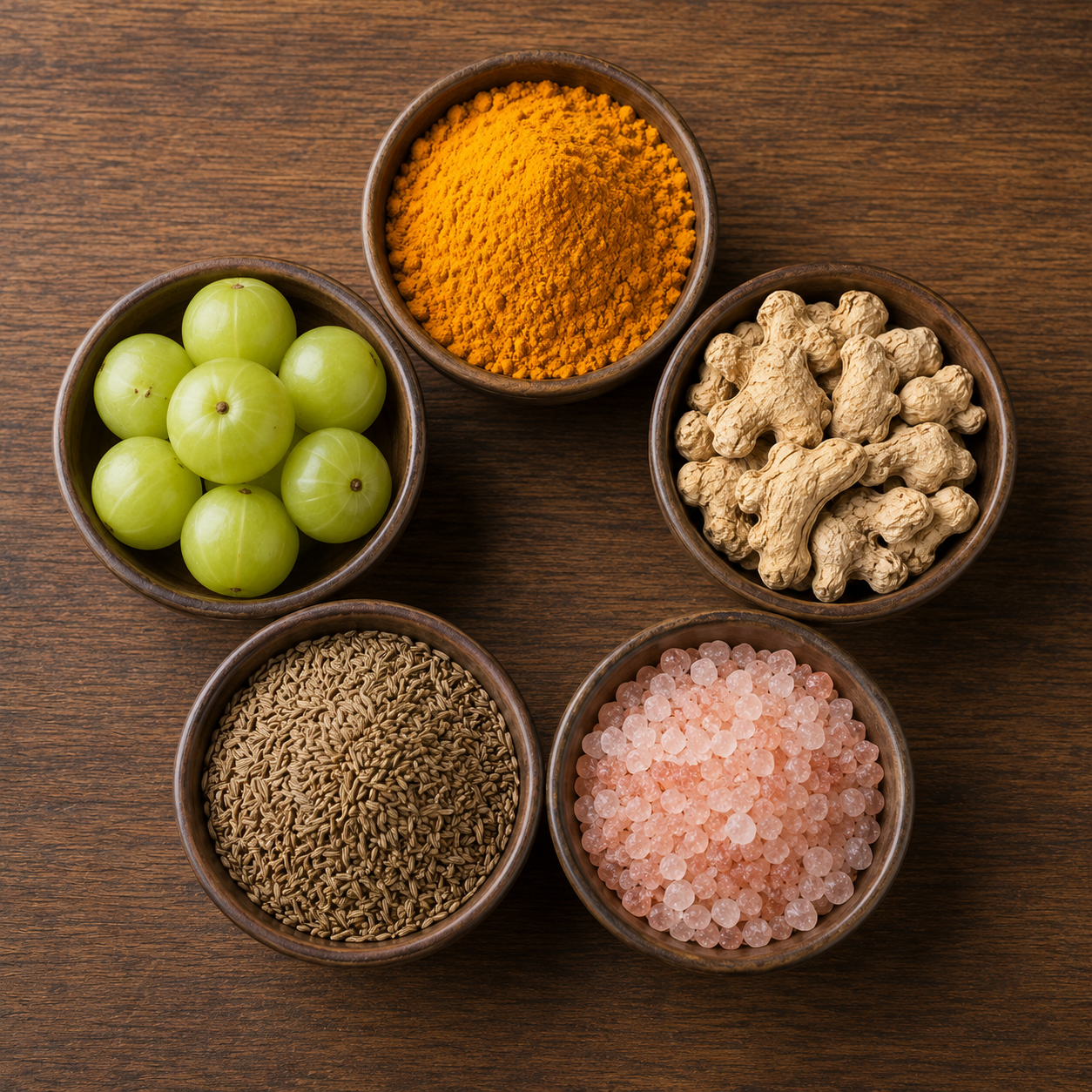
1. Turmeric   The number one supplement that you need in your life is nothing but turmeric.     You may have heard people saying, especially people in the west, talking about having turmeric in the form of teas, in the form of turmeric lattes, or sometimes even in the form of supplements.   You don’t need all of these pills and supplements to get your adequate amount of turmeric to help with all the benefits that it is going to give us.   Our traditional Indian way of cooking where we add the good fats and the spices, along with that we add turmeric, that is the most bioavailable form of turmeric and that helps with better digestion, better absorption, and better assimilation of all the good things that turmeric has to give us.   Now let us understand what turmeric does in our body. For this we have to understand what the properties of turmeric are as per Ayurveda.   Ayurveda says every food has certain properties, like there is a specific taste to a particular food item, a particular post-digestive taste.   Ayurveda also talks about a property called Prabhava or special characteristic.   One special characteristic or Prabhava of turmeric is that it is antimicrobial and anti-inflammatory.   For example, somebody is having a viral condition like chickenpox, we ask our patients to take shower with water boiled with turmeric because it is antimicrobial.   When it comes to food poisoning, if you consume more of turmeric paste throughout the day, you are helping your body to reduce inflammation.   Even if you have acne, you can use turmeric boiled water to wash your face because of its antimicrobial properties, you don’t need any antibacterial face washes.   All bitter tasting herbs are good for your liver. So, if you want to detoxify your liver, don’t go for supplements and medicines that detoxify your liver. Instead, just add a little bit more turmeric to your diet.   Adding turmeric to your dishes can help you improve your digestive fire, reduce gas, and bloating.   If you have children at home who constantly get bronchitis, cough, cold, fever, etc., turmeric helps you to improve their immunity. Make sure that you add turmeric to your cooking every day.   Even in traditional Indian cooking, we have so many dishes like haldi chawal, haldi doodh, haldi ka achar, turmeric lettuce soup. All of these are very good for improving your digestive system.     2. Dry Ginger     Number two is dry ginger.     I am talking about dry ginger and not wet ginger. Wet ginger is extremely heating, extremely pitta increasing. Dry ginger is also warm; it is much less heating compared to wet ginger.   When you buy ginger, make sure that you leave it outside and don’t keep it in the fridge so that it gets a little dry and then you can use it for cooking.   Just like how we said turmeric was anti-microbial and anti-inflammatory because of its prabhava, ginger also has a prabhava.   And what is that?   Dry ginger is anti-emetic. That means if somebody feels like vomiting, dry ginger is what we give.   It’s also good for improving digestion, absorption, and assimilation of food. It helps in reducing gas and bloating. It helps in subsiding Vata gently.   Just like how I told you about turmeric, don’t take dry ginger as a pill or a supplement. Instead, make sure that you have dry ginger in a cooked form along with other spices and good fats.   I personally add dry ginger every day to my cooking. However, one special indulgence that I really love doing is to have dry ginger wali masala chai.   After heavy meals, if for example, you had a biryani and you’re now feeling very heavy, very bloated, or you have this guilt feeling that you shouldn’t have had it because you can’t even think of the digestive problems that may come, then have dry ginger powder mixed with a little bit of rock salt, add a little bit of water and consume it.   That will help you subside the gas and bloating. It will also help you improve the digestion.   And if you’re somebody who feels constipation, you can have a glass of dry ginger water in the morning.   Make sure that you add two glasses of water, add one piece of dry ginger and reduce to one glass to get the maximum essence of dry ginger. And drink this water. This can ease your bowel movements.     3. Amla   This one is my favorite.     If you don’t want to have any supplement at all in this world, then one supplement that you need in your life is amla or amla powder.   This is something that you must include in your life.   Whether it is in the form of amla powder, amla juice, as amla murabba, amla candy, whatever it is, amla has to go into your system every single day.   Every house should have some form of amla ready to be served every day because amla helps in a lot of ways beyond what you can imagine.   There is a particular practice in Ayurveda. We call it as Kuti Pravishika. It is for people who want to reverse aging. It is a complete process. And the one thing that is given to people who wants to reverse their aging is Amla.   Amla has rejuvenating or anti-aging properties which can actually reverse your aging.   It is amazing for your skin, amazing for your heart, amazing for your hair, amazing for your digestive system, your liver, your intestine, and it’s good for your eyes.   So, if you want to take that one supplement every day, take Amla.   How can you consume Amla?   You can have Amla juice. Again, Amla juice, don’t have it as a… Continue reading 5 Natural Supplements You Should Add To Your Diet Every Single Day

From My Clinic to Your Kitchen

Why I am writing this to you…   I have spent decades sitting with people who are unwell.   Not just inconvenienced. Genuinely unwell. People with conditions that have names, diagnoses, years of medical history behind them.   Thyroid disorders, PCOS, IBS, chronic fatigue, autoimmune conditions, type 2 diabetes. People who have seen good doctors, taken their medications, followed the advice, and still wake up every morning not feeling like themselves. They come to me after all of that.   And the first thing I notice, almost every single time, is not their blood reports or their prescription history. It’s how they eat. When they eat. What they believe food is supposed to do for them.   Most of them have been told what not to eat. Very few have been taught how to eat. That distinction has taken me a long time to understand, and even longer to be able to explain. I trained in Ayurveda. I have practiced it across countries, across cultures, across very different kinds of suffering. What I keep coming back to, no matter where I am or who I am sitting with, is that the gut is where almost everything begins.   Not just digestion. Immunity. Hormones. Mood. Energy. Inflammation. It starts there.   Ayurveda has known this for over five thousand years. What we are only now beginning to confirm through modern research, Ayurvedic physicians observed through careful, sustained clinical practice across generations. The gut is not just a digestive organ. It is the foundation of health.   When I write a dietary protocol for my patients, I am not pulling from a wellness trend or a nutrition blog. I am drawing from classical texts, from thousands of hours of clinical observation, and from the humbling experience of watching very sick people get measurably better when they change the way they eat and live.   This document is a version of what I give my patients.   It is not a diet. It is a way of approaching food with knowledge rather than anxiety. Every instruction here has a reason behind it, grounded in how the body actually works, not how we wish it did.   If you are dealing with a chronic condition, if you have been struggling for a long time and feel like you have already tried everything, I want you to read this carefully. Not because it will fix everything overnight. But because in my clinical experience, this is where real recovery begins. Not in a hospital, not in a supplement, but in the kitchen, three times a day, consistently, over time.   That is the medicine I am offering you here.     Ayurvedic Healthy Eating — A Personal Guide     Let’s start with something simple.   Food is your daily medicine. Not a punishment, not a restriction, just a way to come back to balance. And I’m going to walk you through exactly how to do that, one step at a time.   First, let’s fix your meal times.   I want you to eat at the same time every day. Your body has a clock, and your digestion follows it. When you eat irregularly, your gut gets confused. You get bloating, acidity, that heavy sluggish feeling. Sound familiar? So here’s what I need you to do: don’t skip meals. Not breakfast, not lunch. Every skipped meal weakens your digestion a little more, and then you end up overeating later and wondering why you feel terrible. Let’s break that cycle.   Now, let’s talk about water.   I’m not asking you to force down three litres. Drink when you’re thirsty, that’s it. But please, switch to warm water. Cold water is one of the quiet things slowing your digestion down without you realising it. And during meals, just sip. Don’t flood your stomach. You’re trying to digest food, not dilute it.   Here’s what to cook with. For fats, use ghee, coconut oil, or black sesame oil. These nourish you. For sweetness, reach for jaggery or mishri instead of refined sugar. Small swaps, but they make a real difference over time.   Please cook your food.   I know raw salads feel healthy. They’re not, not for a gut that’s already struggling. Raw food is cold, hard to digest, and creates gas. Cook your vegetables with a lid on, add cumin and a pinch of asafoetida, and your body will thank you.   For pulses, dry roast them first, soak overnight, throw away that water, then boil fresh with ginger, turmeric, and cumin. This removes the gas-causing compounds. It’s a few extra steps, but it makes pulses so much easier on your system.   For now, let’s remove a few things.   Just temporarily. Maida, soy products, cow’s milk, curd are putting stress on your digestion right now. Cheese and paneer, once a week at most. No deep-fried food, no packaged food with more than five ingredients on the label.   This isn’t forever. It’s just long enough to let your gut heal.   When you eat out, keep it simple.   Go for grilled or baked over fried. Avoid anything heavy, creamy, or processed. Warm and freshly cooked is always the right call.   And walk. Every day.   Ten thousand steps. It sounds like a lot, but it’s really just being consistently on your feet. Walking supports your digestion, moves toxins out, and clears your head in ways no supplement can.   The last thing I’ll say is this.   None of this works if you do it three days and then stop.   Healing isn’t dramatic. It’s quiet and cumulative.   Every meal you eat on time, every warm glass of water, every freshly cooked dish, it adds up. That’s where the change lives.   You don’t need an extreme diet. You need consistent, aware, daily habits. That’s Ayurveda. And that’s what I’m asking you to try.     Love & Light, @DoctorRekha

Why You Get Acidity, Gas and Bloating After Meals?

What Is Really Going On?   If you feel burning, gas, heaviness or bloating after most meals, it is not “just your usual stomach problem.” Ayurveda says this means your digestion is disturbed and your food is not processing properly.   In simple words, three things are happening inside:   Your digestive “fire” (Agni) is weak or irregular. Your inner heat (Pitta) may be too high – causing burning and acidity. Your air element (Vata) may be disturbed – causing gas and bloating.   When this continues for weeks or months, half-digested food turns into sticky waste called Ama. This Ama creates more gas, heaviness and discomfort after almost every meal.   Agni is like the flame in your stomach. When it is balanced, you feel hungry at the right time, your food digests well, and you feel light and comfortable after a meal. Similarly, when Agni is weak, food stays longer in the stomach and intestines, making you feel full, dull and sleepy even after a small meal.   When it is too strong, you may feel sharp hunger but also burning, acidity and loose stools. When it is irregular, your appetite and digestion keep changing sometimes very hungry, sometimes no hunger at all, sometimes constipated, sometimes loose motions.   All these patterns can lead to discomfort after meals if not corrected.   When food does not digest properly because of disturbed Agni, it turns into something that Ayurveda calls Ama. You can imagine Ama as half-cooked, sticky, stale food sitting in your gut. It is heavy, blocks the natural flow in the intestines and starts to ferment.   This shows up as constant bloating, excessive gas, bad breath, a coated tongue and that feeling of being full and tired even after a small quantity of food. Over time, if Ama keeps building up, it can spread further and contribute to problems like joint pains, low energy and skin issues. That is why just neutralizing acid is not enough, the real work is to improve Agni and clear Ama.   Role of Pitta – Heat and Acidity   Pitta is the fire and heat energy in the body. In the stomach and chest area, high Pitta shows up as burning, sour burps, acid taste in the mouth, nausea and discomfort in the upper abdomen or chest. Everyday habits easily push Pitta up, such as eating very spicy, oily and fried food, taking a lot of pickles, vinegar and sour items, drinking too much tea, coffee, cola or alcohol, and smoking. Skipping meals, having long gaps and then overeating also irritate Pitta.   Emotionally, anger, frustration, working under pressure and eating while tense or upset add more “heat” to the digestive system. If this continues for weeks and months, it can lead to repeated acidity, heartburn and conditions like gastritis and reflux.     Role of Vata – Gas and Bloating   Vata is the principle of movement and air in the body. In the digestive system, excess or disturbed Vata shows up as gas, bloating, gurgling sounds, shifting cramps and irregular bowel habits. Common triggers are eating in a hurry, talking while eating, swallowing a lot of air, taking very cold, dry or raw foods, or living on biscuits, chips and other dry snacks.   Fizzy drinks and chilled water add more air and cold to the system. Irregular meal timings, frequent travel, late nights and worry or anxiety disturb Vata even more. Even if acidity and burning seem to be the main issue, Vata usually adds extra gas and bloating on top of it, which makes you feel stretched and uncomfortable after meals.     Everyday Causes That Make It Worse   Most people with repeat acidity and gas have a few habits in common. When you correct these, you often feel better even before taking any herbs.   Common food-related causes: Eating at odd times every day. Eating again before the last meal is digested. Heavy, late-night dinners. Very spicy, oily, fried and junk food. Too much tea, coffee, cola or alcohol. Mixing foods that don’t go well together (like milk with sour fruits, or fruits with heavy meals). Lifestyle and mind-related causes: Eating while working, scrolling, or in front of a screen. Eating too fast, not chewing properly. Lying down soon after meals. High stress, anger or worry, especially around mealtimes. Not sleeping on time and lack of any movement or exercise.   Simple Food Rules To Keep in Mind   You don’t need a very complicated diet to start healing. A few clear, simple rules help a lot.   Eat at regular times   Try to eat your main meals at similar times each day. Your body likes rhythm. When you eat at random times, your digestive fire becomes confused and weak.   Wait for real hunger   Eat when you feel light hunger, not just boredom or habit. If the last meal is still sitting heavy, give it time to digest. For most people, a gap of about 4 hours between main meals works well.   Eat warm, fresh, cooked food   Warm, freshly cooked meals are easier to digest than cold or stale food. Prefer:   Light khichdi, dal-rice, simple vegetable sabzis. Chapatis with ghee and cooked vegetables. Soups, stews and lightly spiced one-pot meals.   Avoid having large bowls of raw salad, cold smoothies or fridge-cold leftovers when digestion is weak.   Go easy on spice, sour and oil   If you get burning and acid: Cut down on heavy chilli, pickles, vinegar, tomato-heavy gravies and fried food. Reduce deep-fried snacks, pakodas, chips, samosas, puris and heavy biryanis. Keep mustard oil, very spicy chutneys and heavy masalas to a minimum.   Avoid wrong food combinations   Some common combinations can disturb digestion: Milk with sour fruits like orange, pineapple or berries. Milk or curd with salty, fish or meat dishes. Fruits eaten together with a full cooked meal.   It is better to have fruits alone, with some gap before or… Continue reading Why You Get Acidity, Gas and Bloating After Meals?

5 Everyday Kitchen Ingredients That Quietly Build Your Health

Most people think spices are used simply to make food taste good. However, they have a much bigger role. Spices help the body digest food properly, absorb nutrients and prevent accumulation of toxins.   The first and foremost factor for good health is a nutritious and balanced diet. Ayurveda also aims to preserve health through Ahara, it emphasizes not only on the quality of the food, but also in its cooking, processing and digestion.   One of the important aspects of adding spices to food is not just to enhance flavor but also to aid digestion as they are rich in nutrients, have medicinal and antioxidant properties.   In Ayurveda, digestive health is governed by Agni, your internal fire that transforms food into energy, strength and healthy tissues. When Agni is strong, the body is able to properly nourish itself and eliminate waste efficiently. When Agni becomes weak or disturbed, partially digested food can accumulate in the body, creating Ama(toxin) which may lead to heaviness, fatigue, poor immunity, and imbalance over time.   Spices are used to gently stimulate Agni. They reduce Kleda, which builds up in places like Majja Dhatu (nerves). When used correctly, spices also help maintain balance among the three functional energies of the body, known as Doshas.   You don’t need complicated spice blends to gain these benefits. Simple, everyday spices such as cumin, coriander, fennel, turmeric, and fenugreek can quietly support digestion and overall wellbeing when used consistently and in the right way.     Cumin (Jeeraka)     Cumin is one of the most important digestive spices in Ayurveda. It strengthens Agni without creating excessive heat. This makes it suitable for regular use in everyday cooking. Cumin helps the stomach break down food more efficiently and reduces common digestive problems such as gas, bloating, and heaviness.   It also helps in elimination of excess fluids from the body and can be helpful for mild burning during urination when used along with coriander.   Cumin is warming in nature, but not overly stimulating, so even people with mild heat sensitivity can usually tolerate it in small amounts. Traditionally, cumin is also used to support cleansing after childbirth and to prevent stagnation from building up in deeper tissues over time. Lightly roasting cumin makes it easier to digest and enhances its aroma and effectiveness.     Coriander (Dhania)       Coriander has a naturally cooling and soothing effect on the body, which helps calm excess Pitta. It is gentle on the stomach and helps improve appetite and digestion without irritation. Coriander also supports healthy urinary function.   Because coriander is mildly sweet and soothing in nature, it helps balance stronger or warming spices. This is why it is often paired with cumin in traditional cooking. Coriander is considered suitable for all body types when used appropriately and does not tend to create heaviness.   In cooking, coriander powder also helps soften sharp flavors such as while naturally thickening sauces and gravies.     Fennel (Saunf)     Fennel is a sweet, aromatic spice well known for its gentle digestive benefits. It helps relax the digestive tract, reduce bloating, and relieve discomfort after meals. Fennel supports smooth movement of food through the intestines and helps calm digestive sensitivity, especially when Vata is aggravated.   Because fennel is mild and easy to digest, it is commonly used as a mouth freshener and digestive after meals. Lightly dry roasting fennel enhances its flavor and effectiveness. Smaller fennel seeds are usually more potent and less fibrous, making them easier to chew and digest.   Fennel is safe for daily use and works well for people of all ages.     Turmeric (Haridra)     Turmeric is known in Ayurveda for supporting Rakta dhatu, skin clarity, and tissue healing. It is mildly warming and helps prevent the buildup of heaviness and stagnation in the body. Used regularly in small amounts, turmeric supports natural cleansing and is anti-inflammatory.   Turmeric also has strong traditional use for wound care and throat health. Applying turmeric to minor cuts can help stop bleeding and support healing. Gargling warm water with salt and turmeric can help soothe throat irritation.   Dry turmeric is generally preferred over fresh turmeric because it has a stronger cleansing effect. Although turmeric is very beneficial, more is not better. Excessive use may dry or irritate the system. Small, consistent amounts are ideal.     Fenugreek (Methi)     Fenugreek is a stronger, more heating spice than cumin or fennel and is especially helpful when digestion feels slow. It stimulates Agni and helps clear thick buildup in the body, which can be useful for people with more Kapha or cold digestion.   Because fenugreek is quite warming and drying, it should be used in small amounts. Too much can increase heat in the body and may aggravate Pitta. People who experience frequent acid reflux or burning sensations should use fenugreek cautiously or avoid it.   Fenugreek has traditionally been used to support healthy blood sugar balance and milk production in nursing mothers. Soaking fenugreek seeds in water overnight and drinking the water in the morning is a traditional practice for metabolic support.     How You Use Spices Also Matters     The way spices are prepared is just as important as which spices you choose. In Ayurveda, it is suggested warm the spices in ghee before adding them to the food. Ghee acts as a Yogavahi, meaning it carries the properties of the spices deeper into the body and helps distribute their effects throughout the tissues.   This method not only improves flavor and aroma but also makes the spices easier to digest and more effective. Simply sprinkling spices onto food does not create the same digestive benefit.   Learning how food actually behaves inside the body changes the way we relate to eating. The way we cook, the way we combine ingredients, and the way we support digestion quietly shape how the body functions over time. We begin… Continue reading 5 Everyday Kitchen Ingredients That Quietly Build Your Health

Gut Health – Unlocking the Power of Ayurvedic Foods for Digestion

From bloating and constipation to IBS and diarrhoea, poor digestive health has become a sign of modern times. A sedentary lifestyle, improper meal times, unhealthy food choices and mental stress are some of the modern-day contributors to poor gut health. It is alarming to note that nearly 40% of adults suffer from gut issues, ranging from heartburn and bloating to acid reflux and IBS (Irritable Bowel Syndrome). According to Ayurveda, poor gut health is the root cause of all diseases. So, neglecting these problems could lead to severe conditions like colon cancer.    The Reasons Your Gut Is Not Happy   Fatigue, IBS, constipation, bloating, diarrhoea, unintentional weight changes, etc. are all signs of poor gut health. If you see it from the Ayurvedic perspective, Then, it’s time for you to hurry up and consult a doctor. One of the main reasons for your gut health issues is lack of sleep. The role of good sleep in digestive health is, however, often overlooked.   Serotonin is produced in the gut; therefore, any imbalance can significantly affect its production. A weakened immune system can also lead to poor gut health. Your body is not capable of fighting diseases as it has not absorbed nutrients from the food. Another reason for digestive issues is excessive consumption of incompatible and processed foods.   The Gut-Mind Connection   The gut-mind connection has been scientifically proven. Unlike the popular adage ‘You are what you eat,’ Ayurveda believes that ‘you are what you digest’. Healthy digestion is vital to wellness.  In Ayurveda, gut health is derived from ‘Agni’ – the digestive fire. It not only has a bearing on your digestion process, but it also influences your emotions and thoughts. Most digestive problems arise due to an imbalance in Agni. This imbalance in turn affects the Doshas and accumulates Ama or toxins. The GI system and the central nervous system are deployed and connected. Food can trigger mood changes. Ayurveda says, “Rogah sarve api mande agnou,” meaning, a low Agni or poor gut health is the root cause of all diseases – be it physical or emotional. It means your gut and mind are connected. Following a regular daily routine or Dinacharya is intrinsic to wellness as per Ayurveda. This regularity also goes a long way in maintaining a healthy nervous and digestive system.  Furthermore, Ayurveda recommends mindful eating, which, in a way, means the mind and the gut are connected. Additionally, mindful eating is about involving all your senses as you eat.  It makes you aware of the quality and taste of the food and portion control. This nourishes the inner Agni, thereby ensuring balanced digestion.    Ayurvedic Ways to Keep Your Agni Balanced   Here are different ways to keep your Agni on balance: Follow a diet with foods that are simple, light and easy to digest. Be consistent with your mealtimes.  Avoid overeating. Avoid incompatible food combinations. Eat your dinner early. Have three meals every day. Maintain a gap of about 2 to 3 hours between your dinner and bedtime. Follow Dinacharya. Keep your body well hydrated. Avoid cold drinks and ice water as it dampens your Agni. Avoid processed and frozen foods. Have warm, freshly cooked foods instead.   Ayurvedic Remedies To Soothe Your Gut   Here are some Ayurvedic remedies that work best for your gut health: Consume black raisins to support digestive health. They relieve constipation and provide much-needed minerals and nutrients. Guduchi is an Ayurvedic herb that helps soothe gut inflammation. Consume it if you suffer constipation or poor appetite. Add licorice or Yashtimadhu to tea to soothe an acidic gut. Add cinnamon to tea or milk to promote better digestion. It acts as an antioxidant to eliminate oxidative compression in the gut. Use cardamom to reduce inflammation. Furthermore, it alleviates symptoms of indigestion, gas, and bloating. People have used cloves for their analgesic and anti-inflammatory properties. Triphala – a combination of Amla, Haritaki, and Bibhitaki can be consumed for better nutrient absorption and relief from constipation. Relieve nausea by drinking ginger tea. Add ginger while cooking to promote digestive health. Consume fennel to boost digestion. You can either chew fennel seeds after your meals. Alternatively, brew a fennel tea and have it. Carom seeds or ajwain is a wonderful carminative. It has antibacterial and anti-inflammatory properties to reduce bloating, gas, and digestive tract inflammation.  Use black pepper and long pepper in food or tea to enhance digestive power.   Practices For Better Digestive Health   Incorporate these practices into your daily life to improve your digestive health: Try meditation to reduce the stress and anxiety that is part of modern-day life. Not only will you have better gut health, but you will also experience a healthier mental and emotional state. Eat foods that align with your Prakriti (body type). This helps prevent Dosha imbalances. Eat seasonal food. This practice maintains energy balance. Local produce is best as it is fresh and has not travelled thousands of miles to get to your plate. Enjoy your food but keep your gut happy too. Have foods that are easy to digest and follow mindful eating. Keep yourself active. Follow an exercise regimen that suits your age, fitness levels, and overall condition. Daily walks can kindle the Agni and build your digestive capacity. Though the principles of Ayurveda date back several thousand years, they hold relevance even today. Ayurveda gives utmost importance to gut health as it has an impact on your overall health. So, have foods that are digestible, follow a daily routine and keep away from stress. If you need any help with your diet.   If you are struggling with any health issues, you can either book a consultation with us or send us a message via WhatsApp to +91 79074 89839. We have the best Ayurvedic doctors in Trivandrum who are always glad to help you. If you have any queries, contact us.  You can also visit us at our hospital.

Immunity Boosting Tips In Ayurveda

Maintaining a robust immune system is essential for overall well-being in today’s fast-paced world. With constant exposure to stress, pollutants and pathogens, our bodies often need extra support to stay healthy and resilient. While various supplements and medications are available, many people are gradually turning to Ayurveda for immunity boosting purposes. Ayurveda offers a treasure trove of knowledge on boosting immunity naturally. This blogs explores Ayurvedic tips and the best foods for boosting the immune system, and immunity-enhancing practices to help you fortify your body’s defence mechanism.   Understanding Immunity from the Ayurvedic perspective   Ayurveda views immunity as the body’s ability to resist disease and maintain optimal health. Understanding Ayurveda for immunity boosting is crucial in today’s forward life. It emphasises the balance between physical, mental, and emotional well-being to achieve a harmonious state of health.    According to Ayurvedic principles, a robust immune system is closely linked to a balanced digestive fire (Agni), proper elimination of toxins (Ama), and a harmonious balance of the body’s three Doshas: Vata, Pitta, and Kapha. Ayurveda, therefore, advises maintaining the body’s innate ability to combat diseases and their symptoms in order to remain healthy.   A compromised immune system and poor health may manifest in symptoms such as frequent illnesses, inadequate resistance to diseases, allergies, exhaustion, weakness, breathing difficulties, emotional distress, digestive issues and chronic insomnia.   Tips to improve immunity   Numerous factors can contribute to a weakened immune system. Genetics, emotional distress, environmental pollutants, poor diet, lifestyle and metabolic disorders are all contributing factors. Here are a few simple tips that can help to solve all of these problems.   Consuming immunity-enhancing foods   It is crucial to consume nutritious and sensible foods that support your physical health and vitality to maintain good health. According to Ayurveda, the optimal way to eat for maximum nutrition is to align with your body’s energy type. It is advisable to avoid consuming harmful sugars and processed and canned foods containing preservatives, limit the intake of fried and high-calorie foods and reduce alcohol consumption. Consuming everyday staples, such as coriander, turmeric, black pepper and cumin is the best immune booster through Ayurveda. To maintain good digestion, it is recommended to have a substantial lunch around noon and a smaller dinner in the evening. Avoid consuming any foods containing gluten or dairy ingredients. Frequent small meals are a beneficial way to provide your body with the necessary nutrients and prevent excessive hunger.    Detoxification   Improper digestion, consequently, leads to the accumulation of toxins (Ama) that, in turn, can negatively affect your health.  Ama weakens the body’s ability to defend against illnesses. Ayurveda offers detoxification therapies that help cleanse your body and mind and boost your immune system.   Boosting digestive system   A robust immune system relies heavily on your digestive fire or Agni. Ayurveda says “Roga sarve api mande agnou” meaning a low digestive fire or a poor gut health is the root cause of all diseases. If the Agni is not in equilibrium, then it can disrupt metabolism and, consequently, lower the immune system’s strength. Therefore, follow a lifestyle focusing on your gut health. You can also seek the support of an Ayurvedic doctor to correct your gut health and boost your digestive health.    Proper sleep   After a long day at work, it is essential to prioritise getting enough sleep and rest. Ayurveda recommends getting at least 8 hours of sleep to enhance the immune system’s functioning. The body’s immune cells require periods of rest and regeneration during sleep. Lack of sufficient sleep can disrupt your body processes and increase your susceptibility to illnesses such as depression, high blood glucose levels and cardiovascular issues..   Warm bath   Ayurveda recommends bathing with warm water in the evening to soothe the body’s cells and promote their healthy regeneration. But use only normal water to wash your hair as warm or hot water can ruin your hair health..   Natural ways to boost immunity through herbs   There are some amazing Ayurvedic herbs that, in fact, help boost your immunity.   Turmeric  This golden spice is a potent immune booster as per Ayurveda. Its active compound, curcumin, possesses anti-inflammatory, antioxidant, and antimicrobial properties. Incorporate turmeric into your diet by adding it to curries, soups or warm milk.   Ginger Ginger, especially dried ginger, is revered in Ayurveda for its ability to strengthen the immune system and aid digestion. Enjoy ginger tea or add freshly grated ginger to your meals for its warming and refreshing properties.   Tulsi Tulsi is considered a sacred Ayurveda herb renowned for its immunomodulatory effects.  Drinking Tulsi tea or, alternatively, chewing fresh Tulsi leaves can, indeed, help enhance immunity and, in addition, reduce stress.   Amla Amla is a rich source of vitamin C and antioxidants, making it a powerful immune booster in Ayurveda. Incorporate fresh amla juice or, alternatively, dried amla powder into your diet in order to reap its benefits.   Cumin Cumin aids digestion and enhances immunity. Roast cumin seeds and sprinkle them on your dishes, or brew cumin tea for its immune-boosting properties.   Garlic Garlic possesses antimicrobial and immune-enhancing properties. Include raw or cooked garlic in your meals to help ward off infections and strengthen your immune system.   You can further boost your immunity by seeking guidance from an Ayurvedic doctor. Incorporating Ayurvedic principles into your daily life can significantly enhance your body’s natural defenses and promote long-term health and vitality. By nourishing your body with immunity-boosting foods, adopting healthy lifestyle practices, and embracing Ayurvedic wisdom, you can empower yourself to thrive in today’s challenging environment.    Remember, small changes can yield significant results when it comes to bolstering your immunity and enhancing your overall well-being.  Furthermore, embrace real Ayurveda and, consequently, embark on a journey towards optimal health and vitality.       If you are struggling with any health issues, you can either book a consultation with us or send us a message via WhatsApp to +91 79074 89839.… Continue reading Immunity Boosting Tips In Ayurveda

Gut Health Medicines: Three Common Drugs You Should Avoid

According to Ayurveda, gut health is everything. Gut health is a crucial aspect of overall well-being, influencing various bodily functions, from digestion and nutrient absorption to immune system support and even mental health. Let’s Know about Gut health medicines and how it affects in our body.   Poor gut health is the cause of all diseases.    Many factors can impact gut health, including diet, lifestyle, and medications.     Medicines that affect your gut health     The following commonly used medicines can affect your gut health:    Metformin   Metformin is a medication,  specifically, commonly prescribed to individuals with type 2 diabetes.  It helps control blood sugar levels by improving the body’s sensitivity to insulin and reducing the production of glucose in the liver. While it is an effective treatment for diabetes, Metformin can have several effects on gut health.    Antacids    Antacids are over-the-counter or prescription medications that help relieve heartburn, acid reflux and indigestion by neutralizing stomach acid. While they can provide short-term relief, frequent use of antacids can impact your gut health in several ways.    Antibiotics    Antibiotics are powerful medications that help treat bacterial infections by killing or inhibiting the growth of harmful bacteria. While they are essential for treating various illnesses, antibiotics can have a significant impact on gut health.    Now you know why, despite years of taking metformin and having their blood sugar controlled, people eventually get complications of diabetes like diabetic nephropathy, neuropathy, retinopathy etc.    Anti-depressants and laxatives are equally bad for gut health.  All these medicines, however, can take your gut health months back. It is essential to be aware of their potential effects on gut health and take proactive steps to maintain a healthy digestive system.    Remember that a balanced diet, regular exercise and a healthy lifestyle also play crucial roles in supporting gut health alongside any necessary medications. By understanding the effects of these medications on your gut, you can take steps to maintain a healthy and thriving digestive system.    Let all your efforts to stay healthy be natural and safe for your gut. At the end of the day, your overall health completely depends on your gut health – Rogaa sarve api mande agnou.    Want to improve your gut health?    If you are struggling with any health issues, you can either book a consultation with us or send us a message via WhatsApp to +91 79074 89839. We have the best Ayurvedic doctors in Trivandrum who are always glad to help you. If you have any queries, contact us.  You can also visit us at our hospital.