Why High Blood Pressure Is Increasing in People in Their 30s and 40s?

  High blood pressure is no longer considered a condition that appears only after the age of 60.   Today, more and more people in their 30s and 40s are being diagnosed with hypertension, especially those with a family history of diabetes, obesity, cholesterol imbalance, or cardiovascular disease.   Many people believe high blood pressure is simply caused by stress or excess salt intake. While these factors do play a role, the deeper issue is often metabolic dysfunction, particularly insulin resistance.   Let us understand this in a simple way.   The Connection Between Insulin Resistance and High Blood Pressure   Our body produces a hormone called aldosterone.   This hormone tells the kidneys to retain sodium (salt). When salt is retained in the body, water also stays back. Increased water retention raises blood volume, and when blood volume increases, blood pressure rises.   Now here is where insulin resistance becomes important.   People with insulin resistance often have higher insulin levels circulating in the body. Elevated insulin can stimulate the retention of sodium and water, making the body more prone to developing high blood pressure.   This is why people with: Belly fat Weight gain Fatty liver High cholesterol Prediabetes Sedentary lifestyles   often gradually develop hypertension as well.   Ayurveda sees this pattern as a Kapha-dominant metabolic disorder associated with weak Agni, Ama accumulation, sluggish circulation, and blocked channels.   The good news is that Ayurveda focuses not just on controlling blood pressure numbers but on improving the underlying metabolic imbalance itself.   Ayurvedic Principles That Support Better Metabolic Health   Langhana, Lightening Therapy   One of the first approaches in Ayurveda for metabolic disorders is Langhana, or “lightening therapy.” The goal is to reduce overload on the digestive system and give metabolism an opportunity to reset. This includes:   Eating lighter meals Avoiding overeating Choosing foods that are easy to digest Reducing processed and heavy foods Allowing proper gaps between meals   When digestion improves, the body becomes more efficient at handling glucose and insulin. Cells begin responding better to insulin signals, reducing metabolic stress.   Simple dietary practices can often create profound changes in energy levels, bloating, cravings, and metabolic function.   Ruksha Ahara and Ruksha Upachara, Dry Diet and Dry Therapies   Kapha imbalance is typically associated with heaviness, excess moisture, sluggishness, and fat accumulation.   To counter this, Ayurveda recommends “Ruksha” therapies, dry and light approaches that reduce excessive Kapha.   Examples include:   Barley Horse gram Flat beans Millets Light legumes   Daily use of spices such as:   Turmeric Black pepper Dry ginger Cumin Mustard seeds   can help stimulate metabolism and improve digestion.   These foods and herbs support better cellular activity and reduce stagnation in the body.   Ushna Dravya   Cold, heavy, oily, and refrigerated foods tend to aggravate Kapha and weaken digestion.   Warmth, on the other hand, activates Agni.   This is why Ayurveda often recommends:   Warm water throughout the day Freshly cooked warm meals Warm herbal infusions   These practices improve circulation, digestion, and metabolic responsiveness.   Many people notice reduced bloating, better digestion, and improved energy simply by shifting from cold foods and drinks to warm alternatives.   Bitter and Pungent Tastes for Metabolic Cleansing   Ayurveda classifies tastes according to their effect on the body.   For Kapha-related disorders like insulin resistance and obesity, bitter (Tikta) and pungent (Katu) tastes are especially beneficial.   Bitter substances help clear metabolic channels and reduce excess accumulation.   Pungent substances stimulate digestion and circulation.   Examples include: Neem Fenugreek (Methi) Bitter gourd Turmeric Black pepper Garlic Radish Leafy greens   These foods support healthy glucose metabolism and improve digestive efficiency.   Vyayama, Movement and Exercise   Modern lifestyles with very little physical activity are one of the main reasons behind poor metabolism and lifestyle diseases today.   Ayurveda strongly emphasises daily movement to reduce Kapha stagnation.   Exercise helps:   Improve circulation Enhance glucose uptake into muscles Reduce insulin resistance Improve cardiovascular health Support healthy body weight   Strength training is particularly beneficial because muscle tissue improves insulin sensitivity.   Even simple daily habits like walking after meals, climbing stairs, yoga, or mobility exercises can create significant improvements over time.   Consistency matters far more than intensity.   Udvartana, Herbal Dry Powder Massage   Udvartana is a traditional Ayurvedic therapy involving massage with herbal powders.   Unlike oil massage, this therapy uses dry herbal powders to stimulate circulation and reduce excess Kapha.   Horse gram powder is commonly used for this purpose.   Benefits may include:   Improved lymphatic circulation Reduction in heaviness Better skin tone Support for fat metabolism Increased body stimulation   This therapy is often used as part of comprehensive metabolic management programs.   Swedana, Sweat Therapy   Swedana refers to therapeutic sweating or steam therapy.   Mild heat therapy helps mobilise accumulated Kapha in the body.   Benefits include:   Improved circulation Relaxation of stiffness Opening of channels Better elimination of waste Enhanced metabolic activity   One important precaution: The head should not be exposed directly to excessive steam or heat during the process.   Deepana and Pachana, Improving Digestion and Reducing Ama   Ayurveda believes that weak digestion is the foundation of many chronic diseases.   When digestion is impaired, Ama forms in the body.   Ama contributes to:   Sluggish metabolism Inflammation Weight gain Blocked circulation Reduced insulin sensitivity   Deepana therapies stimulate digestive fire, while Pachana therapies help in digestion.   This may include: Digestive herbs Fasting strategies Herbal teas Spice combinations Meal timing corrections   Once digestion improves, many metabolic symptoms begin correcting naturally.   Shamana Therapy, Balancing Kapha with Herbs   After digestion improves and metabolism becomes more active, Ayurveda may use herbal formulations to stabilise the system. This is called Shamana therapy.   Importantly, Ayurveda does not rely on random single herbs for complex metabolic disorders.   Proper treatment usually involves carefully selected herbal combinations tailored to:   Body constitution Digestion Sleep Stress levels Weight… Continue reading Why High Blood Pressure Is Increasing in People in Their 30s and 40s?

5 Natural Supplements You Should Add To Your Diet Every Single Day

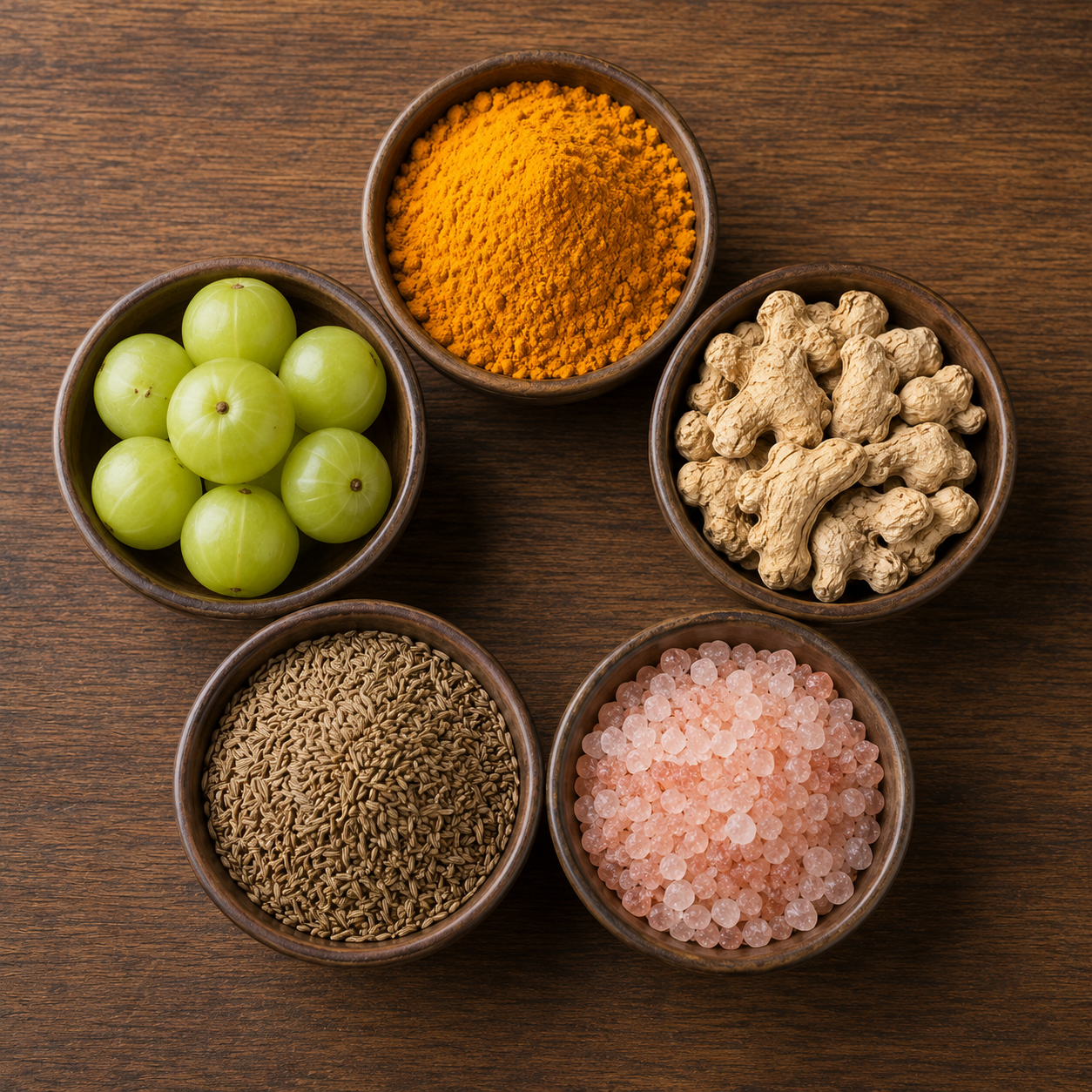
1. Turmeric   The number one supplement that you need in your life is nothing but turmeric.     You may have heard people saying, especially people in the west, talking about having turmeric in the form of teas, in the form of turmeric lattes, or sometimes even in the form of supplements.   You don’t need all of these pills and supplements to get your adequate amount of turmeric to help with all the benefits that it is going to give us.   Our traditional Indian way of cooking where we add the good fats and the spices, along with that we add turmeric, that is the most bioavailable form of turmeric and that helps with better digestion, better absorption, and better assimilation of all the good things that turmeric has to give us.   Now let us understand what turmeric does in our body. For this we have to understand what the properties of turmeric are as per Ayurveda.   Ayurveda says every food has certain properties, like there is a specific taste to a particular food item, a particular post-digestive taste.   Ayurveda also talks about a property called Prabhava or special characteristic.   One special characteristic or Prabhava of turmeric is that it is antimicrobial and anti-inflammatory.   For example, somebody is having a viral condition like chickenpox, we ask our patients to take shower with water boiled with turmeric because it is antimicrobial.   When it comes to food poisoning, if you consume more of turmeric paste throughout the day, you are helping your body to reduce inflammation.   Even if you have acne, you can use turmeric boiled water to wash your face because of its antimicrobial properties, you don’t need any antibacterial face washes.   All bitter tasting herbs are good for your liver. So, if you want to detoxify your liver, don’t go for supplements and medicines that detoxify your liver. Instead, just add a little bit more turmeric to your diet.   Adding turmeric to your dishes can help you improve your digestive fire, reduce gas, and bloating.   If you have children at home who constantly get bronchitis, cough, cold, fever, etc., turmeric helps you to improve their immunity. Make sure that you add turmeric to your cooking every day.   Even in traditional Indian cooking, we have so many dishes like haldi chawal, haldi doodh, haldi ka achar, turmeric lettuce soup. All of these are very good for improving your digestive system.     2. Dry Ginger     Number two is dry ginger.     I am talking about dry ginger and not wet ginger. Wet ginger is extremely heating, extremely pitta increasing. Dry ginger is also warm; it is much less heating compared to wet ginger.   When you buy ginger, make sure that you leave it outside and don’t keep it in the fridge so that it gets a little dry and then you can use it for cooking.   Just like how we said turmeric was anti-microbial and anti-inflammatory because of its prabhava, ginger also has a prabhava.   And what is that?   Dry ginger is anti-emetic. That means if somebody feels like vomiting, dry ginger is what we give.   It’s also good for improving digestion, absorption, and assimilation of food. It helps in reducing gas and bloating. It helps in subsiding Vata gently.   Just like how I told you about turmeric, don’t take dry ginger as a pill or a supplement. Instead, make sure that you have dry ginger in a cooked form along with other spices and good fats.   I personally add dry ginger every day to my cooking. However, one special indulgence that I really love doing is to have dry ginger wali masala chai.   After heavy meals, if for example, you had a biryani and you’re now feeling very heavy, very bloated, or you have this guilt feeling that you shouldn’t have had it because you can’t even think of the digestive problems that may come, then have dry ginger powder mixed with a little bit of rock salt, add a little bit of water and consume it.   That will help you subside the gas and bloating. It will also help you improve the digestion.   And if you’re somebody who feels constipation, you can have a glass of dry ginger water in the morning.   Make sure that you add two glasses of water, add one piece of dry ginger and reduce to one glass to get the maximum essence of dry ginger. And drink this water. This can ease your bowel movements.     3. Amla   This one is my favorite.     If you don’t want to have any supplement at all in this world, then one supplement that you need in your life is amla or amla powder.   This is something that you must include in your life.   Whether it is in the form of amla powder, amla juice, as amla murabba, amla candy, whatever it is, amla has to go into your system every single day.   Every house should have some form of amla ready to be served every day because amla helps in a lot of ways beyond what you can imagine.   There is a particular practice in Ayurveda. We call it as Kuti Pravishika. It is for people who want to reverse aging. It is a complete process. And the one thing that is given to people who wants to reverse their aging is Amla.   Amla has rejuvenating or anti-aging properties which can actually reverse your aging.   It is amazing for your skin, amazing for your heart, amazing for your hair, amazing for your digestive system, your liver, your intestine, and it’s good for your eyes.   So, if you want to take that one supplement every day, take Amla.   How can you consume Amla?   You can have Amla juice. Again, Amla juice, don’t have it as a… Continue reading 5 Natural Supplements You Should Add To Your Diet Every Single Day

From My Clinic to Your Kitchen

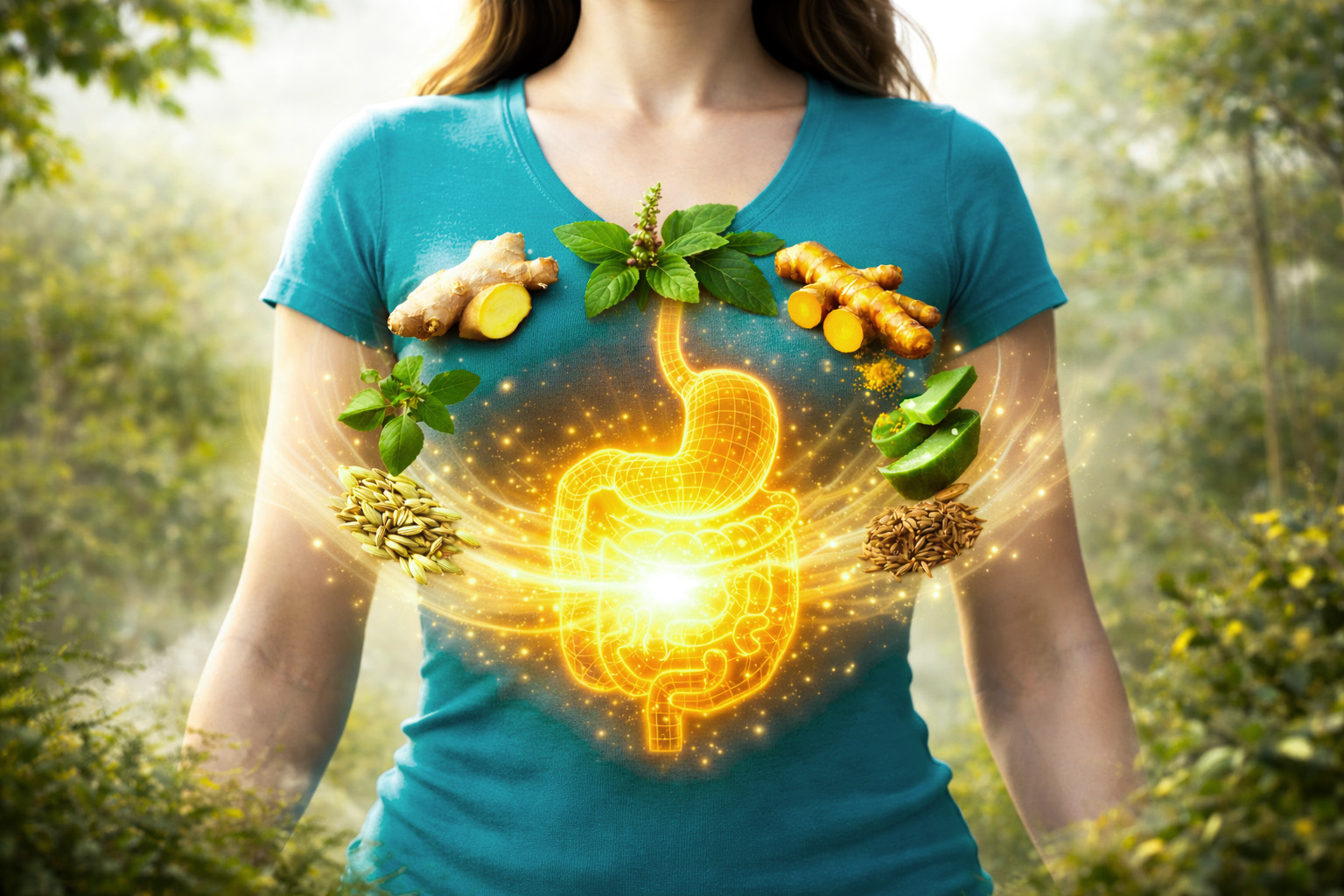
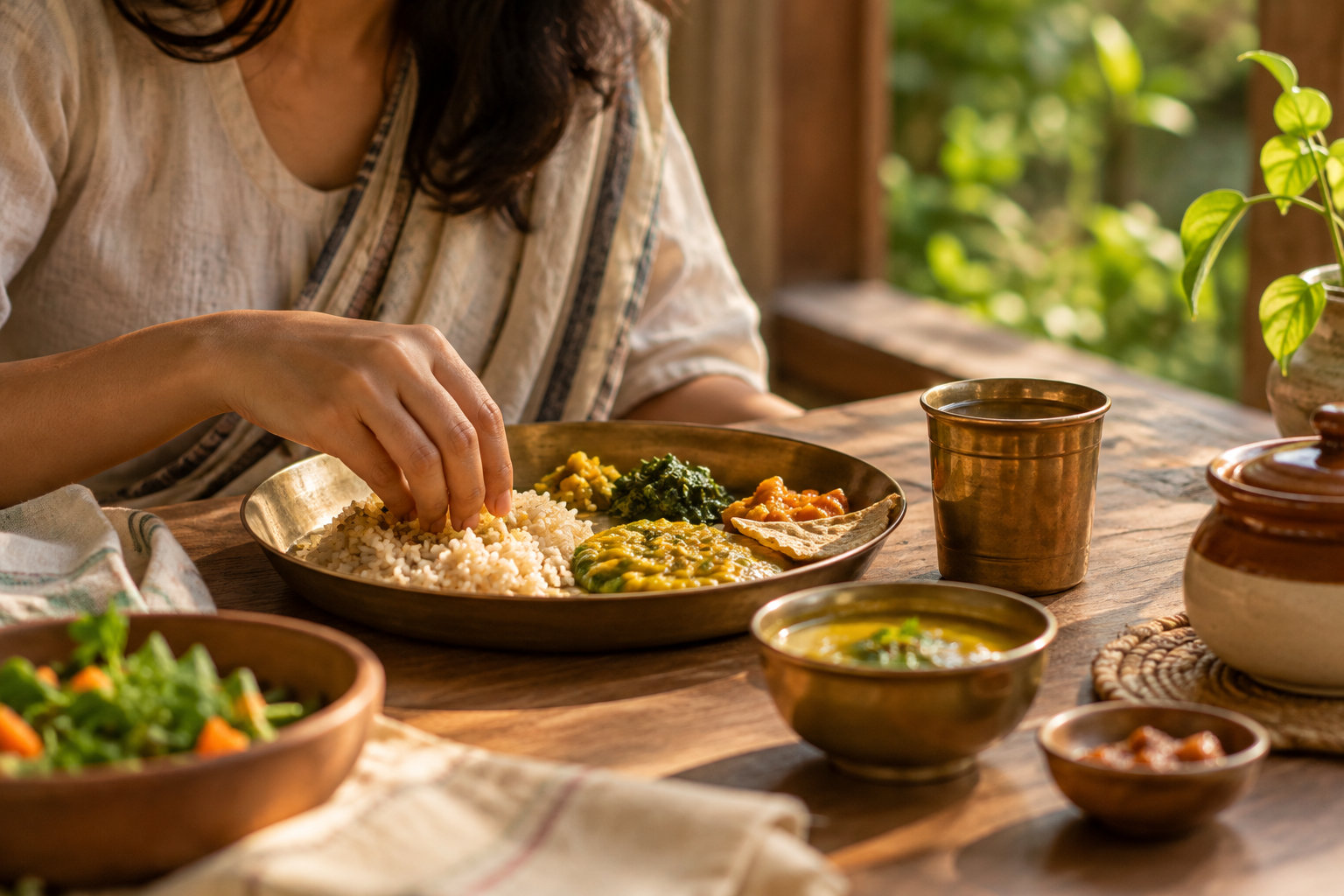
Why I am writing this to you…   I have spent decades sitting with people who are unwell.   Not just inconvenienced. Genuinely unwell. People with conditions that have names, diagnoses, years of medical history behind them.   Thyroid disorders, PCOS, IBS, chronic fatigue, autoimmune conditions, type 2 diabetes. People who have seen good doctors, taken their medications, followed the advice, and still wake up every morning not feeling like themselves. They come to me after all of that.   And the first thing I notice, almost every single time, is not their blood reports or their prescription history. It’s how they eat. When they eat. What they believe food is supposed to do for them.   Most of them have been told what not to eat. Very few have been taught how to eat. That distinction has taken me a long time to understand, and even longer to be able to explain. I trained in Ayurveda. I have practiced it across countries, across cultures, across very different kinds of suffering. What I keep coming back to, no matter where I am or who I am sitting with, is that the gut is where almost everything begins.   Not just digestion. Immunity. Hormones. Mood. Energy. Inflammation. It starts there.   Ayurveda has known this for over five thousand years. What we are only now beginning to confirm through modern research, Ayurvedic physicians observed through careful, sustained clinical practice across generations. The gut is not just a digestive organ. It is the foundation of health.   When I write a dietary protocol for my patients, I am not pulling from a wellness trend or a nutrition blog. I am drawing from classical texts, from thousands of hours of clinical observation, and from the humbling experience of watching very sick people get measurably better when they change the way they eat and live.   This document is a version of what I give my patients.   It is not a diet. It is a way of approaching food with knowledge rather than anxiety. Every instruction here has a reason behind it, grounded in how the body actually works, not how we wish it did.   If you are dealing with a chronic condition, if you have been struggling for a long time and feel like you have already tried everything, I want you to read this carefully. Not because it will fix everything overnight. But because in my clinical experience, this is where real recovery begins. Not in a hospital, not in a supplement, but in the kitchen, three times a day, consistently, over time.   That is the medicine I am offering you here.     Ayurvedic Healthy Eating — A Personal Guide     Let’s start with something simple.   Food is your daily medicine. Not a punishment, not a restriction, just a way to come back to balance. And I’m going to walk you through exactly how to do that, one step at a time.   First, let’s fix your meal times.   I want you to eat at the same time every day. Your body has a clock, and your digestion follows it. When you eat irregularly, your gut gets confused. You get bloating, acidity, that heavy sluggish feeling. Sound familiar? So here’s what I need you to do: don’t skip meals. Not breakfast, not lunch. Every skipped meal weakens your digestion a little more, and then you end up overeating later and wondering why you feel terrible. Let’s break that cycle.   Now, let’s talk about water.   I’m not asking you to force down three litres. Drink when you’re thirsty, that’s it. But please, switch to warm water. Cold water is one of the quiet things slowing your digestion down without you realising it. And during meals, just sip. Don’t flood your stomach. You’re trying to digest food, not dilute it.   Here’s what to cook with. For fats, use ghee, coconut oil, or black sesame oil. These nourish you. For sweetness, reach for jaggery or mishri instead of refined sugar. Small swaps, but they make a real difference over time.   Please cook your food.   I know raw salads feel healthy. They’re not, not for a gut that’s already struggling. Raw food is cold, hard to digest, and creates gas. Cook your vegetables with a lid on, add cumin and a pinch of asafoetida, and your body will thank you.   For pulses, dry roast them first, soak overnight, throw away that water, then boil fresh with ginger, turmeric, and cumin. This removes the gas-causing compounds. It’s a few extra steps, but it makes pulses so much easier on your system.   For now, let’s remove a few things.   Just temporarily. Maida, soy products, cow’s milk, curd are putting stress on your digestion right now. Cheese and paneer, once a week at most. No deep-fried food, no packaged food with more than five ingredients on the label.   This isn’t forever. It’s just long enough to let your gut heal.   When you eat out, keep it simple.   Go for grilled or baked over fried. Avoid anything heavy, creamy, or processed. Warm and freshly cooked is always the right call.   And walk. Every day.   Ten thousand steps. It sounds like a lot, but it’s really just being consistently on your feet. Walking supports your digestion, moves toxins out, and clears your head in ways no supplement can.   The last thing I’ll say is this.   None of this works if you do it three days and then stop.   Healing isn’t dramatic. It’s quiet and cumulative.   Every meal you eat on time, every warm glass of water, every freshly cooked dish, it adds up. That’s where the change lives.   You don’t need an extreme diet. You need consistent, aware, daily habits. That’s Ayurveda. And that’s what I’m asking you to try.     Love & Light, @DoctorRekha