Ayurveda Is An Alternative Medicine. Alternative To WHAT!?

Ayurveda is often called “alternative medicine”.   But alternative to what?   The word “alternative” suggests that Ayurveda came later, as another option after modern medicine. That is simply not true.   Ayurveda is one of the oldest systems of medicine in the world. It has been helping people understand health, disease, and the human body for thousands of years. It did not begin as an alternative. It existed long before modern medicine as we know it today.   What Ayurveda Actually Does   Ayu means life, and Veda means knowledge. Together, Ayurveda is commonly understood as “the science of life.”   Ayurveda is not just about treating disease.   At its core, Ayurveda looks at both the outer world and our inner world. It teaches us that good health comes from understanding ourselves and living in harmony with nature. It is about understanding how the body functions, what keeps it healthy, and what causes it to lose balance.   Instead of looking at one symptom on its own, Ayurveda looks at the whole person.   It asks simple questions.   Why did this problem develop?   What changed in the person’s lifestyle?   How can balance be restored naturally?   The goal is not only to help someone feel better today but also to support long-term health.   This is one of the biggest differences in the way Ayurveda approaches healthcare.   Rather than waiting for illness to develop, Ayurveda encourages us to recognize subtle changes in the body before they progress into larger problems. It teaches that health is something we care for every day, not something we think about only when we are sick.   That is why Ayurveda places so much importance on daily habits, food, sleep, movement, mental wellbeing, and living according to the seasons. These are not isolated aspects of health. They all influence one another.   When one area is out of balance, it often affects the others as well.   The Importance of Daily Living   One of the most beautiful ideas in Ayurveda is that health is created through our everyday choices.   The way we wake up.   The food we eat.   The time we sleep.   How we manage stress.   How we move our bodies.   These may seem like ordinary parts of life, but Ayurveda considers them the foundation of good health.   This is why Ayurveda places great importance on Dinacharya, or a healthy daily routine, and Ritucharya, living according to the changing seasons.   These are not complicated rules.   They are practical ways of helping the body function in harmony with nature.   Is Ayurveda Against Modern Medicine?   Not at all.   Modern medicine has transformed healthcare. It is essential for emergencies, surgeries, infections, and life-threatening conditions. It has saved countless lives, and it continues to save lives every single day.   Nobody serious about health denies this.   But Ayurveda was never trying to do that job. It was never built for emergency intervention. It was built to place particular emphasis on understanding why health declines in the first place, often before disease becomes advanced or requires emergency care.   Ayurveda was never intended to compete with modern medicine, nor was it meant to serve merely as a backup option.   It is one of the oldest and most complete systems for understanding the human body, built on the simple idea that health is something we build every single day, not something we only think about once it is already gone.   Perhaps it is time to stop asking whether Ayurveda is an alternative.   Instead, ask a different question.   What is Ayurveda trying to achieve?   Its purpose has always been clear.   To help us understand the body.   To maintain balance.   To support health through daily living.   To recognize imbalance early.   And to help people live healthier, more fulfilling lives.   The goals have remained the same for thousands of years.   The world around us has changed dramatically. The way we live, work, eat, and interact with our environment is very different from how our ancestors lived.   Medical science has advanced in extraordinary ways, and our understanding of disease continues to evolve. Yet the basic needs of the human body have remained remarkably consistent.   We still need nourishing food, regular sleep, movement, emotional balance, and a lifestyle that supports our physical and mental wellbeing. These are not modern discoveries.   This is why Ayurveda is often described as a way of life rather than simply a system of medicine. Its teachings extend beyond treating illness.   Ayurveda is far more than the labels often attached to it today.   If you want to understand Ayurveda as it was originally taught, explore our courses and learn directly from the timeless wisdom of the Charaka Samhita and Ashtanga Hridayam.

Why Ayurveda Needs Evidence, Not Excuses!

Some people believe asking Ayurveda for evidence is disrespectful.   I disagree.   Evidence does not weaken Ayurveda. It protects Ayurveda.   It separates real practice from misinformation. It helps the world understand what our teachers preserved for centuries.   The Question of Evidence   Like any other traditional system of medicine, Ayurveda has also faced this criticism and scrutiny over the question of evidence.   As modern healthcare has become increasingly evidence driven, Ayurveda has often been judged against standards developed for the biomedical framework.   This has led many people to dismiss it as unscientific, not because of a lack of knowledge, but because the knowledge has been traditionally generated, preserved, and communicated in a different way from the standards of modern medicine.   To understand this, we need to look at how Ayurvedic knowledge has evolved.   For centuries, Ayurveda was taught through the gurukula system, where learning was transferred from the guru to the disciple.   Students did not simply memorize texts. They observed patients alongside their teachers. Most of the knowledge was practical rather than purely theoretical, and knowledge was often refined through observation and experience.   Ayurveda therefore had its own framework for validating knowledge. It relied on its own set of parameters. What it did not develop was the kind of biomedical research framework that has formed the foundation of modern healthcare today, and this is important.   Ayurveda is one of the world’s most extensively documented traditional medical systems. Classical texts like the Charaka Samhita, Sushruta Samhita, and Ashtanga Hridayam have preserved its principles for centuries.   However, while the core philosophy and knowledge have been documented, clinical practice was never recorded in the systematic manner expected today. Individual case studies, long-term treatment outcomes, and standardized datasets are all part of modern clinical culture.   Where the Gap Actually Comes From   As a result, this historical gap explains why Ayurveda has entered the modern scientific era with a wealth of classical wisdom but comparatively limited research documentation. In recent decades, significant efforts have been made to bridge this gap. Institutions working under the AYUSH framework have invested in research on Ayurvedic formulations, therapies, and clinical practices.   This brings us to another challenge.   Much of this research has been expected to conform to the language and methodology of biomedical science, including its full set of protocols. These are valuable tools, but they were never part of the traditional system of Ayurveda.   Presenting Ayurveda through this different scientific language is not just a challenge; it can lead to gaps in both evidence and translation.   Hence, to address this gap, significant efforts are being made.   Addressing The Gap   In May 2025, the World Health Assembly adopted the WHO Global Traditional Medicine Strategy 2025 to 2034, a ten-year roadmap built specifically to strengthen the evidence base for traditional medicine systems including Ayurveda.   India’s Ministry of Ayush has signed a three-million-dollar agreement with WHO to bring Ayurveda into the International Classification of Health Interventions, the same global data framework biomedicine uses to track treatment outcomes worldwide.   WHO is also building a Traditional Medicine Global Library, already holding over 1.5 million records of evidence maps, clinical journals, and policy documents.   None of this happens for a system that has nothing to prove. It happens because global health authorities have recognized that Ayurveda’s outcomes are real and worth documenting properly.   The medicine was never the problem. The documentation was.   And documentation is not a threat to Ayurveda. It is its greatest opportunity.   Evidence does not exist to replace classical knowledge. It exists to preserve it, strengthen it, and make it accessible to a healthcare system that increasingly relies on measurable outcomes. If Ayurveda is to serve future generations across the world, its principles must be communicated in a language that researchers, physicians, policymakers, and patients can understand.   Authentic knowledge should never be afraid of scrutiny. If a treatment consistently produces positive outcomes, documenting those outcomes only strengthens confidence in that practice.   At the same time, we must also recognise that not every aspect of Ayurveda fits neatly into conventional biomedical research models.   Ayurveda is fundamentally personalised. Two patients with the same diagnosis may receive different treatment plans because their constitution, digestive capacity, lifestyle, stage of disease, and overall health are different. Standardised clinical trial designs often attempt to minimise variation between patients, whereas Ayurveda intentionally incorporates individual variation into treatment decisions.   This means Ayurveda deserves research methods that respect the complexity of whole-system, personalised care rather than forcing every principle into a framework originally designed for modern healthcare standards.   The goal should never be to make Ayurveda imitate modern medicine.   The goal should be to develop rigorous methods that can evaluate Ayurveda on its own principles while maintaining the scientific standards expected in global healthcare.   This is where the future lies.   After treating thousands of patients across the world, one thing has become clear to me. I do not see evidence and tradition as competitors. I see them as two generations of the same commitment: the commitment to helping the person in front of you and being honest about what works.   Our teachers built Ayurveda on direct observation of patients over centuries. Evidence based research is simply the modern language for continuing that same observation, at a scale and rigor our teachers never had access to.   The future of Ayurveda needs both. The wisdom of our ancient texts. And the language of modern validation. One without the other is incomplete.  

The Future Doctor Will Not Just Treat Disease

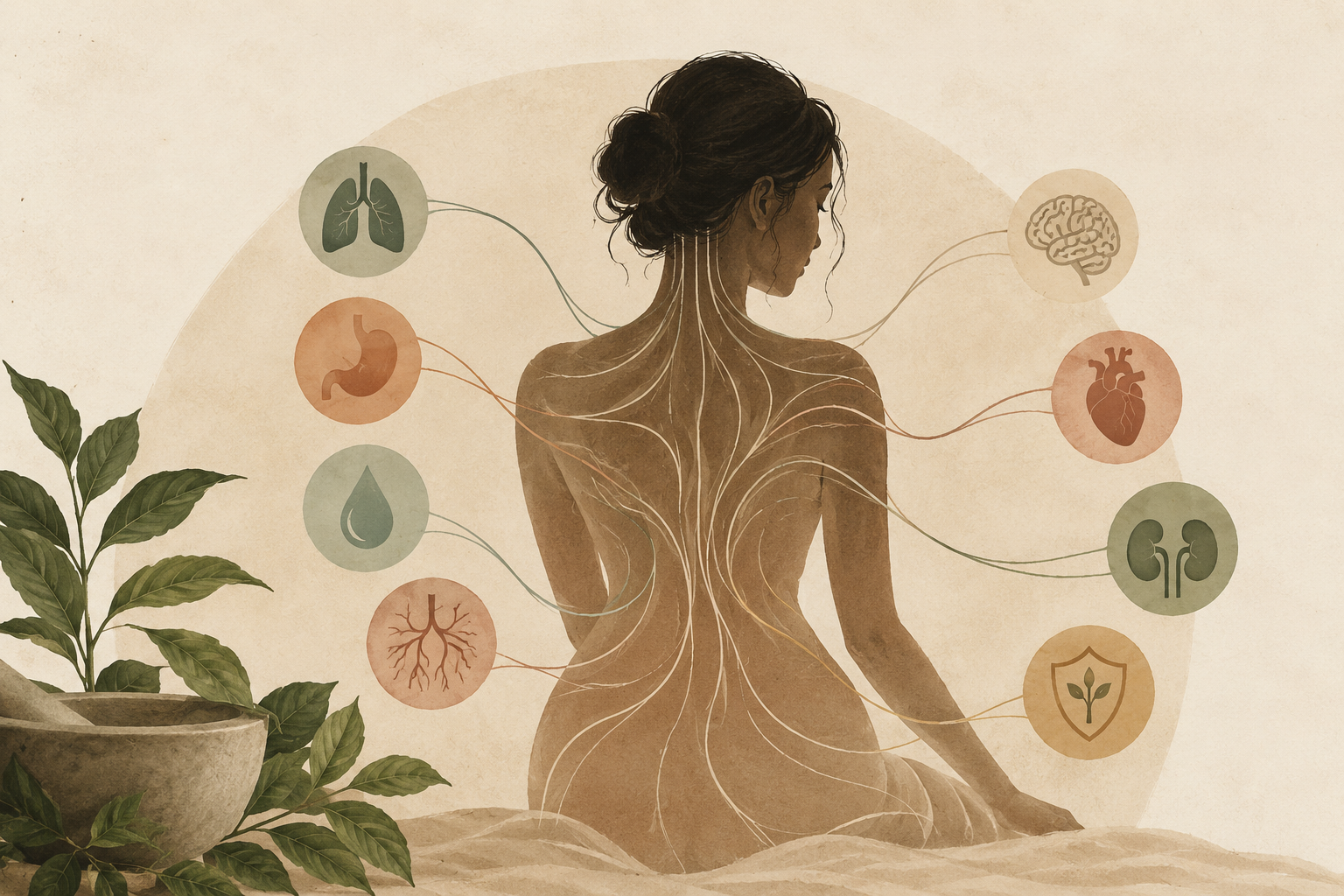
For a long time, healthcare has always been about this one question: How do we treat disease? It learned to spot symptoms and diagnose problems. That is how it worked.   But today, a new question has emerged because of the lifestyle changes people have experienced over the past 50 years due to technological advancement.   That question is: How do we keep ourselves healthy and prevent disease from developing?   The focus is no longer on waiting for a diagnosis or for disease to strike. It is about asking how we can keep a person well in the first place so they don’t get a disease.   This big shift has changed the healthcare industry. And Ayurveda, from the start, has always been about preventive care rather than treating disease.   This also changes how we look at the role of a doctor.   A doctor is not only someone who steps in when something goes wrong. A doctor also helps a person understand what is happening inside the body long before disease develops.   Looking Beyond Symptoms   Symptoms are important. They tell us that something needs attention. Modern medicine has made remarkable progress in diagnosing and treating diseases.   But Ayurveda looks at another part of the picture. It asks what may have disturbed the body’s natural balance before those symptoms appeared.   Was it irregular eating? Poor sleep? Too much stress? A lack of movement?   Or was it a combination of small daily habits that slowly added up over time?   Understanding these patterns helps us understand the person, not just the disease.   Disease does not appear overnight   One of the most important ideas in Ayurveda is that disease rarely appears all at once. The body usually gives small signals before a larger problem develops. They are often easy to ignore because they do not stop us from carrying on with our day.   It may begin with poor digestion after meals. It may be feeling tired even after a full night’s sleep. Some people notice changes in their appetite.   On their own, these may not seem like major concerns. Most people learn to live with them. They become part of the daily routine.   Health Is Built Every Day   Most of our health is shaped by the choices we repeat every day.   The time we wake up.   The food we eat.   How well we digest it.   How much we rest.   How we respond to stress.   These may seem like small things, but together they influence how the body functions over time.   What Prevention Is Not About   Sometimes people think preventive care means never getting sick. That is not realistic.   Anyone can fall ill despite taking good care of themselves.   Prevention is about giving the body the best possible support so it can function well. It is about recognising small changes early and making simple corrections before they become bigger concerns.   It is a practical way of caring for health.   Why This Matters More Than Ever   The reason this feels urgent right now is not a coincidence. Lifestyles have changed dramatically over the past few decades. Sleep schedules have become irregular. Food is more processed than it used to be. Screens keep people sitting still for most of the day. Stress has become a constant.   These changes did not happen suddenly. They built up slowly, year after year, the same way disease often builds up slowly in the body. This is exactly why the question of prevention matters so much today. The conditions that create imbalance are far more common today than they once were, which means the need to understand those patterns is more important now too.   The Future Doctor   If this shift continues, and there is every sign that it will, the doctor of the future will look a little different. That doctor will still treat disease well. That part of the job does not go away. But that doctor will also sit with deeper questions regularly. Why did this imbalance begin? What daily pattern led here? What small change can prevent it from happening again?   Ayurveda has trained doctors to think this way for a very long time. As modern medicine slowly moves toward prevention, it is really just walking a path Ayurveda walked long before it. This is not Ayurveda changing to catch up with medicine. It is medicine finding its way back to a question Ayurveda never stopped asking.   If this got you thinking about your own health, your daily habits, or why your body responds the way it does, our Charaka Samhita and Ashtanga Hridayam courses are a great place to start. They take you back to the foundations of Ayurveda, helping you understand its principles directly from the classical texts and how they can be applied to everyday health.

Why Ayurveda Is More Relevant Than Ever in Modern Medicine

Homeopathy abstract concept vector illustration. Homeopathic medicine, alternative treatment, holistic approach, homeopathy method, natural drug, naturopathic healthcare service abstract metaphor.

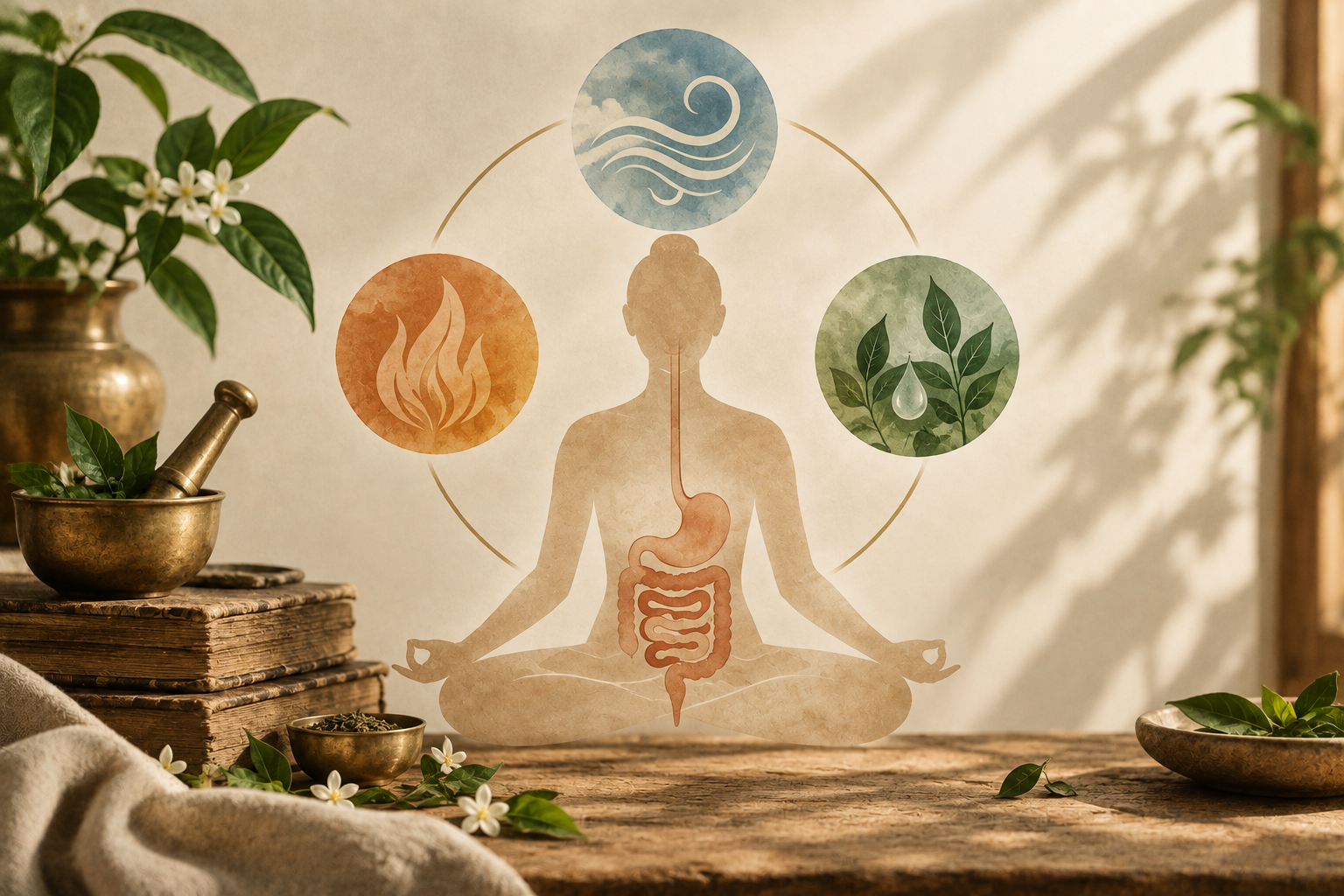
The healthcare industry today is trying to solve problems that are very different from what it was trying to solve fifty years ago.   Because of advancements in technology across every sector and equally rapid changes in lifestyle, the health challenges people face today are completely different from what they were decades ago.   People are now far more prone and susceptible to chronic diseases, lifestyle disorders, stress-related illnesses and metabolic conditions.   Healthcare is no longer just about treating disease after it appears. It is also about understanding why these conditions develop in the first place, who may be more susceptible to them, and how they can be prevented or managed in the long run.   In many ways, healthcare has moved from simply treating disease to understanding the person behind that disease.   This is where Ayurveda comes into the picture.   Although Ayurveda is over two thousand years old, it has always approached health differently. It has always believed in treating the root cause instead of waiting for disease to become the focus of treatment.   According to Ayurveda, our body constantly sends signals about its state of health, and disease is often the final stage of a long-term imbalance rather than the beginning of an illness.   Every individual is unique. Ayurveda had already described health as something very personal.   The basic principles of Ayurveda are built around Prakriti, Dosha and Agni.   The first step in Ayurveda, even before diagnosing or treating disease, is understanding a person’s Prakriti, or individual constitution.   It is believed that every individual has a unique constitution that affects how their body functions, how they respond to food, lifestyle and the environment, and even their tendency to develop certain health conditions.   Doshas, Vata, Pitta and Kapha, are the three functional principles that regulate movement, transformation and structure in the body. Every individual has all three Doshas, but in different proportions, making every person’s physiology unique.   Agni refers to the body’s metabolic fire. According to Ayurveda, healthy Agni is essential for digestion, nutrient absorption and overall health. When Agni becomes weak or disturbed, it can lead to the formation of Ama, or toxins, which accumulate in the body over time and eventually contribute to disease.   Through these concepts, Ayurveda tells us that even two people with the same condition may require completely different treatments because it is not only treating the disease, but also understanding the person, their constitution, what is happening inside their body, and what they may be more susceptible to.   This is why Ayurveda becomes even more relevant when we look at chronic diseases.   In Ayurveda, chronic diseases are known as Chirakari Vyadhi, which means conditions that develop gradually because of long-standing imbalances caused by improper diet, unhealthy lifestyle, disturbed metabolism and psychological factors.   Disease is not viewed as something that suddenly appears. It is understood as the result of imbalances that have been developing over time.   That is why Ayurveda places equal importance on both physical and mental health because it recognises both as contributing factors to a person’s overall well-being.   Treatment is therefore not limited to medicines alone. Depending on the individual’s condition, it may include dietary changes, lifestyle modifications, therapies, herbal medicines, yoga, meditation and Panchakarma.   In essence, Ayurveda looks at the body, the mind and the spirit as interconnected, rather than treating them separately.   If all these ideas sound familiar today, it is because modern healthcare is increasingly moving towards personalised medicine, preventive healthcare and long-term disease management.   Yet despite this comprehensive philosophy, Ayurveda is still viewed by many people as a system of herbs, detoxes and supplements.   How did that happen?   Part of the answer lies in history.   During the colonial period, when the British came to India, they brought Western medicine with them and favoured it within the colonial healthcare system. Ayurveda was gradually pushed to the margins. Ayurvedic practitioners were discredited, traditional institutions lost support, and Western medical education became the preferred system.   Even then, Ayurveda did not disappear completely. States like Kerala continued to preserve classical Ayurvedic knowledge, with generations of Vaidyas passing it down through practice and teaching.   But history is only one part of the story.   Over time, Ayurveda also became commercialised. Instead of being understood as a complete healthcare system, it gradually became associated with the products it prescribed.   Today, when most people hear the word Ayurveda, the first thing that comes to mind are herbs, turmeric, detoxes and supplements, rather than physician consultation, constitutional  diet, lifestyle and preventive healthcare.   Somewhere along the way, an entire healthcare system came to be viewed merely as a supplement industry.   That perception, however, is beginning to change.   The NITI Aayog–PwC report released earlier this week highlights both Ayurveda’s global reach and its biggest challenge. Ayurveda is now formally recognised in nearly 30 countries, and India has more than 355,000 trained Ayurvedic practitioners. Yet almost 95% of them never practise outside India.   The report also notes that Ayurvedic product exports have doubled from US$1.09 billion in 2014 to US$2.16 billion in 2023, reaching nearly 150 countries. However, most of these products are still classified internationally as dietary supplements rather than medicines because of regulatory gaps.   That single statistic explains a lot.   The world is buying Ayurveda as a supplement because Ayurveda has not yet fully entered the medicine category globally.   At the same time, research is also moving forward.   For years, Ayurvedic clinical trials have been criticised for methodological limitations such as small sample sizes, single-centre studies and inadequate reporting. A 2025 update to the international CONSORT reporting standards is now encouraging Ayurvedic clinical research to follow the same level of rigour expected in modern medical research.   New fields such as Ayurgenomics are exploring whether concepts like Prakriti have measurable biological and genetic correlations that may help explain why individuals respond differently… Continue reading Why Ayurveda Is More Relevant Than Ever in Modern Medicine

Pathya and Apathya in Ayurveda: The 8 Rules of Eating from Charaka Samhita

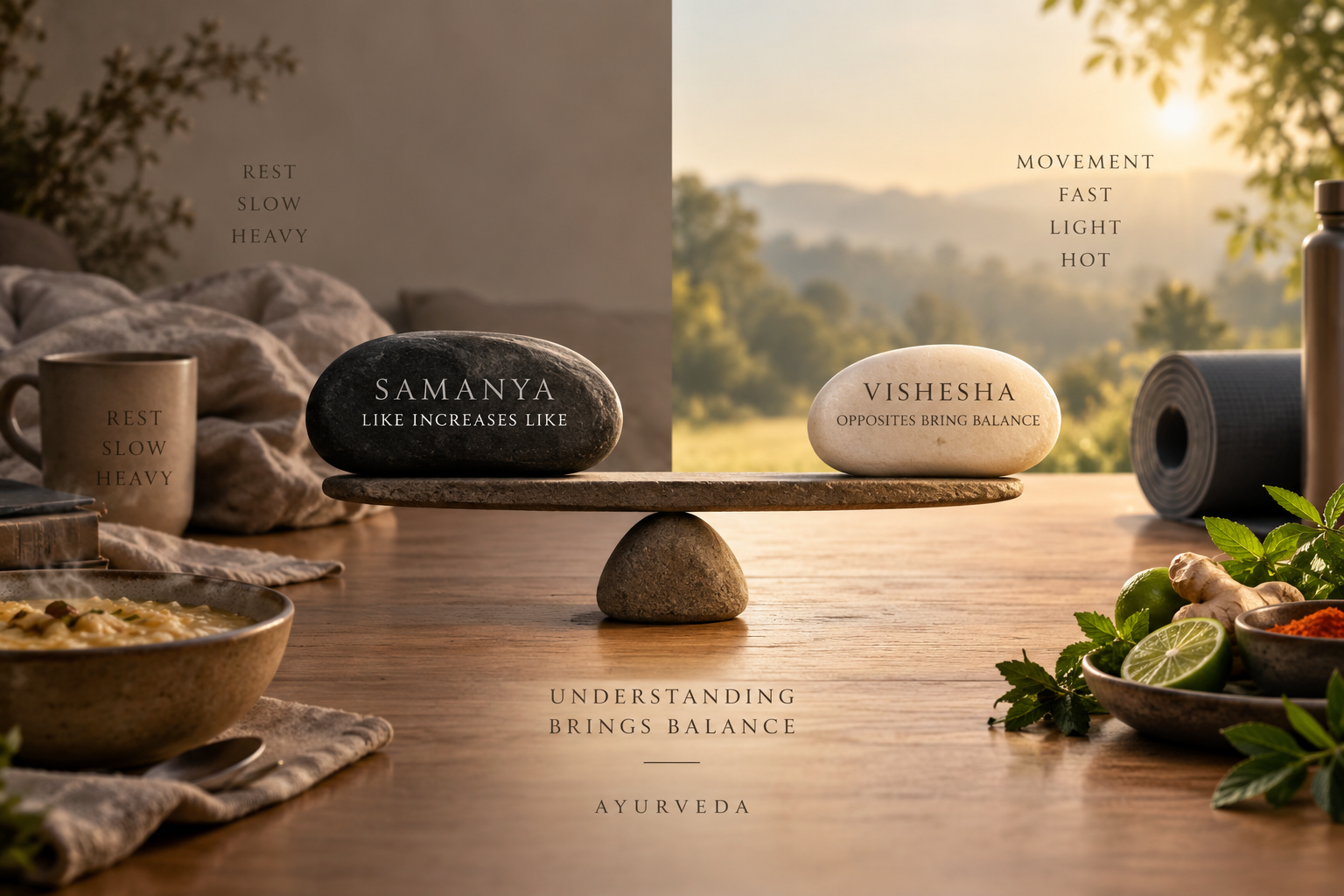
Ever wonder why the same food can heal you one day and throw your digestion off the next?   That is where the ideas of Pathya and Apathya in Ayurveda come in.   A food is not automatically good or bad forever. The same food can become healing or harmful depending on many factors.   It’s not just about what you eat, but how, when, where, and who you are when you eat it.   Charaka Samhita, one of the oldest texts of Ayurveda, gives us the eight rules of eating, Ahara Vidhi, to help us make wiser choices. These principles, though ancient, are still practical and very relevant to modern life.   What Does Pathya and Apathya Really Mean?     Pathya means something that supports balance, digestion, clarity, and strength. Apathya means something that disturbs digestion, creates toxins, or aggravates imbalance.   But Ayurveda never looks at the food being consumed alone. It looks at the whole picture:   How much you eat? When you eat? How the food is prepared? Where you live? Your body type and current imbalance. Your habits and adaptability.   For example, A cup of warm spiced milk at bedtime may be soothing and comforting. The same milk at 3:00 in the morning can feel heavy, sticky, and disturbing to digestion.     Key Factors That Decide Whether Food Becomes Pathya or Apathya   Matra: Quantity   Even good food becomes harmful when eaten in excess. Heavy foods like cheese, fried food, or sweets should be eaten in smaller amounts. Light foods can be eaten a little more freely.   Overeating weakens Agni (digestive fire), creates heaviness, and leads to toxin formation. Undereating can weaken the body and nervous system. Balance is everything.   Kala: Time   Time means time of day, season, and even life stage. Digestion is strongest around midday, that is why lunch should ideally be your main meal. Late-night heavy meals disturb sleep and digestion.   Season also matters. In hot summer, heavy oily food can aggravate heat while in cold dry weather, more nourishing and oily foods may be helpful.   Food that suits winter may not suit summer. Ayurveda constantly reminds us to stay in rhythm with nature.   Kriya or Samskara: How Food Is Prepared   The way you prepare food changes its effect on the body. For example: Raw food is generally heavier to digest. Cooked food becomes lighter and easier for Agni. Dry roasting wheat makes it more digestible than eating it plain or poorly cooked. Rice becomes more wholesome when aged, soaked, washed, and cooked properly. The excess starch is removed, making it lighter and less clogging. Milk combined incorrectly can become harmful. Fish and milk together are considered incompatible. Fruit and milk can also disturb digestion.   Even herbs change their qualities based on preparation, these are the five basic dosage forms as per Ayurveda: Svarasa is fresh juice, very potent and heavy. Kalka is paste, useful externally or for specific effects. Kadha is a reduced decoction and becomes light and penetrating. Phanta is like herbal tea made with hot water. Hima is a cold infusion, often used to cool Pitta. Coriander soaked overnight and drunk the next day is a classic example for acidity and heat.   Even the container can change the effect. Triphala paste kept in an iron vessel becomes beneficial for eye health due to the interaction with iron.   So, food is not just what you eat, it is also how it is transformed.   Desha or Bhumi: Place and Environment   Where you live strongly influences what your body needs.   Dry, windy, high-altitude places increase dryness and nervous system activity. People living there often need more oils, warmth, and grounding foods. Wet, cold places increase heaviness and congestion. Desserts and heavy dairy consumption may worsen imbalance there.   Local food also matters. Vegetables, grains, and even animals carry the qualities of the land. Climate influences your Doshas whether you realize it or not.   Travel can disturb the nervous system, movement increases Vata and restlessness. Many people notice mood shifts or digestive upset after flights.   Dosha and Current Imbalance   Your Prakriti (constitution) and Vikriti (current imbalance) influence what suits you. When Doshas are aggravated, even small mistakes can trigger symptoms. Food choices become more sensitive during illness or stress.   Vega Avastha: Stage of Disease or Imbalance   When imbalance is severe, even small triggers can create flare-ups. At those times, discipline around food becomes especially important.   Satmya: Adaptability and Habituation   This is a powerful and subtle concept. The body adapts to what it is repeatedly exposed to.   Some people tolerate spicy food well because of cultural habits and ancestry. Others feel burned by the same food.   There is Sharira Satmya, adaptability to healthy things. There is Oka Satmya, adaptability to unhealthy things.   The body can adapt even to abuse, someone may tolerate junk food without immediate symptoms, but deeper imbalance may slowly build. Interestingly, a person who reacts quickly to wrong food may actually be healthier than someone who feels nothing.   Ayurveda recommends slow, gentle changes rather than extreme detox or cold-turkey approaches. Sudden drastic change can disturb the nervous system and create instability.   In the end, Pathya and Apathya help us to build a more conscious and compassionate relationship with our bodies.   Instead of chasing trends, superfoods, or rigid dietary rules, we learn to observe, feel, and respond. The body is always giving feedback through digestion, energy, sleep, emotions, and clarity of mind. When we honour that feedback, food becomes a tool for stability rather than struggle.   Even simple shifts such as eating at regular times, choosing freshly prepared meals, avoiding incompatible combinations, and adjusting to seasons can quietly transform health over time. There is no need for perfection, Ayurveda values consistency, patience and gradual refinement.   The body adapts slowly and forcing change often creates more imbalance than healing. When… Continue reading Pathya and Apathya in Ayurveda: The 8 Rules of Eating from Charaka Samhita