

What Your Body Is Telling You Before You Ask It

There’s actually a lot we can tell about a person without asking them a single question.   If they are not feeling well, you can notice the way they look unusually pale, or that their voice sounds different, weaker than usual. Their eyes may look different, their skin may look dry, their lips may look chapped, or maybe they might just look exhausted.   These are just some observations.   Ayurveda actually has an entire section in the Charaka Samhita talking about this kind of observation called Indriya Sthana. The very first chapter is called Varṇasvarīyam Indriyam where Charaka describes how a physician should pay attention to changes in a person’s complexion, voice, and other signs when assessing an illness or the severity of a disease.   Because Ayurveda doesn’t look at the simple question of what disease this person is actually having. It instead goes a little deeper into asking what the body is telling us about the illness.   It is actually our body that gives out the first signs of illness before it becomes something more obvious. Disease isn’t always the beginning of the story. It is ultimately important to keep in check the signs that our body is giving away, always.   यच्चान्यदपि किंचिद्वर्णवैकृतमभूतपूर्वं सहसोत्पद्येतानिमित्तमेव हीयमानस्यातुरस्य शश्वत्, तदरिष्टमिति विद्यात्।   An abnormal change that was not present before, appears suddenly, and occurs in someone whose condition is already declining. Such a change, Charaka says, should be recognized as an ariṣṭa, an ominous prognostic sign.   Now, one of the most important ideas in the chapter is the distinction between Prakriti and Vikriti.   Prakriti refers to a person’s natural state, while Vikriti refers to the deviation from that state.   A person’s appearance may naturally vary depending upon their constitution, age, environment, and other individual characteristics. So we can’t just vaguely determine that one particular complexion may be healthy or unhealthy. We need to look a little deeper.   Charaka’s list of things to examine is very extensive. He not just mentions the complexion and voice, but also the smell, taste, touch, eyes, ears, nose, the mental state, and many more. The list goes on.   In fact, Charaka tells us that a person should be observed as a whole, because a single unusual sign doesn’t entirely tell the entire story.   A temporary change with an obvious explanation is different from a sudden change that appears without apparent reason in someone whose condition may already be deteriorating.   So generally, the whole idea is that observation becomes meaningful when it is placed in context.   The entire emphasis here is on the change that you witness within your body.   And I think this is where this idea becomes useful even outside the context of an Ayurvedic physician examining a patient.   Because most of us don’t necessarily pay attention to our own bodies or the signs they are giving out.   We know how we feel ultimately, whether our face is looking normal when we wake up, or if our skin is feeling as usual. We know our baseline.   But when you wake up feeling different we brush it off as, “Maybe I have not rested well.”   But you need to understand that the baseline is important.   Because if you suddenly feel unusually tired for several days, or maybe your appetite has changed, or there are other signs your body that are trying to tell you, then I think this is where we need to stop looking and start observing what is wrong.   Because from an Ayurvedic point of view, disease is never something that simply comes overnight. Long before it becomes serious, your body is already trying to protest against it through different signs.   None of those signs individually might feel like a big deal. And that is exactly why they get ignored.   But when you look at the whole picture, these small signs can slowly lead up to something more serious.   Disease isn’t the starting point, it is actually much closer to the end of the story that your body has already been trying to tell you for a while now.   We are often quick to notice when there is something wrong with our phones, our cars, or our laptops. We notice that the battery is draining faster than usual, or the screen is running slow, or the phone is lagging a bit.   But when it comes to our bodies, we often ignore the same signs.   And maybe it is because our lifestyle has changed. We sleep less, work more, eat at odd hours, and keep pushing ourselves through the day.   We think our body is adaptable, but it isn’t.   Your body is constantly giving you information. The question is whether you are paying enough attention to notice it.   You don’t have to become an expert at interpreting every single sign. You just need to know what your normal looks and feels like, so you can recognize when something starts to change.   If you want to understand your body a little more deeply, you can explore our courses on the Charaka Samhita and Ashtanga Hridayam, and learn how these texts approach the body, health, and the signs it gives us.
Panchamahabhuta Explained: The Five Elements in Ayurveda

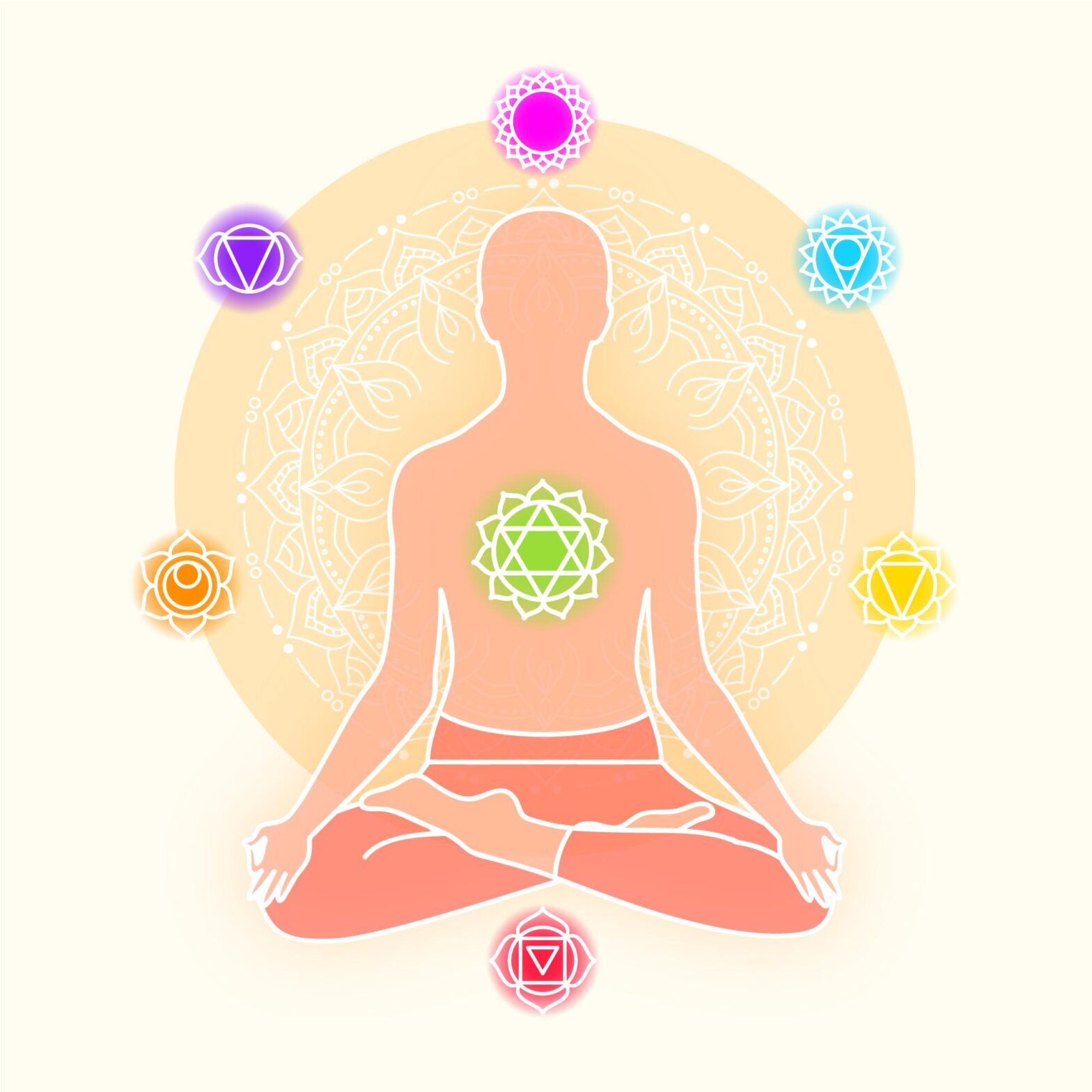
  Panchamahabhuta refers to the five fundamental elements: Akasha (space), Vayu (air), Agni (fire), Jala (water), and Prithvi (earth). Ayurveda teaches that the entire universe, including your body and mind, emerges from their unique combinations. They explain how your body, mind, and even your personality are shaped by nature itself. When you understand these elements, daily choices like food, routine, and emotions start to make much more sense.   Ayurveda says the human body is a small version of the cosmos, a microcosm of the macrocosm. That means whatever exists in nature also exists in you, in some proportion and combination. The Panchamahabhuta are not just physical substances, they are qualities like lightness, movement, heat, liquidity, and solidity that express in different ways.   The Five Elements in Simple Language   Akasha – Space   Akasha is the element of emptiness and openness. In the body, it shows up as all the hollow spaces like the mouth, nostrils, ears, chest cavity, blood vessels, cells and even the gaps between tissues. In the mind, Akasha gives you the feeling of expansion, freedom, and room to think. When space is balanced, you feel creative, spacious, and less “crowded” by thoughts and emotions. When it is disturbed or excessive, you may feel isolated, empty, or disconnected.     Vayu – Air     Vayu is movement. In your body, air governs all kinds of motion: breathing, blinking, heartbeat, circulation, the flow of thoughts, nerve impulses, and even the movement of food through your digestive tract.   In the mind, Vayu shows up as speed, creativity, imagination, quick understanding, and also anxiety when it is too strong. If air is balanced, you feel alert, light, active, and motivated. If it is aggravated, you may experience restlessness, overthinking, fear, dryness, bloating, or disturbed sleep.     Agni – Fire     Agni is the inner flame of digestion, metabolism, and warmth. It governs body temperature, vision, glow of the skin, and the power to transform food into energy and tissues. When Agni is balanced, you digest food well, feel energetic, and think clearly. When it is high, you may feel hot, irritable, angry, or experience acidity and inflammation; when low, you may feel dull, sluggish, confused, and have weak digestion.     Jala – Water     Jala is the element of fluidity and cohesion. In your body, it forms saliva, blood, lymph, plasma, digestive juices, synovial fluid in joints, and all the liquids that keep tissues moist and nourished. When water is balanced, you feel emotionally nourished, content, and stable, and your skin, joints, and tissues feel hydrated.     Prithvi – Earth     Prithvi is solidity and structure. In the body, it forms bones, muscles, skin, nails, teeth, and all the firm, dense tissues that give you shape and strength.   When Prithvi is balanced, you feel safe, steady, and rooted in life. When it is excessive, you may feel heavy, lazy, stuck in old patterns, and gain weight easily, when deficient, you may feel weak, scattered and insecure.     Your basic constitution (Prakriti) whether Vata, Pitta, Kapha, is also decided by the dominant combination of these elements at conception. That is why two people can eat the same food or live in the same climate and still react very differently.   Once you begin to observe your body and mind through the lens of space, air, fire, water, and earth, you start to recognize patterns like why certain foods suit you, why specific emotions repeat, and why your energy fluctuates at different times.   Every action you take either increases or balances certain elements within you. For example, eating dry, light, cold foods increases the qualities of Vayu (air). On the other hand, warm, cooked, moist foods increase Jala (water) and Prithvi (earth), bringing grounding and stability.   Similarly, spicy food, intense competition, exposure to heat, and excessive screen time increase Agni (fire). This can be useful if digestion or motivation is low, but excessive fire can quickly turn into irritation, inflammation, or burnout.   The elements are constantly shifting due to seasons, age, time of day, emotional states, and lifestyle. Your role is not to eliminate any element, but to maintain harmony among them.     Elements and the Mind     Thoughts running in your mind are Vayu. Clarity and perception arise from Akasha. Understanding, judgment, and ambition come from Agni. Emotional bonding, compassion, and attachment relate to Jala. Memory, stability, and patience are rooted in Prithvi.   When the mind feels scattered and anxious, air and space are dominant. If emotions feel heavy or clingy, water and earth may be excessive. When anger or frustration dominates, fire is strong. By recognizing this, Ayurveda allows you to respond wisely instead of reacting blindly.   The solution is not only positive thinking but also grounding practices: regular routines, warm meals and adequate rest.     Prakriti and Vikriti     Your Prakriti is your natural elemental blueprint, the unique balance you were born with. Vikriti is your current imbalance caused by lifestyle, stress, environment, or emotional patterns. Ayurveda focuses more on correcting Vikriti than changing Prakriti.   Instead of comparing your energy, productivity, or emotions to others, you begin honoring your own rhythm. This self-awareness itself becomes healing.   The ultimate aim of understanding Panchamahabhuta is not control, but harmony. Health is experienced when space allows freedom, air allows movement, fire allows transformation, water allows nourishment, and earth provides stability, without any one element overpowering the rest.   Ayurveda reminds us that disease begins when we live against our elemental nature and healing begins when we return to it. By listening to the body, observing the mind, and respecting nature balance becomes a lived experience rather than a concept.   When you start seeing yourself as a living expression of the five elements, life feels less confusing. Symptoms become signals, emotions become teachers, and daily choices turn into tools for alignment. In this way, Panchamahabhuta is not just… Continue reading Panchamahabhuta Explained: The Five Elements in Ayurveda