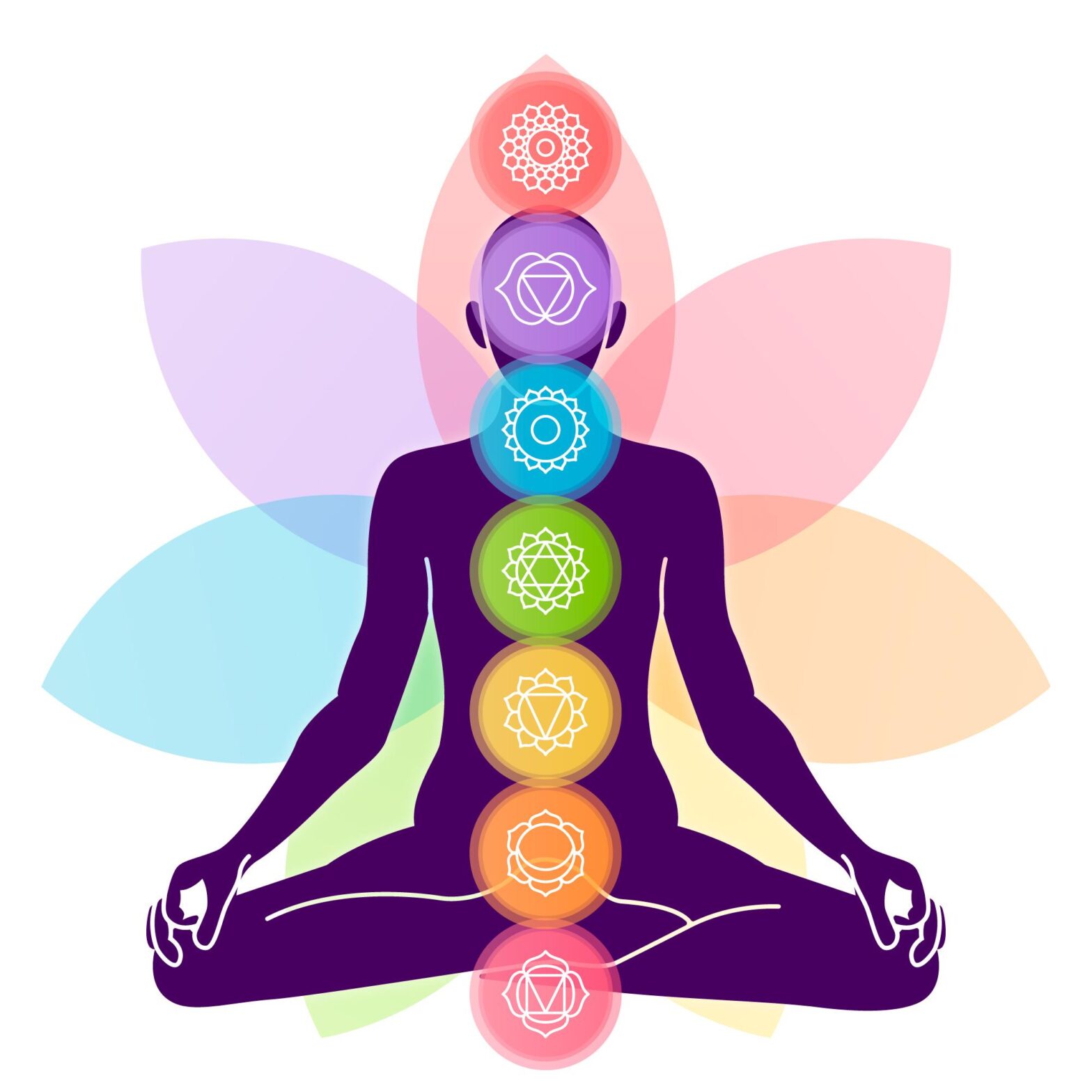

Atman in Ayurveda: Understanding the Self, Mind, and Consciousness

Today, let’s talk about a concept in Ayurveda that is present in everything the system talks about, but not everyone gets into it or knows about it because the whole concept itself is too abstract on the surface.   I am talking about Atman, which translates to the self, the soul, or simply the knower.   Now, before jumping into what Atman really means, let’s start with something which we are more familiar with in terms of Ayurveda, which is the Manas, the mind.   So, mind is essentially the part of you that reacts. It takes in the stimulus and turns it into a response. It distinguishes between likes and dislikes. For example, if something you eat tastes good, you want to eat more of it, and if you experience pain, you pull away. You don’t want to experience it again.   This is what the Manas does.   However, Atman is something else entirely. It is a part of you that is aware that all of this is happening. It’s not the reaction itself, but it’s the one noticing the reaction.   While Manas distinguishes experiences into pain and pleasure, Atman is simply aware of the inside and outside, it is the very awareness of this experience.   Here’s a simple way of how I think about it.   When you’re feeling unwell, usually the food that you eat every time, or the food that you like, you don’t want to have it and it might even taste unpleasant to you.   But nothing about the food has changed. What changed is how it is being received by your body.   This shift, the change between you and your mind, is the job of Atman. It is adjusting your experiences based on what is happening inside you.   Now, Atman cannot itself be described the way we describe everything else in the body, because it has no color, no shape, no texture. Its presence is not known entirely or directly.   But even if you don’t see Atman, you infer it. How differently a person can respond to the same thing, and how something within them prompts them to respond in that particular way.   The whole Atman can also be understood through this perspective, from the whole idea of possession, how it naturally comes to us when we talk about our things.   When we say, “I am tired,” there is still this strange distinction between the one who is experiencing tiredness and the tiredness itself.   This distance implied between someone who possesses and something that is being possessed, is where the idea of Atman comes from.   All the parts of your body are what is possessed by you, the person. So, despite any changes or aging or anything, the one that is staying constant is me, my. The idea of the owner is what is Atma.   And this whole distinction isn’t just philosophical. There’s a real practical framework of diagnosis around it too.   In Ayurveda, illness comes in three severities. One is ordinary, one serious, and one that is heading to a very fatal outcome.   And the way you tell these apart isn’t just purely because of external signs, but how clearly the person can experience their own feeling.   How clearly can they experience things like their preference, discomfort, desire, how they feel, and if all of this is intact in a coherent way.   Because once illness starts to get serious, all of this starts to blur. The person struggles to clearly experience. Memory becomes hazy, and the coordination too falters.   And in most serious cases, the patients may not be able to experience anything at all. They might feel numb. They can’t tell you how they feel because the whole response, the whole connection between your Atma, Manas, and the senses has weakened and there’s only basic signs of life that’s left.   This is such a different way of thinking about diagnosis compared to how we actually imagine ancient medicine, which is reduced to something that is purely external, physical observation.   In Ayurveda, the presence of your mind and the clarity of your awareness itself is one of the most important ways to diagnose what is wrong inside you, and it is sometimes arguably more important than any physical sign.   Now, the takeaway from all of this is very simple, despite how abstract Atman sounds.   And before even Ayurveda gets into the details of the body, bones, tissues, or organs, it is first establishing that awareness that is present inside every one of us, and everything else is built on top of that basic confirmation.   Health is never only about visible, measurable parts of the body. It is always, at its core, something that is changing inside you.   And I think this is where Atman becomes much less abstract than it initially sounds.   Because when we hear words like soul or self, it can immediately feel like we’re entering a completely philosophical conversation, something very distant from the body and from medicine. But Ayurveda doesn’t really separate these things in the way that we might expect. The person who is experiencing the illness is not just the body that is carrying the illness.   There is the body, there are the senses, there is the mind, and there is this awareness that experiences all of it.   If ideas like this interest you, you can check out our courses on Charaka Samhita and Ashtanga Hridayam which talk in depth about how Ayurveda understands the self, the mind, and the body as one connected system and much more.


Satva, Rajas and Tamas: The Three Forces Behind How We Think and Act

When we look at something that already exists, we tend to focus on what we can see. To us, in our mind, a book is a book, a building is a building and a person is a person.   But let us go a little deeper, what made that thing come into existence in the first place? What happened before we could see the finished form? What allowed an idea to become reality?   According to the Ayurvedic understanding of nature, three fundamental qualities are involved in this process: Satva, Rajas and Tamas.   These are not substances in the ordinary physical sense. They are the principles that influence how things are conceived, developed, organised and eventually brought into a definite form.   They also influence how we think, respond to situations and behave.   From an idea to something real   Think about something as simple as a printed page.   Before the page existed, someone first had an idea. They imagined that information could be communicated through a page.   Then came the practical process where the paper had to be selected, its size had to be decided, the text had to be organized and the printing process had to be worked out.   Only then could the page actually be produced.   This can be understood through the three qualities.   Satva is associated with clarity, awareness and the emergence of an idea.   Rajas is associated with activity, movement and the effort required to bring that idea into action.   Tamas provides stability, limitation and resistance to further alternatives. It allows something to settle into a definite form.   All three have a role.   An idea without action remains an idea while an action without direction becomes scattered and without some form of limitation or stability, nothing is ever finalised.   This principle can be observed everywhere, from something as simple as making a page to something as complex as the development of a living being.   Satva, Rajas and Tamas in the mind   Ayurveda extends this idea beyond the physical world and applies it to Manas, or the mind.   Every person has Satva, Rajas and Tamas in relative dominance.   This explains us why two people can experience exactly the same situation but respond to it completely differently.   This is where understanding the predominance of Satva, Rajas and Tamas becomes important.   The Satva-dominant mind   A person in whom Satva is more prominent tends to be curious, observant and interested in understanding things.   They want to know why something happened.   If they fall ill, they may want to understand the cause, the relationship between their habits and their symptoms, and what they can do to improve their situation.   They may also be better able to remain composed during difficult circumstances. Instead of immediately reacting, they tend to step back, understand what is happening and work towards a solution.   This does not mean that a Satva-dominant person does not experience pain, fear or distress. Rather, their ability to understand and process the situation can influence how they respond to it.   The Rajas-dominant mind   Rajas is associated with movement, activity and constant engagement.   A Rajas-dominant person may be more expressive about both pleasure and discomfort. They may actively seek experiences, stimulation and reassurance.   If something happens to them, they may not necessarily be interested in understanding the deeper cause immediately. What they often need first is clear guidance and reassurance.   Once they feel confident about the course of action, they may be able to move forward.   Their mind is active and constantly responding to what is happening around them.   The Tamas-dominant mind   Tamas is associated with resistance, confusion and difficulty in moving forward.   A Tamas-dominant person may struggle to understand or accept what is happening around them. When they are facing a difficult situation, fear and apprehension may become stronger.   They may repeatedly question advice, seek opinions from several people and still find it difficult to make a decision.   Even with the outcome seeming clear, they may find it difficult to take a first step.   This is also why the same advice might not help every person, as they might not react to it in a similar way.   Why this matters in Ayurveda   For Ayurveda, treating a person is not limited to identifying physical symptoms.   The way a person perceives, expresses and responds to those symptoms also matters.   Let us take an example, someone may experience severe pain but barely express it while there is another person who may express relatively mild pain very dramatically. Someone else may not even understand that their symptoms require attention.   Now, the individual’s mental state might affect the way they communicate or show signs to understand about their condition.   If a practitioner judges the severity of a condition only by outward expression, there is a possibility of misunderstanding the situation.   Ayurveda’s understanding of Satva, Rajas and Tamas also highlights something that is often overlooked in modern conversations about health.   Two people can have similar physical circumstances but very different experiences of illness. Our perception, emotional response, understanding and behaviour can influence how we deal with what is happening to us.   This does not mean that mental qualities magically determine whether someone will recover. Nor does it mean that a person’s illness is simply a result of their mindset.   Rather, the Ayurvedic framework recognises that the mind is part of the individual’s overall experience and therefore deserves attention during care.   Three qualities, one constantly changing mind   Satva, Rajas and Tamas should not be understood as three permanent personality categories.   They are present in everyone, in different proportions, and can change depending on circumstances.   A person may be calm and thoughtful in one situation, highly restless in another and completely withdrawn in a third.   The important… Continue reading Satva, Rajas and Tamas: The Three Forces Behind How We Think and Act

Your Moods Have a Pattern Too, Here’s What Ayurveda Says

Ever had one of those days where you feel completely calm and clear-headed, like nothing can shake you?   And then there are days where you feel restless, edgy, almost itching to argue with someone over nothing?   And then, of course, there are the days where you don’t want to do anything at all. Not work, not talk, not even get off the couch.   If you’ve felt all three of these at different points in your life, you already understand the Trigunas, even if you’ve never heard the word before.   We talk a lot about Doshas when it comes to Ayurveda, Vata, Pitta, Kapha. But those three govern the body. What most people don’t know is that Ayurveda had a separate set of three for the mind. These are called the Trigunas: Sattva, Rajas and Tamas.   And honestly, I think this is one of the more underrated ideas in the whole system.   Let’s break it down simply.   Sattva is that calm, clear state of mind. Sharp focus, a settled heart, the kind of headspace where good decisions just come naturally.   Rajas is the restless one, driven, ambitious, a little impatient, always chasing the next thing.   Tamas is the heavy one, sluggish, foggy, the mental version of hitting snooze five times in a row.   Here’s the part I find genuinely interesting. Ayurveda didn’t treat these as personality types you’re stuck with. Unlike your Dosha, which is largely fixed from birth, your Guna shifts, sometimes within the same day.   You could wake up Sattvic, turn Rajasic by 3pm after back-to-back meetings, and end the night fully Tamasic on the couch, scrolling your phone with zero motivation to move. Same person, three different mental states, all in twelve hours.   That alone tells you something important. Ayurveda wasn’t describing who you are, it was describing where your mind happens to be, right now.   And that’s a much more useful way to think about your own moods, isn’t it?   We tend to label ourselves. “I’m just a lazy person.” “I’m always anxious.” “I’m just wired this way.”   Ayurveda would gently push back on that. It would say, you’re not permanently anything.   This is honestly a bit of a relief when you sit with it.   Ayurveda also didn’t leave you to just observe your Guna. It gave you actual levers to pull.   Food, for one.   Ever notice how a heavy, greasy meal makes you want to do absolutely nothing afterward? That’s Tamas showing up through your plate.   Ayurveda classified food the same way it classified minds: Sattvic, Rajasic and Tamasic, and it genuinely believed what you eat nudges your mental state, not just your waistline.   Sleep, company, the media you consume, even the pace of your day. Ayurveda considered all of it capable of tilting you toward one Guna or another.   This is where it gets a little uncomfortable, in a good way.   Because it means your 2am doom-scrolling isn’t just a habit. It’s actively feeding a Tamasic state.   And that overpacked schedule you’re proud of might be keeping you stuck in Rajas far more than you realise, wired, busy, but never actually at peace.   Ayurveda wasn’t saying Rajas or Tamas are bad, by the way.   You need Rajas to get out of bed and get things done. You need a bit of Tamas to actually rest. The goal was never to eliminate them. It was to notice which one you’re leaning on too heavily, and gently steer yourself back toward Sattva, the state Ayurveda considered closest to genuine wellbeing.   So why doesn’t this concept come up as often as Doshas do?   I think it’s because Doshas feel more “medical.” They explain digestion, body type, physical symptoms, things that are easy to point to.   Gunas are quieter. They live in your mood, your focus, your patience, things we’re used to blaming on stress or personality instead of actually examining.   But if you ask me, understanding your Guna day to day might be more useful than knowing your Dosha.   Because most of us aren’t struggling with our body type. We’re struggling with why we feel foggy, restless or completely unmotivated, and not knowing there was ever a name for it, or a way back to balance.   If ideas like this interest you, our guided courses on Charaka Samhita and Ashtanga Hridayam explore concepts like the Trigunas straight from the original texts.

Ayurveda Named the Reason We Keep Doing Things We Know Are Bad For Us

Have you ever eaten an extra serving despite being full?   Have you ever stayed up scrolling through your phone and lost track of time?   Have you ever decided to be a little lazy and skip your workout?   Admit it, we’ve all at least done any one of these once in our lives.   And here’s the thing, none of us do this because we don’t know better. We know exactly what we’re doing. We just do it anyway.   Ayurveda had a word for this, thousands of years before behavioural science made a whole field out of it. It’s called Pragyaparadha.   And according to Ayurveda, this one idea sits behind almost every disease we end up bringing on ourselves.   The word comes from two Sanskrit roots. Pragya, meaning wisdom or intellect. Aparadha, meaning offence or crime. Put the two together and Pragyaparadha literally means an offence against wisdom.   Not a lack of wisdom but an offence against it.   That difference matters a lot. Ayurveda wasn’t talking about ignorance here, it was talking about something far more familiar and honestly, a little harder to admit to. Knowing exactly what’s good for you, and choosing the opposite anyway.   Ayurvedic texts describe Pragyaparadha as actions of the body, mind or speech, done despite knowing better. Eating something you already know doesn’t suit you. Brushing off clear signs that you’re exhausted. Saying something in anger that you know you’ll regret the second it leaves your mouth. None of this needs ignorance. It just needs one moment where awareness loses to impulse.   Ayurveda believed that this pattern, repeated enough times, becomes one of the root causes of disease itself.   This is a very different starting point from how most of us think about getting sick.   When something goes wrong with our health, we usually look outward first. We look for the virus, the deficiency, the bad gene, the environmental trigger, the food we ate, or sometimes, simply, bad luck. And of course, these things matter.   Ayurveda never claimed that everything that happens to the body is a consequence of personal choices. But it also asked us to look somewhere else, somewhere most of us are much less comfortable looking: at the small, repeated choices we make against our own better judgement.   Because sometimes, we already know.   We know we are tired, but we stay up anyway. We know we are full, but we take another serving because it tastes good. We know that certain foods leave us feeling terrible, yet somehow, they keep finding their way back onto our plates. We know we need to move, rest, slow down, or stop stressing about something, and still find ourselves doing the exact opposite.   We think subconsciously that stayiny up one late night is not going to affect our health, one indulgent meal is not going to make us sick. But we forget that we keep repeating these things quietly, so much so that you’ll realise it stopped becoming a choice and started becoming a pattern.   The doshas getting disturbed again and again by the same habits. The body constantly having to compensate for the same disruptions. Small imbalances being ignored because they are still small enough to live with. Until, eventually, the body cannot keep correcting itself quite as easily as it once did, and disease gets the room it needs to take hold.   And honestly, this sounds a lot like something we are already talking about today.   There is an entire area of behavioural science concerned with the distance between what we know and what we actually do. It is often described as the knowledge-behaviour gap, and you do not need a psychology degree to recognise it in your own life.   We are not exactly short on information.   And yet, somehow, knowing all of this does not guarantee that we will act on it.   We can have all the information in the world and still find ourselves repeating the same habits we promised ourselves we were going to change.   And this is where I think the concept gets particularly interesting, because Pragyaparadha is not really about not knowing better. It is about knowing better and then, for whatever reason, choosing otherwise.   There is something almost painfully human about that.   And here is what I particularly like about the Ayurvedic approach to this. It does not seem interested in turning that observation into another reason for us to feel terrible about ourselves.   There is already enough guilt attached to health. Every day, we are given another reason to feel like we are failing at taking care of ourselves.   Pragyaparadha gives us a slightly different way of looking at the problem. Instead of asking, What is wrong with me that I keep doing this?, perhaps the more useful question is, Why did I act against what I already knew?   That question takes us somewhere much more interesting.   Ayurveda places importance on cultivating Sattva, a state associated with clarity, steadiness and a balanced mind. The answer, therefore, was not simply to keep collecting more knowledge. It was to develop the mental clarity required to actually live according to the knowledge you already have.   Because there is a huge difference between knowing something and being able to act on it.   And this is also why practices like Dinacharya, the Ayurvedic approach to daily routine, make more sense when viewed through this lens. They were not simply a collection of rituals designed to give you another checklist to complete every morning. At their best, routines create regularity, and regularity gives you the opportunity to notice yourself.   You start noticing when you are actually hungry instead of eating because the clock says it is lunchtime. You notice when your sleep is beginning to deteriorate. You notice when your digestion feels different, when your energy is lower than usual, when… Continue reading Ayurveda Named the Reason We Keep Doing Things We Know Are Bad For Us