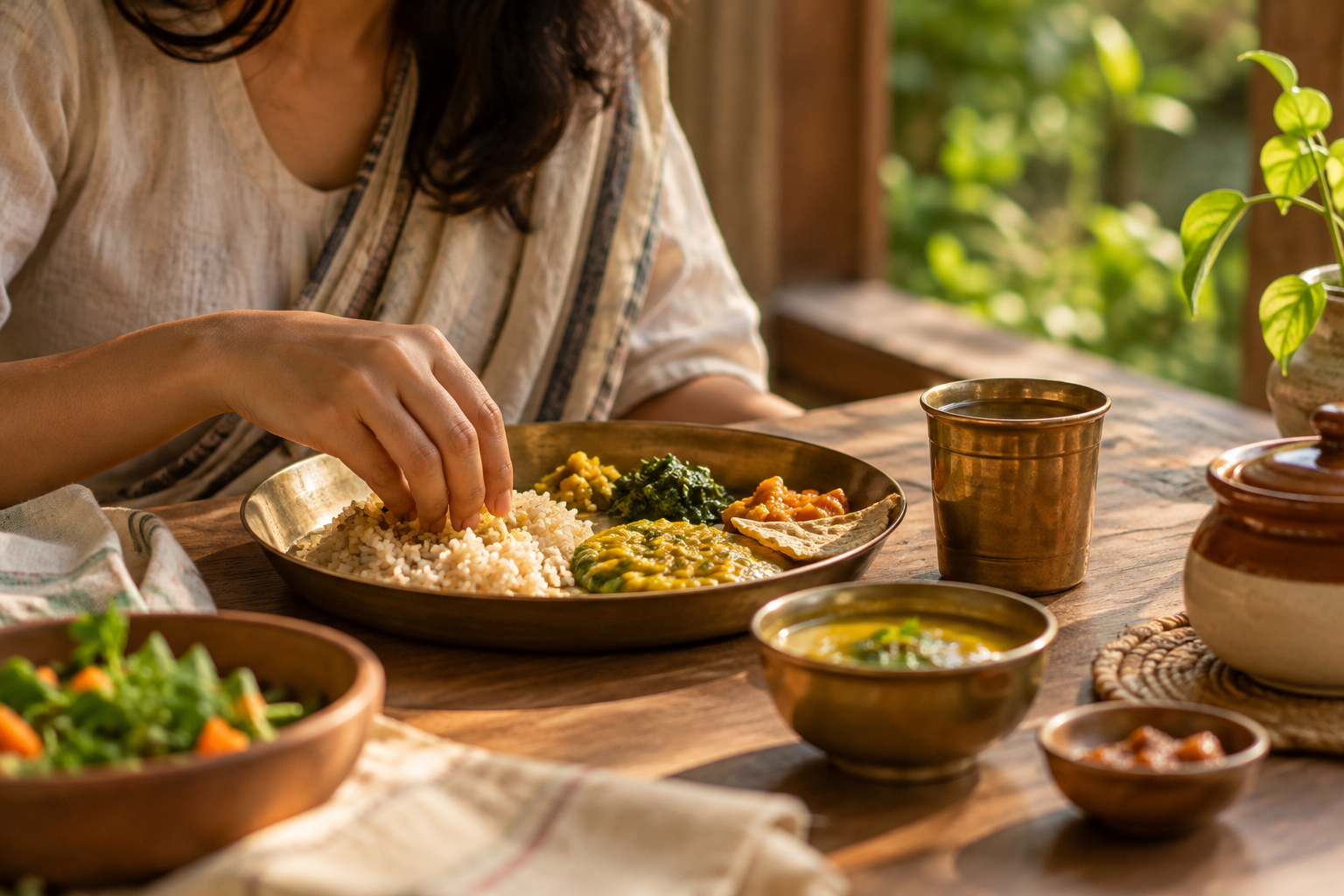
We have all had those days when we eat a meal and, instead of feeling satisfied and comfortable, we feel as though the food is just sitting there, your stomach feels heavy, and even hours later, we do not feel quite right. We usually dismiss these experiences as indigestion, blame the meal we ate or promise ourselves that we will eat lighter the next day. But Ayurveda has a particular way of looking at certain kinds of digestive disturbances, especially those in which food and the processes involved in digestion appear to become stagnant. One such condition is called Alasaka. The concept of Alasaka is discussed in both the Charaka Samhita and the Ashtanga Hridaya. The word itself is associated with a state of inactivity or stagnation. In the Ayurvedic description, the condition develops when food is not properly digested and the doshas involved in digestion become disturbed, rather than moving and functioning as they should. One of the explanations given in the Ashtanga Hridaya describes food that neither moves upwards nor downwards and remains undigested in the stomach. This is a useful starting point for understanding the condition because it tells us that Alasaka is not simply about eating too much or experiencing ordinary fullness after a meal. It describes a more disturbed state of digestion within the Ayurvedic framework. To understand this idea, we need to look at another important Ayurvedic concept: Agni. Agni is commonly described as the body’s digestive fire, although its meaning within Ayurveda extends beyond the literal process of digestion. It represents the capacity to process and transform what we consume. When Agni is functioning appropriately, food is understood to be digested and assimilated in a way that supports the body’s needs. When this process becomes impaired, Ayurveda describes the formation or accumulation of Ama, a concept associated with incompletely processed material. Ama appears repeatedly in classical Ayurvedic discussions of digestive disturbances, and it plays an important role in the explanation of Alasaka. The way we eat becomes relevant here. Alasaka in association with excessive food intake can cause weakened digestive capacity and the aggravation of Kapha and Vata. It also mentions certain qualities of food, including heaviness, dryness, coldness and difficulty of processing within the Ayurvedic framework. When food is consumed in quantities that the digestive system cannot comfortably process, rather than progressing through digestion normally, they remain there, contributing to the condition described as Alasaka. There is an interesting distinction here between eating a heavy meal and experiencing a more serious digestive disturbance. We are familiar with the feeling of being uncomfortably full after a large lunch or dinner. Perhaps we ate too quickly, had more than we needed or chose a meal that did not agree with us. That experience alone does not mean that we have Alasaka. It is a specific pathological state within Ayurveda, and it should not be used as a label for every episode of bloating or indigestion. Still, the text’s emphasis on digestive capacity raises a question worth considering: are we paying attention to how much we eat, how we feel after eating and whether persistent discomfort needs further investigation? Within the Ayurvedic explanation, suppressing the natural bodily urges, particularly passing urine and stools and releasing intestinal gas urges is considered one of the factors that can contribute to the disturbance. The idea is connected to the importance Ayurveda places on the normal movement of Vata, which is associated with movement and transport within the body. When that movement is disturbed, the text describes a situation in which the doshas and food become obstructed rather than progressing through their usual pathways. This is where the description of Alasaka becomes more specific. The movement of food and the doshas becomes obstructed, and the usual routes through which the body eliminates material are affected. Symptoms described include abdominal distension or a sense of fullness in the abdomen, discomfort, thirst, belching and constipation. The reference also mentions a lack of the usual vomiting or diarrhoea that might otherwise be expected in some digestive disturbances involving Ama. There also exists a more severe state known as DandAlasaka. The word danda refers to a staff or pillar, and the name is used to describe a state in which the body becomes stiff, as though it were rigid like a pillar. This is associated with a severe aggravation of the doshas and obstruction affecting channels throughout the body. It is presented as a serious and acute condition. What makes this chapter interesting is the attention it gives to the relationship between food, digestive capacity and the normal movement of the body. We often discuss digestion in very simple terms: what we ate, whether it was healthy and whether it gave us enough nutrients. But digestion is a process, and the experience of eating involves much more than the food itself. The amount we consume, our individual tolerance, the way we eat and the condition of our digestive system all influence how we feel afterwards. Ayurveda places these questions within its own framework of Agni, Ama and the doshas. Perhaps the most useful takeaway is not to become anxious about every heavy meal or occasional bout of bloating. It is to become more attentive to patterns. Does discomfort happen repeatedly? Are there foods that consistently seem to aggravate it? Are we eating past the point of comfortable fullness? Are we ignoring symptoms that deserve attention because we assume they are simply part of everyday life? These observations cannot diagnose a disease, but they can help us recognise when we need to change a habit or seek professional advice. Alasaka represents a disturbance in which food and the doshas become stagnant and digestion is significantly affected. It is a more specific concept than the everyday feeling of being too full after a meal. But the broader conversation around digestion gives us… Continue reading Understanding Alasaka in Ayurveda