
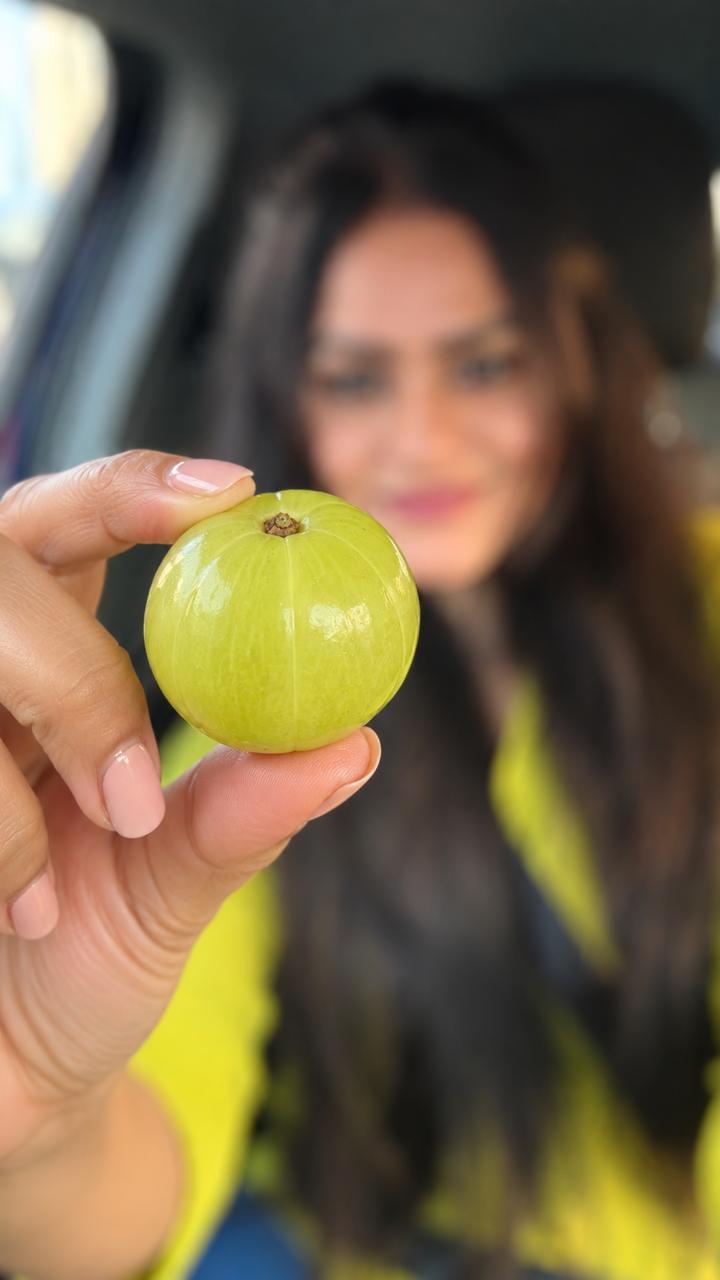
Amla: Everything I Tell My Patients About How To Have It

Someone asked me the other day if I like matcha.   No. I have something better. And we Indians have had it forever.   It is amla. Our humble Indian gooseberry.   Now everybody will tell you amla is good. Amla is good, amla is good. But nobody is telling you how much to have, when to have it, in what form, and what to do if you cannot get it fresh.   So that is what I am going to tell you here. Exactly what I tell my patients.     First, what amla actually is in Ayurveda     In Charaka Samhita, amalaki is placed in the vayasthapana mahakashaya. That is the group of ten drugs classified as age sustaining.   Age sustaining. Not anti-ageing. There is a difference, and Ayurveda made that difference two thousand years back.   Now here is what most people get wrong. Amla tastes sour. So everybody assumes it is heating.   It is not.   Amalaki is sheeta virya. Cold in potency. And madhura vipaka. Sweet after digestion. This is what Bhavaprakasha Nighantu tells us.   So, both of these are going against what your tongue is telling you. Your tongue says sour, your mind says heating. But that is not what is happening inside. And this is exactly why amla calms pitta, when almost every other sour thing will increase it.   And that sweetness you feel in your mouth after eating amla, especially when you drink water on top of it? That is not vipaka.   Vipaka is happening hours later, in your tissues. People mix up these two all the time.     The best form is the fruit. Always.     One amla a day itself is great. That is the whole thing.   If fresh amla is naturally available to you, please have it like that. Do not overthink it. Do not go looking for a supplement. The fruit is the best form and nothing beats it.   And amla comes in the cold season. That is not by accident. Nature is giving it to you exactly when you need it, so that is when you should be having it.   So, when it is in season, eat it. Every day. Your body knows what to do with it.     If you cannot get fresh amla, then powder     Now most of you reading this are not in India. I know. Half of my patients are in places where amla is only available as a powder in a packet.   That is okay. Powder works. But please listen to me about the quality.   Get organic. Get good quality. And I mean really check.   Because we have no idea where these people are drying it. We have no idea where they are powdering it. We have no idea what it went through before it came into that nice looking jar.   So, if you are not sure about the source, better to avoid it. Really. Do not have it at all rather than having something you cannot trace.   But if you are sure, if you know where it was dried and how it was powdered and how authentic it is, then go ahead. Find the best quality you can.   I know I am dragging on too much about quality. I know. But this is more important than the dose, more important than the timing, more important than anything else in this whole article. A bad powder is not a weaker amla. It is a completely different thing.   How much: one teaspoon of powder mixed into your food. That is the easiest way and the safest way, and this is what I tell most of my patients.     Amla juice, please read this part carefully     You can have amla as a juice. But as a shot. Not as a glass.   Never drink a full glass of amla juice. Please. Do not take ten, fifteen amlas and make a big juice out of it and sit and drink it. Do not do it.   Instead do this:   Crush two or three amlas Add a little water Add pepper, turmeric, dry ginger A little Himalayan pink salt If you do not like the salt, add mishri or rock sugar instead   And have it like a shot. Not more than 25 ml.   That is it. Every day in the morning. That is enough.     Timing and Anupana     Morning is good. Have your shot in the morning.   If you have a very strong acidic stomach, then have it after food. It works just as well and it is gentler on you.   Anupana for amla is always water. Keep it simple.   And there is one more way which I love, and most people have not even heard of it. Take amla powder, mix it with a little ghee, and have it with the first morsels of rice at lunch time.   Beautiful way to take it. You can do the same at dinner also.     Now, amla does not cause acidity     I have to correct this one, because I am hearing it constantly.   Amla does not cause acidity. It cannot. Once it goes into your stomach it cools down and it turns into sweet taste. It is not going to heat you and it is not going to burn you.   It actually reduces acidity.   Now if your stomach lining is already raw and inflamed, a concentrated shot on an empty stomach can still feel like too much for you. But that is the concentration doing it, not the amla. And that is exactly why I said have it after food.   And see the irony here. People think curd is cooling. It is not. Classically dadhi is ushna virya with amla vipaka, and it is abhishyandi, it blocks your channels. It is doing almost the opposite of… Continue reading Amla: Everything I Tell My Patients About How To Have It
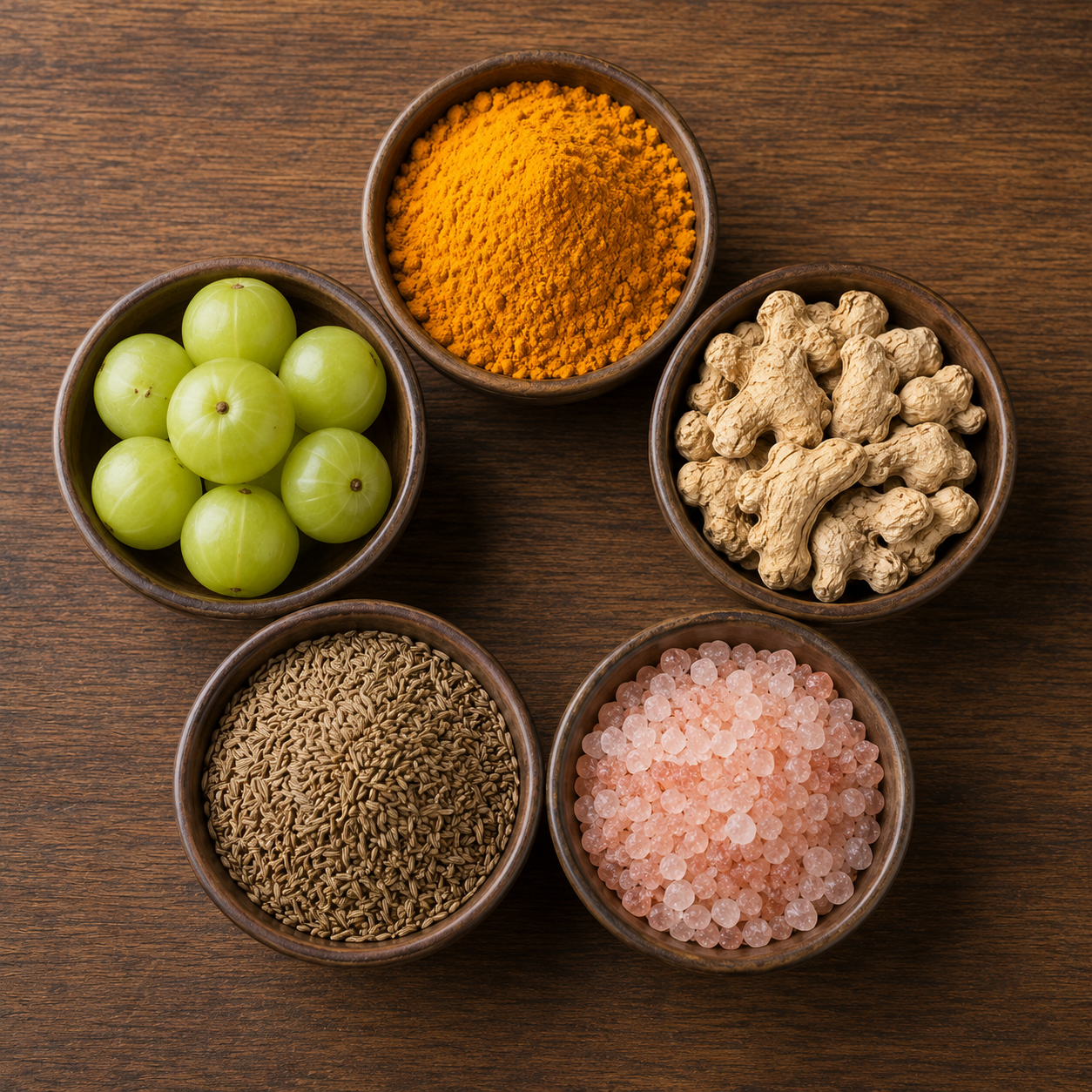
5 Natural Supplements You Should Add To Your Diet Every Single Day

1. Turmeric   The number one supplement that you need in your life is nothing but turmeric.     You may have heard people saying, especially people in the west, talking about having turmeric in the form of teas, in the form of turmeric lattes, or sometimes even in the form of supplements.   You don’t need all of these pills and supplements to get your adequate amount of turmeric to help with all the benefits that it is going to give us.   Our traditional Indian way of cooking where we add the good fats and the spices, along with that we add turmeric, that is the most bioavailable form of turmeric and that helps with better digestion, better absorption, and better assimilation of all the good things that turmeric has to give us.   Now let us understand what turmeric does in our body. For this we have to understand what the properties of turmeric are as per Ayurveda.   Ayurveda says every food has certain properties, like there is a specific taste to a particular food item, a particular post-digestive taste.   Ayurveda also talks about a property called Prabhava or special characteristic.   One special characteristic or Prabhava of turmeric is that it is antimicrobial and anti-inflammatory.   For example, somebody is having a viral condition like chickenpox, we ask our patients to take shower with water boiled with turmeric because it is antimicrobial.   When it comes to food poisoning, if you consume more of turmeric paste throughout the day, you are helping your body to reduce inflammation.   Even if you have acne, you can use turmeric boiled water to wash your face because of its antimicrobial properties, you don’t need any antibacterial face washes.   All bitter tasting herbs are good for your liver. So, if you want to detoxify your liver, don’t go for supplements and medicines that detoxify your liver. Instead, just add a little bit more turmeric to your diet.   Adding turmeric to your dishes can help you improve your digestive fire, reduce gas, and bloating.   If you have children at home who constantly get bronchitis, cough, cold, fever, etc., turmeric helps you to improve their immunity. Make sure that you add turmeric to your cooking every day.   Even in traditional Indian cooking, we have so many dishes like haldi chawal, haldi doodh, haldi ka achar, turmeric lettuce soup. All of these are very good for improving your digestive system.     2. Dry Ginger     Number two is dry ginger.     I am talking about dry ginger and not wet ginger. Wet ginger is extremely heating, extremely pitta increasing. Dry ginger is also warm; it is much less heating compared to wet ginger.   When you buy ginger, make sure that you leave it outside and don’t keep it in the fridge so that it gets a little dry and then you can use it for cooking.   Just like how we said turmeric was anti-microbial and anti-inflammatory because of its prabhava, ginger also has a prabhava.   And what is that?   Dry ginger is anti-emetic. That means if somebody feels like vomiting, dry ginger is what we give.   It’s also good for improving digestion, absorption, and assimilation of food. It helps in reducing gas and bloating. It helps in subsiding Vata gently.   Just like how I told you about turmeric, don’t take dry ginger as a pill or a supplement. Instead, make sure that you have dry ginger in a cooked form along with other spices and good fats.   I personally add dry ginger every day to my cooking. However, one special indulgence that I really love doing is to have dry ginger wali masala chai.   After heavy meals, if for example, you had a biryani and you’re now feeling very heavy, very bloated, or you have this guilt feeling that you shouldn’t have had it because you can’t even think of the digestive problems that may come, then have dry ginger powder mixed with a little bit of rock salt, add a little bit of water and consume it.   That will help you subside the gas and bloating. It will also help you improve the digestion.   And if you’re somebody who feels constipation, you can have a glass of dry ginger water in the morning.   Make sure that you add two glasses of water, add one piece of dry ginger and reduce to one glass to get the maximum essence of dry ginger. And drink this water. This can ease your bowel movements.     3. Amla   This one is my favorite.     If you don’t want to have any supplement at all in this world, then one supplement that you need in your life is amla or amla powder.   This is something that you must include in your life.   Whether it is in the form of amla powder, amla juice, as amla murabba, amla candy, whatever it is, amla has to go into your system every single day.   Every house should have some form of amla ready to be served every day because amla helps in a lot of ways beyond what you can imagine.   There is a particular practice in Ayurveda. We call it as Kuti Pravishika. It is for people who want to reverse aging. It is a complete process. And the one thing that is given to people who wants to reverse their aging is Amla.   Amla has rejuvenating or anti-aging properties which can actually reverse your aging.   It is amazing for your skin, amazing for your heart, amazing for your hair, amazing for your digestive system, your liver, your intestine, and it’s good for your eyes.   So, if you want to take that one supplement every day, take Amla.   How can you consume Amla?   You can have Amla juice. Again, Amla juice, don’t have it as a… Continue reading 5 Natural Supplements You Should Add To Your Diet Every Single Day