
5 Signs Your Vata Is High and Your Body Needs Help

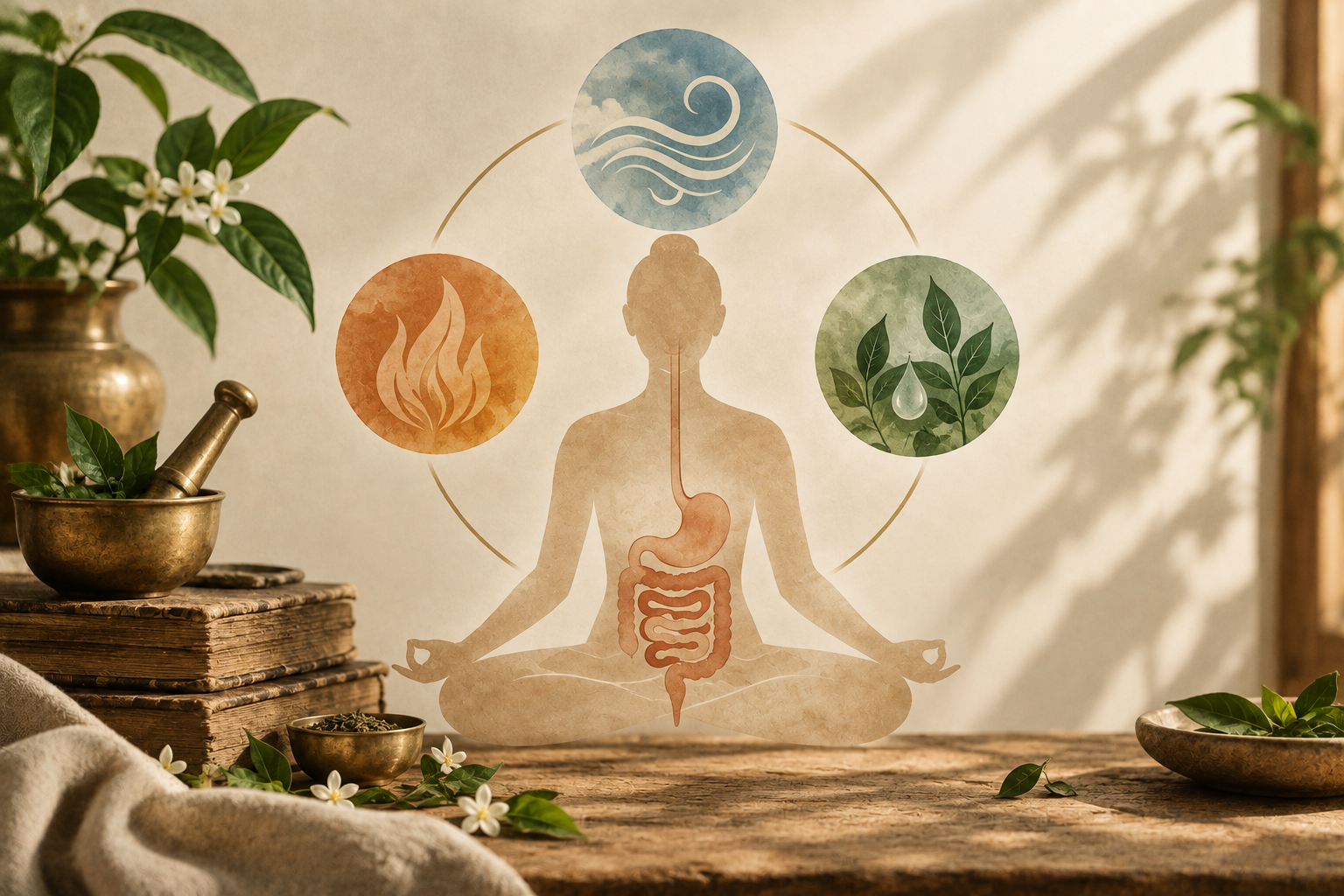
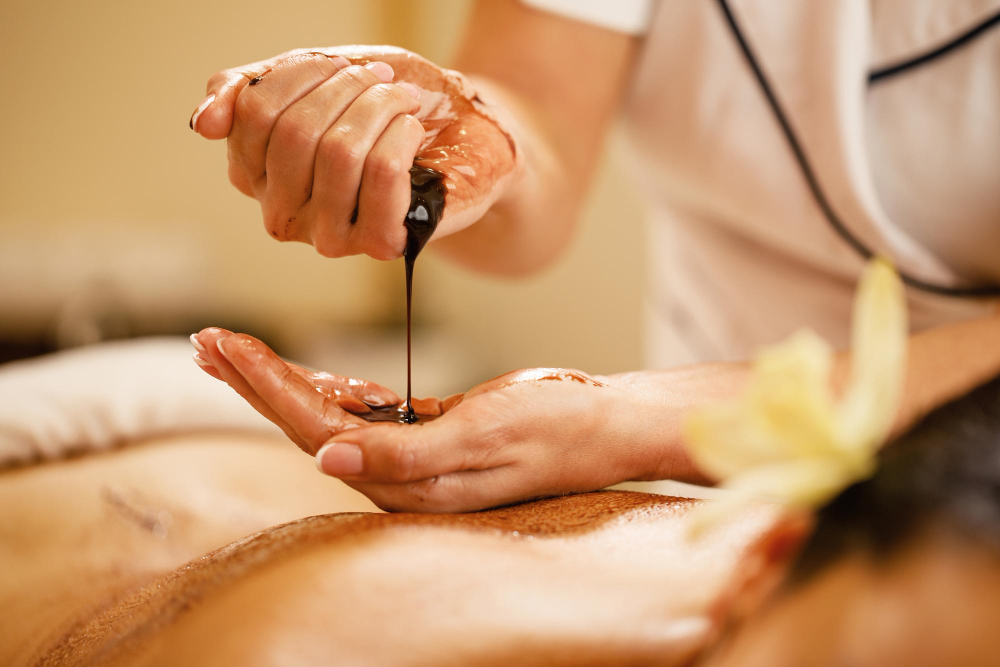
You know what’s interesting?   It’s easy to think of dry skin, constipation, feeling cold, and an overactive mind as completely different problems.   They’re not.   What if all of these are connected?   When I look at a combination of symptoms like these, one of the first things I think about is Vata.   Vata is the dosha responsible for movement in the body. It governs everything from your nervous system and circulation to your breathing, bowel movements, and even your thoughts. Because it carries qualities like dryness, lightness, coldness, and movement, an increase in Vata usually shows up in ways that reflect those same qualities.   In fact, Ayurveda places so much importance on Vata.   “Pittam pangu, Kapham pangu, Pangavo maladhatavah. Vayuna yaccha neeyante, Tatra gacchanti meghavat.”   It means that Pitta and Kapha cannot function on their own. Even the tissues and waste products of the body depend on Vata to move. Just as clouds move only because of the wind, every process in the body depends on Vata.   That’s why Vata is often considered the driving force behind all the doshas. When it is in balance, the body functions harmoniously. When it becomes aggravated, many different symptoms can begin to appear, even if they don’t seem related at first.   Let’s look at some of the signs.   Your skin and hair have become unusually dry   One of the easiest places to notice high Vata is on your skin.   If your skin constantly feels dry, flaky, or rough despite using creams, or your hair has become frizzy and lacks its usual softness, your body could simply be asking for more nourishment.   Vata carries the quality of dryness. So, when it increases, your body loses some of its natural moisture.   What Can Help?   One of the simplest things you can do for an aggravated Vata is Abhyanga, the practice of applying warm sesame oil to the body.   It helps replace the dryness that Vata creates, keeps the joints moisturized, and supports healthy circulation.   Even spending ten minutes massaging warm sesame oil into your skin can make a noticeable difference over time.   If you’ve never practised Abhyanga before, don’t worry. It’s much simpler than it sounds. I’ve created a step-by-step YouTube video where I show you exactly how to do it at home. Check it out here.   You always seem to feel cold   This is another common sign of aggravated Vata.   Since Vata itself is cold by nature, anything that adds more cold can make the imbalance worse. That includes cold weather, air conditioning, cold showers, and even regularly eating cold foods and drinks.   What Can Help?   Whenever possible, choose warmth.   Take warm showers instead of cold ones. Wear socks if your feet tend to get cold. Keep yourself covered when you’re exposed to cold winds or strong air conditioning.   Choose warm, cooked meals over raw salads.   These may sound like small habits, but Ayurveda has always believed that the little things we do every day have the greatest impact on our health.   Your bowel movements have become irregular   Constipation is one of the clearest signs that Vata has become aggravated.   If your stools have become hard, dry, or difficult to pass, your body may simply be reflecting the same dryness you’ve already noticed in your skin and hair.   What Can Help?   Make sure every meal contains some healthy fat.   Traditionally, Ayurveda recommends ghee because it nourishes the tissues and supports healthy digestion. If ghee isn’t suitable for you, healthy cooking fats like sesame oil, olive oil, coconut oil, or butter can also be included based on your individual needs.   Your mind is always racing   Not every sign of high Vata shows up in the body. Some of the most obvious signs appear in the mind.   If you constantly jump from one thought to another, lose interest quickly, or feel like your brain never really switches off, this could also be a sign that Vata is elevated.   Remember, Vata governs movement. That includes mental movement too.   What Can Help?   Simple practices like Pranayama, meditation, or even sitting quietly for a few minutes each day help slow the constant movement of the mind.   They don’t have to be complicated.   Consistency matters far more than duration.   You keep pushing yourself even when you’re tired   Many people with aggravated Vata have one thing in common. They find it difficult to slow down.   There is always one more task to finish.   Over time, this constant overexertion can leave the body feeling depleted.   What Can Help?   Ayurveda recommends exercising only to about half of your capacity, especially when Vata is already high.   This doesn’t mean avoiding movement altogether. Gentle walks, yoga, stretching, or moderate strength training can all be wonderful choices.   And don’t underestimate the power of rest.   Sometimes the most healing thing you can do isn’t adding another habit to your routine.   A Final Thought   Vata imbalances don’t usually appear overnight. They build up gradually, and thankfully, they can also be corrected.   The good news is that your body is constantly communicating with you. Dry skin, feeling cold, constipation, a restless mind, and exhaustion aren’t just random inconveniences. They may be gentle reminders that your body needs a little more warmth, nourishment, and rest.   The earlier you listen, the easier it becomes to bring yourself back into balance.  

Daily Abhyanga: Ayurvedic Oil Massage for Healthy Skin and Joints

Abhyanga, or daily oil massage, is one of the simplest and most effective practices I recommend in Ayurveda. In fact, Ayurveda talks about Abhyanga as something you should do every single day of your life.   Just as we take care of our teeth every day by brushing them, Ayurveda recommends caring for the body daily through Abhyanga.   The best part is that Abhyanga does not require any special equipment or complicated techniques. With the right oil and a few minutes of your time, you can make it a valuable part of your daily routine.   It is good for your complexion, good for your skin health, and good for improving the flexibility and mobility of your joints. Overall, Abhyanga is a daily practice that can support your long-term health and well-being.     Why Should You Do Abhyanga?     Abhyanga is good for improving complexion. It is good for improving skin health. It is also good for improving the flexibility and mobility of your joints.   Ayurveda explains that Abhyanga helps reduce the pace at which you age. Because of these benefits, Abhyanga is something that Ayurveda recommends as a daily practice.     What Oil Should You Use for Abhyanga?     The best oil that can be used for Abhyanga is organic black sesame oil. Different people use different oils and different varieties, but it is important to get the best quality oil possible. The darkest oils are usually considered the best quality. Good organic black sesame oil is not cheap, but using a high-quality oil can make a difference.   How to Do Abhyanga?   Before starting Abhyanga, it is important to understand that Ayurveda gives special importance to certain parts of the body. These are the mandatory areas that should receive massage.   They include the head, especially the top of the head, the palms, the feet, the navel, the ears, and the face.   Start by taking oil in your palms and applying it to the top of your head. Massage the scalp with your fingers. If you wish, you can also massage the length of your hair. After that, massage your face, hands, feet, and then the rest of your body.   Ayurveda places special importance on the joints because they are areas where Vata accumulation happens easily. In every joint, bones come together and movement takes place. Whenever there is movement, Vata increases. If there is dryness, Vata also increases.   Because of this, the joints need regular oil application.   Applying oil to the joints every day is similar to using lubricant in a car or machine. A machine functions better and lasts longer when it receives the right amount of lubrication. In the same way, regular oil application supports the joints.   When massaging the joints, use circular movements. For the other parts of the body, use long strokes. While massaging the legs, move upward toward the heart because you want the blood flow toward the heart.   For the hands and legs, use folded movements along the length of the limbs to massage the long bones.     When Should You Do Abhyanga?     You can do Abhyanga in the morning or in the evening based on your convenience. However, the ideal time is in the morning.   After applying oil to the body, spending a little time outside in the sun can be beneficial. According to Ayurveda, this is especially useful when you are using sesame oil for your massage.     Who Should Do Abhyanga?     Every single person can do Abhyanga. This includes people with Vata Prakriti, who usually have a lean and thin body type, Pitta Prakriti, who generally have a medium body type, and Kapha Prakriti, who may have a heavier body type.   For Kapha Prakriti, you can apply oil to the body, but massage should be avoided. If you are extremely obese and your BMI is above 32 or 35, it is better not to use oil massage because it can increase Kapha in the body. If you are only slightly overweight, you can apply oil to the skin but skip the massage.     What Should You Do After Abhyanga?     After massaging your body with oil, leave the oil on the body for five to ten minutes if possible. This gives the body time to absorb the oil. If you do not have time, you can take a shower immediately.   Warm water is ideal for the body, while room-temperature water is ideal for the hair. To remove the oil, you can use herbal bath powders. You can also prepare your own herbal bath powder using ingredients such as green gram flour, besan flour, and bilva powder.     What If You Have Dry Skin?     If your skin feels dry throughout the day, there is one additional step you can follow.   After your shower, apply a small amount of oil to the skin while there is still a little moisture present. When the oil combines with the moisture on the skin, it forms an emulsion.   This helps the skin retain moisture for a longer period and can keep dryness under control throughout the day.   For people who struggle with persistent dry skin, this simple practice can be especially useful.   WhatsApp +91 99011 26331 for enquiries! (Consulations, Products, Agni Awakening Program, Courses)

Beyond Remedies: Ayurveda & the Body’s Intelligence

Most of us treat health like a problem‑solution game. Dry skin? Apply something moisturizing. Low energy? Drink something strong. Upset digestion? Take a quick‑fix remedy.   But Ayurveda asks us to pause and ask a deeper question: What is the body trying to tell us through these experiences?   As you continue listening to more insights from Ayurveda, you’ll noticed something beautiful.   The body is constantly adapting, and our role is to support that intelligence instead of overriding it.   Let us explore how this works in everyday life.   Not Everything Natural Is the Same   In today’s wellness world, “natural” is almost a magic word. But Ayurveda digs a little deeper and asks: How natural? And more importantly, how suitable is it for you?   Take camphor, for example. At first glance, it might seem like any camphor will do. But Ayurveda differentiates between:   Natural camphor (Bhimseni camphor) Synthetic camphor   They look similar, but their qualities are different.   Natural camphor has an irregular, crystalline shape and dissolves slowly. Synthetic camphor is uniform, very rigid, and burns with a harsher, sharper flame.   Why does this matter? Because subtle qualities affect how a substance interacts with the body. A harsh, synthetic version can irritate rather than soothe.   Ayurveda teaches us not to trust only the label, but to observe the qualities—how something feels, smells, and behaves. That attention to detail can make a big difference in how your body responds.   The Forgotten Art of Preparation   Another often overlooked part of health is how we prepare what we eat and use.   Take dry ginger powder, for example.   Making it at home usually means fresher, purer ingredients. Store‑bought is okay too, but only if you are sure it is unadulterated and of good quality.   Even the way you consume it matters. A small amount of dry ginger boiled briefly and then reduced in water can become a gentle digestive tonic. But this is not one‑size‑fits‑all advice.   If someone already has a lot of internal heat (Pitta), even something considered helpful like dry ginger can increase burning, acidity, or discomfort. In that case, it needs to be used cautiously or avoided until the heat is under control.   This shows a simple yet powerful idea: The same ingredient can heal or harm depending on the internal environment of the person.   The Body Is Not One System—It’s Many Working Together   Ayurveda does not see the body only as organs and bones. It describes the body as several functional energies working together in harmony.   One of the most beautiful frameworks is the five types of Vayu, or subtypes of Vata:   Prana Vayu – governs breathing, perception, and mental clarity Udana Vayu – supports speech, expression, and confidence Samana Vayu – manages digestion and assimilation Vyana Vayu – handles circulation and movement Apana Vayu – oversees elimination and reproductive functions   When you look at the body this way, symptoms start to make more sense.   For example, someone who struggles to speak clearly or feels hesitant to express themselves may not be dealing only with an emotional issue. It can also involve Udana Vayu being disturbed.   Similarly, poor circulation and stiffness are not just physical problems. They may indicate that Vyana Vayu needs support.   This interconnected view reminds us: Nothing in the body truly operates in isolation.   When Substitutes Are Not Real Substitutes   Modern thinking often asks, “Can I use this instead of that?” But Ayurveda is cautious about substitutes because it focuses on energy, not just appearance.   Take sesame oil, for example. It is widely considered ideal for daily use in many Ayurvedic practices. If you cannot find or use it, alternatives exist, but they are not equal.   White sesame oil can be acceptable, though it may be slightly less potent. Coconut oil can work, but it suits some people better in heat‑dominated conditions. Other oils may be suitable only after individual assessment.   And some substitutes, like certain refined seed oils, are simply not appropriate at all, even though they look similar.   Why such precision? Because Ayurveda does not just replace one ingredient with another. It works with qualities like heat, heaviness, lightness, and penetration, and matches them to the person’s condition.   Similarity in appearance does not mean similarity in effect.   Skin, Sensitivity, and the Limits of Moisturizing   We often treat dry skin as a surface problem. We apply more oil, carry more creams, and buy richer lotions.   But Ayurveda sees dry skin as a reflection of deeper imbalance, especially of Vata. When common oils are not tolerated, something like Shatadhauta Ghritam can be helpful.   Shatadhauta Ghritam is ghee that is transformed through repeated washing with water. It becomes cooling, light, and deeply soothing, and can be used as an external application.   Interestingly, even people sensitive to dairy may tolerate it on the skin, because:   It is processed differently It is used externally, not ingested   Still, Ayurveda adds important nuances:   It is not suitable for infected or oily skin. Sensitive individuals should always patch test first.   This level of personalization shows an essential truth: Healing is not about finding the single best product. It is about finding the right match for your body and condition.   Simple Practices, Done Mindfully   Some of the most powerful Ayurvedic practices are also the simplest.   Take foot soaks, for example.   Warm water alone can relax muscles and improve circulation. Adding a little salt can enhance the effect. Herbal decoctions can be used when extra support is needed.   No complicated steps. No fancy equipment. Just a simple, grounded practice done with awareness.   Even something as basic as water temperature matters.   Lukewarm water is usually preferred. It gently stimulates the body without shocking it, which supports smoother digestion and circulation.   These small details may seem minor, but they… Continue reading Beyond Remedies: Ayurveda & the Body’s Intelligence

Premature Ejaculation: An Ayurvedic Perspective

Premature ejaculation (PE) is a common male problem that can lead to frustration, shattered relationships and low self-esteem. It is the situation when ejaculation occurs sooner than desired during intercourse. This affects one in three men at some stage of life. It may seem like an awkward topic and not many like to talk about it, but this is part of men’s health and should be addressed. Every health disorder, whether physical or mental, needs proper attention and treatment.    Cause of Premature Ejaculation   In Ayurveda, the corresponding term for this problem is Sukragatavata. As the name suggests, it is primarily caused by an imbalance in Vata Dosha.  Ayurveda, the ancient science of life, offers a holistic approach to managing this condition by addressing the root cause—Vata Dosha imbalance—and nourishing the reproductive system (Shukra Dhatu). In the Sushruta Samhita, it is explained that premature ejaculation occurs when Vata Dosha becomes imbalanced. This leads to rapid ejaculation and weakening of Shukra Dhatu – the vital tissue responsible for reproductive health: शुक्रक्षयः शोषणं च वातः शीघ्रगमनं च ततः। वातदोषेण जनितं वातनाशं च योजयेत्।। (Sushruta Samhita, Chikitsasthana, Chapter 26) Translation: “Premature ejaculation is caused by Vata aggravation, leading to rapid ejaculation and depletion of reproductive strength. Treatments that pacify Vata are recommended for healing.” Apana, on the other hand, is a subtype of Vata energy, specifically governing the lower abdomen and reproductive organs.  An imbalance in Apana Vata causes premature ejaculation.   Other Causes of Premature Ejaculation   Premature ejaculation can happen at any age. Apart from ageing and Vata imbalance, there are, in addition, many other reasons for the condition.: Emotional factors like stress, anxiety and depression  Erectile dysfunction Hormonal imbalances Oversensitivity in sex organs   Ayurvedic Management of Premature Ejaculation   Here’s a guide to Ayurvedic practices for managing PE:   Herbal support In Ayurveda, there are some amazing herbs, such as Brahmi, Mandukaparni, Kapikachu, and Eranda, among others.  Having them in certain combinations along with diet correction, have shown tremendous positive results in the treatment of premature ejaculation.  But take them strictly under the supervision of a qualified Ayurvedic doctor to avoid adverse reactions. Amla powder Have  2 teaspoons of Amla powder mixed with ghee during lunch daily. Amla, also known as ‘Amritphal’ (the nectar fruit) in Ayurveda, is a highly potent fruit.  It replenishes the nutrients in the body and restores vitality. Nutmeg milk Crush the sun-dried rind of nutmeg into a fine powder. Then, add 5g of the powder to hot milk, and subsequently, boil it. Have this drink before you go to bed. Abhyanga (oil massage) Do regular massages around the abdomen from your naval downward using a mix of cinnamon oil and organic black sesame oil. Black sesame oil is highly revered in Ayurveda, whereas cinnamon is a healing herb. Yoga Yoga, on the one hand, can be a supportive practice that, in addition, increases body awareness and control. Yoga poses like Pavanamuktasana, Halasana, Sarvangasan, Kakasana, Kati-chakrasana and backward bending poses are extremely beneficial for strengthening the reproductive organs.  Mental well-being Needless to say, a partner’s assurance and comfort, psychological counselling/therapy, meditation, breathing exercises, and meditation help anyone overcome this problem and enhance results. Relax and rest Overexertion and lack of sleep can aggravate Vata and weaken your system. Ensure a proper sleep routine; consequently, this will help the body heal.   Lifestyle habits play a huge role in managing premature ejaculation. Incorporating regular exercise, as well as balanced meals and quality sleep, can significantly improve energy levels and, consequently, reduce stress. Meditation and yoga are also beneficial for building core strength and mental clarity, which aid in managing the condition. However, sometimes changes may not be enough. If they don’t yield favourable results, consulting an Ayurvedic doctor for personalised treatment is a good choice.     If you are struggling with any health issues, you can either book a consultation with us or send us a message via WhatsApp to +91 79074 89839. We have the best Ayurvedic doctors in Trivandrum who are always glad to help you. If you have any queries, contact us.  You can also visit us at our hospital.

Ageing with Ayurveda

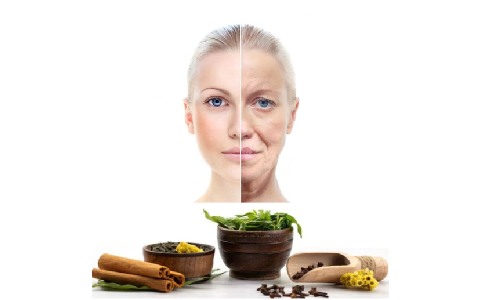
Ageing is inevitable. But it does not mean that it has to be a tough or bitter experience. Instead, it should be considered as a graceful and meaningful journey.    With the help of Ayurveda, you can make the journey towards older age beautiful by focusing on improving the quality of your physical and mental well-being.      Take Care of Yourself     According to Ayurveda, ageing is a natural process regulated by the three Doshas – Vata, Pitta, and Kapha.    As we age, our Vata Dosha goes out of balance and we experience it through symptoms, such as dryness, weakness and difficulty in mobility. Therefore, balancing Vata Dosha is essential to remain healthy and active in the later years.    Ayurveda recommends many natural ways to keep your Vata Dosha in balance.      Change Your Lifestyle     Indeed, lifestyle changes can make a whole lot of difference in the way you age.      Follow a Daily Routine     Following a structured daily routine or Dinacharya has a strong positive influence over the Doshas.      Morning rituals      Start the day with a glass of warm water to wash out toxins. Oil pulling, brushing and tongue scraping are small routine activities that make way for great oral health.  This should be followed by some yoga or stretching exercises to keep your body flexible and disease-free.      Oil massage (Abhyanga)      Use organic black sesame oil to do a full-body massage before taking a shower. It helps to moisten and feed the skin. It also prevents the formation of cracks and relieves Vata Dosha.      Healthy breakfast      Consume a balanced, freshly cooked breakfast to have energy throughout the day. Don’t run after the packaged breakfast options like cereals, muesli, etc. Cook your first meal of the day with love and with a dash of ghee and it will do wonders to balance your aggravated Vata.     Want to learn more about Dinacharya? Download my e-book for free.      Have a Balanced Diet     While planning for a meal, include foods that are fresh and organic and are light on the tummy.   Have warm, cooked foods      As you age, your digestion may be compromised. Hence your body may not be able to absorb nutrients properly.    Therefore, it is advisable to go for warm, cooked meals rather than raw, cold, or heavy foods that, on the other hand, may cause indigestion.      Consume anti-ageing foods      Increase the intake of foods that can help counter oxidative stress such as berries, green leafy vegetables, fruits and nuts.      Stay hydrated      Have plenty of water, especially during the warmer Summer and Autumn months or if you engage in heavy physical activity or work outdoors.     You can also have herbal teas occasionally to help detoxify your body. However, not all herbs may be suitable for you. So, it’s better to consult a qualified Ayurvedic doctor for advice.       Sleep Well     Sleep is an essential factor for overall wellness.      Have adequate sleep      One must get quality sleep in order to be healthy and alert. Sleep for 6-8 hours at night so that your body gets enough repair time to rejuvenate itself.      Establish a sleep routine      Be consistent with your sleep and wake-up timings. In addition, this helps to set your body clock efficiently.        Create a calming environment      Declutter your bedroom by getting rid of all the electronic gadgets and things that may distract you at night.      Practice relaxation techniques      Do activities that will help you relax, such as listening to music or reading a book, before sleeping.        Try Detoxification      As we age, more toxin buildup happens in our body because our body’s natural process of expelling the toxins gets weakened. Detoxification flushes out toxins from the body and revitalizes tissues.      Seasonal detox      Discuss with an Ayurvedic doctor to choose one suitable detox program at the beginning of every season. Detoxifying not only purifies your body but also improves your energy levels.      Herbal teas      Occasionally, drink herbal teas that support liver functions and remove toxins from the body. Remember, not all herbal teas suit you. So, it’s better to consult a qualified Ayurvedic doctor for advice.     Sip dry ginger tea at night. It gently detoxifies your gut, boosts digestive fire and promotes blood circulation. Dry ginger also controls Vata, which is the dominant Dosha especially in old age.      Ayurvedic Practices for Ageing      Apart from diet and lifestyle practices, Ayurveda also recommends certain practices that help you age well.      Yoga and Exercise      Physical exercise is vital so as to keep your body in the best shape possible.      Yoga    Perform relatively low-impact movements to help in the flexibility of joints. First, try Bitilasana Marjariasana (Cat-Cow pose); then, move on to Balasana (Child’s pose); and finally, conclude with Pashchimottanasana (Seated forward bend pose).    It is advisable to perform these poses under the supervision of an expert Yoga trainer if you are a beginner.     Also, practising Surya Namaskar (Sun Salutation) daily can also help maintain flexibility and energy levels.      Daily walks      Take a walk for about 45 to 60 minutes daily. It improves blood circulation; as a result, it makes you feel better and more energized.      Strength training      Do strength training under the supervision of an expert trainer to help sustain muscles and bones. As the endurance power of your muscles increase, new cells regenerate, delaying the ageing process.      Mindfulness and Meditation      Age is just a number! It’s all in your mind. Your mental health is, therefore, also of great importance in healthy ageing.      Meditation … Continue reading Ageing with Ayurveda