
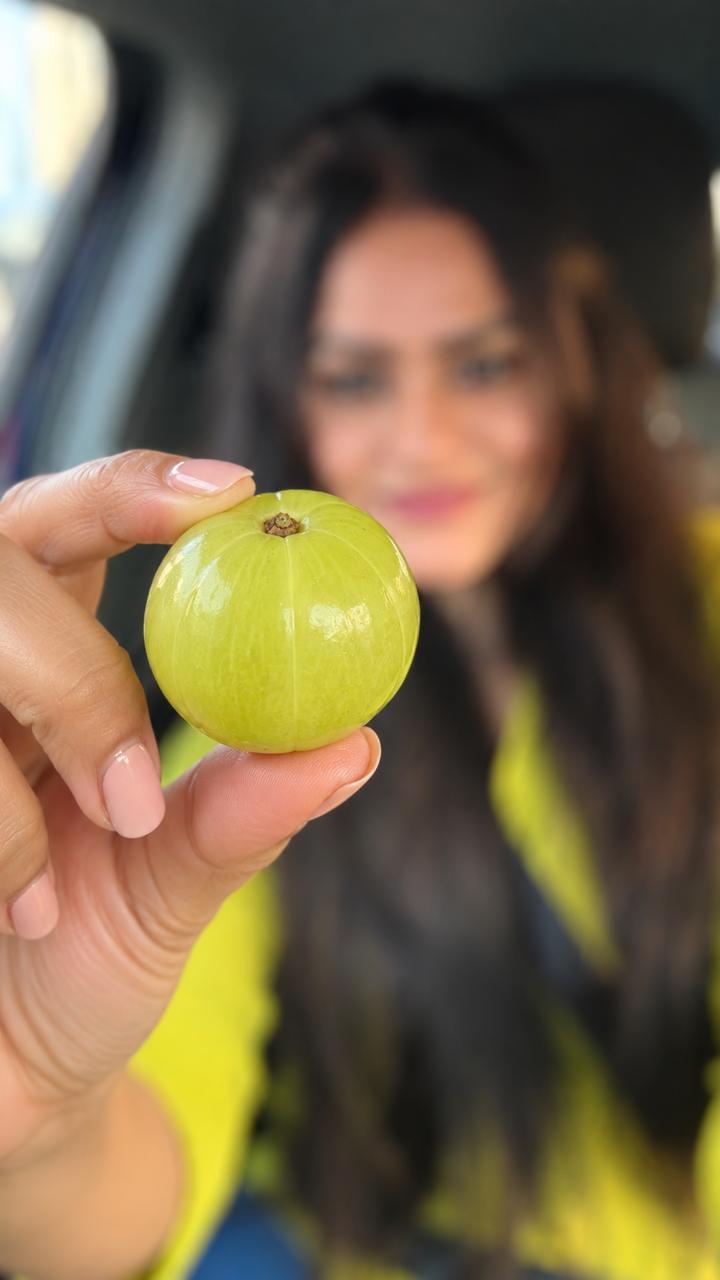
Amla: Everything I Tell My Patients About How To Have It

Someone asked me the other day if I like matcha.   No. I have something better. And we Indians have had it forever.   It is amla. Our humble Indian gooseberry.   Now everybody will tell you amla is good. Amla is good, amla is good. But nobody is telling you how much to have, when to have it, in what form, and what to do if you cannot get it fresh.   So that is what I am going to tell you here. Exactly what I tell my patients.     First, what amla actually is in Ayurveda     In Charaka Samhita, amalaki is placed in the vayasthapana mahakashaya. That is the group of ten drugs classified as age sustaining.   Age sustaining. Not anti-ageing. There is a difference, and Ayurveda made that difference two thousand years back.   Now here is what most people get wrong. Amla tastes sour. So everybody assumes it is heating.   It is not.   Amalaki is sheeta virya. Cold in potency. And madhura vipaka. Sweet after digestion. This is what Bhavaprakasha Nighantu tells us.   So, both of these are going against what your tongue is telling you. Your tongue says sour, your mind says heating. But that is not what is happening inside. And this is exactly why amla calms pitta, when almost every other sour thing will increase it.   And that sweetness you feel in your mouth after eating amla, especially when you drink water on top of it? That is not vipaka.   Vipaka is happening hours later, in your tissues. People mix up these two all the time.     The best form is the fruit. Always.     One amla a day itself is great. That is the whole thing.   If fresh amla is naturally available to you, please have it like that. Do not overthink it. Do not go looking for a supplement. The fruit is the best form and nothing beats it.   And amla comes in the cold season. That is not by accident. Nature is giving it to you exactly when you need it, so that is when you should be having it.   So, when it is in season, eat it. Every day. Your body knows what to do with it.     If you cannot get fresh amla, then powder     Now most of you reading this are not in India. I know. Half of my patients are in places where amla is only available as a powder in a packet.   That is okay. Powder works. But please listen to me about the quality.   Get organic. Get good quality. And I mean really check.   Because we have no idea where these people are drying it. We have no idea where they are powdering it. We have no idea what it went through before it came into that nice looking jar.   So, if you are not sure about the source, better to avoid it. Really. Do not have it at all rather than having something you cannot trace.   But if you are sure, if you know where it was dried and how it was powdered and how authentic it is, then go ahead. Find the best quality you can.   I know I am dragging on too much about quality. I know. But this is more important than the dose, more important than the timing, more important than anything else in this whole article. A bad powder is not a weaker amla. It is a completely different thing.   How much: one teaspoon of powder mixed into your food. That is the easiest way and the safest way, and this is what I tell most of my patients.     Amla juice, please read this part carefully     You can have amla as a juice. But as a shot. Not as a glass.   Never drink a full glass of amla juice. Please. Do not take ten, fifteen amlas and make a big juice out of it and sit and drink it. Do not do it.   Instead do this:   Crush two or three amlas Add a little water Add pepper, turmeric, dry ginger A little Himalayan pink salt If you do not like the salt, add mishri or rock sugar instead   And have it like a shot. Not more than 25 ml.   That is it. Every day in the morning. That is enough.     Timing and Anupana     Morning is good. Have your shot in the morning.   If you have a very strong acidic stomach, then have it after food. It works just as well and it is gentler on you.   Anupana for amla is always water. Keep it simple.   And there is one more way which I love, and most people have not even heard of it. Take amla powder, mix it with a little ghee, and have it with the first morsels of rice at lunch time.   Beautiful way to take it. You can do the same at dinner also.     Now, amla does not cause acidity     I have to correct this one, because I am hearing it constantly.   Amla does not cause acidity. It cannot. Once it goes into your stomach it cools down and it turns into sweet taste. It is not going to heat you and it is not going to burn you.   It actually reduces acidity.   Now if your stomach lining is already raw and inflamed, a concentrated shot on an empty stomach can still feel like too much for you. But that is the concentration doing it, not the amla. And that is exactly why I said have it after food.   And see the irony here. People think curd is cooling. It is not. Classically dadhi is ushna virya with amla vipaka, and it is abhishyandi, it blocks your channels. It is doing almost the opposite of… Continue reading Amla: Everything I Tell My Patients About How To Have It

From My Clinic to Your Kitchen

Why I am writing this to you…   I have spent decades sitting with people who are unwell.   Not just inconvenienced. Genuinely unwell. People with conditions that have names, diagnoses, years of medical history behind them.   Thyroid disorders, PCOS, IBS, chronic fatigue, autoimmune conditions, type 2 diabetes. People who have seen good doctors, taken their medications, followed the advice, and still wake up every morning not feeling like themselves. They come to me after all of that.   And the first thing I notice, almost every single time, is not their blood reports or their prescription history. It’s how they eat. When they eat. What they believe food is supposed to do for them.   Most of them have been told what not to eat. Very few have been taught how to eat. That distinction has taken me a long time to understand, and even longer to be able to explain. I trained in Ayurveda. I have practiced it across countries, across cultures, across very different kinds of suffering. What I keep coming back to, no matter where I am or who I am sitting with, is that the gut is where almost everything begins.   Not just digestion. Immunity. Hormones. Mood. Energy. Inflammation. It starts there.   Ayurveda has known this for over five thousand years. What we are only now beginning to confirm through modern research, Ayurvedic physicians observed through careful, sustained clinical practice across generations. The gut is not just a digestive organ. It is the foundation of health.   When I write a dietary protocol for my patients, I am not pulling from a wellness trend or a nutrition blog. I am drawing from classical texts, from thousands of hours of clinical observation, and from the humbling experience of watching very sick people get measurably better when they change the way they eat and live.   This document is a version of what I give my patients.   It is not a diet. It is a way of approaching food with knowledge rather than anxiety. Every instruction here has a reason behind it, grounded in how the body actually works, not how we wish it did.   If you are dealing with a chronic condition, if you have been struggling for a long time and feel like you have already tried everything, I want you to read this carefully. Not because it will fix everything overnight. But because in my clinical experience, this is where real recovery begins. Not in a hospital, not in a supplement, but in the kitchen, three times a day, consistently, over time.   That is the medicine I am offering you here.     Ayurvedic Healthy Eating — A Personal Guide     Let’s start with something simple.   Food is your daily medicine. Not a punishment, not a restriction, just a way to come back to balance. And I’m going to walk you through exactly how to do that, one step at a time.   First, let’s fix your meal times.   I want you to eat at the same time every day. Your body has a clock, and your digestion follows it. When you eat irregularly, your gut gets confused. You get bloating, acidity, that heavy sluggish feeling. Sound familiar? So here’s what I need you to do: don’t skip meals. Not breakfast, not lunch. Every skipped meal weakens your digestion a little more, and then you end up overeating later and wondering why you feel terrible. Let’s break that cycle.   Now, let’s talk about water.   I’m not asking you to force down three litres. Drink when you’re thirsty, that’s it. But please, switch to warm water. Cold water is one of the quiet things slowing your digestion down without you realising it. And during meals, just sip. Don’t flood your stomach. You’re trying to digest food, not dilute it.   Here’s what to cook with. For fats, use ghee, coconut oil, or black sesame oil. These nourish you. For sweetness, reach for jaggery or mishri instead of refined sugar. Small swaps, but they make a real difference over time.   Please cook your food.   I know raw salads feel healthy. They’re not, not for a gut that’s already struggling. Raw food is cold, hard to digest, and creates gas. Cook your vegetables with a lid on, add cumin and a pinch of asafoetida, and your body will thank you.   For pulses, dry roast them first, soak overnight, throw away that water, then boil fresh with ginger, turmeric, and cumin. This removes the gas-causing compounds. It’s a few extra steps, but it makes pulses so much easier on your system.   For now, let’s remove a few things.   Just temporarily. Maida, soy products, cow’s milk, curd are putting stress on your digestion right now. Cheese and paneer, once a week at most. No deep-fried food, no packaged food with more than five ingredients on the label.   This isn’t forever. It’s just long enough to let your gut heal.   When you eat out, keep it simple.   Go for grilled or baked over fried. Avoid anything heavy, creamy, or processed. Warm and freshly cooked is always the right call.   And walk. Every day.   Ten thousand steps. It sounds like a lot, but it’s really just being consistently on your feet. Walking supports your digestion, moves toxins out, and clears your head in ways no supplement can.   The last thing I’ll say is this.   None of this works if you do it three days and then stop.   Healing isn’t dramatic. It’s quiet and cumulative.   Every meal you eat on time, every warm glass of water, every freshly cooked dish, it adds up. That’s where the change lives.   You don’t need an extreme diet. You need consistent, aware, daily habits. That’s Ayurveda. And that’s what I’m asking you to try.     Love & Light, @DoctorRekha