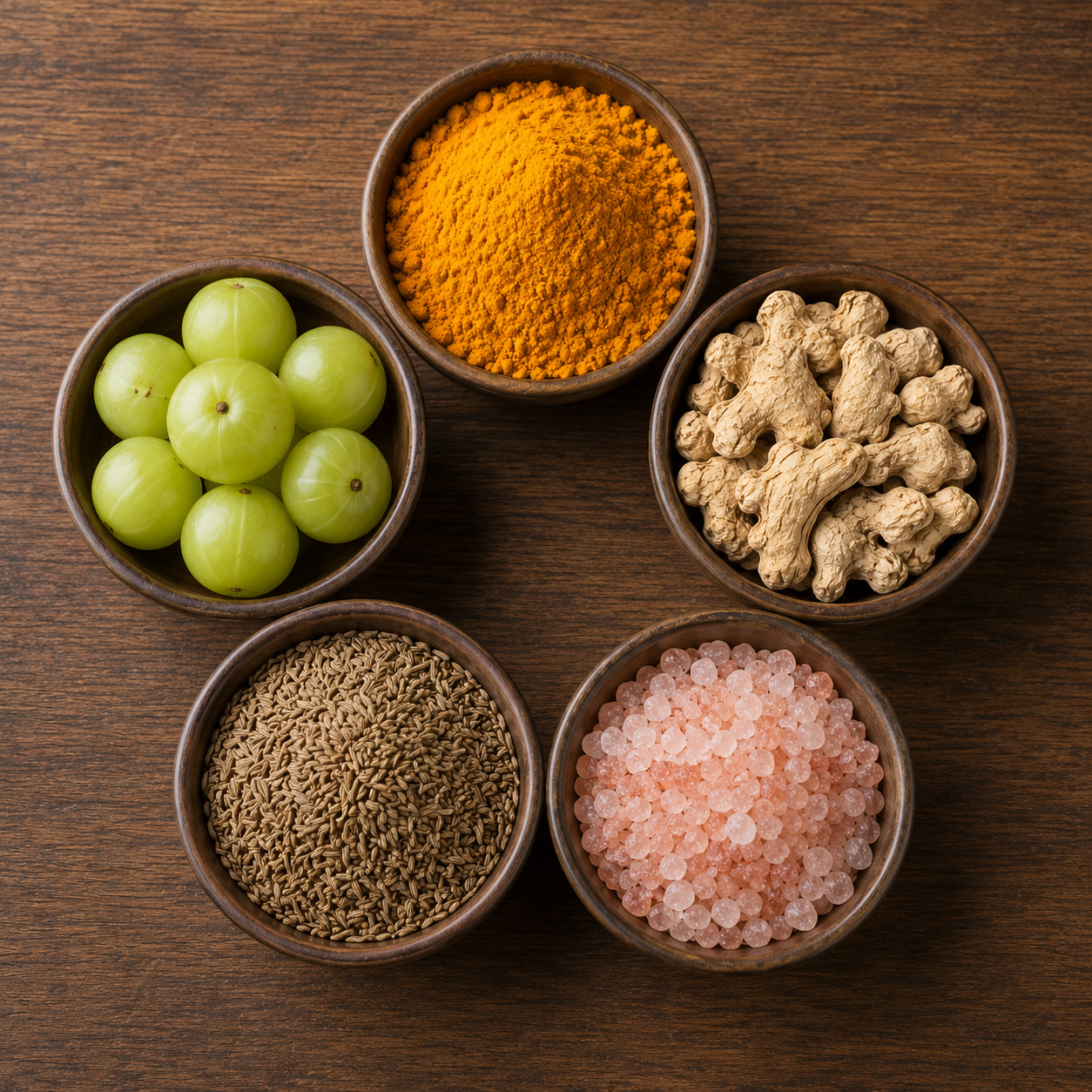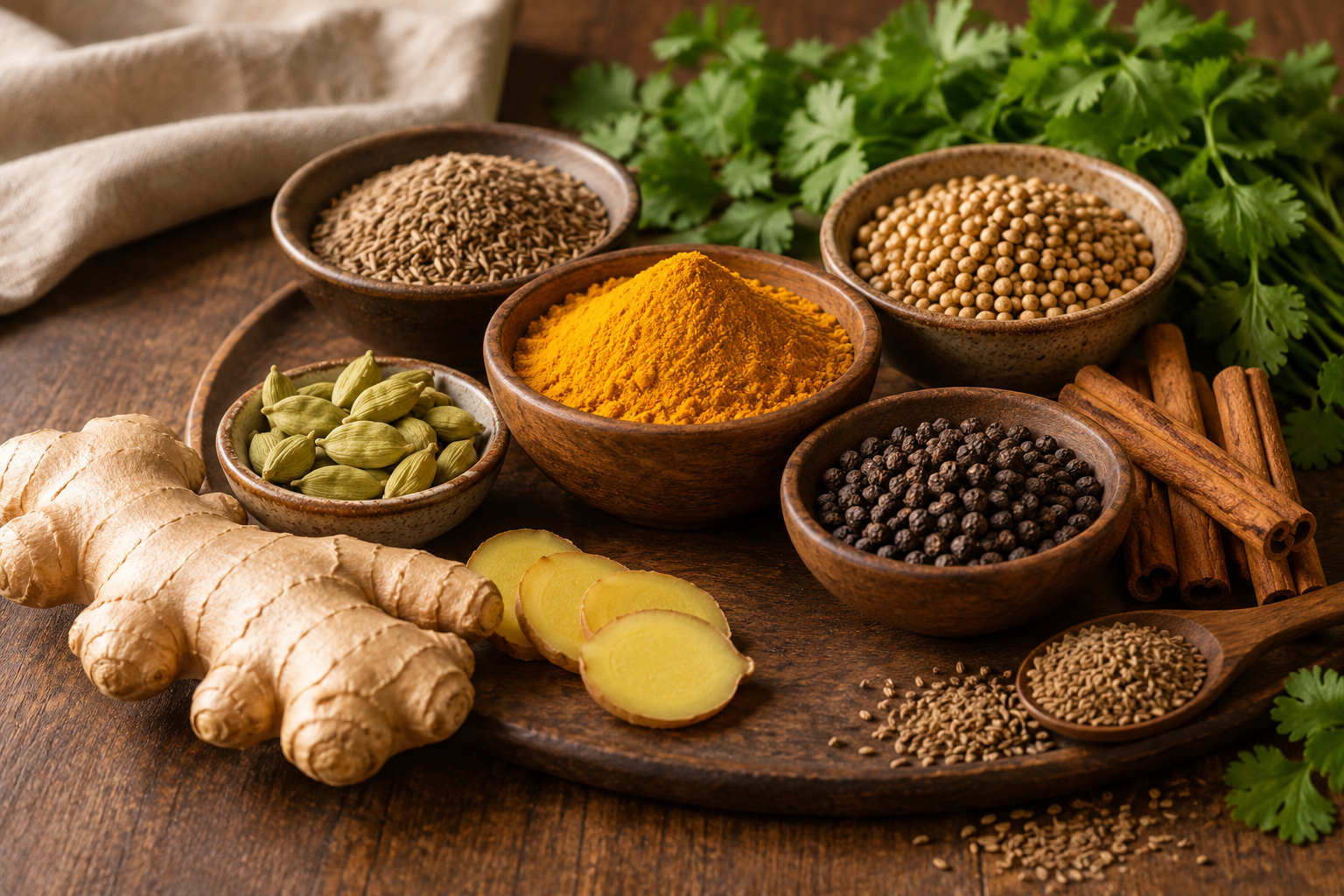
If you grew up in an Indian household, you’ve probably heard it at least once – “add some jeera, it’ll help you digest” or “have a bit of ginger, it’ll help settle your stomach.” We all treated these as remedies our grandmothers just knew. But a lot of these tips come from classical Ayurvedic texts, with specific reasoning attached. One of the best known is the Bhavaprakasha Nighantu, written by Bhavamishra around the 16th century. A Nighantu is basically a reference book of medicinal plants and foods, listing each one’s taste, qualities and what it does inside the body. Even the Charaka Samhita and the Ashtanga Hridayam, two important classical Ayurvedic texts, discuss many of the ingredients we continue to use in everyday cooking. Their approach to food is particularly interesting because it looks beyond individual ingredients and considers how food is prepared, how it is digested, and whether it is suitable for the person eating it. Here are a few things from the texts about our everyday kitchen spices that you would find interesting and surprising. Let’s take a look. Turmeric (Haridra) Known as Haridra in Sanskrit, turmeric is described as pungent, bitter, dry and hot, and it’s said to calm Kapha and Pitta. It also has a long set of uses, from skin problems to swelling, wounds and pallor. Modern research has paid considerable attention to curcumin, one of the principal compounds found in turmeric. It has been studied for its anti-inflammatory and antioxidant properties. You do not need to consume concentrated turmeric preparations to appreciate the spice. Sometimes, the most sensible way to use turmeric is simply to cook with it regularly, rather than treating it as a supplement. Add it to your everyday cooking. Use it in vegetable dishes, lentils, soups, or rice. Pair it with other ingredients as you normally would when preparing a balanced meal. Black Pepper (Maricha) Black pepper is sharp, pungent and strong at stimulating digestion, and it is used mainly to balance Kapha. It relieves breathlessness, colic and worms, and also increases Pitta. So its generally not recommended for everyone to use in large amounts. Black pepper can be added freshly ground to soups, vegetables, lentils, and other savoury foods. It is also a source of piperine, a compound studied for several biological effects, including its ability to influence the absorption and metabolism of certain substances. Ginger (Shunthi and Ardraka) In Ayurveda, ginger is known as Ardraka when fresh and Shunthi when dried. Both have an important place in classical Ayurvedic literature, although their qualities are not considered identical. The Charaka Samhita describes ginger using the following verse: सस्नेहं दीपनं वृष्यमुष्णं वातकफापहम् । Sa-sneham dīpanam vṛṣyam uṣṇam vāta-kaphāpaham. The verse describes ginger as slightly unctuous, warming, and Deepana, a term associated with kindling digestive fire or Agni. Agni is one of those Ayurvedic concepts that deserves more attention. It refers to the processes of digestion and transformation, not simply the amount of stomach acid a person produces. Ayurveda considers the ability to digest food comfortably an important part of maintaining health. So, how do you use ginger in everyday life? Add freshly grated ginger to vegetable preparations, crush a little into your dal, or use it to flavour a warm drink. You do not need to turn it into an elaborate preparation to make it part of your diet. If you are prone to acidity or experience discomfort with spicy foods, it is advised to limit your intake of ginger. Cumin (Jiraka) Cumin, or Jeeraka, is one of those ingredients that can change the flavour of an entire dish with just a small amount. If you have ever heated cumin seeds in ghee before adding onions, vegetables, or lentils, you already know how much fragrance they release. Ayurveda classifies cumin among ingredients associated with Deepana and Pachana. These terms refer, respectively, to supporting digestive activity and the processing of food and substances within the body. Cumin is also considered Medhya, meaning supportive of the mind, and supports the cleansing of the uterus. Cumin can also increase Pitta, which is worth remembering if you tend to run hot. One of the easiest ways to use cumin is to add the seeds to warm ghee at the beginning of cooking. You can also dry-roast them and grind them into a powder for vegetables and buttermilk. Coriander (Dhanyaka) Coriander is particularly interesting because both its fresh leaves and dried seeds are used in Indian cooking, yet they bring very different qualities to a dish. The seeds are described as light and astringent, with a diuretic quality. The fresh form tastes sweet, and is especially good at calming Pitta. So that handful of fresh coriander on top of your curry isn’t just garnish. In Ayurvedic terms, it’s quietly balancing the heat in the meal. Try adding freshly crushed coriander seeds to a vegetable dish or using roasted coriander powder in a homemade spice mix. You can also use fresh leaves to lentils, curries and soups. Ajwain (Yavani) Ajwain, known as Yavani in Sanskrit, is often one of the first ingredients we think of when discussing traditional approaches to digestive discomfort. Its strong, distinctive aroma comes partly from compounds such as thymol. In Indian kitchens, ajwain is used in preparations such as parathas, savoury snacks, and certain lentil dishes. Ajwain aids digestion, improves appetite, and is sharp, hot, pungent and light. It helps with Vata and Kapha related abdominal issues, bloating and worms. Like pepper and cumin, though, it can increase Pitta, so a little goes a long way. Looking at these six spices together, one thing becomes clear. Ayurveda does not ask us to think about food exclusively in terms of whether an ingredient is good or bad. It asks us to consider… Continue reading 6 Everyday Spices Ayurveda Wrote About Centuries Ago