
Why High Blood Pressure Is Increasing in People in Their 30s and 40s?

  High blood pressure is no longer considered a condition that appears only after the age of 60.   Today, more and more people in their 30s and 40s are being diagnosed with hypertension, especially those with a family history of diabetes, obesity, cholesterol imbalance, or cardiovascular disease.   Many people believe high blood pressure is simply caused by stress or excess salt intake. While these factors do play a role, the deeper issue is often metabolic dysfunction, particularly insulin resistance.   Let us understand this in a simple way.   The Connection Between Insulin Resistance and High Blood Pressure   Our body produces a hormone called aldosterone.   This hormone tells the kidneys to retain sodium (salt). When salt is retained in the body, water also stays back. Increased water retention raises blood volume, and when blood volume increases, blood pressure rises.   Now here is where insulin resistance becomes important.   People with insulin resistance often have higher insulin levels circulating in the body. Elevated insulin can stimulate the retention of sodium and water, making the body more prone to developing high blood pressure.   This is why people with: Belly fat Weight gain Fatty liver High cholesterol Prediabetes Sedentary lifestyles   often gradually develop hypertension as well.   Ayurveda sees this pattern as a Kapha-dominant metabolic disorder associated with weak Agni, Ama accumulation, sluggish circulation, and blocked channels.   The good news is that Ayurveda focuses not just on controlling blood pressure numbers but on improving the underlying metabolic imbalance itself.   Ayurvedic Principles That Support Better Metabolic Health   Langhana, Lightening Therapy   One of the first approaches in Ayurveda for metabolic disorders is Langhana, or “lightening therapy.” The goal is to reduce overload on the digestive system and give metabolism an opportunity to reset. This includes:   Eating lighter meals Avoiding overeating Choosing foods that are easy to digest Reducing processed and heavy foods Allowing proper gaps between meals   When digestion improves, the body becomes more efficient at handling glucose and insulin. Cells begin responding better to insulin signals, reducing metabolic stress.   Simple dietary practices can often create profound changes in energy levels, bloating, cravings, and metabolic function.   Ruksha Ahara and Ruksha Upachara, Dry Diet and Dry Therapies   Kapha imbalance is typically associated with heaviness, excess moisture, sluggishness, and fat accumulation.   To counter this, Ayurveda recommends “Ruksha” therapies, dry and light approaches that reduce excessive Kapha.   Examples include:   Barley Horse gram Flat beans Millets Light legumes   Daily use of spices such as:   Turmeric Black pepper Dry ginger Cumin Mustard seeds   can help stimulate metabolism and improve digestion.   These foods and herbs support better cellular activity and reduce stagnation in the body.   Ushna Dravya   Cold, heavy, oily, and refrigerated foods tend to aggravate Kapha and weaken digestion.   Warmth, on the other hand, activates Agni.   This is why Ayurveda often recommends:   Warm water throughout the day Freshly cooked warm meals Warm herbal infusions   These practices improve circulation, digestion, and metabolic responsiveness.   Many people notice reduced bloating, better digestion, and improved energy simply by shifting from cold foods and drinks to warm alternatives.   Bitter and Pungent Tastes for Metabolic Cleansing   Ayurveda classifies tastes according to their effect on the body.   For Kapha-related disorders like insulin resistance and obesity, bitter (Tikta) and pungent (Katu) tastes are especially beneficial.   Bitter substances help clear metabolic channels and reduce excess accumulation.   Pungent substances stimulate digestion and circulation.   Examples include: Neem Fenugreek (Methi) Bitter gourd Turmeric Black pepper Garlic Radish Leafy greens   These foods support healthy glucose metabolism and improve digestive efficiency.   Vyayama, Movement and Exercise   Modern lifestyles with very little physical activity are one of the main reasons behind poor metabolism and lifestyle diseases today.   Ayurveda strongly emphasises daily movement to reduce Kapha stagnation.   Exercise helps:   Improve circulation Enhance glucose uptake into muscles Reduce insulin resistance Improve cardiovascular health Support healthy body weight   Strength training is particularly beneficial because muscle tissue improves insulin sensitivity.   Even simple daily habits like walking after meals, climbing stairs, yoga, or mobility exercises can create significant improvements over time.   Consistency matters far more than intensity.   Udvartana, Herbal Dry Powder Massage   Udvartana is a traditional Ayurvedic therapy involving massage with herbal powders.   Unlike oil massage, this therapy uses dry herbal powders to stimulate circulation and reduce excess Kapha.   Horse gram powder is commonly used for this purpose.   Benefits may include:   Improved lymphatic circulation Reduction in heaviness Better skin tone Support for fat metabolism Increased body stimulation   This therapy is often used as part of comprehensive metabolic management programs.   Swedana, Sweat Therapy   Swedana refers to therapeutic sweating or steam therapy.   Mild heat therapy helps mobilise accumulated Kapha in the body.   Benefits include:   Improved circulation Relaxation of stiffness Opening of channels Better elimination of waste Enhanced metabolic activity   One important precaution: The head should not be exposed directly to excessive steam or heat during the process.   Deepana and Pachana, Improving Digestion and Reducing Ama   Ayurveda believes that weak digestion is the foundation of many chronic diseases.   When digestion is impaired, Ama forms in the body.   Ama contributes to:   Sluggish metabolism Inflammation Weight gain Blocked circulation Reduced insulin sensitivity   Deepana therapies stimulate digestive fire, while Pachana therapies help in digestion.   This may include: Digestive herbs Fasting strategies Herbal teas Spice combinations Meal timing corrections   Once digestion improves, many metabolic symptoms begin correcting naturally.   Shamana Therapy, Balancing Kapha with Herbs   After digestion improves and metabolism becomes more active, Ayurveda may use herbal formulations to stabilise the system. This is called Shamana therapy.   Importantly, Ayurveda does not rely on random single herbs for complex metabolic disorders.   Proper treatment usually involves carefully selected herbal combinations tailored to:   Body constitution Digestion Sleep Stress levels Weight… Continue reading Why High Blood Pressure Is Increasing in People in Their 30s and 40s?

5 Natural Supplements You Should Add To Your Diet Every Single Day

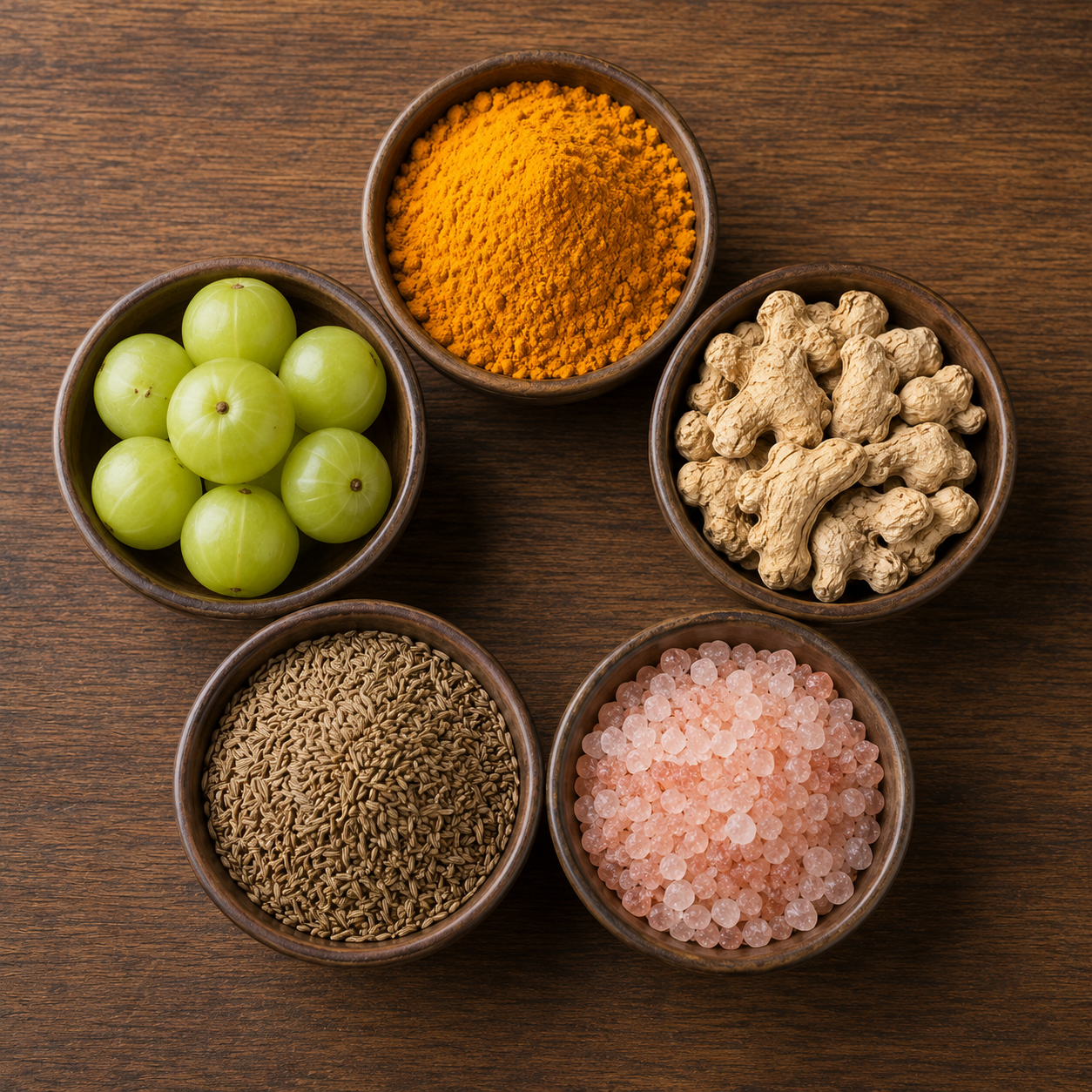
1. Turmeric   The number one supplement that you need in your life is nothing but turmeric.     You may have heard people saying, especially people in the west, talking about having turmeric in the form of teas, in the form of turmeric lattes, or sometimes even in the form of supplements.   You don’t need all of these pills and supplements to get your adequate amount of turmeric to help with all the benefits that it is going to give us.   Our traditional Indian way of cooking where we add the good fats and the spices, along with that we add turmeric, that is the most bioavailable form of turmeric and that helps with better digestion, better absorption, and better assimilation of all the good things that turmeric has to give us.   Now let us understand what turmeric does in our body. For this we have to understand what the properties of turmeric are as per Ayurveda.   Ayurveda says every food has certain properties, like there is a specific taste to a particular food item, a particular post-digestive taste.   Ayurveda also talks about a property called Prabhava or special characteristic.   One special characteristic or Prabhava of turmeric is that it is antimicrobial and anti-inflammatory.   For example, somebody is having a viral condition like chickenpox, we ask our patients to take shower with water boiled with turmeric because it is antimicrobial.   When it comes to food poisoning, if you consume more of turmeric paste throughout the day, you are helping your body to reduce inflammation.   Even if you have acne, you can use turmeric boiled water to wash your face because of its antimicrobial properties, you don’t need any antibacterial face washes.   All bitter tasting herbs are good for your liver. So, if you want to detoxify your liver, don’t go for supplements and medicines that detoxify your liver. Instead, just add a little bit more turmeric to your diet.   Adding turmeric to your dishes can help you improve your digestive fire, reduce gas, and bloating.   If you have children at home who constantly get bronchitis, cough, cold, fever, etc., turmeric helps you to improve their immunity. Make sure that you add turmeric to your cooking every day.   Even in traditional Indian cooking, we have so many dishes like haldi chawal, haldi doodh, haldi ka achar, turmeric lettuce soup. All of these are very good for improving your digestive system.     2. Dry Ginger     Number two is dry ginger.     I am talking about dry ginger and not wet ginger. Wet ginger is extremely heating, extremely pitta increasing. Dry ginger is also warm; it is much less heating compared to wet ginger.   When you buy ginger, make sure that you leave it outside and don’t keep it in the fridge so that it gets a little dry and then you can use it for cooking.   Just like how we said turmeric was anti-microbial and anti-inflammatory because of its prabhava, ginger also has a prabhava.   And what is that?   Dry ginger is anti-emetic. That means if somebody feels like vomiting, dry ginger is what we give.   It’s also good for improving digestion, absorption, and assimilation of food. It helps in reducing gas and bloating. It helps in subsiding Vata gently.   Just like how I told you about turmeric, don’t take dry ginger as a pill or a supplement. Instead, make sure that you have dry ginger in a cooked form along with other spices and good fats.   I personally add dry ginger every day to my cooking. However, one special indulgence that I really love doing is to have dry ginger wali masala chai.   After heavy meals, if for example, you had a biryani and you’re now feeling very heavy, very bloated, or you have this guilt feeling that you shouldn’t have had it because you can’t even think of the digestive problems that may come, then have dry ginger powder mixed with a little bit of rock salt, add a little bit of water and consume it.   That will help you subside the gas and bloating. It will also help you improve the digestion.   And if you’re somebody who feels constipation, you can have a glass of dry ginger water in the morning.   Make sure that you add two glasses of water, add one piece of dry ginger and reduce to one glass to get the maximum essence of dry ginger. And drink this water. This can ease your bowel movements.     3. Amla   This one is my favorite.     If you don’t want to have any supplement at all in this world, then one supplement that you need in your life is amla or amla powder.   This is something that you must include in your life.   Whether it is in the form of amla powder, amla juice, as amla murabba, amla candy, whatever it is, amla has to go into your system every single day.   Every house should have some form of amla ready to be served every day because amla helps in a lot of ways beyond what you can imagine.   There is a particular practice in Ayurveda. We call it as Kuti Pravishika. It is for people who want to reverse aging. It is a complete process. And the one thing that is given to people who wants to reverse their aging is Amla.   Amla has rejuvenating or anti-aging properties which can actually reverse your aging.   It is amazing for your skin, amazing for your heart, amazing for your hair, amazing for your digestive system, your liver, your intestine, and it’s good for your eyes.   So, if you want to take that one supplement every day, take Amla.   How can you consume Amla?   You can have Amla juice. Again, Amla juice, don’t have it as a… Continue reading 5 Natural Supplements You Should Add To Your Diet Every Single Day

Why You Get Acidity, Gas and Bloating After Meals?

What Is Really Going On?   If you feel burning, gas, heaviness or bloating after most meals, it is not “just your usual stomach problem.” Ayurveda says this means your digestion is disturbed and your food is not processing properly.   In simple words, three things are happening inside:   Your digestive “fire” (Agni) is weak or irregular. Your inner heat (Pitta) may be too high – causing burning and acidity. Your air element (Vata) may be disturbed – causing gas and bloating.   When this continues for weeks or months, half-digested food turns into sticky waste called Ama. This Ama creates more gas, heaviness and discomfort after almost every meal.   Agni is like the flame in your stomach. When it is balanced, you feel hungry at the right time, your food digests well, and you feel light and comfortable after a meal. Similarly, when Agni is weak, food stays longer in the stomach and intestines, making you feel full, dull and sleepy even after a small meal.   When it is too strong, you may feel sharp hunger but also burning, acidity and loose stools. When it is irregular, your appetite and digestion keep changing sometimes very hungry, sometimes no hunger at all, sometimes constipated, sometimes loose motions.   All these patterns can lead to discomfort after meals if not corrected.   When food does not digest properly because of disturbed Agni, it turns into something that Ayurveda calls Ama. You can imagine Ama as half-cooked, sticky, stale food sitting in your gut. It is heavy, blocks the natural flow in the intestines and starts to ferment.   This shows up as constant bloating, excessive gas, bad breath, a coated tongue and that feeling of being full and tired even after a small quantity of food. Over time, if Ama keeps building up, it can spread further and contribute to problems like joint pains, low energy and skin issues. That is why just neutralizing acid is not enough, the real work is to improve Agni and clear Ama.   Role of Pitta – Heat and Acidity   Pitta is the fire and heat energy in the body. In the stomach and chest area, high Pitta shows up as burning, sour burps, acid taste in the mouth, nausea and discomfort in the upper abdomen or chest. Everyday habits easily push Pitta up, such as eating very spicy, oily and fried food, taking a lot of pickles, vinegar and sour items, drinking too much tea, coffee, cola or alcohol, and smoking. Skipping meals, having long gaps and then overeating also irritate Pitta.   Emotionally, anger, frustration, working under pressure and eating while tense or upset add more “heat” to the digestive system. If this continues for weeks and months, it can lead to repeated acidity, heartburn and conditions like gastritis and reflux.     Role of Vata – Gas and Bloating   Vata is the principle of movement and air in the body. In the digestive system, excess or disturbed Vata shows up as gas, bloating, gurgling sounds, shifting cramps and irregular bowel habits. Common triggers are eating in a hurry, talking while eating, swallowing a lot of air, taking very cold, dry or raw foods, or living on biscuits, chips and other dry snacks.   Fizzy drinks and chilled water add more air and cold to the system. Irregular meal timings, frequent travel, late nights and worry or anxiety disturb Vata even more. Even if acidity and burning seem to be the main issue, Vata usually adds extra gas and bloating on top of it, which makes you feel stretched and uncomfortable after meals.     Everyday Causes That Make It Worse   Most people with repeat acidity and gas have a few habits in common. When you correct these, you often feel better even before taking any herbs.   Common food-related causes: Eating at odd times every day. Eating again before the last meal is digested. Heavy, late-night dinners. Very spicy, oily, fried and junk food. Too much tea, coffee, cola or alcohol. Mixing foods that don’t go well together (like milk with sour fruits, or fruits with heavy meals). Lifestyle and mind-related causes: Eating while working, scrolling, or in front of a screen. Eating too fast, not chewing properly. Lying down soon after meals. High stress, anger or worry, especially around mealtimes. Not sleeping on time and lack of any movement or exercise.   Simple Food Rules To Keep in Mind   You don’t need a very complicated diet to start healing. A few clear, simple rules help a lot.   Eat at regular times   Try to eat your main meals at similar times each day. Your body likes rhythm. When you eat at random times, your digestive fire becomes confused and weak.   Wait for real hunger   Eat when you feel light hunger, not just boredom or habit. If the last meal is still sitting heavy, give it time to digest. For most people, a gap of about 4 hours between main meals works well.   Eat warm, fresh, cooked food   Warm, freshly cooked meals are easier to digest than cold or stale food. Prefer:   Light khichdi, dal-rice, simple vegetable sabzis. Chapatis with ghee and cooked vegetables. Soups, stews and lightly spiced one-pot meals.   Avoid having large bowls of raw salad, cold smoothies or fridge-cold leftovers when digestion is weak.   Go easy on spice, sour and oil   If you get burning and acid: Cut down on heavy chilli, pickles, vinegar, tomato-heavy gravies and fried food. Reduce deep-fried snacks, pakodas, chips, samosas, puris and heavy biryanis. Keep mustard oil, very spicy chutneys and heavy masalas to a minimum.   Avoid wrong food combinations   Some common combinations can disturb digestion: Milk with sour fruits like orange, pineapple or berries. Milk or curd with salty, fish or meat dishes. Fruits eaten together with a full cooked meal.   It is better to have fruits alone, with some gap before or… Continue reading Why You Get Acidity, Gas and Bloating After Meals?

Hormonal Imbalance Treatment with Ayurveda

As an Ayurvedic doctor, I often have patients consult me with different health conditions. And one of the reasons for some of the health problems, especially for women, is hormonal imbalances. Health conditions, such as PCOS, hypothyroidism, etc. are all results of hormonal imbalance.    In today’s fast-paced world, hormonal imbalances have become increasingly common. Factors such as stress, poor diet, environmental toxins and sedentary lifestyles can influence the balance of your hormones. The common symptoms include irregular menstrual cycles, mood swings, weight gain and low energy levels. While conventional medicine offers solutions like hormone replacement therapy, many individuals seek natural alternatives to restore balance to their hormones without side effects.    In this blog, let us explore how Ayurveda offers natural methods to balance hormones effectively.   What is Hormonal Imbalance?   The endocrine system is made of endocrine glands. These glands secrete hormones that are necessary to carry out a variety of functions in our body. Endocrine glands do not have channels or ducts to carry these hormones. Therefore, hormones are discharged directly into the bloodstream. The pituitary gland, pineal gland, thymus, thyroid, adrenal glands, pancreas, testes and ovaries are among the most crucial endocrine glands in the body.    Hormones play a crucial role in our growth, digestion, sexual desire and reproductive health. They are also responsible for our cognitive processes, emotions, regulating our body temperature, and satisfying our thirst.    An excess or deficiency of a hormone in the body can lead to hormonal imbalances and eventually diseases. This situation can occur due to various factors, such as feeling stressed, having a poor diet, or experiencing health issues.     Hormonal Imbalance as per Ayurveda   Ayurvedic texts do not have a direct mention of the endocrine glands. However, they do have mentions of symptoms due to the increase or decrease of hormones in different contexts.    Influence of Doshas on endocrine glands   Doshas cannot be considered as hormones, as they lack form and also because Kapha and Pitta Doshas are stagnant and need to be mobilized by Vata Dosha. However, their functioning can be considered similar to hormones.    Pituitary gland   The pituitary gland,  also known as the master gland, is located in the brain. This gland secretes hormones that control the operation of some of the other endocrine glands. Similarly, Prana Vata, Sadhaka Pitta and Tarpaka Kapha – subtypes of Vata, Pitta and Kapha Doshas are also located in the head. When these Dosha subtypes work together, they can be considered similar to the functions of the pituitary gland. Also, the Dosha subtypes have an influence on the pituitary gland and its functions.   Thyroid gland   Ayurveda considers the throat as the seat of kapha. This is exactly where our thyroid and parathyroid glands are situated. The movement of Udana Vata and Prana Vata – two of the Vata subtypes also happens in the throat. So, you can say that Kapha, Prana Vata and Udana Vata oversee and influence the functioning of your thyroid and parathyroid glands.    Adrenal glands and pancreas   Adrenal glands and pancreas are situated in the abdomen, which is also the seat of Ranjaka Pitta and Pachaka Pitta – Pitta subtypes, Kledaka Kapha – one of the Kapha subtypes and Samana Vata – a Vata subtype. Therefore, these Dosha subtypes do influence the functioning of the adrenal glands as well as the pancreas. Also, since the Udana Vata moves upwards from the navel towards the throat, it also has an influence on the endocrine glands.   Testes and ovaries   Similarly, the testes in men and ovaries in women are located in the pelvis, which is primarily the territory of Apana Vata. Therefore, the vata subtype oversees the functioning of the glands.      Treatment of Hormonal Imbalance with Ayurveda   Every year, I have a lot of patients who join my women’s hormonal health program as well as thyroid and PCOS reversal programs to have their hormonal imbalances corrected with Ayurveda. Though the treatment can vary with the health condition, Prakriti (body type) and Dosha imbalances of the patients, here are some of the common treatment approaches I follow.   Dietary Modifications   According to Ayurveda, poor gut health is the root cause of all diseases. If your digestive fire (Agni) is not in balance, it can affect your digestion. Food, when not digested, turns into Ama (toxins) and the accumulation of toxins (Ama) in the body can lead to diseases and even disrupt your hormonal balance. Therefore, treatment for hormonal imbalances with Ayurveda often focuses on improving digestive function mainly through dietary changes.   If you are someone who follows my Instagram page or reads my blogs, you might be aware of how 80% of my treatment involves food as medicine. Only the rest 20% involves medicines, that too if necessary. Therefore, my treatment plan for patients with hormonal imbalances primarily involves dietary corrections.   In Ayurveda, diet plays a crucial role in maintaining hormonal balance. Foods are categorized according to their taste (Rasa), energy (Virya), and post-digestive effect (Vipaka), and individuals are encouraged to eat according to their Dosha type and current imbalances. For example:   Vata-pacifying foods, such as warm soups, cooked grains, and nourishing oils, can help calm the nervous system and balance Vata hormones.   Pitta-pacifying foods, such as cooling fruits, vegetables, and grains, can help reduce inflammation and balance Pitta hormones.   Kapha-pacifying foods, such as light, dry, and spicy foods, can help stimulate digestion and balance Kapha hormones.   Herbs, herbal remedies and herbal medicines   Some of the common herbs and medicines that help with hormonal imbalance according to Ayurveda include the following:   Licorice This is one of my favorite Ayurvedic herbs! Licorice or Mulethi helps regulate cortisol levels and supports the adrenal glands. You can have licorice in the form of tea, tonic or extracts, but with the advice of a qualified Ayurvedic doctor.    Turmeric Curcumin – the active component of turmeric has anti-inflammatory… Continue reading Hormonal Imbalance Treatment with Ayurveda

Seasons Change, So Should Your Ayurveda Routine

With changing seasons, our bodies undergo various changes. You might experience Dosha imbalances, seasonal allergies, gut health issues due to varying digestive fire (Agni) and more. But you don’t have to worry! Ayurveda offers the perfect advices to take care of yourself with the changing seasons. In this blog, let us delve deeper into the principles of Ayurveda and how they guide us towards optimal health and wellbeing, particularly in alignment with the changing seasons.   Understanding Ayurveda   Ayurveda is a traditional system of medicine that focuses on the physical, mental and spiritual well being of a person. It is not just about treating health conditions; Ayurveda can also be considered as a way of life that ensures the overall wellness and well being of an individual.  At its core, Ayurveda recognizes that each individual is unique, with their distinct constitution, or “Prakriti,” which is determined by the three Doshas – Vata, Pitta and Kapha. These Doshas govern various physiological and psychological functions in the body and are influenced by factors such as diet, lifestyle, environment and the changing seasons.   Seasonal Wellness from Ayurvedic perspective   According to Ayurveda, the key to maintaining good health lies in living in harmony with nature’s rhythms, including the cycles of the seasons. Each season influences the doshas with its own set of qualities.  Therefore, Ayurveda recommends seasonal adjustments to diet, lifestyle and daily routines to maintain balance and prevent imbalances or illnesses. For example, during the hot summer months, when Pitta Dosha tends to be aggravated, Ayurveda advises consuming cooling foods and beverages, such as fresh fruits, salads and herbal teas, to pacify excess heat in the body. Similarly, in the cold, dry winter months, when Vata Dosha may become imbalanced, nourishing and grounding foods like soups, stews and warm spices help to counteract the cold and keep Vata in check.   Ayurvedic Treatments for Seasonal Wellness   In addition to dietary and lifestyle recommendations, Ayurveda offers a wide range of treatments and therapies to support your health with changing seasons.    Abhyanga (Ayurvedic oil massage)   Regular massage with organic sesame oil or Sheeta Tailam (during summers) helps to lubricate the joints, nourish the skin and calm the nervous system. These massages are particularly beneficial during the dry, cold winter months.   Panchakarma   This Ayurvedic detoxification and rejuvenation therapy involves a series of cleansing procedures designed to eliminate toxins from the body and restore balance to the Doshas. Health professionals often recommend Panchakarma during seasonal transitions to reset the body and boost immunity.   Herbal remedies Ayurveda employs a vast array of herbs with specific properties to address imbalances associated with each Dosha and season. For example, herbs like Tulsi are known for their adaptogenic and immune-enhancing properties. they, therefore, make an ideal choice for supporting overall health and well-being throughout the year.   Ayurveda and Seasonal Routines   Ayurveda and Ayurvedic medicine take into account the natural properties of the elements. The different combinations of the five elements (earth, water, fire, air, and ether) form the three Doshas (Vata, Pitta, and Kapha).  The varying characteristics, such as mass, heat, feel, compactness, etc., are present in nature, including the different seasons. These characteristics directly influence our physical, mental and overall well being.  Understanding the characteristics of each season is crucial for making necessary adjustments to your diet and lifestyle in order to maintain good health. The ancient Ayurvedic texts advise adhering to a schedule that aligns with the six distinct seasons in their region.  We will simplify things – routines, foods and more for each of the four seasons: Fall, Winter, Spring, and Summer. But they can vary depending on your location, your Prakriti and Dosha imbalances.    Routines for the Autumn season During autumn, Vata’s dominance brings cold, wind, dryness and restlessness. Adjust by adding warm foods and fats like ghee, dressing warmly, and having warm oil massages. Opt for seasonal foods, warm water, and less cold foods like salads.   Routines for the Winter season In Winter, colder weather worsens Vata and increases Kapha. Neglecting season-appropriate routines may lead Vata-dominant individuals to have dry, cracked feet, poor sleep and distress. Vata types can stick to Autumn routines. But Kapha types should opt for warm, light foods and aromatic spices like black pepper and mustard, with less oil.   Routines for the Spring season During Spring, increasing warmth melts built-up Kapha qualities, causing phlegm and allergies. For renewed energy, engage in more movement like walks, gym or yoga. Massage dryly, and consume warm, dry foods with bitter greens and spices. This season is also ideal for detox or Panchakarma.   Routines for the Summer season In summer, Pitta-dominant individuals must take extra care in the hot weather. Stay cool by avoiding midday sun, walking in forests and using Sheeta Tailam for massages. Try relaxing yoga and cooling pranayama, like Shitali and Sheetkari, along with meditation. Stay hydrated with drinks like coconut water, and have cooling and seasonal foods.   Consult an Ayurvedic Doctor   Incorporating Ayurvedic principles into your daily life isn’t just enough. It’s essential to consult with a qualified Ayurvedic doctor for personalized guidance to ensure your overall well being. An Ayurvedic doctor assesses your Prakriti, identifies imbalances, and recommends personalized treatments.   Embracing Emotional and Mental Wellbeing   In addition to physical health, Ayurveda also places great emphasis on emotional and mental wellbeing. According to Ayurvedic teachings, the mind and body are intimately connected, and imbalances in one can manifest as symptoms in the other. Therefore, we encourage practices such as meditation, yoga, and Pranayama (breathwork).  They help promote relaxation, reduce stress and cultivate mental clarity and emotional balance. In this fast-paced world, Ayurveda reminds you to slow down, reconnect with nature and prioritize our health and well-being. By aligning our daily routines with the changing seasons and understanding our Prakriti, we can cultivate vibrant health, balance and vitality in our lives. So, let us embrace the wisdom of Ayurveda; furthermore, let us embark… Continue reading Seasons Change, So Should Your Ayurveda Routine

Rheumatoid Arthritis in Ayurveda: Balancing Dos and Don’ts

 As an ayurvedic doctor, I’ve dedicated my career to helping individuals navigate the complexities of diseases starting from gut issues, weight management, PCOS, type 2 Diabetes, rheumatoid arthritis (RA) disease, etc., and adopting a healthy lifestyle with healthy food habits and regimes. Each day, I am humbled by the opportunity to make a difference in my patients’ lives—to offer medical expertise, compassion, empathy, and unwavering support on their journey to wellness. During this whole journey, I came across some patients suffering from RA, which is a chronic autoimmune disease that primarily affects the joints. The symptoms include inflammation, pain, stiffness, and sometimes deformity of the joints. According to the Arthritis Foundation, about 1.3 million people worldwide are affected by RA, with women being more commonly affected than men. While conventional medicine offers various treatments to manage RA symptoms, many individuals seek alternative therapies like Ayurveda for relief and holistic management. In this comprehensive guide, we’ll explore the dos and don’ts of managing rheumatoid arthritis with Ayurveda, covering everything from symptoms and types to treatment options and lifestyle adjustments.      Understanding  Rheumatoid  Arthritis     Rheumatoid arthritis is different from the more common osteoarthritis. While osteoarthritis is caused by wear and tear on the joints over time, RA is an autoimmune disorder where the body’s immune system mistakenly attacks its tissues, primarily affecting the synovium (the lining of the joints). This leads to inflammation, pain, and eventual damage to the joints and other organs. In Ayurveda, rheumatoid arthritis is referred to as Amavata. Pain and swelling in the joints can be attributed to an issue with the Vata and Ama. The Amavata treatment, therefore, involves gentle care; moreover, it includes natural detoxification of the body. The treatments consist of fasting; furthermore, they involve improving digestion, and additionally, eliminating undigested food. Other forms of treatment, for instance, include the application of oils, the use of heat, and, furthermore, the elimination of bodily waste.   Signs and symptoms of Rheumatoid Arthritis   The signs and symptoms of rheumatoid arthritis can vary from person to person; however, they may also change over time.  But the general symptoms include: Joint pain and swelling, typically symmetrical (affecting both sides of the body) Stiffness, especially in the morning or after periods of inactivity Fatigue Fever Weight loss Rheumatoid nodules (firm lumps under the skin) Joint deformity over time   Different types of Rheumatoid Arthritis   There are three main types of rheumatoid arthritis. Seropositive RA: This type is characterized by the presence of rheumatoid factor (RF) and anti-cyclic citrullinated peptide (anti-CCP) antibodies in the blood. Seronegative RA: These antibodies are not present in this type, making diagnosis more challenging. Juvenile RA: This occurs in children under the age of 16 and can be either similar to adult RA or present with different symptoms.   Ayurvedic Approach to Rheumatoid Arthritis Treatment   Ayurveda, offers a holistic approach to managing rheumatoid arthritis.  Ayurvedic treatment for rheumatoid arthritis rebalances Doshas, enhances digestion, fights inflammation, and boosts the immune system.   Early Signs of rheumatoid arthritis and Diagnosis   Recognizing the early signs of rheumatoid arthritis is crucial for early intervention and management. Some early signs include joint pain, stiffness, and swelling, especially in the morning or after periods of inactivity. If you experience these symptoms, then, consult a healthcare professional for proper diagnosis and treatment.   Ayurvedic Diagnosis   In Ayurveda, rheumatoid arthritis is classified under “Amavata,” which translates to toxic arthritis. Diagnosis in Ayurveda involves assessing the individual’s constitution (Prakriti), current imbalances (Vikriti), and the nature of the disease manifestation.   Ayurvedic Treatment Modalities   Ayurvedic treatments for rheumatoid arthritis aim to reduce inflammation, alleviate pain, and improve joint function. Some key modalities include:   Herbal Remedies Ayurvedic herbs like guggul, turmeric and ginger have anti-inflammatory properties and also, they can help reduce joint pain and stiffness.   Panchakarma This detoxification therapy, in fact, involves various cleansing procedures to not only remove toxins from the body but also restore balance.   Dietary Modifications An anti-inflammatory diet rich in fresh fruits, vegetables, whole grains, and lean proteins can help reduce inflammation and support overall health.   Lifestyle Changes Yoga, meditation and gentle exercise can improve flexibility, reduce stress, and promote overall well-being.   Ayurvedic Therapies External therapies like oil massage (Abhyanga), herbal steam (Swedana), and poultice application (Pinda Sweda) can provide joint pain relief and stiffness.   Do’s and Don’ts   If you are suffering from rheumatoid arthritis. Here are some dos and don’ts that can help improve your condition.   Do’s   Consult an ayurvedic practitioner: Seek guidance from a qualified Ayurvedic doctor who can provide personalized treatment based on your constitution and imbalances. Follow a healthy diet: Emphasize on fresh, whole foods. Avoid processed, inflammatory foods like refined sugar, refined flour, and trans fats. Stay active: Engage in gentle exercise, yoga, or tai chi to improve joint flexibility and reduce stiffness. Manage stress: Practice relaxation techniques like meditation, deep breathing, or spending time in nature to reduce stress levels and support overall health.   Don’ts   Overexertion: Avoid overworking or straining your joints, as this can exacerbate symptoms. Unhealthy habits: Minimize or eliminate habits like smoking and excessive alcohol consumption, as these can worsen inflammation and weaken the immune system. Ignoring symptoms: Pay attention to changes in your symptoms. Consult your healthcare provider if you experience worsening pain, swelling, or stiffness. While rheumatoid arthritis can be a challenging condition to manage, Ayurveda offers a holistic approach that addresses the root cause of the disease and aims to restore balance to the body. With Ayurveda, you can find relief from pain and inflammation and improve your overall quality of life. Remember, managing rheumatoid arthritis is a journey. Patience, consistency, and a proactive approach are key to achieving long-term wellness and vitality.   If you are struggling with any health issues, you can either book a consultation with us or send us a message via WhatsApp to +91 79074 89839. We have the best Ayurvedic doctors in Trivandrum who… Continue reading Rheumatoid Arthritis in Ayurveda: Balancing Dos and Don’ts

Women Health Exploration Through Ayurvedic Lenses

Did you know that according to recent statistics, India faces significant health challenges among women? Women’s health is a treasure that must be maintained with the utmost attention. From reproductive issues to mental health concerns, women often bear the brunt of societal pressures and biological complexities.    About 30% of women in India experience reproductive health issues and mental health disorders affect around 20% of women.  A woman’s body undergoes incredible modifications and variances from the time she reaches adolescence until the life-changing stages of pregnancy, childbirth, and menopause.    Unfortunately, disrupting this delicate balance can lead to a variety of women’s-specific health difficulties. However, with the support of Ayurveda, women may embark on a path of healing and rejuvenation, regaining their well-being with grace and vitality.   Ayurveda shines a ray of hope in a world where stress, the environment, and hormone imbalances may all harm women’s health. The system of medicine recognizes that women need special care as they navigate the tangled web of their lives.    Ayurveda provides women with the skills they need to embark on a life-changing journey toward robust health by balancing the Doshas and supporting overall well-being. As an Ayurvedic doctor, I’ll shed light on how Ayurveda can be a game changer for women’s health. So, let’s dive in.    Let’s talk about women’s health first!   When we discuss women’s health, we recognize that it encompasses various issues at different stages of a woman’s life. Every woman goes through several massive changes over her lifetime. Menarche, pregnancy, postpartum, and menopause are vital changes.    The uterus, ovary, and breast are the three organs that carry out these physiologic functions. The vagina is another organ that is essential to a woman’s overall health. Female hormones are vital in many physiological and emotional changes, making them equally important factors.    Women have unique health challenges, ranging from pregnancy and menopause to gynaecological disorders such as uterine fibroids and pelvic floor abnormalities. Only women are impacted by the following health conditions. While some other ailments afflict males, they affect women more severely.     Gynaecological issues affecting women include menstruation and menstrual irregularities, urinary tract health, such as urinary incontinence and pelvic floor disorders, and ailments such as bacterial vaginosis, vaginitis, uterine fibroids, and vulvodynia.     Pregnancy-related issues include prenatal care, miscarriage, early birth, preterm labour, Sudden Infant Death Syndrome (SIDS), breastfeeding, and birth challenges. Uterine fibroids, polycystic ovary syndrome, endometriosis, and primary ovarian insufficiency are some of the disorders associated with infertility.     An add-on is the societal expectations of a woman centred on her weight and looks, in which she continually stresses herself out to try to achieve the perfect figure, unaware that it indirectly impacts their mental health as well.    How does Ayurveda come to the rescue?   Ayurvedic beliefs highlight that every woman is unique, and her health is affected by her distinct constitution, or Dosha, which might be Vata, Pitta or Kapha dominant. Menstruation, pregnancy, parenthood, and menopause are all distinct life stages that women will experience over their lives.   The ancient method also clarifies the importance of diet, natural medicines, and lifestyle choices. They are created exclusively for a woman’s requirements. These practices also highlighted the value of self-care, stress management, and emotional balance.   Hormonal Balance Ayurvedic medicines and treatments assist in managing the hormonal fluctuations that women regularly experience. They treat conditions including premenstrual syndrome (PMS), polycystic ovary syndrome (PCOS), irregular periods, and menopausal symptoms.   Fertility and Reproductive Health Ayurveda offers extensive recommendations for increasing fertility and improving reproductive health. It’s accomplished by food recommendations, natural remedies and lifestyle changes.   Menstrual Health Ayurvedic medicines for monthly discomfort include particular herbs, warm oil massages, and heat therapies to relieve cramps, bloating, and mood swings.   Pregnancy and Postpartum Care Ayurveda encourages a healthy pregnancy and a quick postpartum recovery. It offers advice on a healthy diet, prenatal yoga, herbal medicines, and complementary therapies for the mother and child’s health.   Menopausal Support Ayurveda uses herbal supplements, changes in diet, and relaxation techniques to assist people manage menopausal symptoms, including hot flashes, nocturnal sweating, mood swings, and insomnia.   Ayurvedic Practices for Women’s Health   Now, let us look at some ayurvedic techniques that advise for improving women’s health.   Abhyanga Abhyanga, the Ayurvedic practice of self-massage, is one of the most beneficial ways for women to care for their minds and bodies. The mild ritual, therefore, consists of applying warm oil to the body.  It has several benefits in addition to relaxing.    The process also helps to improve blood circulation and calm the nervous system. Abhyanga is particularly effective for women facing discomfort or menopausal symptoms. The therapy also helps to keep the joints lubricated and the skin healthy. Abhyanga promotes a profound connection with one’s body and increases self-awareness daily/anytime you desire some self-care.   Yoga and Pranayama Yoga and pranayama (breathing exercises) are two of the most effective methods advised by Ayurveda for women’s health. These activities promote body-mind harmony, making them crucial for emotional and physical well-being. Yoga positions, or asanas, can help with common conditions, including menstruation cramps and back discomfort.    They increase flexibility, strength, and posture for women of all ages. In contrast, pranayama focuses on breath control. Practising these strategies can be beneficial. They are a great way to relieve tension and relax your thoughts. One can readily adapt these techniques to any age group and can perform them with or without the assistance of an ayurvedic doctor.   Herbal Remedies Ayurveda offers a wealth of herbal therapies for addressing typical women’s health concerns. Several herbs give significant health advantages to women. They help promote hormonal balance, making them ideal for menstruation irregularities and menopausal symptoms.    Turmeric and ginger are well-known home treatments for digestive and inflammatory disorders. They identify as the root cause of a variety of women’s health issues.  Herbal drinks such as chamomile and peppermint might help relieve tension and anxiety.  … Continue reading Women Health Exploration Through Ayurvedic Lenses

Uterine Fibroids Treatment : How Ayurveda Offers Natural Relief

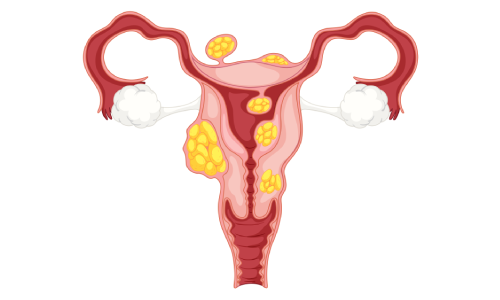
Uterine fibroids are non-cancerous growths in the uterus common in women in their reproductive ages. Modern medicine suggests strong medications and surgery as its  treatment. Unfortunately, most people resort to these methods without looking for other options.      While they can occur at any age, they are most prevalent among women in their 40s and early 50s. Studies show that about 20% to 80% of women will develop uterine fibroids by the time they reach the age of 50.        Do you know that Ayurveda can treat uterine fibroids and reduce them in size without strong medications and surgery?    What are uterine fibroids?    Uterine fibroids are benign tumours that develop within the uterine muscle. These growths can vary in size, number, and location within the uterus.     Symptoms of uterine fibroids    The following symptoms suggest that you may have uterine fibroids:   Heavy flow during periods   Longer periods lasting more than 10 days   Pain around the pelvis   Frequent urination & difficulty in emptying, etc.     However, they can be asymptomatic too, and you may detect it only with an ultrasound.    Ayurveda and uterine fibroids    Ayurvedically, we treat this based on the Dosha-Dhatu imbalance of individual patients, with Ayurvedic medicines, diet and routines. They can be completely reduced in size with Ayurveda.      Ayurvedic practitioners prescribe herbal formulations that aim to restore balance to the Doshas and promote the body’s natural healing processes. These herbal remedies can help reduce the size of fibroids and alleviate associated symptoms.    Ayurvedic dietary recommendations are personalized to address the specific Dosha imbalance. A balanced diet with an emphasis on whole foods, fruits, vegetables, and herbs is encouraged to support overall well-being.    Indeed, Ayurveda places great importance on daily routines (Dinacharya) and, furthermore, seasonal routines (Ritucharya).  Adhering to these routines can help maintain a harmonious balance within the body and mind, promoting healing.    But unfortunately, people consider Ayurveda the “last resort” or the “last option” when other medical systems fail.  Most patients come to Ayurveda for treatment for uterine fibroids only after they have grown quite big in size – when modern medicine has advised surgery as the only option. At this point, it becomes difficult even for a good Ayurvedic doctor to treat.      So, seek Ayurvedic support as soon as you are diagnosed with fibroids. Don’t wait for the fibroids to get bigger, even if it stays asymptomatic!  You can join our   Health Programs for mind and body detox.   If you are struggling with any health issues, you can either book a consultation with us or send us a message via WhatsApp to +91 79074 89839. We have the best Ayurvedic doctors in Trivandrum who are always glad to help you. If you have any queries, contact us.  You can also visit us at our hospital.