

What Ayurveda Can Actually Offer Autistic Children and What It Can’t

Parents of autistic children usually hear one of two things.   Either that nothing can be done, and they should simply learn to live with it. Or that someone, somewhere, has a cure.   Both of these are failures of honesty.   Autism is a neurodevelopmental difference. I cannot remove it, and I will never tell a parent otherwise. What I can say, based on years of clinical experience, is that many children show meaningful improvements in cognition, regulation, sleep, and digestion with individualized Ayurvedic care.   Where I Actually See the Pattern   Many of the autistic children I’ve worked with come in with gastrointestinal symptoms alongside everything else, constipation, restless sleep, real difficulty winding down at night.   Classically, this combination has a name: disturbed Vata and weak Agni, presenting together. In this framework, the digestive and nervous systems are not viewed as separate problems.   They’re two expressions of the same underlying imbalance.   That’s the starting point for how treatment gets built and here is what I actually do.   Dinacharya (Daily Routine and Rhythm)   Meals at the same time, every day. Sleep at the same time, every day.   This is, without question, the intervention parents underestimate the most.   Vata, the quality most associated with restlessness, irregularity, and difficulty settling, responds to consistency more than to almost anything else I can prescribe. A predictable rhythm to the day is not a minor lifestyle suggestion here.   Ahara (Food)   Warm. Cooked. Simple. Unhurried. And no restriction.   Most autistic children are already working with a narrow range of accepted foods. Taking things away tends to make that narrower still, not better. So, the approach isn’t to remove foods, it’s to change how the accepted foods are prepared, before changing what they are.   Same ingredients a child already trusts and eats, prepared in a way that’s easier on digestion.   Deepana and Pachana (Kindling Digestion, Clearing Ama)   This is the direct work of strengthening digestive fire and addressing Ama, the accumulation of incompletely digested material as described in Ayurveda. Everything here is gentle, matched to the child’s age and constitution, and prescribed individually, in person. There’s no standard protocol handed out uniformly, the dose and approach are unique to the child.   Medhya Medicines   This is a classical category of Ayurvedic preparations traditionally used to support memory, learning, and cognitive function. Many are prepared as medicated ghrita, with the specific preparation chosen according to the child’s constitution and clinical presentation.   That property is what allows herbs like Brahmi and Centella asiatica (Gotu Kola) to actually reach the brain and act on cognitive function, rather than being absorbed elsewhere in the body and doing little for the nervous system directly.   In my experience treating many autistic children, these preparations help. But there is no single herb you simply take and get uniform benefit from.   The combination, the dose, the vehicle, and the child’s own constitution all have to be individualized. What works well for one child can be entirely wrong for another.   Abhyanga (Daily Warm Oil Massage)   A daily practice, and one I’ve written about extensively. As a consistent, long-term habit, it supports overall well-being in a way that compounds over time rather than producing an immediate, isolated effect.   I’ve written a detailed guide on how to practice Abhyanga correctly, the oils to use, and its benefits. You can read it here.   What I Do Not Do   Boundaries matter as much as the treatment itself, so here they are, stated plainly.   I do not perform Panchakarma on young children. In my clinical practice, children under seven are not considered candidates for classical Panchakarma procedures such as Nasya, Vamana, or Virechana, or any of the other classical cleansing procedures.   If anyone tells you otherwise, don’t do it.   I do not put autistic children on restrictive diets. Many of them are already eating a very limited set of foods. Removing items from an already-narrow list isn’t a viable strategy. The work happens around preparation and ingredients, not elimination.   What Actually Happens   Every child is different. Some respond well. Some change slowly. Some continue to struggle with the same challenges despite consistent treatment. There are no guarantees here, and I won’t pretend otherwise.   What I can say, based on what I’ve seen across many cases, is this: a child receiving genuinely individualized Ayurvedic treatment will often be doing noticeably better over time.   If you’d like a deeper understanding of autism and how it’s approached through our Agni Awakening Programs, send a WhatsApp message to +91 99011 26331. Our team will guide you through the next steps.  
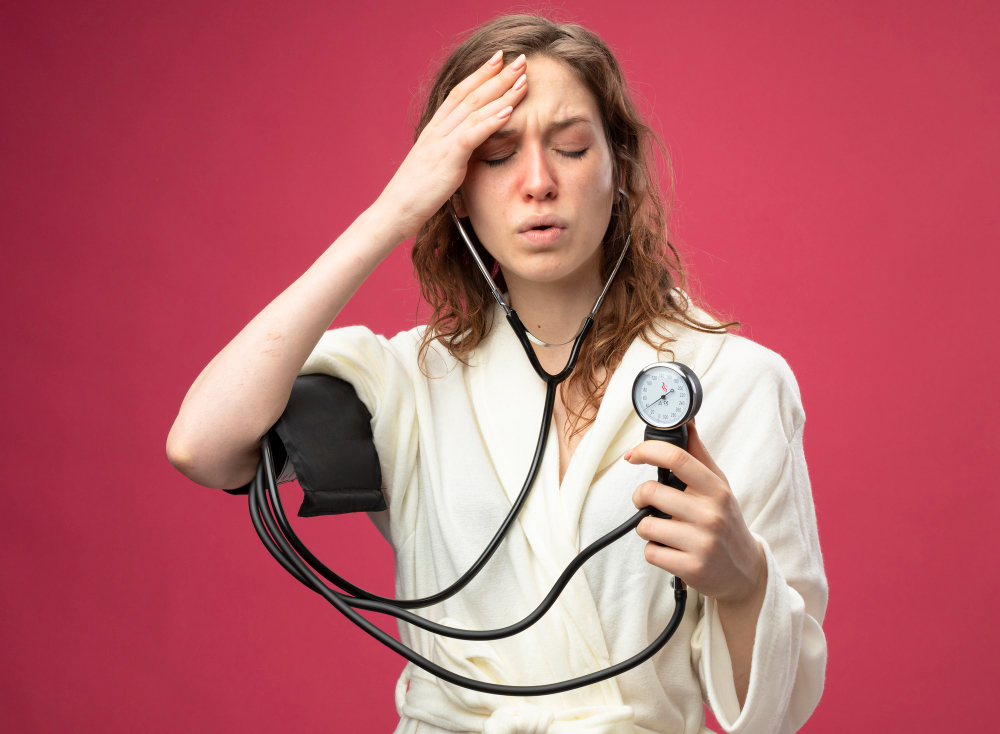
Why High Blood Pressure Is Increasing in People in Their 30s and 40s?

  High blood pressure is no longer considered a condition that appears only after the age of 60.   Today, more and more people in their 30s and 40s are being diagnosed with hypertension, especially those with a family history of diabetes, obesity, cholesterol imbalance, or cardiovascular disease.   Many people believe high blood pressure is simply caused by stress or excess salt intake. While these factors do play a role, the deeper issue is often metabolic dysfunction, particularly insulin resistance.   Let us understand this in a simple way.   The Connection Between Insulin Resistance and High Blood Pressure   Our body produces a hormone called aldosterone.   This hormone tells the kidneys to retain sodium (salt). When salt is retained in the body, water also stays back. Increased water retention raises blood volume, and when blood volume increases, blood pressure rises.   Now here is where insulin resistance becomes important.   People with insulin resistance often have higher insulin levels circulating in the body. Elevated insulin can stimulate the retention of sodium and water, making the body more prone to developing high blood pressure.   This is why people with: Belly fat Weight gain Fatty liver High cholesterol Prediabetes Sedentary lifestyles   often gradually develop hypertension as well.   Ayurveda sees this pattern as a Kapha-dominant metabolic disorder associated with weak Agni, Ama accumulation, sluggish circulation, and blocked channels.   The good news is that Ayurveda focuses not just on controlling blood pressure numbers but on improving the underlying metabolic imbalance itself.   Ayurvedic Principles That Support Better Metabolic Health   Langhana, Lightening Therapy   One of the first approaches in Ayurveda for metabolic disorders is Langhana, or “lightening therapy.” The goal is to reduce overload on the digestive system and give metabolism an opportunity to reset. This includes:   Eating lighter meals Avoiding overeating Choosing foods that are easy to digest Reducing processed and heavy foods Allowing proper gaps between meals   When digestion improves, the body becomes more efficient at handling glucose and insulin. Cells begin responding better to insulin signals, reducing metabolic stress.   Simple dietary practices can often create profound changes in energy levels, bloating, cravings, and metabolic function.   Ruksha Ahara and Ruksha Upachara, Dry Diet and Dry Therapies   Kapha imbalance is typically associated with heaviness, excess moisture, sluggishness, and fat accumulation.   To counter this, Ayurveda recommends “Ruksha” therapies, dry and light approaches that reduce excessive Kapha.   Examples include:   Barley Horse gram Flat beans Millets Light legumes   Daily use of spices such as:   Turmeric Black pepper Dry ginger Cumin Mustard seeds   can help stimulate metabolism and improve digestion.   These foods and herbs support better cellular activity and reduce stagnation in the body.   Ushna Dravya   Cold, heavy, oily, and refrigerated foods tend to aggravate Kapha and weaken digestion.   Warmth, on the other hand, activates Agni.   This is why Ayurveda often recommends:   Warm water throughout the day Freshly cooked warm meals Warm herbal infusions   These practices improve circulation, digestion, and metabolic responsiveness.   Many people notice reduced bloating, better digestion, and improved energy simply by shifting from cold foods and drinks to warm alternatives.   Bitter and Pungent Tastes for Metabolic Cleansing   Ayurveda classifies tastes according to their effect on the body.   For Kapha-related disorders like insulin resistance and obesity, bitter (Tikta) and pungent (Katu) tastes are especially beneficial.   Bitter substances help clear metabolic channels and reduce excess accumulation.   Pungent substances stimulate digestion and circulation.   Examples include: Neem Fenugreek (Methi) Bitter gourd Turmeric Black pepper Garlic Radish Leafy greens   These foods support healthy glucose metabolism and improve digestive efficiency.   Vyayama, Movement and Exercise   Modern lifestyles with very little physical activity are one of the main reasons behind poor metabolism and lifestyle diseases today.   Ayurveda strongly emphasises daily movement to reduce Kapha stagnation.   Exercise helps:   Improve circulation Enhance glucose uptake into muscles Reduce insulin resistance Improve cardiovascular health Support healthy body weight   Strength training is particularly beneficial because muscle tissue improves insulin sensitivity.   Even simple daily habits like walking after meals, climbing stairs, yoga, or mobility exercises can create significant improvements over time.   Consistency matters far more than intensity.   Udvartana, Herbal Dry Powder Massage   Udvartana is a traditional Ayurvedic therapy involving massage with herbal powders.   Unlike oil massage, this therapy uses dry herbal powders to stimulate circulation and reduce excess Kapha.   Horse gram powder is commonly used for this purpose.   Benefits may include:   Improved lymphatic circulation Reduction in heaviness Better skin tone Support for fat metabolism Increased body stimulation   This therapy is often used as part of comprehensive metabolic management programs.   Swedana, Sweat Therapy   Swedana refers to therapeutic sweating or steam therapy.   Mild heat therapy helps mobilise accumulated Kapha in the body.   Benefits include:   Improved circulation Relaxation of stiffness Opening of channels Better elimination of waste Enhanced metabolic activity   One important precaution: The head should not be exposed directly to excessive steam or heat during the process.   Deepana and Pachana, Improving Digestion and Reducing Ama   Ayurveda believes that weak digestion is the foundation of many chronic diseases.   When digestion is impaired, Ama forms in the body.   Ama contributes to:   Sluggish metabolism Inflammation Weight gain Blocked circulation Reduced insulin sensitivity   Deepana therapies stimulate digestive fire, while Pachana therapies help in digestion.   This may include: Digestive herbs Fasting strategies Herbal teas Spice combinations Meal timing corrections   Once digestion improves, many metabolic symptoms begin correcting naturally.   Shamana Therapy, Balancing Kapha with Herbs   After digestion improves and metabolism becomes more active, Ayurveda may use herbal formulations to stabilise the system. This is called Shamana therapy.   Importantly, Ayurveda does not rely on random single herbs for complex metabolic disorders.   Proper treatment usually involves carefully selected herbal combinations tailored to:   Body constitution Digestion Sleep Stress levels Weight… Continue reading Why High Blood Pressure Is Increasing in People in Their 30s and 40s?