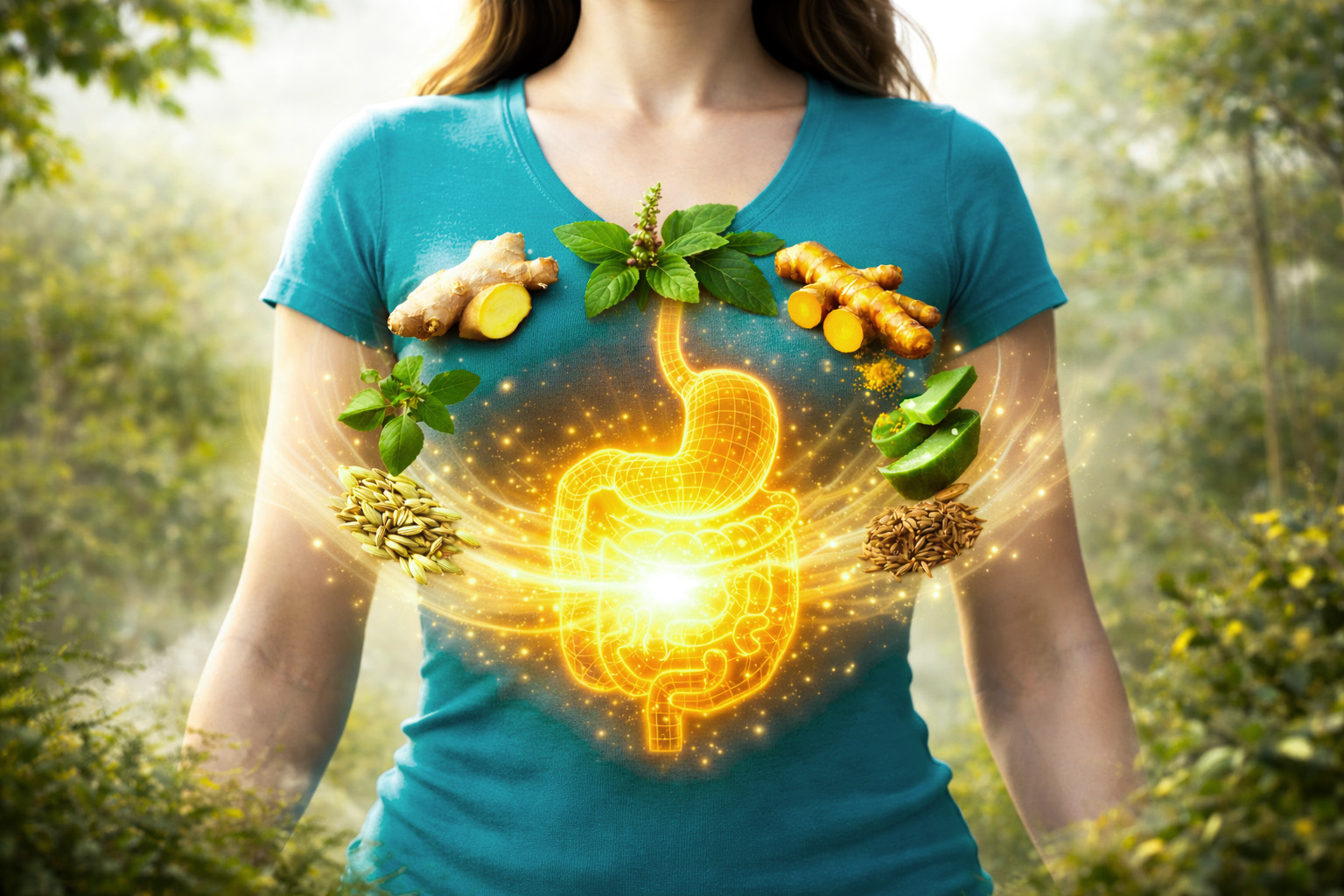

Today, let’s go back to the very beginning. Before Doshas, before Agni, before all the specific topics we usually talk about, there is a bigger question. What is Ayurveda actually trying to do? Most people think of it as a system to treat disease and yes, it does that. But that is only half of it. Ayurveda comes from two Sanskrit words, Ayur meaning life and Veda meaning science. Therefore, Ayurveda translates to the science of life, and it cares just as much about keeping a healthy person healthy as it does about treating someone who is unwell. In the Indian way of thinking, life has four goals. Dharma, Artha, Kama and Moksha. And none of these are possible if your body and mind are struggling. So, health was never the end goal, it was what made everything else possible. Now, to understand how Ayurveda looks at the body, you need to start with one idea. Pancha Mahabhuta. We experience the world through five senses. Sight, touch, hearing, taste and smell. Ayurveda says everything around us can be understood through five elements that go with these: Akasha, Vayu, Agni, Jala and Prithvi. Space, air, fire, water and earth. And this isn’t only about nature. Your body is made of these same elements, so is your food and so is your medicine. Even ordinary water isn’t just Jala. It carries all five, with one leading. This is why Ayurveda never saw the body and the world as two separate things. What is outside you keeps becoming what is inside you, through food, water and air. And when the balance shifts within, your body tries to correct it. It lets go of what is in excess and asks for what is lacking. In a way, that is what a craving really is. From these five elements come the three Doshas. Vata, Pitta and Kapha. Vata is mostly space and air. It is movement. Breathing, speaking, and everything in your body that needs to be pushed forward. Pitta is mostly fire. It is transformation. Digestion, forming blood, vision, memory, turning one thing into another. Kapha is mostly water and earth. It is moisture and stability. It softens food for digestion, helps you taste, and nourishes the senses. Something I always want people to understand is that these three are not sitting in separate corners of the body. They are everywhere but the concentration varies. Vata is mostly in the intestines and bones, Pitta is in the stomach and blood, Kapha in the chest and joints. When they are balanced, they hold you up. When they are disturbed, that is where disease begins. Then come the Dhatus, the seven tissues that form the body’s structure. Rasa, Rakta, Mamsa, Meda, Asthi, Majja and Shukra. Plasma, blood, muscle, fat, bone, marrow and reproductive tissue. And this matters because Doshas don’t affect the body randomly. The Dhatus are the first place they act. So, when you look at how a disease really develops, it almost always passes through them. Which brings us back to Agni. The food you eat comes from outside. It is unfamiliar to your body, and it has to be broken down and made into something your body can use. Agni is what does that. But there is not just one Agni. There is the main digestive fire in the gut. There are five Bhutagnis that turn the elements in your food into elements your body recognises. And there are seven Dhatvagnis, one for each tissue, turning nutrients into that specific tissue, step by step. That is why Ayurveda treats Agni almost as the body itself. When someone comes in with a problem, a Vaidya often looks first at the state of their Agni. Because if that isn’t working well, nothing else will. Most Ayurvedic medicines are designed with this in mind. Now here is the part I find the most personal. Prakriti. Ayurveda believes every person is unique, and Prakriti is the reason. At the time of conception, the Doshas present decide your natural constitution. It could be Vata, Pitta, Kapha, a mix of two, or a balance of all three. And it stays with you for life. That is why Ayurveda says it treats the person, not the disease. Two people with the same illness may need very different treatment. Someone with a Vata Prakriti is more prone to Vata problems, so they are advised to avoid what aggravates Vata. A Pitta person is given cooling things. A Kapha person, warming things. And the mind is part of this too. Prakriti is also described through Sattva, Rajas and Tamas, because Ayurveda never saw disease as only physical. The mind affects the body, and the body affects the mind. Which is why even a physical illness sometimes comes with steps for the mind. Even medicines are understood this way. They carry the five elements as well, so Ayurveda looks at their taste, called Rasa, their qualities, called Guna, their potency, Virya, and their effect after digestion, Vipaka. And then there is something none of these can explain, the medicine’s special action, called Prabhava. Two medicines can be alike in every other way and still act differently because of this. Now, none of this is meant to be memorised in one sitting. But if you step back, you can see how it all connects. The elements make the Doshas. The Doshas affect the tissues. Agni keeps the whole thing running. Prakriti decides how all of it shows up in you and the same logic carries over to food, medicine and even the mind. That is what makes Ayurveda a system, and not just a collection of remedies. And I think that is the real takeaway. When you understand these basics, you stop seeing Ayurvedic advice as random rules, like eat this, avoid that. You… Continue reading Principles of Ayurveda: What Everything Else Is Built On