

GLP-1 Medications and the Question Nobody’s Asking: What Are You Actually Losing?

Weight loss has become one of the biggest health goals today. And with medications like Ozempic, Wegovy, Mounjaro, and Zepbound becoming more common, many people are losing weight faster than ever before.   It’s not surprising that the numbers on the scale are going down. But there is a question worth asking.   What exactly are you losing?   Imagine if I were to remove five kilos from your body today. What would you choose to lose? Five kilos of muscle? fat? bone?   The answer is obvious. Nobody wants to lose muscle, water, or bone. Everyone wants to lose excess body fat.   The problem is that your weighing scale cannot tell the difference. It cannot tell you whether the weight you lost came from fat, muscle, or something else. It simply tells you that your weight has changed. It doesn’t tell you what your body had to give up to make that happen.   This is why we need to focus on something much more important.   Losing weight is not always the same as becoming healthier.   When most people say they want to lose weight, what they actually mean is that they want to lose excess fat, feel healthier, have more energy, and reduce their long-term health risks.   The problem is that the weighing scale never tells the whole story.   The goal was never really about losing weight. The goal has always been about improving health.   That distinction matters because not all weight loss improves health in the same way.   How do GLP-1 medications work?   Medications like Ozempic, Wegovy, Mounjaro, and Zepbound belong to a group of medicines called GLP-1 receptor agonists.   These medications work by mimicking the action of a hormone that our body naturally produces after eating. This hormone helps you feel full, slows down how quickly food leaves your stomach, and reduces appetite.   As a result, many people naturally eat less without constantly feeling hungry.   This reduced food intake is one of the main reasons these medications lead to weight loss.   They are being widely prescribed because studies have shown impressive results for people living with obesity and type 2 diabetes. For many individuals, they genuinely improve blood sugar control, reduce body weight, and lower the risk of several obesity-related complications.   But there is another part of the story that deserves equal attention.   Weight loss doesn’t always mean fat loss alone   When people lose weight quickly, the body doesn’t burn only fat.   It also loses some muscle.   This is not unique to GLP-1 medications. It happens with almost every form of weight loss, including calorie restriction, fasting, bariatric surgery, and normal dieting.   However, studies on GLP-1 medications have shown that a meaningful portion of the weight people lose comes from lean mass, which includes muscle.   The exact amount varies between studies, but researchers have reported that anywhere from around one quarter to nearly half of the total weight lost may come from lean tissue, depending on the medication, the amount of weight lost, and the individual.   That is an important fact to understand because weight loss without a plan can cost you muscle as well as fat.   Why does muscle matter so much?   Muscle is one of the most important organs for your long-term health.   It supports healthy metabolism, helps regulate blood sugar, improves physical strength, protects your bones, supports healthy ageing, and allows you to stay active and independent.   When you lose muscle, your body’s energy needs gradually become lower.   Over time, your metabolism slows down, making it easier to regain weight if the medication is reduced or stopped without a long-term strategy in place.   In other words, you may become lighter, but your body may also become less resilient.   That is not the outcome most people are hoping for.   Thin does not always mean healthy   One of the biggest misconceptions in modern health is that a lean or thin body is automatically a healthy one.   It isn’t.   Health is not defined by the number on the scale.   Someone can lose significant weight while also losing strength, muscle, and metabolic health. At the same time, another person may lose less weight overall but preserve muscle, improve fitness, and achieve much better long-term health outcomes.   This is why body composition matters far more than body weight alone.   The goal should never be to become the lightest version of yourself. The goal should be to become the healthiest version of yourself.   Protecting muscle should be part of the plan   If you are taking a GLP-1 medication, losing weight should not be the only goal.   Protecting your muscle should be part of the plan from the very beginning.   Because these medications reduce appetite so effectively, many people struggle to eat enough each day. Their overall food intake drops significantly, and with it, the amount of   nutrients the body needs to maintain muscle.   Without enough building blocks, the body finds it much harder to preserve lean tissue during weight loss.   This is where nutrition becomes essential.   Eating healthy food and meeting your nutritional needs gives your body the raw materials it needs to maintain muscle while losing fat.   The second part is just as important.   Strength training sends the right message   One of the most effective ways to preserve muscle during weight loss is strength training.   When you regularly challenge your muscles through resistance exercises, your body receives a clear message that those muscles are still needed.   When muscles are being used consistently, the body is much more likely to preserve them, even while losing weight.   Without that stimulus, the body has little reason to hold on to muscle tissue during a calorie deficit.   Weight loss should support long-term health   GLP-1 medications can be powerful. For many people, they… Continue reading GLP-1 Medications and the Question Nobody’s Asking: What Are You Actually Losing?
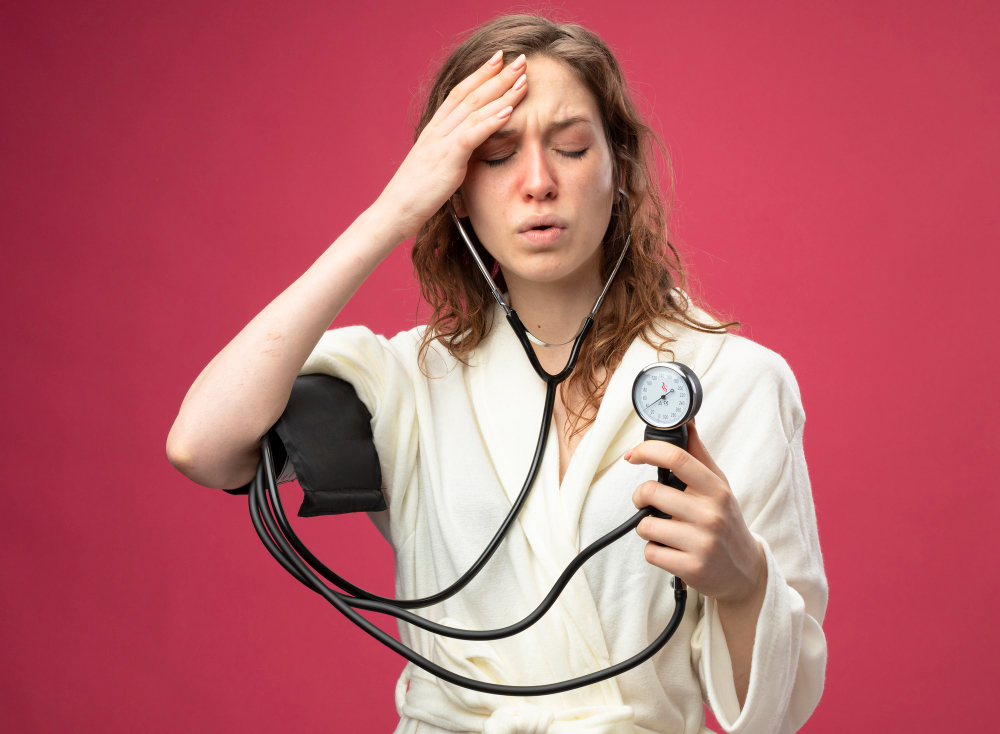
Why High Blood Pressure Is Increasing in People in Their 30s and 40s?

  High blood pressure is no longer considered a condition that appears only after the age of 60.   Today, more and more people in their 30s and 40s are being diagnosed with hypertension, especially those with a family history of diabetes, obesity, cholesterol imbalance, or cardiovascular disease.   Many people believe high blood pressure is simply caused by stress or excess salt intake. While these factors do play a role, the deeper issue is often metabolic dysfunction, particularly insulin resistance.   Let us understand this in a simple way.   The Connection Between Insulin Resistance and High Blood Pressure   Our body produces a hormone called aldosterone.   This hormone tells the kidneys to retain sodium (salt). When salt is retained in the body, water also stays back. Increased water retention raises blood volume, and when blood volume increases, blood pressure rises.   Now here is where insulin resistance becomes important.   People with insulin resistance often have higher insulin levels circulating in the body. Elevated insulin can stimulate the retention of sodium and water, making the body more prone to developing high blood pressure.   This is why people with: Belly fat Weight gain Fatty liver High cholesterol Prediabetes Sedentary lifestyles   often gradually develop hypertension as well.   Ayurveda sees this pattern as a Kapha-dominant metabolic disorder associated with weak Agni, Ama accumulation, sluggish circulation, and blocked channels.   The good news is that Ayurveda focuses not just on controlling blood pressure numbers but on improving the underlying metabolic imbalance itself.   Ayurvedic Principles That Support Better Metabolic Health   Langhana, Lightening Therapy   One of the first approaches in Ayurveda for metabolic disorders is Langhana, or “lightening therapy.” The goal is to reduce overload on the digestive system and give metabolism an opportunity to reset. This includes:   Eating lighter meals Avoiding overeating Choosing foods that are easy to digest Reducing processed and heavy foods Allowing proper gaps between meals   When digestion improves, the body becomes more efficient at handling glucose and insulin. Cells begin responding better to insulin signals, reducing metabolic stress.   Simple dietary practices can often create profound changes in energy levels, bloating, cravings, and metabolic function.   Ruksha Ahara and Ruksha Upachara, Dry Diet and Dry Therapies   Kapha imbalance is typically associated with heaviness, excess moisture, sluggishness, and fat accumulation.   To counter this, Ayurveda recommends “Ruksha” therapies, dry and light approaches that reduce excessive Kapha.   Examples include:   Barley Horse gram Flat beans Millets Light legumes   Daily use of spices such as:   Turmeric Black pepper Dry ginger Cumin Mustard seeds   can help stimulate metabolism and improve digestion.   These foods and herbs support better cellular activity and reduce stagnation in the body.   Ushna Dravya   Cold, heavy, oily, and refrigerated foods tend to aggravate Kapha and weaken digestion.   Warmth, on the other hand, activates Agni.   This is why Ayurveda often recommends:   Warm water throughout the day Freshly cooked warm meals Warm herbal infusions   These practices improve circulation, digestion, and metabolic responsiveness.   Many people notice reduced bloating, better digestion, and improved energy simply by shifting from cold foods and drinks to warm alternatives.   Bitter and Pungent Tastes for Metabolic Cleansing   Ayurveda classifies tastes according to their effect on the body.   For Kapha-related disorders like insulin resistance and obesity, bitter (Tikta) and pungent (Katu) tastes are especially beneficial.   Bitter substances help clear metabolic channels and reduce excess accumulation.   Pungent substances stimulate digestion and circulation.   Examples include: Neem Fenugreek (Methi) Bitter gourd Turmeric Black pepper Garlic Radish Leafy greens   These foods support healthy glucose metabolism and improve digestive efficiency.   Vyayama, Movement and Exercise   Modern lifestyles with very little physical activity are one of the main reasons behind poor metabolism and lifestyle diseases today.   Ayurveda strongly emphasises daily movement to reduce Kapha stagnation.   Exercise helps:   Improve circulation Enhance glucose uptake into muscles Reduce insulin resistance Improve cardiovascular health Support healthy body weight   Strength training is particularly beneficial because muscle tissue improves insulin sensitivity.   Even simple daily habits like walking after meals, climbing stairs, yoga, or mobility exercises can create significant improvements over time.   Consistency matters far more than intensity.   Udvartana, Herbal Dry Powder Massage   Udvartana is a traditional Ayurvedic therapy involving massage with herbal powders.   Unlike oil massage, this therapy uses dry herbal powders to stimulate circulation and reduce excess Kapha.   Horse gram powder is commonly used for this purpose.   Benefits may include:   Improved lymphatic circulation Reduction in heaviness Better skin tone Support for fat metabolism Increased body stimulation   This therapy is often used as part of comprehensive metabolic management programs.   Swedana, Sweat Therapy   Swedana refers to therapeutic sweating or steam therapy.   Mild heat therapy helps mobilise accumulated Kapha in the body.   Benefits include:   Improved circulation Relaxation of stiffness Opening of channels Better elimination of waste Enhanced metabolic activity   One important precaution: The head should not be exposed directly to excessive steam or heat during the process.   Deepana and Pachana, Improving Digestion and Reducing Ama   Ayurveda believes that weak digestion is the foundation of many chronic diseases.   When digestion is impaired, Ama forms in the body.   Ama contributes to:   Sluggish metabolism Inflammation Weight gain Blocked circulation Reduced insulin sensitivity   Deepana therapies stimulate digestive fire, while Pachana therapies help in digestion.   This may include: Digestive herbs Fasting strategies Herbal teas Spice combinations Meal timing corrections   Once digestion improves, many metabolic symptoms begin correcting naturally.   Shamana Therapy, Balancing Kapha with Herbs   After digestion improves and metabolism becomes more active, Ayurveda may use herbal formulations to stabilise the system. This is called Shamana therapy.   Importantly, Ayurveda does not rely on random single herbs for complex metabolic disorders.   Proper treatment usually involves carefully selected herbal combinations tailored to:   Body constitution Digestion Sleep Stress levels Weight… Continue reading Why High Blood Pressure Is Increasing in People in Their 30s and 40s?