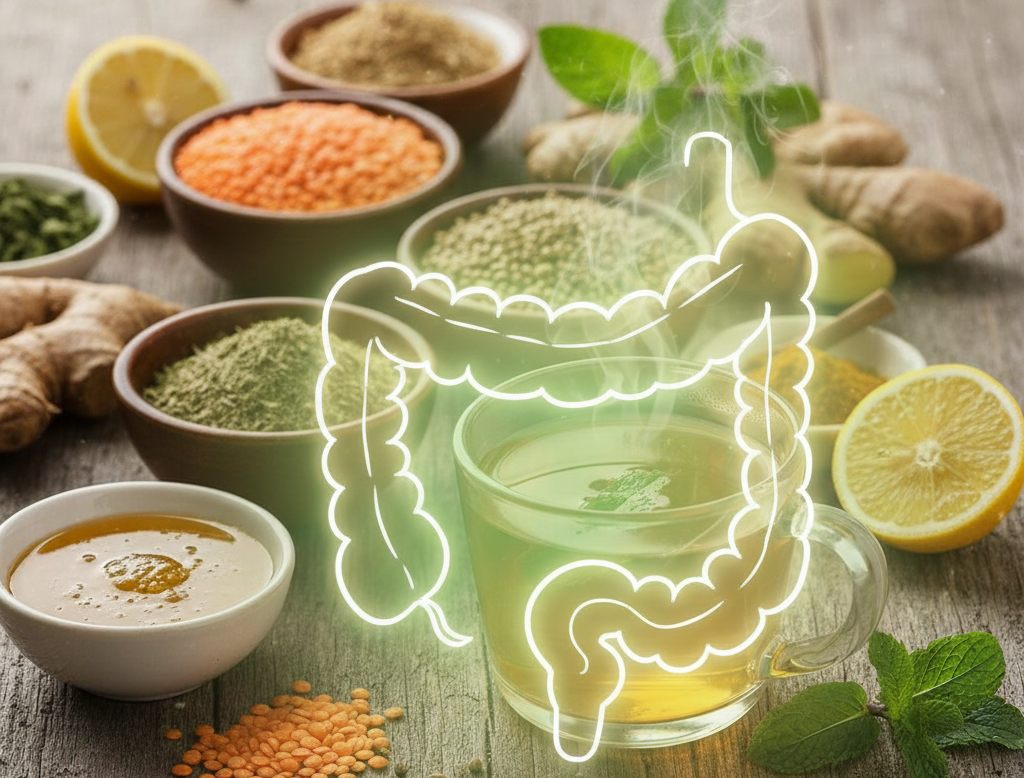

What is Agni and Why Every Disease Starts Here?

Once you start understanding Ayurveda deeply, and spend enough time studying it, you slowly realize that Ayurveda considers disturbed Agni to be one of the foundational factors behind many chronic diseases.   Even if you are completely new to Ayurveda, you have probably heard this word before.   Most people know Agni as “digestive fire.”   Something related to the stomach. Something related to appetite. Something related to food.   But it is much bigger than that.   Agni is transformation itself. This is the simplest way to understand it.   The food we eat must transform into energy. Energy must transform into tissues. Tissues must transform into strength, immunity, and vitality.   This entire process depends on Agni.   And when this transformation starts becoming weak, disturbed, irregular, or excessive, disease slowly begins developing over time.   Ayurveda gives Agni such importance because digestion is not just about comfort after meals. It is about the body’s ability to process everything it receives.   If food is not properly transformed, it does not become proper nourishment. Instead, it can remain partially digested and create strain in the system.   Over time, this can weaken the tissues, disturb the doshas, and reduce vitality.   And honestly, many times the disturbance starts much before reports become abnormal.   The body always gives signals first.   Loss of appetite. Bloating. Brain fog. Heaviness. Fatigue. Coated tongue. Irregular bowel movements.   In Ayurveda, we do not ignore these small signs because these are often the earliest indications that Agni is struggling.   Ama   Ama is one of the most misunderstood concepts in Ayurveda.   People often translate Ama simply as “toxins.”   But honestly, Ama is much more complex than that.   Ama is anything that the body could not properly digest, process, or eliminate.   Improperly digested food can become Ama.   Poor lifestyle habits can contribute to Ama.   Even unresolved emotions and chronic stress can create imbalance in the system.   Ayurveda describes Ama as: heavy, sticky, obstructive, clouding.   And clinically, this description makes a lot of sense.   When digestion weakens, the body slowly loses efficiency.   Channels become blocked. Inflammation increases. Metabolism slows down. Energy decreases. Tissues stop functioning optimally.   Then disease begins expressing itself differently in different people.   In one person it may become a skin disorder.   In another, hormonal imbalance.   In someone else, autoimmune disease, chronic fatigue, joint pain, or metabolic disorders.   The disease names may change.   But internally, disturbed Agni and Ama are often present somewhere in the background.   This is one reason Ayurveda places so much importance on digestion.   One thing I find fascinating is that Ayurveda does not see digestion as only stomach digestion.   Even the mind digests.   Have you noticed how stress affects your stomach?   How anxiety changes appetite?   How grief can make digestion weak?   The Four States of Agni   According to Ayurveda, Agni does not become disturbed in the same way in every person.   Sometimes it becomes weak. Sometimes excessive. Sometimes irregular. And sometimes perfectly balanced.   Understanding these patterns is very important because they explain why different people experience digestion and disease differently.   The healthiest state is called Sama Agni.   People with Sama Agni usually have: good appetite, comfortable digestion, stable energy, clear mind, healthy bowel movements, and overall balance in the body.   Food nourishes them properly.   There is no heaviness after eating. No burning. No excessive gas or discomfort.   In Ayurveda, this is considered the ideal state because the body is transforming nourishment properly.   Then there is Manda Agni.   Weak or slow digestion.   This is extremely common today.   These individuals often feel: heavy, sluggish, sleepy after meals, bloated, and mentally dull.   Their appetite may feel low, but even small amounts of food can create discomfort.   Ayurveda says this state allows Ama to accumulate very easily because the digestive fire is not strong enough to process food properly.   This pattern is commonly associated with Kapha imbalance.   Then comes Tikshna Agni.   Excessively sharp digestion.   In these individuals, the digestive fire becomes too intense.   They may experience: very strong hunger, acidity, burning sensation, irritability, heat intolerance, loose stools, or inflammation.   Even though digestion appears “strong,” Ayurveda does not consider this healthy either.   Because excessive fire can slowly start damaging tissues over time.   This state is commonly associated with aggravated Pitta.   And then there is Vishama Agni.   Irregular digestion.   One day digestion feels completely normal. The next day there is bloating, constipation, gas, or discomfort.   Appetite becomes unpredictable.   This is very commonly seen in people with: stress, anxiety, irregular schedules, poor sleep, overthinking, excessive travel, and disturbed routines.   In Ayurveda, this is strongly connected with Vata imbalance.   There is also something called Dhatvagni, which refers to the metabolic activity present within each tissue.   According to Ayurveda, digestion does not stop after food leaves the stomach.   Transformation continues throughout the body.   Food must eventually nourish blood, muscle, fat, bone, marrow, and reproductive tissues properly.   This is an incredibly sophisticated way of understanding metabolism.   One thing I deeply appreciate about Ayurveda is that it never separates the mind from the body.   We can clearly observe how emotional states affect digestion.   Stress creates acidity.   Fear disturbs appetite.   Grief weakens digestion completely.   Anxiety creates irregular bowel patterns.   Modern medicine is now studying the gut-brain connection very seriously.   But Ayurveda recognized this relationship thousands of years ago.   Ojas   Ayurveda says that when Agni functions properly for a long time, the final refined essence created in the body is called Ojas.   Ojas is considered the essence of vitality.   It is what gives the body strength, stability, resilience, immunity, and even emotional steadiness.   When Agni works well, it helps create… Continue reading What is Agni and Why Every Disease Starts Here?

Have We Been Looking at Cancer the Wrong Way?

While the modern world is still trying to understand the many factors that contribute to cancer, I feel like I may have understood something important through my experience with Ayurveda.   I am not saying this is written in any ancient Ayurvedic textbook. In fact, it is not mentioned in any of the Samhitas or classical Ayurvedic texts in the exact way I am going to explain it.   Nobody taught me this directly.   This understanding has come from years of observing patients, studying Ayurveda deeply, and trying to correlate what I see in practice.   And honestly, I just want to share my learning.   Whenever I asked my professors about cancer, they would say that cancer can be understood as Ojakshaya, which means depletion of ojas, or reduction in vitality and immunity.   Yes, that explanation made some sense to me.   But still, I always felt that there was something missing. There was no clear explanation about why cancer develops in the first place. No direct cause that was fully satisfying to me.   Over time, I started connecting dots on my own.   Let me explain this in the simplest way possible so that even if you don’t know much about Ayurveda, you will still understand.   Most people have heard about Vata, Pitta, and Kapha. These are the three doshas in Ayurveda.   Vata is mainly associated with the air element. Pitta is associated with fire. Kapha is associated with earth and water.   Now think about this carefully.   People who naturally gain weight easily, people who accumulate fat, people whose bodies tend to “build up” tissues, in Ayurveda, these are considered Kapha-dominant people.   Conditions like:   Polycystic ovaries (PCOS), Thyroid swelling (Galagandha), Diabetes, Fibroids,   all have strong Kapha involvement mentioned in Ayurvedic texts.   Why?   Because Kapha is all about accumulation, growth, nourishment, and building tissues.   In diabetes too, Ayurveda explains that toxins accumulate because digestion is weak.   Food is eaten but not properly digested, and over time, undigested material starts accumulating in the body.   In Kapha individuals, this accumulation tendency is naturally higher because their system is already more prone to storing and building.   Now here is where my thinking started becoming very clear.   What is cancer, fundamentally?   Cancer involves uncontrolled cell growth and multiplication. From an Ayurvedic lens, I began wondering whether this process could also reflect a tendency toward excessive accumulation and tissue build-up.   So logically, shouldn’t cancer also have a strong Kapha component?   Nobody taught me this directly. I arrived at this understanding by observing patterns repeatedly in patients.   And then I looked at modern research.   Today, modern medicine is increasingly talking about:   fasting, calorie restriction, not feeding the cancer, metabolic therapies.   You may have come across phrases like “starve the cancer,” often discussed in conversations around metabolism and cancer research.   And suddenly, it made sense.   Because in Ayurveda, the number one treatment mentioned for aggravated Kapha is Langhana.   Langhana means fasting.   It is eating less, lightening the system and decreasing accumulation.   When Kapha increases excessively, Ayurveda says the body needs reduction, not more nourishment.   And honestly, when I saw this parallel between modern research and Ayurvedic principles, it made complete sense to me.   Of course, our ancestors may have understood something this profound a long time ago.   Sometimes we assume ancient systems are primitive, but often they observed the body in incredibly intelligent ways.   Now, I want to make something very clear here.   I do not believe Ayurveda should replace modern cancer treatment.   Modern medicine is extraordinary when it comes to managing rapidly proliferating cancer cells. Cancer can spread aggressively, and modern interventions like chemotherapy, radiation, surgery, immunotherapy, these are fast-acting and lifesaving in many cases.   We cannot ignore that.   What we do through Ayurveda is different.   We work alongside modern medicine.   While modern treatment targets and destroys the actively multiplying cancer cells, Ayurveda focuses on reducing the internal environment that may be supporting that growth.   In simple words:   while one side is treating the disease directly, the other side is trying to reduce the tendency for accumulation.   That is where Kapha reduction becomes important.   Through this, we try to:   reduce excessive accumulation, improve digestion and metabolism, reduce toxins, support immunity, decrease heaviness in the body, improve overall vitality.   And more importantly, we focus heavily on reducing recurrence, slowing progression, improving quality of life and helping recovery.   This is not about “curing cancer overnight.” This is about changing the terrain of the body.   I openly acknowledge that my understanding may still be limited. Maybe my logic is incomplete. Maybe there are aspects I still do not understand.   But at the same time, I cannot ignore what I am seeing clinically.   I am seeing patients improve. I am seeing recovery happen beautifully alongside treatment. I am seeing people feel stronger, lighter, healthier, and more hopeful.   And for that, I feel deeply grateful.   Honestly, I feel like this understanding was given to me by the universe as a blessing. And I do not want to take that for granted. I want to acknowledge it with gratitude.   Because when you spend years studying, observing, questioning, and genuinely trying to help people, sometimes insights come quietly.   And I felt this understanding was worth sharing.   Even if this perspective helps one person think differently about their health, their lifestyle, or their healing journey, I will be happy.   I also want people to understand something important: Ayurveda is not only about herbs. It is not only about medicines.   It is also about understanding the body’s tendencies.   If the body is constantly in a state of accumulation, heaviness, sluggish digestion, toxin build-up, and excessive growth tendencies, then naturally we must ask: “How do we reduce… Continue reading Have We Been Looking at Cancer the Wrong Way?

Beyond Remedies: Ayurveda & the Body’s Intelligence

Most of us treat health like a problem‑solution game. Dry skin? Apply something moisturizing. Low energy? Drink something strong. Upset digestion? Take a quick‑fix remedy.   But Ayurveda asks us to pause and ask a deeper question: What is the body trying to tell us through these experiences?   As you continue listening to more insights from Ayurveda, you’ll noticed something beautiful.   The body is constantly adapting, and our role is to support that intelligence instead of overriding it.   Let us explore how this works in everyday life.   Not Everything Natural Is the Same   In today’s wellness world, “natural” is almost a magic word. But Ayurveda digs a little deeper and asks: How natural? And more importantly, how suitable is it for you?   Take camphor, for example. At first glance, it might seem like any camphor will do. But Ayurveda differentiates between:   Natural camphor (Bhimseni camphor) Synthetic camphor   They look similar, but their qualities are different.   Natural camphor has an irregular, crystalline shape and dissolves slowly. Synthetic camphor is uniform, very rigid, and burns with a harsher, sharper flame.   Why does this matter? Because subtle qualities affect how a substance interacts with the body. A harsh, synthetic version can irritate rather than soothe.   Ayurveda teaches us not to trust only the label, but to observe the qualities—how something feels, smells, and behaves. That attention to detail can make a big difference in how your body responds.   The Forgotten Art of Preparation   Another often overlooked part of health is how we prepare what we eat and use.   Take dry ginger powder, for example.   Making it at home usually means fresher, purer ingredients. Store‑bought is okay too, but only if you are sure it is unadulterated and of good quality.   Even the way you consume it matters. A small amount of dry ginger boiled briefly and then reduced in water can become a gentle digestive tonic. But this is not one‑size‑fits‑all advice.   If someone already has a lot of internal heat (Pitta), even something considered helpful like dry ginger can increase burning, acidity, or discomfort. In that case, it needs to be used cautiously or avoided until the heat is under control.   This shows a simple yet powerful idea: The same ingredient can heal or harm depending on the internal environment of the person.   The Body Is Not One System—It’s Many Working Together   Ayurveda does not see the body only as organs and bones. It describes the body as several functional energies working together in harmony.   One of the most beautiful frameworks is the five types of Vayu, or subtypes of Vata:   Prana Vayu – governs breathing, perception, and mental clarity Udana Vayu – supports speech, expression, and confidence Samana Vayu – manages digestion and assimilation Vyana Vayu – handles circulation and movement Apana Vayu – oversees elimination and reproductive functions   When you look at the body this way, symptoms start to make more sense.   For example, someone who struggles to speak clearly or feels hesitant to express themselves may not be dealing only with an emotional issue. It can also involve Udana Vayu being disturbed.   Similarly, poor circulation and stiffness are not just physical problems. They may indicate that Vyana Vayu needs support.   This interconnected view reminds us: Nothing in the body truly operates in isolation.   When Substitutes Are Not Real Substitutes   Modern thinking often asks, “Can I use this instead of that?” But Ayurveda is cautious about substitutes because it focuses on energy, not just appearance.   Take sesame oil, for example. It is widely considered ideal for daily use in many Ayurvedic practices. If you cannot find or use it, alternatives exist, but they are not equal.   White sesame oil can be acceptable, though it may be slightly less potent. Coconut oil can work, but it suits some people better in heat‑dominated conditions. Other oils may be suitable only after individual assessment.   And some substitutes, like certain refined seed oils, are simply not appropriate at all, even though they look similar.   Why such precision? Because Ayurveda does not just replace one ingredient with another. It works with qualities like heat, heaviness, lightness, and penetration, and matches them to the person’s condition.   Similarity in appearance does not mean similarity in effect.   Skin, Sensitivity, and the Limits of Moisturizing   We often treat dry skin as a surface problem. We apply more oil, carry more creams, and buy richer lotions.   But Ayurveda sees dry skin as a reflection of deeper imbalance, especially of Vata. When common oils are not tolerated, something like Shatadhauta Ghritam can be helpful.   Shatadhauta Ghritam is ghee that is transformed through repeated washing with water. It becomes cooling, light, and deeply soothing, and can be used as an external application.   Interestingly, even people sensitive to dairy may tolerate it on the skin, because:   It is processed differently It is used externally, not ingested   Still, Ayurveda adds important nuances:   It is not suitable for infected or oily skin. Sensitive individuals should always patch test first.   This level of personalization shows an essential truth: Healing is not about finding the single best product. It is about finding the right match for your body and condition.   Simple Practices, Done Mindfully   Some of the most powerful Ayurvedic practices are also the simplest.   Take foot soaks, for example.   Warm water alone can relax muscles and improve circulation. Adding a little salt can enhance the effect. Herbal decoctions can be used when extra support is needed.   No complicated steps. No fancy equipment. Just a simple, grounded practice done with awareness.   Even something as basic as water temperature matters.   Lukewarm water is usually preferred. It gently stimulates the body without shocking it, which supports smoother digestion and circulation.   These small details may seem minor, but they… Continue reading Beyond Remedies: Ayurveda & the Body’s Intelligence

Understanding Seasonal Living Through Ayurveda

If we observe nature closely, it becomes clear that our body is not separate from the environment. Ayurveda explains that the movement of the sun, the change of seasons, and the shifting climate all influence our strength, digestion, and overall health.   By understanding this relationship, we can gently adjust our food, lifestyle, and daily habits so that we stay balanced throughout the year.   One important way Ayurveda explains this connection is through the movement of the sun across the year. The year is broadly divided into two halves called Uttarayana and Dakshinayana, and each of these phases affects both nature and the human body in a very specific way.   The Role of the Sun: Adana and Visarga   During Uttarayana, the sun appears to move northward and its intensity gradually increases. In Ayurveda, this phase is called Adana Kala, which means to take away or absorb.   In this period, the growing strength of the sun and wind slowly draws moisture, nourishment, and strength from the earth and living beings. The environment becomes more dry and sharp, and our physical strength tends to go down.   Dakshinayana is the opposite half of the year, when the sun appears to move southward. This phase is known as Visarga Kala, which means to release or nourish.   Here, the influence of the moon becomes more prominent, bringing coolness, moisture, and stability to the surroundings. The earth and all living beings receive nourishment, and strength gradually returns.   These are not just astronomical descriptions. They describe how solar movement changes qualities like heat, dryness, and moisture, and how these qualities affect our strength, nourishment, and the balance of the doshas in the body.   This is why Ayurvedic seasonal routines change so much from one part of the year to another.   Why Our Strength Changes with the Seasons   Summer falls within the Adana phase and is marked by intense heat. During this time, the sun and air become extremely hot, sharp, and dry. Because the sun is effectively taking away strength, human vitality reaches one of its lowest points in this period.   To support the body, Ayurveda recommends foods that are cooling, hydrating, and light during summer. At the same time, it advises avoiding foods that increase internal heat, especially salty, sour, and pungent tastes.   These tastes are naturally heating, and if we consume them in large amounts during very hot weather, they can increase internal heat, dehydrate the body further, and worsen fatigue.   Instead, summer foods are better when they are light, cooling, and somewhat liquid in nature. They help maintain hydration, soothe heat, and protect strength.   A good example is a traditional drink called Rasala, which is curd churned with sugar and a small amount of pepper. At first, pepper may seem like an odd choice for hot weather, but in this preparation it helps support weak digestive fire, while the sugar and churning make the drink light and cooling overall. The result is a gentle, nourishing drink that fits the needs of the season.   How Seasons Influence the Doshas   Each season affects the doshas in a different way, which is why the focus of seasonal routines keeps changing.   In spring, Kapha is the main dosha to watch. During the cold months, Kapha accumulates in the body. When the sun begins to warm the earth in spring, this stored Kapha starts to melt.   This can weaken digestion and lead to congestion or other Kapha-related issues if not managed well. So, seasonal guidance for spring focuses on reducing Kapha with light food, regular exercise, and cleansing practices.   In summer, the extreme heat reduces Kapha but begins to increase Vata. Dryness, overheating, and exhaustion slowly aggravate Vata. By the time the rainy season arrives, Vata reaches its peak. The cool winds, clouds, dampness, and unstable weather further disturb Vata and make the body more vulnerable to illness.   These patterns show why Ayurveda gives so much importance to seasonal routines. The idea is not to wait until disease appears but to anticipate these natural shifts and support the body before imbalance sets in.   Winter: A Season of Strong Digestive Fire   Winter holds a special place in Ayurvedic understanding of the body. Even though the environment is very cold, the internal digestive fire, known as Agni, actually becomes stronger.   The reason is that the cold outside blocks the sweat channels of the body and prevents heat from escaping. This trapped heat builds up inside and increases digestive power so the body can stay warm and stable.   However, this strong digestive fire also has a risk. If it does not receive enough proper nourishment, it may begin to use the body’s own tissues as fuel, which can lead to depletion and Vata-type problems.   To prevent this, winter diets emphasize nourishing foods rich in sweet, sour, and salty tastes. These tastes are heavier and more strengthening, and they provide the fuel needed to support the powerful digestive fire and protect body tissues from being used up. This is why many traditional winter foods are richer, heavier, and more satisfying than foods we typically eat in other seasons.   The Six Tastes and Their Effects   Ayurveda describes six main tastes, or rasas, and each one has a specific effect on the body. Sweet, bitter, and astringent tastes generally have a cooling potency, while sour, salty, and pungent tastes tend to be heating.   These tastes also influence strength. Sweet, sour, and salty tastes usually increase strength, nourishment, and stability when used in the right way. Pungent, bitter, and astringent tastes can reduce strength if overused, as they are more drying and clearing in nature.   Ayurveda does not ask us to completely avoid any taste. Instead, it encourages moderation and context. Even a food that can aggravate a particular dosha may be perfectly safe or even beneficial when taken in the right amount, at the right… Continue reading Understanding Seasonal Living Through Ayurveda

Hypothyroidism: Why Your Metabolism Is Slowing Down

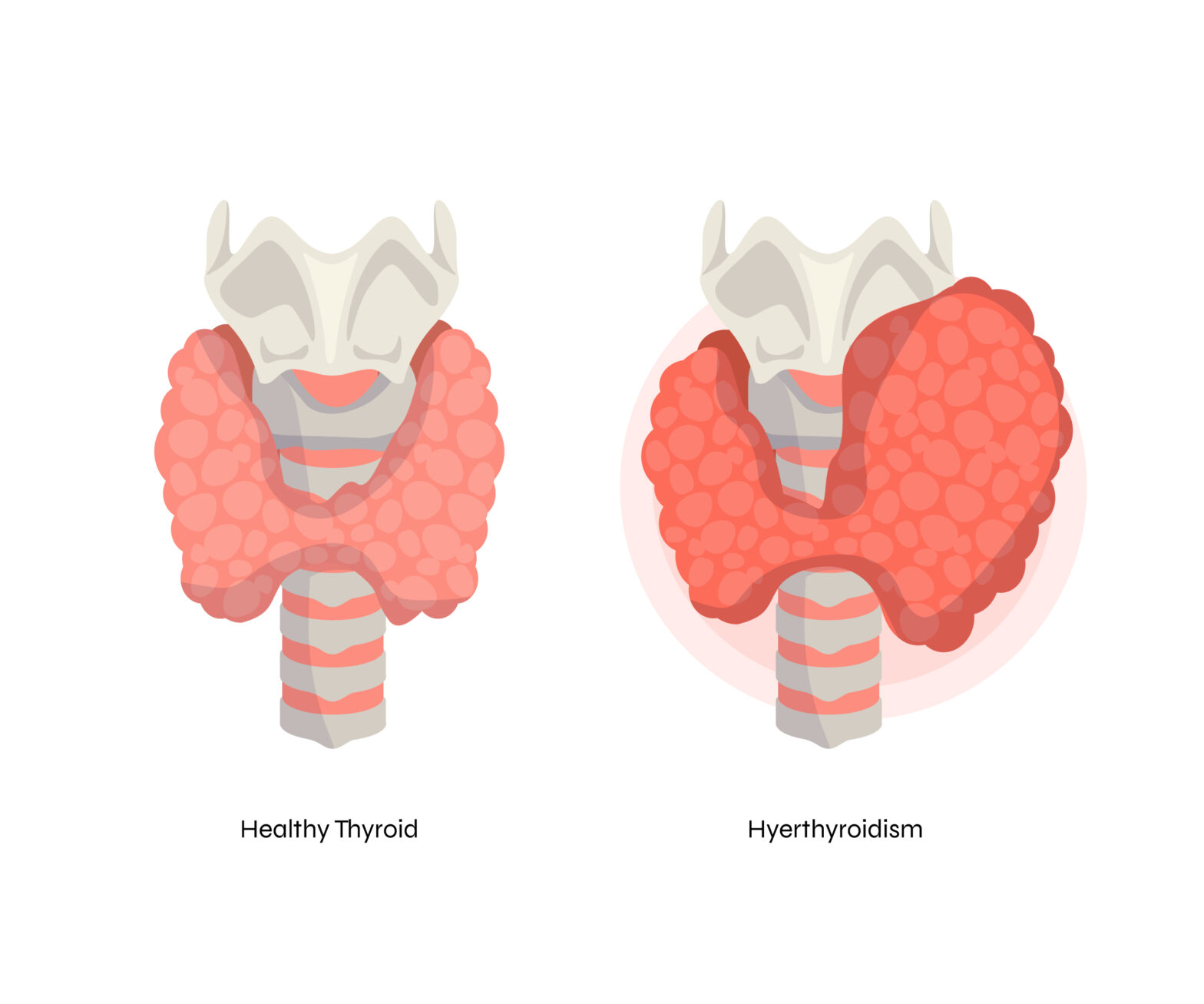
You’re doing everything “right” – eating well and sleeping enough. But you’re suddenly gaining weight, feeling tired all the time, or struggling with brain fog. Eventually, you get a diagnosis that brings both answers and new questions: hypothyroidism.   And it’s not just you. Hypothyroidism is becoming increasingly common these days.   If you’ve been diagnosed with hypothyroidism, or if you suspect something is wrong with your metabolism, read till the end to understand what’s happening inside your body and more importantly, what you can actually do about it.     What Is Hypothyroidism?   Hypothyroidism occurs when your thyroid gland doesn’t produce enough thyroid hormones. These hormones, primarily T3 and T4, are responsible for regulating your metabolism, which is essentially the rate at which your body burns calories and converts food into energy.   The condition is usually diagnosed through blood tests measuring TSH (Thyroid Stimulating Hormone) and free T4 levels.   Hashimoto’s thyroiditis is the most common cause of autoimmune hypothyroidism. In this condition, the immune system mistakenly identifies thyroid tissue as a threat and gradually attacks it. Over time, this immune response damages the thyroid gland’s ability to produce adequate hormones, leading to progressive slowing of metabolism.   Unlike temporary thyroid dysfunction caused by stress or nutrient deficiencies, Hashimoto’s is a chronic immune-mediated condition.   The immune system produces antibodies, most commonly thyroid peroxidase (TPO) antibodies and thyroglobulin antibodies, which interfere with normal hormone production.     The Hereditary Truth     Here’s something most people don’t realize: if your family has a history of hypothyroidism, your risk of developing it is significantly higher. Your thyroid hormone production capacity is determined by genetics.   In practical terms, if your mother has Hashimoto’s thyroiditis, your risk of developing the same condition is extremely high. Genetic inheritance plays a powerful role in autoimmune thyroid disorders, making proactive screening and preventive care essential. This is a condition that requires careful attention, regular monitoring, and early supportive measures rather than waiting for hormone levels to decline.   Some people are even born with congenital hypothyroidism, a condition present from birth where the thyroid gland doesn’t develop properly or function from the start.   But, even if you inherit the genetic tendency toward hypothyroidism, you might never develop it if you manage your lifestyle well. Conversely, you can be genetically resilient but still develop hypothyroidism if you’re exposed to enough environmental stressors.     The Ayurvedic View     In Ayurveda, hypothyroidism is understood through the concept of Udanavrita Samana Vata. It means, your thyroid problem starts with an imbalance in two Vata subtypes in your body, combined with excess Kapha heaviness.   Your thyroid gland is located in the throat region, which is governed by Udana Vata, one of the five subtypes of Vata Dosha. When Udana Vata becomes aggravated, it directly impacts your thyroid function.   This imbalance then spreads downward to Samana Vata, the type of Vata energy responsible for digestion and the absorption of nutrients.   When both Udana and Samana Vata are compromised, your Agni (digestive fire) becomes weak. This is when excess Kapha physically surrounds and blocks the Vata energy in your throat and digestive system.   The main symptoms are weight gain, bloating, constipation, water retention, sluggishness and cold intolerance.     Can Hypothyroidism Be Reversed?     This is one of the most common questions people ask after receiving a thyroid diagnosis. The honest answer is, it depends on the root cause, the stage of the condition, and how consistently lifestyle changes are applied.   If hypothyroidism is caused by temporary stress, nutritional deficiencies, gut imbalance, postpartum hormonal shifts, or early metabolic dysfunction, the thyroid can often recover partially or even completely with the right interventions.   However, if the condition is autoimmune (such as Hashimoto’s thyroiditis) or if the thyroid tissue has been significantly damaged, full reversal may not always be possible. In these cases, the focus shifts toward slowing progression, optimizing hormone levels, reducing symptoms, and improving overall quality of life.   The encouraging news is that regardless of the cause, your body can respond remarkably well when metabolic stress is reduced and digestion, immunity, and hormonal balance are supported properly.   Why Additional Testing is Important?     In some individuals, standard thyroid blood tests such as TSH, T3, and T4 may appear completely normal, yet the person continues to experience classic symptoms of hypothyroidism. These symptoms may include cold hands and feet, excessive sleepiness after meals, forgetfulness, slow metabolism, low energy, difficulty concentrating, and overall sluggishness.   In such cases, it becomes essential to evaluate thyroid antibodies, specifically:   Anti-TPO (Thyroid Peroxidase Antibodies) Anti-TG (Thyroglobulin Antibodies)   These tests help detect whether the immune system is attacking the thyroid gland, even before hormone levels become abnormal. Elevated antibody levels often indicate early or developing Hashimoto’s thyroiditis.     A Structured Path Toward Thyroid Balance     Rebalancing the thyroid is rarely about quick fixes or isolated treatments. From an Ayurvedic perspective, true healing happens when the body’s internal constitution is supported consistently through nutrition, daily routines, detoxification, emotional balance, and personalized care.   Personalized Assessment   Every individual has a unique constitution, digestive strength, stress response, emotional pattern, and lifestyle rhythm. A comprehensive assessment identifies the dominant doshic imbalances, digestive efficiency, toxin load, sleep quality, hormonal history, and mental resilience.   Strengthening Agni (Digestive Fire)   Healthy metabolism begins in the gut. When digestion improves, nutrient absorption becomes efficient, inflammation reduces, and hormone conversion stabilizes. Warm, freshly prepared meals, mindful eating, proper meal timing, hydration, and digestive herbs support Agni naturally.   Reducing Metabolic Toxins (Ama)   Detoxification practices help clear stagnation from tissues and channels. Gentle cleansing, proper elimination, hydration, breathing practices, and seasonal routines prevent toxin accumulation and support cellular rejuvenation.   Nourishing Ojus   Ojus represents immunity, vitality, resilience, and hormonal stability. Chronic stress, irregular lifestyle, excessive stimulation, poor sleep, and digestive weakness gradually deplete Ojus. Rebuilding Ojus requires nourishing foods, emotional balance, rest, grounding routines,… Continue reading Hypothyroidism: Why Your Metabolism Is Slowing Down