
The Future of Ayurveda: Why Trust Matters More Than Tradition

Yoga was once misunderstood. Many people thought it was just stretching or a fitness trend.   Today, more than 300 million people practice yoga around the world. It has become a global industry worth over $100 billion.   What changed?   It wasn’t because yoga became less authentic.   It became more credible.   Teacher training programs were developed, certification bodies were established, and universities began researching its effects on stress, anxiety, and overall health. Most importantly, yoga was explained in a way that people around the world could understand without changing its core philosophy.   Ayurveda is now at a similar stage.   Interest in Ayurveda is growing rapidly across the world. The market is expanding every year, and millions of people are looking for natural ways to improve their health.   But popularity alone is not enough.   If Ayurveda wants to become a respected global healthcare system, it must build trust.   Ayurveda is Growing Faster Than Its Credibility   The business is growing.   The global Ayurveda market is expected to grow from about USD 24 billion in 2026 to more than USD 120 billion over the next decade.   This sounds impressive, but growth in sales is not the same as growth in trust.   Many healthcare professionals still hesitate to recommend Ayurvedic medicines because they want stronger scientific evidence. Others point to inconsistent regulations and varying quality standards across different countries.   In simple words, people are interested in Ayurveda.   They are just not always confident about it.   That confidence gap is the biggest challenge Ayurveda faces today.   The Quality Problem Cannot Be Ignored   This is an uncomfortable conversation, but it is an important one.   Several scientific studies have found that some Ayurvedic products sold in the market contain unsafe levels of heavy metals such as lead, mercury, and arsenic.   That does not mean Ayurveda itself is unsafe. It means poor manufacturing, lack of testing, and weak regulation have allowed low-quality products to reach consumers.   Authentic Ayurvedic medicines prepared according to proper classical methods are very different from poorly manufactured products sold without adequate quality checks.   The problem is that most people cannot tell the difference. If the industry does not clearly explain that difference, trust will continue to suffer.   Ignoring bad products does not protect Ayurveda.   Removing them does.   The World Is Already Moving Towards Better Standards   Good news is that this change has already started.   The World Health Organization has introduced a dedicated module for Ayurveda, Siddha, and Unani in the ICD-11 to support better documentation and research.   The WHO Global Centre for Traditional Medicine has also been established with support from the Indian government to strengthen research and international collaboration.   Many countries now officially recognize traditional medicine within their healthcare systems.   The world is preparing to take traditional medicine seriously.   Ayurveda must prepare as well.   Dubai is a good example.   Ayurvedic doctors cannot simply start practicing there. They must complete recognized education, pass licensing examinations, and meet strict regulatory requirements before treating patients.   Ayurveda is treated like any other healthcare profession.   That should not be seen as a barrier. It should be seen as a strength.   When patients know their doctor has met high professional standards, trust naturally follows.   What Does “Authentic Ayurveda Explained Simply” Mean?   It does not mean changing Ayurveda to make it fashionable. It means making it understandable without losing its authenticity.   That means: Explain which herb is being used and why.   Mention the correct dosage whenever appropriate.   Share available scientific evidence instead of relying only on tradition.   Clearly identify products that have undergone quality testing.   Explain that certain classical formulations require specialized purification methods before they are safe to use.   Be honest about what Ayurveda can do and where more research is still needed.   Simple language does not make Ayurveda weaker. It makes it accessible.   The Future of Ayurveda Depends on Trust   Yoga became a global movement because it invested in education, research, training, certification, and standards.   Ayurveda now has the opportunity to follow a similar path.   The goal should never be to simplify Ayurveda until it loses its identity.   The goal should be to preserve its authenticity while explaining it clearly, supporting it with research, maintaining high manufacturing standards, and holding practitioners accountable.   Popularity may bring attention but credibility is what earns respect.   The practitioners who focus on quality, transparency, and evidence today will shape what Ayurveda looks like for the next generation.   If you’re interested in evidence-based Ayurveda explained in simple language, subscribe to our newsletter. Every week, we break down Ayurveda into ideas you can actually understand and use, we explore what classical Ayurveda says, what modern research shows, and where the two meet.

Guduchi – Why Ayurveda Calls It the Nectar of Immortality

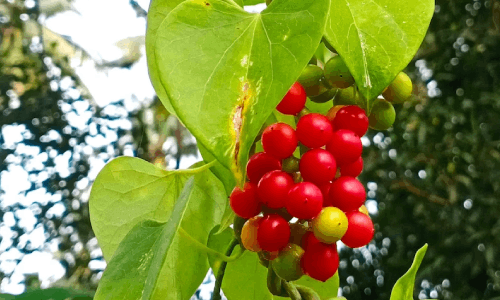
Of all the herbs mentioned in Ayurveda, Guduchi or Giloy is my most favourite! It has given me the best results in treating diseases from diabetes to arthritis to autoimmune diseases to heart diseases to women’s health! Guduchi holds a significant place in Ayurveda, for its potent medicinal properties. Its botanical name, Tinospora cordifolia, stems from its heart-shaped leaves and is native to tropical regions of India, Sri Lanka and Myanmar. Guduchi is a Rasayana herb renowned for its ability to enhance immunity and promote overall health and longevity. It is classified as bitter and astringent in taste with a cooling potency, making it particularly beneficial for pacifying Pitta Dosha and balancing the body’s systems. Guduchi helps treat many ailments, including fevers, respiratory disorders, digestive issues, and inflammatory conditions. Its immunomodulatory effects help strengthen the body’s defences against infections and diseases. Guduchi also has amazing detoxifying properties,  eliminating toxins and promoting cellular rejuvenation. It is often prescribed to support overall wellbeing and vitality in various Ayurvedic formulations, such as herbal teas, powders, and decoctions. In this blog, let us learn more about this amazing herb.   Guduchi in Ayurveda     For general wellbeing, Guduchi is rasayana (rejuvenating) and anti-aging. It also helps improve digestion, removes Ama (toxins) and strengthens the body! This herb is celebrated for its multifaceted therapeutic properties and has been utilized for centuries in Ayurvedic practice. With its bitter taste and heating potency, Guduchi is esteemed for balancing all three Doshas, particularly pacifying Pitta and Kapha imbalances. Its post-digestive sweet effect nourishes the body, while its affinity for deep tissues benefits overall vitality. Guduchi’s standout quality lies in its capacity to enhance Ojas (vitality), the essence of immunity and vitality, granting it a special potency status. It serves as a potent detoxifier, purifying the blood and eliminating toxins while bolstering the immune system against infectious diseases. Rich in bioactive compounds, Guduchi also exhibits formidable anti-inflammatory and antioxidant prowess, safeguarding against oxidative stress and inflammation. Its support for liver health, digestion, stress resilience, and skin wellness also underscores its holistic healing potential. Whether consumed as fresh juice, powder, decoction or as a part of herbal formulations, Guduchi is a cornerstone in Ayurvedic therapeutics, offering a versatile and potent ally in pursuing holistic health and wellbeing. If you ask me for one Ayurvedic supplement we all need to boost our immunity, it is this! This is one herb you should grow around your house. The most medicinal part is the stem, though we use all parts of it in various Ayurvedic medicines. Now that you have read this, please don’t run to a medical shop and look for a tablet or powder! If you can, get hold of this plant, cut the stems, dry them in sunlight, powder and store them. Boil two glasses of water, add one tablespoon, reduce to one glass, and drink before breakfast daily! Your safest immunity booster!     Benefits of Guduchi     Guduchi is renowned in Ayurveda for its numerous health benefits. Here are some of the vital health benefits it offers:   Immune Support Guduchi is a potent immunomodulator that helps regulate and strengthen the immune system. It stimulates the production of white blood cells, enhancing the body’s defence mechanism against infections and diseases.   Detoxification Guduchi is valued for its detoxifying properties. It helps to cleanse the blood, liver and other vital organs, facilitating the elimination of toxins and metabolic waste products from the body.   Anti-inflammatory Guduchi possesses strong anti-inflammatory properties, which help reduce inflammation and swelling in various body parts. It is often used to alleviate symptoms of inflammatory conditions like arthritis, gout, and inflammatory bowel diseases.   Antioxidant It is rich in antioxidants, such as flavonoids and polyphenols, which help to neutralize harmful free radicals in the body. This antioxidant activity protects cells from oxidative damage and supports overall health and longevity.   Liver Support It is beneficial for liver health and function. It helps to detoxify the liver, protect it from damage caused by toxins and pollutants, and promote regeneration of liver cells.   Digestive Health It aids digestion and helps to improve appetite. It stimulates the digestive fire (Agni), promotes the absorption of nutrients, and relieves symptoms of indigestion, bloating, and gas.   Stress Reduction It is an adaptogen, meaning it helps the body adapt to stress and maintain homeostasis. It has a calming effect on the nervous system, reducing stress, anxiety, and fatigue.   Fever Management It is traditionally used to manage fevers and other symptoms of viral and bacterial infections. It helps to reduce body temperature, alleviate symptoms like headache and body aches, and promote faster recovery.   Skin Health It benefits skin health and can help improve complexion and treat acne, eczema, and other skin disorders. Its detoxifying and blood-purifying properties contribute to healthy and radiant skin.   Anti-diabetic Properties Some studies suggest that Guduchi may have hypoglycemic effects, helping to lower blood sugar levels and improve insulin sensitivity in individuals with diabetes.   Tips to grow Guduchi at home   Growing Guduchi at home can be a rewarding experience, as it allows you to have easy access to this valuable medicinal herb. Here’s a guide on the best way to grow Guduchi at home. It is  important to note that Guduchi is a tropical climbing vine that thrives in warm and humid conditions. Therefore, it is best to cultivate it in regions with a low or subtropical climate. Living in a colder climate, you can still grow Guduchi indoors or in a greenhouse.   To start growing Guduchi, you’ll need to obtain a healthy Guduchi plant or stem cuttings from a reliable source. You can often find Guduchi plants or cuttings at nurseries specializing in medicinal herbs or online.   Select a suitable location for planting Guduchi. It prefers partial shade to full sun and well-drained soil with organic matter. Guduchi is a climbing vine, so you’ll need to provide it with a sturdy trellis, fence, or support structure… Continue reading Guduchi – Why Ayurveda Calls It the Nectar of Immortality