

Ojas: The Ayurvedic Concept Modern Medicine Doesn’t Have a Word For

Before we talk about Ojas, let me ask you a question.   What keeps you from falling sick?   Your answer would probably have been immunity, right?!   Ayurveda has a broader concept for this term called immunity, it’s called Ojas.   Most people, when talking about Ayurveda, must have heard or come across its fundamental concepts like Doshas and Agni. But very few have heard of Ojas, even though classical texts like the Charaka Samhita treat it as one of the most important substances in the body.   So what exactly is it?   Ayurveda describes Ojas as the final, most refined product of digestion. Food is broken down and transformed through seven progressive tissue layers, called Dhatus, each one nourishing the next. At the very end of this chain sits Ojas, described as the essence that remains once digestion and tissue formation have been completed properly.   In simple terms, Ojas is what your body produces when everything upstream, digestion, absorption, sleep, stress and lifestyle, is working the way it is supposed to.   This is very different from how modern medicine defines immunity.   Modern immunology has largely been about defence. It studies how white blood cells recognise a threat, how antibodies respond to an infection, how inflammation rises and eventually settles down. So much of the field is built around one fundamental question: what does the body do to fight disease once the disease has already appeared?   Ayurveda asked a slightly different question. Instead of only asking how the body fights disease once it appears, it asked what keeps a person resilient enough that disease struggles to take hold in the first place.   This is where Ojas becomes more than just another word for immunity. It points to the body’s underlying capacity to remain nourished and resilient.   Ayurveda describes Ojas as responsible not only for physical resistance to illness, but also for mental steadiness, emotional stability and general vitality. A person with strong Ojas is described as calm and capable of recovering quickly from physical or emotional strain. A person with depleted Ojas is described as fatigued, anxious and repeatedly falling ill.   Sounds familiar?   This is remarkably close to a field in modern medicine called psychoneuroimmunology, the study of how the mind and the immune system influence each other. Research in this space has repeatedly shown that chronic stress suppresses immune function, lowers the activity of certain immune cells, and disrupts hormonal balance over time.   Ayurveda arrived at a this conclusion, though earlier and through a completely different method.   According to Ayurvedic texts, Ojas exists in two forms. Para Ojas, a small, fixed reserve said to be located in the heart, considered essential to life itself. And Apara Ojas, a larger, circulating form that fluctuates based on how a person lives. Apara Ojas is what rises with good digestion, adequate sleep, emotional balance and a stable routine. It is also what depletes with poor diet, chronic stress, overexertion and disrupted sleep.   This is an important detail, because it means Ayurveda never treated immunity as fixed. It treated it as something built daily, and something that can just as easily be worn down daily.   That idea alone reframes a lot of modern health conversations.   We tend to think of immunity reactively. Ayurveda asked people to think of it proactively, as something to be cultivated through Ahara, or diet, Nidra, or sleep, and Brahmacharya, a disciplined, balanced lifestyle.   Rasayana, the branch of Ayurveda focused on rejuvenation, exists almost entirely around this idea. Its routines and therapies are not designed to treat a specific illness but to strengthen Ojas itself, on the belief that a body with strong Ojas is naturally less susceptible to disease in the first place.   This is a meaningfully different starting point from most of modern healthcare, where treatment typically begins after a diagnosis.   None of this means Ayurveda and modern immunology are describing identical things. Ojas is a broader, more integrated concept, tying together digestion, sleep, emotional health and physical resilience in a way modern immunology usually studies as separate systems. But the overlap is close enough that researchers today are actively exploring where classical descriptions of Ojas align with measurable biomarkers of immune and stress response.   Which brings us back to the original question.   If Ayurveda already had a framework for resilience that considered the body and mind as one system, why did it stay this unfamiliar to most people?   Likely for the same reason so much of Ayurveda’s deeper philosophy gets overlooked.  Concepts like Ojas require explanation, context and patience to be understood.   But this is also exactly why concepts like Ojas are worth understanding properly, and not just referencing in passing.   Because long before immunity became a trending word, Ayurveda had already built an entire framework around what it actually takes for a body to stay resilient, not just after illness, but before it ever begins.   If topics like this interest you, our courses on Charaka Samhita and Ashtanga Hridayam explore concepts like Ojas in far greater depth, straight from the original texts.  
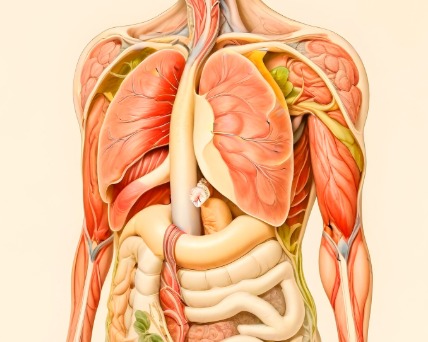
7 Dhatus in Ayurveda: Meaning, Functions & How They Support Your Health

Ayurveda views human body in a different way compared to modern science and biology. Instead of focusing mainly on organs and cells, Ayurveda talks about tissues, called Dhatus that form the very foundations of our physical body.   The Sanskrit word “Dhatu” means one that holds, supports and sustains. There are seven main tissues in our body, Saptha Dhatus that make our whole physical being.   Before we jump into what each Dhatu does, let’s talk about how they are formed.   In simple terms, they start with the food you eat, your digestive fire breaks it down into the purest, most refined nutrients and become the first tissue, Rasa Dhatu.   Each Dhatu has its own job and gets built and nourished from the one before it.   So basically, your body is made from the food you eat, being transformed step by step into all the tissues that keep you alive.   Missing nutrients or poor digestion directly can affect the tissues. That’s why Ayurveda says good digestion is the backbone of good health.     The 7 Dhatus:     Rasa Dhatu   Rasa Dhatu is the first tissue formed after digestion of food. It represents the nourishing fluid in the body, similar to plasma and lymph. Its main role is to carry nutrients, hydration, and energy to every part of the body. Simply put, Rasa is the foundation that feeds all other tissues. This Dhatu is closely linked with Kapha Dosha, so when Kapha increases, Rasa tissue tends to increase too, and when Kapha decreases, Rasa also diminishes. Healthy Rasa Dhatu keeps you nourished, warm, and well-hydrated, while a weak Rasa may lead to fatigue, dryness, or feeling undernourished.     Rakta Dhatu   Rakta Dhatu is the blood tissue that develops from Rasa. It gives life, warmth, and vitality to the body. Rakta carries oxygen and nutrients to organs and tissues and helps remove waste. It supports good energy levels, clear skin and proper circulation. Rakta is directly related to Pitta Dosha, which gives it its red color and heat quality. But when blood tissue is compromised, such as in deficiency, symptoms like pale complexion, weakness, dryness, or skin problems can appear.     Mamsa Dhatu   Mamsa Dhatu refers to the muscle tissue of the body. It provides strength, shape, stability, and protection to internal organs. Strong muscles help with movement, posture, and daily physical activity. Mamsa is what gives the body its power and structure. Kapha Dosha influences Mamsa Dhatu, so changes in Kapha affect muscle strength and size. If it becomes weak or depleted, one might experience muscle wasting, weakness, or difficulty with movement and posture.     Meda Dhatu   Meda Dhatu is the fat tissue that stores energy and lubricates the body. In Ayurveda, Meda plays several important roles: it stores energy, protects organs, insulates the body against heat loss, and lubricates joints and tissues. Meda is also connected with sweat as a waste product (Mala). Healthy Meda supports endurance, flexibility, and proper metabolism. Meda acts like the body’s natural energy reserve. Too much Meda can lead to weight gain and metabolic imbalance, while too little can cause dryness, aggravated Vata symptoms.     Asthi Dhatu   Asthi Dhatu is the bone tissue. All the bones, cartilages, and hard structures that form your body’s framework. It gets its nourishment from the Meda Dhatu. Its main function is support and structure, giving the body its shape, protecting inner organs, and enabling strength for movement through joints and limbs. Asthi also produces nails and hair as the waste products of its formation, linking bone health with external features. Strong Asthi Dhatu means sturdy skeleton, good posture, and resilience, while weakness can show up as brittle bones, joint discomfort, weak nails or other concerns.     Majja Dhatu   Majja Dhatu refers to bone marrow and the tissues that fill the spaces within bones, including support for the nervous system. It is nourished by Asthi Dhatu and plays a key role in nervous system function and mental clarity. In Ayurveda, Majja fills up the bone cavities, supports nerve channels, and contributes to overall body strength. When Majja Dhatu is balanced, you tend to have good memory, clear thinking, stable nerves, and healthy marrow function. If Majja becomes depleted, it can lead to symptoms like dizziness, weakness, joint pains, or neurological discomforts.     Shukra Dhatu   Shukra Dhatu is the reproductive tissue and the most refined of all the Dhatus. It represents vitality, immunity, creativity, and reproductive strength. It supports fertility, stamina, glowing health, and emotional balance. When Shukra is depleted, low energy, reduced immunity, and reproductive challenges may occur. Shukra is often described as the essence of life and long-term strength.       What makes the concept of the seven Dhatus so powerful is the way they are all connected. Each tissue depends on the one before it for nourishment. If Rasa is weak due to poor digestion or unhealthy food choices, Rakta will not receive enough nutrition, and this imbalance can slowly affect all the other tissues down the line.   In the same way, when the earlier tissues are strong and balanced, the later tissues naturally become healthier and more stable. This chain effect teaches us that health is not about fixing just one problem, but about supporting the entire system.   Simple daily habits like eating fresh and wholesome food, chewing properly, drinking enough water, maintaining regular meal times, getting good sleep, and moving the body can go a long way in keeping these tissues healthy. Managing stress, spending time outdoors, and listening to the body’s natural rhythms also support tissues like Majja and Shukra.   Understanding the seven Dhatus helps us see our body with more awareness and respect. Instead of only reacting when illness appears, we begin to notice early signs of imbalance and take small steps to correct them. When digestion is strong and lifestyle choices are balanced, the body naturally builds healthy tissues and… Continue reading 7 Dhatus in Ayurveda: Meaning, Functions & How They Support Your Health