Panchamahabhuta Explained: The Five Elements in Ayurveda

  Panchamahabhuta refers to the five fundamental elements: Akasha (space), Vayu (air), Agni (fire), Jala (water), and Prithvi (earth). Ayurveda teaches that the entire universe, including your body and mind, emerges from their unique combinations. They explain how your body, mind, and even your personality are shaped by nature itself. When you understand these elements, daily choices like food, routine, and emotions start to make much more sense.   Ayurveda says the human body is a small version of the cosmos, a microcosm of the macrocosm. That means whatever exists in nature also exists in you, in some proportion and combination. The Panchamahabhuta are not just physical substances, they are qualities like lightness, movement, heat, liquidity, and solidity that express in different ways.   The Five Elements in Simple Language   Akasha – Space   Akasha is the element of emptiness and openness. In the body, it shows up as all the hollow spaces like the mouth, nostrils, ears, chest cavity, blood vessels, cells and even the gaps between tissues. In the mind, Akasha gives you the feeling of expansion, freedom, and room to think. When space is balanced, you feel creative, spacious, and less “crowded” by thoughts and emotions. When it is disturbed or excessive, you may feel isolated, empty, or disconnected.     Vayu – Air     Vayu is movement. In your body, air governs all kinds of motion: breathing, blinking, heartbeat, circulation, the flow of thoughts, nerve impulses, and even the movement of food through your digestive tract.   In the mind, Vayu shows up as speed, creativity, imagination, quick understanding, and also anxiety when it is too strong. If air is balanced, you feel alert, light, active, and motivated. If it is aggravated, you may experience restlessness, overthinking, fear, dryness, bloating, or disturbed sleep.     Agni – Fire     Agni is the inner flame of digestion, metabolism, and warmth. It governs body temperature, vision, glow of the skin, and the power to transform food into energy and tissues. When Agni is balanced, you digest food well, feel energetic, and think clearly. When it is high, you may feel hot, irritable, angry, or experience acidity and inflammation; when low, you may feel dull, sluggish, confused, and have weak digestion.     Jala – Water     Jala is the element of fluidity and cohesion. In your body, it forms saliva, blood, lymph, plasma, digestive juices, synovial fluid in joints, and all the liquids that keep tissues moist and nourished. When water is balanced, you feel emotionally nourished, content, and stable, and your skin, joints, and tissues feel hydrated.     Prithvi – Earth     Prithvi is solidity and structure. In the body, it forms bones, muscles, skin, nails, teeth, and all the firm, dense tissues that give you shape and strength.   When Prithvi is balanced, you feel safe, steady, and rooted in life. When it is excessive, you may feel heavy, lazy, stuck in old patterns, and gain weight easily, when deficient, you may feel weak, scattered and insecure.     Your basic constitution (Prakriti) whether Vata, Pitta, Kapha, is also decided by the dominant combination of these elements at conception. That is why two people can eat the same food or live in the same climate and still react very differently.   Once you begin to observe your body and mind through the lens of space, air, fire, water, and earth, you start to recognize patterns like why certain foods suit you, why specific emotions repeat, and why your energy fluctuates at different times.   Every action you take either increases or balances certain elements within you. For example, eating dry, light, cold foods increases the qualities of Vayu (air). On the other hand, warm, cooked, moist foods increase Jala (water) and Prithvi (earth), bringing grounding and stability.   Similarly, spicy food, intense competition, exposure to heat, and excessive screen time increase Agni (fire). This can be useful if digestion or motivation is low, but excessive fire can quickly turn into irritation, inflammation, or burnout.   The elements are constantly shifting due to seasons, age, time of day, emotional states, and lifestyle. Your role is not to eliminate any element, but to maintain harmony among them.     Elements and the Mind     Thoughts running in your mind are Vayu. Clarity and perception arise from Akasha. Understanding, judgment, and ambition come from Agni. Emotional bonding, compassion, and attachment relate to Jala. Memory, stability, and patience are rooted in Prithvi.   When the mind feels scattered and anxious, air and space are dominant. If emotions feel heavy or clingy, water and earth may be excessive. When anger or frustration dominates, fire is strong. By recognizing this, Ayurveda allows you to respond wisely instead of reacting blindly.   The solution is not only positive thinking but also grounding practices: regular routines, warm meals and adequate rest.     Prakriti and Vikriti     Your Prakriti is your natural elemental blueprint, the unique balance you were born with. Vikriti is your current imbalance caused by lifestyle, stress, environment, or emotional patterns. Ayurveda focuses more on correcting Vikriti than changing Prakriti.   Instead of comparing your energy, productivity, or emotions to others, you begin honoring your own rhythm. This self-awareness itself becomes healing.   The ultimate aim of understanding Panchamahabhuta is not control, but harmony. Health is experienced when space allows freedom, air allows movement, fire allows transformation, water allows nourishment, and earth provides stability, without any one element overpowering the rest.   Ayurveda reminds us that disease begins when we live against our elemental nature and healing begins when we return to it. By listening to the body, observing the mind, and respecting nature balance becomes a lived experience rather than a concept.   When you start seeing yourself as a living expression of the five elements, life feels less confusing. Symptoms become signals, emotions become teachers, and daily choices turn into tools for alignment. In this way, Panchamahabhuta is not just… Continue reading Panchamahabhuta Explained: The Five Elements in Ayurveda

Pathya and Apathya in Ayurveda: The 8 Rules of Eating from Charaka Samhita

Ever wonder why the same food can heal you one day and throw your digestion off the next?   That is where the ideas of Pathya and Apathya in Ayurveda come in.   A food is not automatically good or bad forever. The same food can become healing or harmful depending on many factors.   It’s not just about what you eat, but how, when, where, and who you are when you eat it.   Charaka Samhita, one of the oldest texts of Ayurveda, gives us the eight rules of eating, Ahara Vidhi, to help us make wiser choices. These principles, though ancient, are still practical and very relevant to modern life.   What Does Pathya and Apathya Really Mean?     Pathya means something that supports balance, digestion, clarity, and strength. Apathya means something that disturbs digestion, creates toxins, or aggravates imbalance.   But Ayurveda never looks at the food being consumed alone. It looks at the whole picture:   How much you eat? When you eat? How the food is prepared? Where you live? Your body type and current imbalance. Your habits and adaptability.   For example, A cup of warm spiced milk at bedtime may be soothing and comforting. The same milk at 3:00 in the morning can feel heavy, sticky, and disturbing to digestion.     Key Factors That Decide Whether Food Becomes Pathya or Apathya   Matra: Quantity   Even good food becomes harmful when eaten in excess. Heavy foods like cheese, fried food, or sweets should be eaten in smaller amounts. Light foods can be eaten a little more freely.   Overeating weakens Agni (digestive fire), creates heaviness, and leads to toxin formation. Undereating can weaken the body and nervous system. Balance is everything.   Kala: Time   Time means time of day, season, and even life stage. Digestion is strongest around midday, that is why lunch should ideally be your main meal. Late-night heavy meals disturb sleep and digestion.   Season also matters. In hot summer, heavy oily food can aggravate heat while in cold dry weather, more nourishing and oily foods may be helpful.   Food that suits winter may not suit summer. Ayurveda constantly reminds us to stay in rhythm with nature.   Kriya or Samskara: How Food Is Prepared   The way you prepare food changes its effect on the body. For example: Raw food is generally heavier to digest. Cooked food becomes lighter and easier for Agni. Dry roasting wheat makes it more digestible than eating it plain or poorly cooked. Rice becomes more wholesome when aged, soaked, washed, and cooked properly. The excess starch is removed, making it lighter and less clogging. Milk combined incorrectly can become harmful. Fish and milk together are considered incompatible. Fruit and milk can also disturb digestion.   Even herbs change their qualities based on preparation, these are the five basic dosage forms as per Ayurveda: Svarasa is fresh juice, very potent and heavy. Kalka is paste, useful externally or for specific effects. Kadha is a reduced decoction and becomes light and penetrating. Phanta is like herbal tea made with hot water. Hima is a cold infusion, often used to cool Pitta. Coriander soaked overnight and drunk the next day is a classic example for acidity and heat.   Even the container can change the effect. Triphala paste kept in an iron vessel becomes beneficial for eye health due to the interaction with iron.   So, food is not just what you eat, it is also how it is transformed.   Desha or Bhumi: Place and Environment   Where you live strongly influences what your body needs.   Dry, windy, high-altitude places increase dryness and nervous system activity. People living there often need more oils, warmth, and grounding foods. Wet, cold places increase heaviness and congestion. Desserts and heavy dairy consumption may worsen imbalance there.   Local food also matters. Vegetables, grains, and even animals carry the qualities of the land. Climate influences your Doshas whether you realize it or not.   Travel can disturb the nervous system, movement increases Vata and restlessness. Many people notice mood shifts or digestive upset after flights.   Dosha and Current Imbalance   Your Prakriti (constitution) and Vikriti (current imbalance) influence what suits you. When Doshas are aggravated, even small mistakes can trigger symptoms. Food choices become more sensitive during illness or stress.   Vega Avastha: Stage of Disease or Imbalance   When imbalance is severe, even small triggers can create flare-ups. At those times, discipline around food becomes especially important.   Satmya: Adaptability and Habituation   This is a powerful and subtle concept. The body adapts to what it is repeatedly exposed to.   Some people tolerate spicy food well because of cultural habits and ancestry. Others feel burned by the same food.   There is Sharira Satmya, adaptability to healthy things. There is Oka Satmya, adaptability to unhealthy things.   The body can adapt even to abuse, someone may tolerate junk food without immediate symptoms, but deeper imbalance may slowly build. Interestingly, a person who reacts quickly to wrong food may actually be healthier than someone who feels nothing.   Ayurveda recommends slow, gentle changes rather than extreme detox or cold-turkey approaches. Sudden drastic change can disturb the nervous system and create instability.   In the end, Pathya and Apathya help us to build a more conscious and compassionate relationship with our bodies.   Instead of chasing trends, superfoods, or rigid dietary rules, we learn to observe, feel, and respond. The body is always giving feedback through digestion, energy, sleep, emotions, and clarity of mind. When we honour that feedback, food becomes a tool for stability rather than struggle.   Even simple shifts such as eating at regular times, choosing freshly prepared meals, avoiding incompatible combinations, and adjusting to seasons can quietly transform health over time. There is no need for perfection, Ayurveda values consistency, patience and gradual refinement.   The body adapts slowly and forcing change often creates more imbalance than healing. When… Continue reading Pathya and Apathya in Ayurveda: The 8 Rules of Eating from Charaka Samhita

5 Everyday Kitchen Ingredients That Quietly Build Your Health

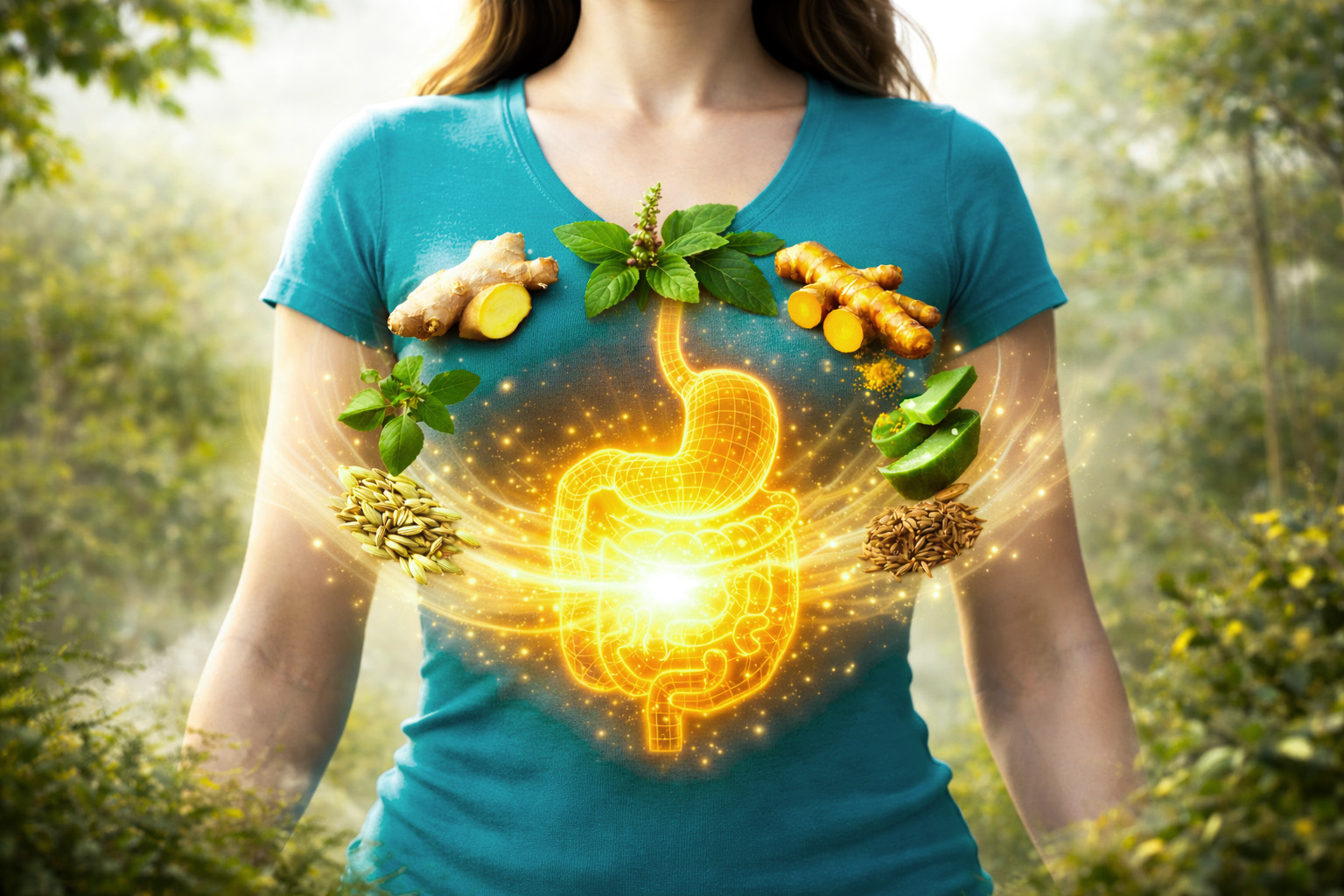
Most people think spices are used simply to make food taste good. However, they have a much bigger role. Spices help the body digest food properly, absorb nutrients and prevent accumulation of toxins.   The first and foremost factor for good health is a nutritious and balanced diet. Ayurveda also aims to preserve health through Ahara, it emphasizes not only on the quality of the food, but also in its cooking, processing and digestion.   One of the important aspects of adding spices to food is not just to enhance flavor but also to aid digestion as they are rich in nutrients, have medicinal and antioxidant properties.   In Ayurveda, digestive health is governed by Agni, your internal fire that transforms food into energy, strength and healthy tissues. When Agni is strong, the body is able to properly nourish itself and eliminate waste efficiently. When Agni becomes weak or disturbed, partially digested food can accumulate in the body, creating Ama(toxin) which may lead to heaviness, fatigue, poor immunity, and imbalance over time.   Spices are used to gently stimulate Agni. They reduce Kleda, which builds up in places like Majja Dhatu (nerves). When used correctly, spices also help maintain balance among the three functional energies of the body, known as Doshas.   You don’t need complicated spice blends to gain these benefits. Simple, everyday spices such as cumin, coriander, fennel, turmeric, and fenugreek can quietly support digestion and overall wellbeing when used consistently and in the right way.     Cumin (Jeeraka)     Cumin is one of the most important digestive spices in Ayurveda. It strengthens Agni without creating excessive heat. This makes it suitable for regular use in everyday cooking. Cumin helps the stomach break down food more efficiently and reduces common digestive problems such as gas, bloating, and heaviness.   It also helps in elimination of excess fluids from the body and can be helpful for mild burning during urination when used along with coriander.   Cumin is warming in nature, but not overly stimulating, so even people with mild heat sensitivity can usually tolerate it in small amounts. Traditionally, cumin is also used to support cleansing after childbirth and to prevent stagnation from building up in deeper tissues over time. Lightly roasting cumin makes it easier to digest and enhances its aroma and effectiveness.     Coriander (Dhania)       Coriander has a naturally cooling and soothing effect on the body, which helps calm excess Pitta. It is gentle on the stomach and helps improve appetite and digestion without irritation. Coriander also supports healthy urinary function.   Because coriander is mildly sweet and soothing in nature, it helps balance stronger or warming spices. This is why it is often paired with cumin in traditional cooking. Coriander is considered suitable for all body types when used appropriately and does not tend to create heaviness.   In cooking, coriander powder also helps soften sharp flavors such as while naturally thickening sauces and gravies.     Fennel (Saunf)     Fennel is a sweet, aromatic spice well known for its gentle digestive benefits. It helps relax the digestive tract, reduce bloating, and relieve discomfort after meals. Fennel supports smooth movement of food through the intestines and helps calm digestive sensitivity, especially when Vata is aggravated.   Because fennel is mild and easy to digest, it is commonly used as a mouth freshener and digestive after meals. Lightly dry roasting fennel enhances its flavor and effectiveness. Smaller fennel seeds are usually more potent and less fibrous, making them easier to chew and digest.   Fennel is safe for daily use and works well for people of all ages.     Turmeric (Haridra)     Turmeric is known in Ayurveda for supporting Rakta dhatu, skin clarity, and tissue healing. It is mildly warming and helps prevent the buildup of heaviness and stagnation in the body. Used regularly in small amounts, turmeric supports natural cleansing and is anti-inflammatory.   Turmeric also has strong traditional use for wound care and throat health. Applying turmeric to minor cuts can help stop bleeding and support healing. Gargling warm water with salt and turmeric can help soothe throat irritation.   Dry turmeric is generally preferred over fresh turmeric because it has a stronger cleansing effect. Although turmeric is very beneficial, more is not better. Excessive use may dry or irritate the system. Small, consistent amounts are ideal.     Fenugreek (Methi)     Fenugreek is a stronger, more heating spice than cumin or fennel and is especially helpful when digestion feels slow. It stimulates Agni and helps clear thick buildup in the body, which can be useful for people with more Kapha or cold digestion.   Because fenugreek is quite warming and drying, it should be used in small amounts. Too much can increase heat in the body and may aggravate Pitta. People who experience frequent acid reflux or burning sensations should use fenugreek cautiously or avoid it.   Fenugreek has traditionally been used to support healthy blood sugar balance and milk production in nursing mothers. Soaking fenugreek seeds in water overnight and drinking the water in the morning is a traditional practice for metabolic support.     How You Use Spices Also Matters     The way spices are prepared is just as important as which spices you choose. In Ayurveda, it is suggested warm the spices in ghee before adding them to the food. Ghee acts as a Yogavahi, meaning it carries the properties of the spices deeper into the body and helps distribute their effects throughout the tissues.   This method not only improves flavor and aroma but also makes the spices easier to digest and more effective. Simply sprinkling spices onto food does not create the same digestive benefit.   Learning how food actually behaves inside the body changes the way we relate to eating. The way we cook, the way we combine ingredients, and the way we support digestion quietly shape how the body functions over time. We begin… Continue reading 5 Everyday Kitchen Ingredients That Quietly Build Your Health

Viruddha Ahara in Ayurveda: Incompatible Foods and Their Effects

In Ayurveda, food is considered the foundation of health. It is not only meant to satisfy hunger but also to nourish the body, mind, and tissues. When food is chosen and consumed correctly, it supports digestion, strengthens immunity, and maintains balance in the body.   However, when food is taken in an improper manner, it can disturb digestion and gradually lead to disease. One such important concept explained is Viruddha Ahara in Ayurveda, which means incompatible or contradictory food.   The word “Viruddha” means opposite. Viruddha Ahara refers to food or food combinations that are opposite in nature to the body and its digestive process. Such food interrupts metabolism, weakens digestion, and prevents proper formation of body tissues.   Even foods that are healthy on their own can become harmful when consumed in the wrong combination, wrong quantity or wrong time. Regular consumption of such incompatible food is considered a major cause of metabolic and systemic disorders in Ayurveda.   Viruddha Ahara does not usually cause immediate illness. Instead, it works slowly by disturbing Agni and creating Ama, which is toxic, undigested material in the body.   Over time, this Ama blocks channels, vitiates the Doshas (Vata, Pitta, and Kapha), and weakens the tissues. This gradual imbalance eventually manifests as digestive problems, skin disorders, hormonal imbalance, mental disturbances, and chronic diseases.     Types of Viruddha Explained Simply     Desha Viruddha (Place / Environment Incompatibility)   Food should match the place you live in. Dry, spicy, alcoholic foods in hot, dry regions aggravate Vata and Pitta while cold, oily foods in marshy or humid places increase Kapha. Eating against the nature of your environment disturbs balance.     Kala Viruddha (Time & Season Incompatibility)   Each season has its own demands. Cold, dry foods in winter and extremely spicy and hot foods in summer, such choices strain digestion and doshas.     Agni Viruddha (Digestive Power Incompatibility)   Agni means digestive fire. Heavy food when digestion is weak and light food when digestion is strong both cause imbalance. Food must match your digestive capacity.     Matra Viruddha (Quantity Incompatibility)   Quantity matters as much as quality. Too much food Too little food Certain foods in equal quantities (like honey and ghee) Even healthy foods can become harmful in wrong proportions.     Satmya Viruddha (Habit Incompatibility)   Your body adapts to habits over time. If someone accustomed to spicy, hot food suddenly eats excessive cold and sweet food, digestion suffers.     Dosha Viruddha (Dosha-Specific Incompatibility)   Eating foods that increase the sameDosha already dominant in your body can cause imbalance. Example: Heavy, oily food for Kapha-dominant people Dry, cold food for Vata-dominant people   Samskara Viruddha (Processing Incompatibility)   It is incompatibility caused by improper processing or preparation of food. Certain methods of cooking or processing can convert food into a toxic substance. Examples include heating honey or preparing food using unsuitable materials or methods.     Virya Viruddha (Potency Incompatibility)   It occurs when substances with opposite potencies are consumed together. Combining hot-potency and cold-potency foods confuses digestion and creates imbalance in the body.     Koshtha Viruddha (Bowel Nature Incompatibility)   Koshtha Viruddha is related to bowel nature. Some people have hard bowels, while others have soft bowels. Food and medicines should be chosen accordingly. Ignoring bowel nature can lead to digestive disturbances.     Avastha Viruddha (Condition Incompatibility)   It refers to incompatibility related to the physical or mental state of the person. Consuming Vata-aggravating food after exhaustion or heavy exercise, or Kapha-aggravating food during lethargy and sleepiness, worsens Dosha imbalance.     Krama Viruddha (Order Incompatibility)   Occurs when the proper sequence of eating is not followed. Eating without hunger, eating before bowel and bladder are cleared, or eating when hunger is excessive disturbs digestion.     Parihara Viruddha and Upachara Viruddha (Treatment Incompatibility)   These are related to ignoring dietary restrictions during illness or treatment. Consuming foods that are prohibited for a particular disease or during treatment can interfere with recovery.     Paka Viruddha (Cooking Incompatibility)   It refers to incompatibility due to improper cooking. Food that is burnt, undercooked, overcooked, stale, or reheated becomes difficult to digest and harmful to health.     Samyoga Viruddha (Combination Incompatibility)   It is incompatibility due to wrong combinations. Certain combinations, such as sour substances with milk, produce harmful effects even though the individual items may be healthy.     Hridaya Viruddha (Mental Incompatibility)   Hridaya Viruddha is incompatibility related to the mind. Eating food that is unpleasant or disliked affects digestion because the mind and digestive system are closely connected.     Sampat Viruddha (Quality Incompatibility)   It refers to food that lacks proper quality, such as unripe, overripe, or impure substances.     Vidhi Viruddha (Eating Rules Violated)   Vidhi Viruddha occurs when the rules of eating are violated, such as eating without discipline, in an improper environment, or without mindfulness.     Effects of Consuming Viruddha Ahara   Digestive disorders (bloating, acidity, IBS) Skin diseases (eczema, vitiligo, herpes-like eruptions) Anemia and liver disorders Hormonal and reproductive problems Mental disturbances like anxiety and insanity Toxic buildup (Ama) Chronic inflammation Reduced immunity Even fatal outcomes in extreme cases   The concept of Viruddha Ahara highlights one of the most practical and insightful teachings of Ayurveda, that food is not universally beneficial just because it is nutritious.   The same food can act as medicine for one person and as poison for another, depending on how it is combined, prepared, consumed, and digested. Ayurveda reminds us that digestion is at the centre of health, and anything that disturbs it repeatedly will eventually disturb the entire system of the body.   Modern lifestyles unknowingly promote Viruddha Ahara. Irregular eating habits, fast food combinations, excessive use of refrigerated and reheated food, eating under stress, and ignoring seasonal needs all contribute to digestive imbalance.   Many people suffer from acidity, bloating, skin issues, allergies, fatigue, and hormonal problems without realizing that the root cause may lie… Continue reading Viruddha Ahara in Ayurveda: Incompatible Foods and Their Effects

7 Dhatus in Ayurveda: Meaning, Functions & How They Support Your Health

Ayurveda views human body in a different way compared to modern science and biology. Instead of focusing mainly on organs and cells, Ayurveda talks about tissues, called Dhatus that form the very foundations of our physical body.   The Sanskrit word “Dhatu” means one that holds, supports and sustains. There are seven main tissues in our body, Saptha Dhatus that make our whole physical being.   Before we jump into what each Dhatu does, let’s talk about how they are formed.   In simple terms, they start with the food you eat, your digestive fire breaks it down into the purest, most refined nutrients and become the first tissue, Rasa Dhatu.   Each Dhatu has its own job and gets built and nourished from the one before it.   So basically, your body is made from the food you eat, being transformed step by step into all the tissues that keep you alive.   Missing nutrients or poor digestion directly can affect the tissues. That’s why Ayurveda says good digestion is the backbone of good health.     The 7 Dhatus:     Rasa Dhatu   Rasa Dhatu is the first tissue formed after digestion of food. It represents the nourishing fluid in the body, similar to plasma and lymph. Its main role is to carry nutrients, hydration, and energy to every part of the body. Simply put, Rasa is the foundation that feeds all other tissues. This Dhatu is closely linked with Kapha Dosha, so when Kapha increases, Rasa tissue tends to increase too, and when Kapha decreases, Rasa also diminishes. Healthy Rasa Dhatu keeps you nourished, warm, and well-hydrated, while a weak Rasa may lead to fatigue, dryness, or feeling undernourished.     Rakta Dhatu   Rakta Dhatu is the blood tissue that develops from Rasa. It gives life, warmth, and vitality to the body. Rakta carries oxygen and nutrients to organs and tissues and helps remove waste. It supports good energy levels, clear skin and proper circulation. Rakta is directly related to Pitta Dosha, which gives it its red color and heat quality. But when blood tissue is compromised, such as in deficiency, symptoms like pale complexion, weakness, dryness, or skin problems can appear.     Mamsa Dhatu   Mamsa Dhatu refers to the muscle tissue of the body. It provides strength, shape, stability, and protection to internal organs. Strong muscles help with movement, posture, and daily physical activity. Mamsa is what gives the body its power and structure. Kapha Dosha influences Mamsa Dhatu, so changes in Kapha affect muscle strength and size. If it becomes weak or depleted, one might experience muscle wasting, weakness, or difficulty with movement and posture.     Meda Dhatu   Meda Dhatu is the fat tissue that stores energy and lubricates the body. In Ayurveda, Meda plays several important roles: it stores energy, protects organs, insulates the body against heat loss, and lubricates joints and tissues. Meda is also connected with sweat as a waste product (Mala). Healthy Meda supports endurance, flexibility, and proper metabolism. Meda acts like the body’s natural energy reserve. Too much Meda can lead to weight gain and metabolic imbalance, while too little can cause dryness, aggravated Vata symptoms.     Asthi Dhatu   Asthi Dhatu is the bone tissue. All the bones, cartilages, and hard structures that form your body’s framework. It gets its nourishment from the Meda Dhatu. Its main function is support and structure, giving the body its shape, protecting inner organs, and enabling strength for movement through joints and limbs. Asthi also produces nails and hair as the waste products of its formation, linking bone health with external features. Strong Asthi Dhatu means sturdy skeleton, good posture, and resilience, while weakness can show up as brittle bones, joint discomfort, weak nails or other concerns.     Majja Dhatu   Majja Dhatu refers to bone marrow and the tissues that fill the spaces within bones, including support for the nervous system. It is nourished by Asthi Dhatu and plays a key role in nervous system function and mental clarity. In Ayurveda, Majja fills up the bone cavities, supports nerve channels, and contributes to overall body strength. When Majja Dhatu is balanced, you tend to have good memory, clear thinking, stable nerves, and healthy marrow function. If Majja becomes depleted, it can lead to symptoms like dizziness, weakness, joint pains, or neurological discomforts.     Shukra Dhatu   Shukra Dhatu is the reproductive tissue and the most refined of all the Dhatus. It represents vitality, immunity, creativity, and reproductive strength. It supports fertility, stamina, glowing health, and emotional balance. When Shukra is depleted, low energy, reduced immunity, and reproductive challenges may occur. Shukra is often described as the essence of life and long-term strength.       What makes the concept of the seven Dhatus so powerful is the way they are all connected. Each tissue depends on the one before it for nourishment. If Rasa is weak due to poor digestion or unhealthy food choices, Rakta will not receive enough nutrition, and this imbalance can slowly affect all the other tissues down the line.   In the same way, when the earlier tissues are strong and balanced, the later tissues naturally become healthier and more stable. This chain effect teaches us that health is not about fixing just one problem, but about supporting the entire system.   Simple daily habits like eating fresh and wholesome food, chewing properly, drinking enough water, maintaining regular meal times, getting good sleep, and moving the body can go a long way in keeping these tissues healthy. Managing stress, spending time outdoors, and listening to the body’s natural rhythms also support tissues like Majja and Shukra.   Understanding the seven Dhatus helps us see our body with more awareness and respect. Instead of only reacting when illness appears, we begin to notice early signs of imbalance and take small steps to correct them. When digestion is strong and lifestyle choices are balanced, the body naturally builds healthy tissues and… Continue reading 7 Dhatus in Ayurveda: Meaning, Functions & How They Support Your Health

Before Irregular Periods Begin: Early Signs of PCOS Ayurveda Looks For

Diagram of subserosal uterine fibroids illustration

  PCOS doesn’t show up suddenly one day. If you are thinking that irregular periods are the only sign, you are already missing out the most important moment to pay attention.   Your body starts sending signals months and sometimes years before your cycle becomes irregular. I wish most woman understood these warning signs earlier, as they are there all along and obvious. They keep reminding us something is happening inside our bodies that we shouldn’t ignore.         The earliest signs start when two of the Doshas – Kapha and Pitta become excessive at the same time. The imbalance of these two Doshas creates an environment for cysts to start developing in the ovaries inside your body. This is the stage where Ayurveda can see the problem developing and when you can actually do something about it.     THE EARLY SIGNS AYURVEDA WATCHES FOR:     Now, let us talk about what exactly you should be paying attention to. These are the signs that appear before your periods starts becoming noticeably irregular.   1) Bloating and the heavy feeling after eating   Have you ever felt sluggish and uncomfortable after eating, but only on a few days, while the rest days your digestion maybe fine?   This inconsistency can actually be an important clue that your Agni (digestive fire) is starting to get weak, you food isn’t being fully processed and digested which is causing gas and bloating. This also allows Kapha to accumulate inside you.     2) Weight gain     You might not have changed how much you eat or you may even be eating less that you used to, but do you keep gaining weight, especially around your belly and thighs?     This might be because of poor diet with too much sugar, carbonated drinks, and highly refined carbohydrates.   In Ayurvedic terms, this is due to an excess Kapha and Ama accumulation. Even if you eat less, these foods disrupt your metabolism, creating the stagnation that serves as the biggest lifestyle contributor to PCOS.     3) Skin Changes     Acne suddenly shows up on your chin or jawline or dark patches appear on your neck, under your arms, or on your inner thighs. This skin condition is called Acanthosis nigricans, and it happens due to insulin resistance.       There’s also hair growth on your face and your skin might feel oilier than it used to be. These changes are directly connected to excess hormonal release, your body’s way of communicating it through your skin. This is an early-stage signal. Before your periods start becoming irregular, your skin is already responding to the hormonal changes happening inside.     4) Mood Swings, Brain Fog, and Sudden Anxiety     Your mood feels unstable. One day you’re fine, the next day you’re irritable or anxious for no clear reason. You can’t concentrate like you used to or you forget things easily.     What’s actually happening is your nervous system responding to hormonal imbalance. When Ama circulates through your body, it affects your mental clarity. Vata imbalance creates anxiety and scattered thinking. Pitta imbalance creates irritability. All of this is connected to early hormonal disruption happening inside your body.     Finally, your period starts to change, what used to come like clockwork on day 28. Now it comes on day 23 one month, then day 32 the next month. The flow varies – one month it’s heavy, the next month it’s light. You might also get spotting between your actual periods.     According to Ayurvedic understanding, this falls under Artava Vyapat, which refers to menstrual disorders. This is your reproductive channels starting to respond to the imbalance and blockage happening inside you.     This is actually the critical awareness window. Your periods aren’t irregular enough to be diagnosed as a problem yet, but they’re starting to become unpredictable.   This is the moment where Ayurveda can see that imbalance is developing. This is the moment where intervention can be most effective.     Not every woman experiences all of these signs. Some women might have intense skin changes but minimal weight gain. Others might have extreme fatigue but relatively clear skin. Some might have mainly mood and mental health changes. This variation is really important to understand.     If you have a naturally heavier Kapha constitution, you’ll likely experience more weight gain, bloating, and heaviness. Or if you have a naturally intense Pitta constitution, you’ll likely experience more acne and androgen related symptoms. If you have a naturally airy Vata constitution, you might experience more anxiety, irregular hunger, and scattered thinking.     By noticing which of these signs resonate most strongly with you, you’ll getting clues about your unique constitution and how your body is responding to imbalance.     In these early stages, when it’s still just Dosha imbalance and Ama accumulation, your body can respond remarkably quickly to support.   Your body is asking for help at this stage and your body is capable of still rebalancing itself if given the right support and attention.     If you’re recognizing some of these signs in yourself, the first step is simply awareness. You’re not trying to diagnose yourself nor you’re trying to treat yourself. You’re simply starting to pay attention to what your body is telling you.     Remember, your body is intelligent. It’s constantly communicating with you. These early signs of PCOS aren’t disease. They’re your body telling you that something needs attention.     The question is whether you listen to these messages now, in the early stages, or wait until the imbalance becomes more profound. The good news is that you have power here. By paying attention now, by seeking understanding, you’re taking the first step toward restoring your body’s balance. Your body is asking for that attention. And it’s capable of remarkable healing when given proper support.     If you are noticing these early… Continue reading Before Irregular Periods Begin: Early Signs of PCOS Ayurveda Looks For

Understanding Ayurveda: Health as a Balance of Vata, Pitta, and Kapha

Have you ever noticed how some days you feel full of energy while on other days you feel calm and grounded? Or perhaps you’ve experienced times when you felt extremely focused while there were periods when you felt sluggish and lazy?   These shifts in how we feel aren’t random. According to Ayurveda, they reflect the natural balance of three fundamental Doshas within our bodies: Vata, Pitta and Kapha.   Ayurveda teaches that true health is the state of harmony. This harmony exists between our inner nature and the natural world around us. Every element in nature: air, fire, water, earth, and space have a counterpart in our bodies. When these elements work together in balance, we experience vitality, mental clarity and wellbeing. When they fall out of balance, our bodies send us signals through fatigue, discomfort or illness.     The Three Doshas: Vata, Pitta and Kapha   Think of the three forces as three essential qualities that keep your body functioning. Each one brings something important to the table.   Vata: The Force of Movement   Vata is like the wind in your body. It’s the principle of movement, space, and lightness. Whenever something moves in your body, your breath flowing in and out, your heart beating, your thoughts moving through your mind and your digestion happening. Vata governs your nervous system, circulation and the flow of ideas.   When Vata is balanced, you feel energetic, creative and mentally clear. You sleep well and wake refreshed. Your digestion hums along smoothly. But when Vata becomes excessive, due to stress, travel, cold weather, or irregular routines, you might feel scattered, anxious or restless. Your sleep might become light and interrupted. This means your Vata needs to be calmed and grounded.   Pitta: The Principle of Heat and Transformation   Pitta is the fire element in your body. It represents heat, metabolism, digestion, and transformation. Pitta is responsible for breaking down your food into nutrients, maintaining your body temperature, and powering your mental focus and determination. When you’re feeling motivated and sharp, that’s Pitta fuelling your actions.   A balanced Pitta gives you good digestion, steady energy, a calm mind, and the ability to tackle challenges with confidence. However, when Pitta flares up from too much spicy food, stress, intense exercise in the heat, or a rushed lifestyle, you might experience heartburn, irritability, or intensity in your emotions.   Kapha: The Source of Nourishment and Stability   Kapha embodies the qualities of earth and water. It’s the force of nourishment and stability. Kapha builds and maintains your body, your bones, muscles, and tissues. It keeps your body moving and maintains that flow of state.   When Kapha is balanced, you feel strong, resilient, and emotionally stable. You have good immunity and endurance and can move through life with patience and calm. When Kapha becomes excessive, often from a sedentary lifestyle, heavy foods, or lack of stimulation, you might feel sluggish, heavy, or emotionally stuck. But like the other Doshas, excess Kapha simply needs rebalancing through appropriate lifestyle choices.   Health as Balance, Not Perfection   None of the Doshas are harmful in themselves. Each one serves essential functions. The key to wellbeing is balance, having each Dosha present in the right proportion for your unique body constitution.   This constitution remains relatively stable throughout your life and influences how your body responds to food, seasons, stress, and lifestyle choices. Understanding your individual constitution is the first step toward maintaining balance and supporting your natural wellbeing.   Food and the Six Tastes: Gentle Tools for Balance   One of the most accessible ways Ayurveda helps maintain balance is through food and taste. Ayurveda recognizes six tastes: Madhura (sweet), Amla Rasa (sour), Lavana (salty), Katu (pungent), Tikta (bitter) and Kashaya (astringent). Each taste has a unique effect on the doshas.   Sweet foods (like grains, milk, and natural sweetness) nourish Kapha. Sour and salty tastes stimulate Pitta. Pungent and bitter flavors can increase Pitta and decrease Kapha. Astringent tastes (like beans and tea) increase Vata. A healthy diet includes all six tastes in moderation, creating a natural balance.   This is why Ayurveda emphasizes variety and moderation rather than strict rules. A healthy diet includes all six tastes in moderation, creating a natural balance. It’s not about perfection; it’s about awareness and gentle, consistent choices.   Beginning Your Journey   Understanding Ayurveda is like learning a new language for listening to your body. Start by noticing how different foods, seasons, and activities make you feel. Do you feel more energized or more grounded? More focused or more scattered? These observations are your body’s wisdom speaking.   We need to remember, Ayurveda isn’t about becoming rigid or obsessive. It’s about cultivating awareness and making small, sustainable changes in our daily lifestyle. As you learn more about Vata, Pitta, and Kapha, you’ll discover that Ayurveda isn’t something distant or complicated, it’s a natural state waiting to be rediscovered through balance and harmony with nature.   For enquiries regarding consultations, products, Agni Awakening Program and courses, drop a WhatsApp message at +91 99011 26331.

Ayurvedic Gut Health: The Hidden Key to Clear Skin & Radiant Hair

In a world full of trendy diets, gut-reset teas, and skin-brightening serums, we forget the most fundamental truth of healing: everything begins in the gut.   Ayurveda has repeated this for more than 5,000 years.   If your hair feels weak… If your skin looks dull… If your energy is low… If breakouts, hair fall or bloating are your daily visitors…   Then the first place to look is not your bathroom shelf,  but your digestive system.   This is where Ayurvedic gut health begins: a deep, intelligent process that restores balance, ignites metabolic fire, removes toxins, and nourishes you from within.   If you’ve been struggling with persistent hair loss, acne, dullness, or low energy, before you reach out for another serum or supplement, read on. Because maybe the answer isn’t on your shelf, but inside your body.     Why the Gut Is the Root of Beauty    In classical Ayurvedic texts like Charaka Samhita and the Ashtanga classics, all our bodily tissues (dhatus) and life energies (doshas) are nourished and maintained through a process that begins in the digestive system, known as “Agni” (digestive fire). A balanced Agni digests food properly, absorbs nutrients efficiently, and ensures toxins (ama) don’t accumulate.   But when Agni is weak due to poor diet, stress, irregular lifestyle, or toxins, digestion becomes inefficient. Food isn’t processed properly, nutrients don’t reach deep tissues, toxins accumulate, and the whole physiology and metabolism get disturbed.   Ayurveda says:   “Rogaḥ sarve api mande agnau” All diseases arise due to weak digestive fire.   Your digestive fire (Agni) is the engine that fuels every tissue in the body.   When it’s strong: Food is digested effortlessly Nutrients reach the deepest tissues Hormones and metabolism stay balanced Skin glows Hair grows strong   When Agni weakens: Food sits undigested Toxins (ama) accumulate Blood becomes impure Skin breaks out Hair starts thinning Mind becomes foggy Immunity drops   This is why Ayurveda calls gut imbalance the root cause of most beauty and health concerns.     How Poor Gut Health Impacts Hair & Skin Here are key ways in which a disturbed digestive system (weak agni / imbalanced gut) sabotages hair and skin health:   Poor nutrient absorption — Vital nutrients (vitamins, minerals, healthy fats) never reach deeper tissues (like hair root or skin dermis), hence hair weakens, and skin loses radiance. Toxin (ama) accumulation — Undigested food and metabolic waste build-up leads to internal inflammation; skin eruptions, dandruff, breakouts, or scalp irritation follow. Dosha imbalance — Gut imbalance often disbalances doshas (especially Pitta and Vata), which can manifest as premature greying, dryness, inflammation, dryness, or excessive oiliness. Hormonal & metabolic stress — Poor digestion burdens the liver, reduces immunity, disturbs hormones — leading to hair fall, skin dullness, fatigue, mood swings, and insomnia. Thus, what you see outside, i.e., hair fall, skin troubles, is often a reflection of what’s going wrong inside.   Almost every chronic beauty issue has a digestive origin. This is why external products alone will never give long-term results.     Modern vs. Ayurvedic View: Why External Care Isn’t Enough   Modern skincare says: “Fix it from the outside.”   Ayurveda says: “Fix the root.”   Modern haircare says: “Use this serum and reduce hair fall in 7 days.”   Ayurveda says: “Cleanse toxins, ignite Agni, nourish roots, balance emotions, fix sleep — and hair will grow.”   This is why Ayurvedic gut health is not a trend. It is a timeless truth.     How Ayurveda Heals the Gut (and Everything Else) To repair the gut, Ayurveda follows a powerful 4-step framework:   1. Ignite Agni (Digestive Fire) Ways to strengthen Agni naturally: Eat warm, freshly prepared meals Sip warm water throughout the day Avoid ice-cold drinks Add spices like cumin, ginger, and fennel Eat meals at the same time daily Never overeat or skip meals Stop emotional eating A strong Agni is the biggest beauty secret Ayurveda offers.   2. Remove Ama (Toxins) Toxins form when digestion is weak. Signs you have ama: Coated tongue Lethargy Bloating Low appetite Constant hair fall Foul body odor Puffy eyes Breakouts   Ayurvedic toxin-removal methods include: Light fasting Herbs like Triphala Warm water cleansing Gentle sweating (yoga/steam) Rasayana therapies Panchakarma (under guidance) Clean gut → clean skin → clean mind.   3. Nourish Tissues (Dhatus) Once digestion is restored, deeper tissues get nourished: Rasa → Skin hydration Rakta → Clear complexion Mamsa → Firmness of skin Meda → Balanced oils Asthi → Strong hair roots Majja → Scalp + nervous system health Shukra → Glow & vitality Hair and skin repair happen automatically when dhatus receive clean nutrition.   4. Balance Doshas  Each dosha affects the gut and beauty differently:   Vata imbalance Signs: Dry skin, frizz, split ends, anxiety, constipation Balance with: warm oil massage, grounding food Pitta imbalance Signs: Acne, heat rashes, inflammation, premature greying Balance with: cooling foods, early sleep, calm routines Kapha imbalance Signs: Oily scalp, dandruff, puffiness, congestion Balance with: light meals, movement, digestive spices     7-Step Simple Ayurvedic Gut Routine (Begin Today) Here’s a beginner-friendly Ayurvedic routine you can start immediately:   Morning Routine  Wake up at Brahma Muhurta (before sunrise) in silence Brush teeth. Tongue-cleaning (with a copper or stainless steel tongue-scraper): Gently remove the overnight coating from your tongue to clear toxins and stimulate digestion. Oil-pulling (Gandusha/Kavala): Swish a tablespoon of warm sesame or coconut oil in your mouth for 5–15 minutes, then spit out (don’t swallow). This helps detoxify the mouth, supports gum/ oral health, and stimulates digestive fire.  Drink a glass of warm water (Ushapaan) to wake up your internal digestion (agni) gently. Self-massage (Abhyanga) or at least a light oil application and stretching / gentle yoga to awaken the body, improve circulation, stimulate lymphatic flow, and prepare the body for the day. Finish with a warm shower to feel fresh and balanced as you begin the day.   Breakfast (8–9 AM) Warm, easy-to-digest foods: Poha Upma Khichdi Stewed apples Warm oats… Continue reading Ayurvedic Gut Health: The Hidden Key to Clear Skin & Radiant Hair

Vaginal Health the Ayurvedic Way – Balance, Care & Healing

You will be shocked to hear that 75% of women worldwide experience vaginal discomfort at least once or twice in their lifetime.  However, due to hesitation or embarrassment, many avoid discussing or seeking treatment for these concerns. Therefore, I request you not to leave this page if you or any of your female acquaintances suffer from: Vaginal dryness due to menopause Itching or a burning sensation in your vagina Difficulty conceiving because of discomfort during sex Excessive vaginal discharge Yeast infection If your answer is yes to any of these, read through the end because I’m going to share with you a remedy that can be life-changing for you!     Yoni Pichu: The Ultimate Vaginal Health Secret     Yoni means vagina and Pichu means cotton swab.   India is a land where women have always been revered for their role as the nurturers of life. This ancient treatment mentioned in Sushruta Samhita points at the importance of women’s health emphasizing that a society’s well-being is deeply intertwined with the well-being of its women.    For all the conditions that I mentioned before, I will guide you through the procedure of Yoni Pichu and explain the specific ingredients that you need for the procedure.    At the hospital, we do an elaborate version of this. As part of my endeavor to make Ayurveda reach every household, I’m going to share this specific hospital-based procedure with you in a much more simplified and safer form so that you can do this effectively at your home.     Who shouldn’t do Yoni Pichu ?     You cannot do Yoni Pichu if you:   never had sex are below 13 years of age and have not started menstruating are menstruating. are pregnant. You have to do a specifically customized, individualized Yoni Pichu depending upon your body only under expert supervision. are in the 9th month of pregnancy. At this stage, it is done for ease of delivery under expert supervision.     How to do Yoni Pichu ?     For this treatment, you’ll need:   A sterile tampon – Make sure it is aseptic to prevent infections. 15 to 20 ml of oil – The type of oil depends on your specific condition (explained below).   Procedure:   Dip the tampon in 15 to 20 ml of the chosen oil until it is fully absorbed. Lie down on your back, keep your knees flexed. Carefully insert the tampon inside your vagina as high as comfortably possible. Keep the tampon in place for 2 to 3 hours. Make sure that you pass urine before inserting the tampon. If you feel like passing urine after inserting it, you will have to remove the tampon and use a fresh new one. To avoid this, pass urine beforehand so you can hold it for the maximum time and get the maximum benefits.     What oil should you use for  vaginal health ?   The kind of oil you use depends on your condition.      For vaginal dryness and pain   Use sesame oil. Make sure to use good quality organic black sesame oil when you’re doing this Yoni Pichu. You can contact us to get pure organic black sesame oil.     For a burning sensation in the vaginal area   Use Shata Dhauta Ghrita or SDG.  It is very cooling and can help with the burning sensation inside the vagina.   Here is how you can make Shata Dhauta Ghrita, the best Ayurvedic moisturizer:       For vaginal itching   Use Triphala Ghrita for best results in relief from itching. Slightly warm the ghee before inserting the tampon.     Why is Yoni Pichu effective for vaginal health ?     Even if it looks like an external treatment, it is not. It has systemic benefits.   Balances Vata Dosha, which is responsible for most reproductive issues.   Helps conditions related to fallopian tubes, the uterus, and other hollow organs, which are primarily governed by Vata.   The vaginal membrane is lipophilic, meaning the oils inserted via tampon get absorbed into the systemic circulation, providing deep healing.   If you have unexplained infertility, recurrent miscarriages, or pregnancy-related issues, there are better Yoni Pichu and Yoni Varti treatments in Ayurveda that are super effective. Please consult an Ayurvedic doctor to understand what works best for you.   The four expected outcomes of Yoni Pichu:   Brimhana – Nourishing Ropana – Wound healing Shodhana – Cleansing Balyam – Strengthening     Vaginal Candidiasis    One such common, yet often ignored, issue is yeast infection, also known as Vaginal Candidiasis. This condition affects around 30–50% of women globally and requires careful attention as it is contagious, unlike most other skin infections.       What is a vaginal yeast infection ?   A yeast infection is a fungal infection that primarily affects the vagina and surrounding genital area causing pain, itching, and discomfort. If left untreated, it can cause complications, including a burning sensation during urination and persistent irritation.       What Causes Vaginal Candidiasis?   Several reasons can cause and speed up the growth of yeast infections. Here are the most common offenders:     Candida overgrowth   Yeast infections are caused mainly by candida, a type of fungus that naturally occurs on the skin and inside the body (mouth, gut, throat, and vagina) without causing harm. But sometimes, candida overgrows resulting in an infection.     Uncontrolled diabetes   Yeast infections are more common in people with diabetes because high blood sugar levels provide a favorable environment for fungal growth.     Hormonal imbalance   Lowers estrogen and progesterone levels disrupt the natural microbiome making the vagina more susceptible to candida overgrowth.     Antibiotic use   Broad-spectrum antibiotics kill both bad and good bacteria. This disrupts vaginal flora, allowing candida to grow freely.     Ayurvedic Treatment for Yeast Infections   Yeast infections can be effectively managed with Ayurveda. The primary focus will be on finding the root cause of the yeast infection.    If it is… Continue reading Vaginal Health the Ayurvedic Way – Balance, Care & Healing

Virechanam | The Ayurvedic Detoxification Technique

If you feel your body needs a good, deep cleanse — more than just drinking detox teas or juices, Ayurveda has a millennia-old, time-tested approach to detox your system from within – Virechanam.  It is one of the five therapies of Panchakarma, a powerful detoxification technique of Ayurveda that helps remove all the toxins, particularly associated with Pitta Dosha.  If you are experiencing skin issues (like acne or eczema), slow digestion, or even unexplained grumpiness, this therapy can break that cycle and help your body get back to balance. But before you even think about undergoing Virechanam, let’s break it down — what it is, how it works, who should and shouldn’t do it, and what you should eat before and after for maximum results.     What is Virechanam in Ayurveda ?     Virechana or Virechanam is a controlled purgation therapy used to clear excess Pitta Dosha and toxins (Ama) from the body through the GI (gastrointestinal) tract. It is  designed to eliminate toxins without weakening the body.    Rather, it leaves you more refreshed and rejuvenated.    Here’s how it works:   Preparation phase (Purva Karma)   Before the actual detox, the body is readied with Snehapana (internal oleation with medicated ghee) and Swedana (sweating therapy) to loosen toxins.   Main procedure (Pradhana Karma)   A carefully selected herbal purgative is administered to induce controlled bowel movements, flushing out toxins.   Post care (Paschat Karma)   The digestive fire (Agni) is weak after detox, hence, diet and lifestyle should be handled delicately to facilitate proper recovery.     Virechanam Ayurvedic Detox Benefits     Why should someone go through Virechanam? Here are some incredible benefits:   Liver detoxification    Virechanam eliminates excess Pitta, making it one of the best treatments for abdominal health. The stomach and small intestine are the seats of Pitta. Therefore, it can be beneficial for those with fatty liver, jaundice, or excessive heat in the body.   Skin diseases and allergies   According to Ayurveda, the root cause of major skin problems like acne, eczema, psoriasis, and urticaria (Sheetapitta) lies in poor liver health and Pitta aggravation. Virechanam helps balance Pitta dosha and restores liver health. This prevents the recurrence of skin conditions and promotes a healthy glow.   Weight loss   Since this therapy targets the intestines where major digestion happens, the healing starts immediately. As the gut gets rid of toxins, Agni increases resulting in better nutrient absorption and improved metabolism promoting weight management.   Mental clarity and emotional balance   Since Virechanam clears accumulated Pitta, it also helps to reduce anger, frustration, and irritability. A balanced Pitta fosters a sense of calm.   Digestive Health    As Virechanam cleans the gut, it helps to relieve chronic acidity, constipation, indigestion and bloating.     Virechanam Therapy for Liver Detox     In Kerala, if you really love someone, you say, “Ente Karale.”   It means ‘Oh, my dear liver.’   Yes, it is neither the heart nor the brain; but the liver that has been designated as the most important organ in the body.    The liver does multiple jobs – detoxification, blood purification, fat metabolism and so on.    According to Ayurveda, the liver is the seat of Pitta Dosha. Over time when we constantly consume unhealthy food, live in stress, and lead an unhealthy lifestyle; the liver suffers an overload. With its Pitta getting imbalanced, the liver becomes fatty and leads to inflammation in the body.    Virechanam is like a reset button as it helps the liver to function optimally. To be honest, I’ve seen patients with serious skin problems, stubborn acne, and sluggish digestion do wonders after Virechanam. It’s like unclogging a drain. The moment toxins are removed, everything flows better!     Who Should and Shouldn’t Undergo Virechanam Therapy ?     Virechanam is best suited for:   People with excess Pitta Dosha (heat-related issues) Chronic acidity, ulcers or poor digestion Liver disorders like fatty liver or jaundice Skin conditions like acne, eczema and psoriasis Frequent anger, irritability or stress due to Pitta imbalance Obesity and slow metabolism   You should avoid it, if:   Pregnant or lactating women People with extreme weakness or low body weight Those with severe diarrhea or dehydration issues Children and the elderly unless prescribed by an expert     Virechanam Diet: What to Eat Before and After     Before Virechanam, you are advised to eat light foods to prepare the body. After this therapy, digestion is weak, so again careful dietary management is required.   Before Virechanam:   Light khichdi or rice gruel (Peya) Warm, cooked foods with minimal spices Buttermilk for digestion (Takra)   After Virechanam:   Start with rice gruel (Peya) and gradually move to cooked vegetables Avoid spicy, oily, and heavy foods Sip on warm water or herbal teas to keep digestion smooth   This is just a basic guide. As you undergo the treatment, the doctor will guide you with a detailed diet plan that needs to be followed meticulously throughout the day.     Best Herbs for Virechanam Detox in Ayurveda     Many herbs are used in Ayurveda for Virechanam, depending on the Prakriti and condition of the patient. Some of the commonly used ones are: Triphala – A gentle detoxifier for the intestines and liver Aragvadha (Cassia fistula) – Best for clearing excess Pitta Haritaki – Improves digestion and prevents bloating Amalaki (Indian Gooseberry) – Strengthens the liver and boosts immunity Draksha (Raisins) – A mild laxative that nourishes the body     Virechanam vs. Vasti: Which Ayurvedic Detox is Better ?     Many people ask me—should I do Virechanam or Vasti? The answer depends on your Dosha imbalance. Virechanam is primarily performed for Pitta aggravation (heat, acidity, skin problems, liver problems) Basti is best for Vata disorders (joint pain, constipation, anxiety, dryness).     Key Differences: Virechana vs. Vasti Feature  Virechana Vasti Targets Dosha Pitta (Heat, inflammation, toxins) Vata (Dryness, constipation, joint issues) Detox Pathway Intestines (Bowel movements) Colon (Enema therapy) Treatment Type Purgation (Laxative-based cleansing) Medicated enema (Oil or herbal decoction) Best For… Continue reading Virechanam | The Ayurvedic Detoxification Technique