
The Protein Obsession – You Are Not What You Eat

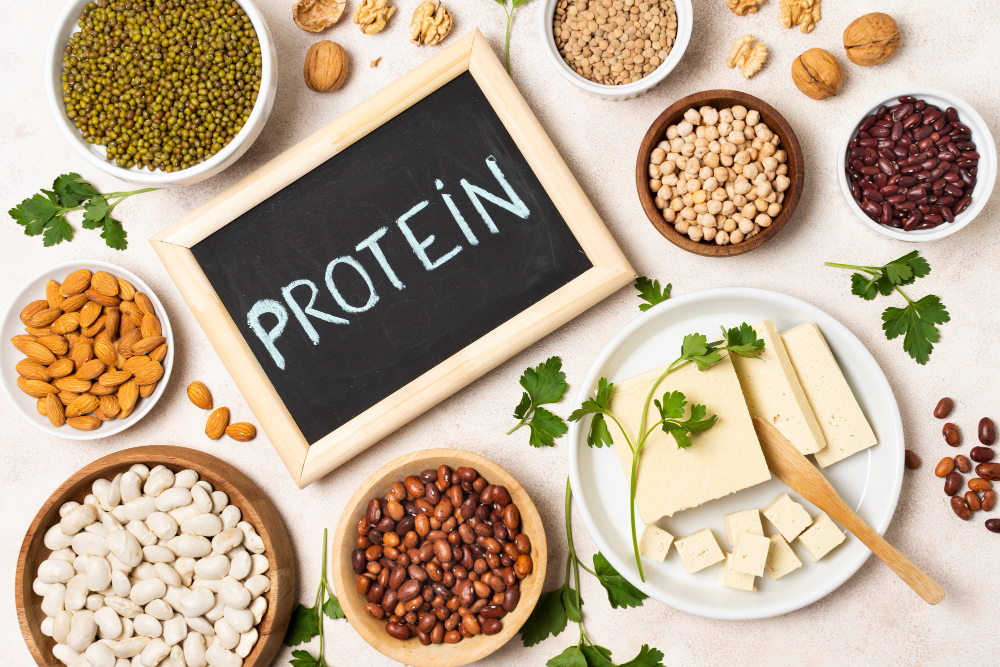
I want to talk about protein. Not because it doesn’t matter, because it does. But because we are being sold a deficiency most of us don’t have, and you deserve to know who is selling it, and why.   Walk through any store now and protein is everywhere. Protein water. Protein coffee. Bread, cereal, chips, yoghurt, all wearing the number on the front of the pack. It feels like science. It feels like progress. It is neither. It is marketing, and it has a history most people have never been told.   In 1974, a paper in The Lancet took apart the idea of a global “protein gap,” the belief, pushed for two decades by international agencies, that the world was starving for protein and needed industrial protein products to fix it. The scientist who had led that entire field admitted, the very next year, that the gap had never existed.   The recommended protein for infants was quietly revised down, again and again. One of the men involved later called it one of the greatest errors ever made in the name of nutrition science.   Fifty years later, the same myth is back. Bigger, and far more profitable. It is a thirty-billion-dollar industry now, doubling. And this time it has reached your morning coffee.   Here in India, the campaign working hardest to convince you that you are protein deficient is funded by an American soybean export council. That is not a conspiracy; it is stated openly on their own website. And the figure you have seen everywhere that seventy-three percent of Indians are protein deficient, comes from a 2017 market research survey of 1,800 people.   Not a health study. A marketing study.   The government’s own survey, of more than two hundred thousand households, tells a different story. On average, we already eat enough protein. What we are actually short on is not quantity. It is quality, diversity, and the part nobody is selling: digestion.   Because this is what the grams will never tell you.   You are not what you eat. You are what you digest and absorb.   In my tradition, this is not a metaphor. Digestion is agni, your metabolic fire. And there is a line I return to again and again: rogah sarve’pi mande’gnau. Nearly all disease begins in weak digestion.   You can drink three protein shakes a day. But if your agni is weak, that protein does not become muscle. It becomes ama, undigested, sticky residue that clogs your channels and quietly inflames you. More fuel on a low fire does not make a bigger flame. It makes smoke.   And here is the part I find most beautiful. My tradition knew, thousands of years ago, that food becomes flesh. The Chandogya Upanishad says it plainly: the coarsest part of food becomes waste, the middle part becomes flesh, and the subtlest part becomes the mind.   Read that again.   They knew food builds muscle. They simply refused to make muscle the goal. Flesh was the middle outcome, above waste, below mind.   The finest yield of what you eat was never meant to be a bigger body. It was meant to be a clearer one.   In Ayurveda, muscle, Mamsa, is the third transformation of your food, not the first. Food becomes plasma, then blood, then muscle, each step depending on a fire of its own. You cannot shortcut that by scooping more powder into the top. There is no supplement for a broken fire.   Now let me be honest, because I am a physician and not a contrarian.   There are people who genuinely need more protein. Women in perimenopause and beyond. Anyone over sixty losing muscle to age. People on the new weight-loss injections. Those recovering from illness, surgery, childbirth. Serious athletes in real training.   If you are one of them, this is not permission to eat less. But for most others, sitting at a desk, reaching for a third shake out of anxiety, it is the opposite.   So, before you count another gram, do this instead.   Rebuild the fire first. Warm, freshly cooked food, at regular hours. Fewer cold shakes. Your dal with rice and a spoon of ghee is a complete protein and an easily digested one, the combination our grandmothers understood long before it had a name.   And that fruit-and-milk smoothie you feel so virtuous about? Milk and fruit are two different digestions fighting in one glass. My texts call that combination harmful, and they are right. It is one of the most common causes of the bloating and congestion I see every single day.   Strength was never a number on a package. It is what your body can actually transform.   That is the real question. Not how much protein you can swallow, but how much of it you can become.
7 Dhatus in Ayurveda: Meaning, Functions & How They Support Your Health

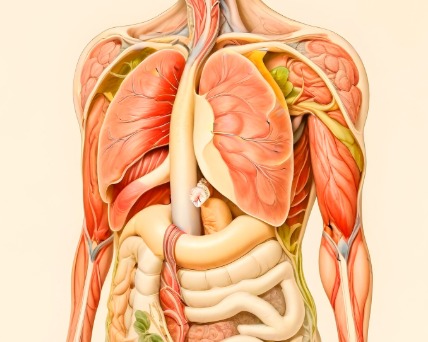
Ayurveda views human body in a different way compared to modern science and biology. Instead of focusing mainly on organs and cells, Ayurveda talks about tissues, called Dhatus that form the very foundations of our physical body.   The Sanskrit word “Dhatu” means one that holds, supports and sustains. There are seven main tissues in our body, Saptha Dhatus that make our whole physical being.   Before we jump into what each Dhatu does, let’s talk about how they are formed.   In simple terms, they start with the food you eat, your digestive fire breaks it down into the purest, most refined nutrients and become the first tissue, Rasa Dhatu.   Each Dhatu has its own job and gets built and nourished from the one before it.   So basically, your body is made from the food you eat, being transformed step by step into all the tissues that keep you alive.   Missing nutrients or poor digestion directly can affect the tissues. That’s why Ayurveda says good digestion is the backbone of good health.     The 7 Dhatus:     Rasa Dhatu   Rasa Dhatu is the first tissue formed after digestion of food. It represents the nourishing fluid in the body, similar to plasma and lymph. Its main role is to carry nutrients, hydration, and energy to every part of the body. Simply put, Rasa is the foundation that feeds all other tissues. This Dhatu is closely linked with Kapha Dosha, so when Kapha increases, Rasa tissue tends to increase too, and when Kapha decreases, Rasa also diminishes. Healthy Rasa Dhatu keeps you nourished, warm, and well-hydrated, while a weak Rasa may lead to fatigue, dryness, or feeling undernourished.     Rakta Dhatu   Rakta Dhatu is the blood tissue that develops from Rasa. It gives life, warmth, and vitality to the body. Rakta carries oxygen and nutrients to organs and tissues and helps remove waste. It supports good energy levels, clear skin and proper circulation. Rakta is directly related to Pitta Dosha, which gives it its red color and heat quality. But when blood tissue is compromised, such as in deficiency, symptoms like pale complexion, weakness, dryness, or skin problems can appear.     Mamsa Dhatu   Mamsa Dhatu refers to the muscle tissue of the body. It provides strength, shape, stability, and protection to internal organs. Strong muscles help with movement, posture, and daily physical activity. Mamsa is what gives the body its power and structure. Kapha Dosha influences Mamsa Dhatu, so changes in Kapha affect muscle strength and size. If it becomes weak or depleted, one might experience muscle wasting, weakness, or difficulty with movement and posture.     Meda Dhatu   Meda Dhatu is the fat tissue that stores energy and lubricates the body. In Ayurveda, Meda plays several important roles: it stores energy, protects organs, insulates the body against heat loss, and lubricates joints and tissues. Meda is also connected with sweat as a waste product (Mala). Healthy Meda supports endurance, flexibility, and proper metabolism. Meda acts like the body’s natural energy reserve. Too much Meda can lead to weight gain and metabolic imbalance, while too little can cause dryness, aggravated Vata symptoms.     Asthi Dhatu   Asthi Dhatu is the bone tissue. All the bones, cartilages, and hard structures that form your body’s framework. It gets its nourishment from the Meda Dhatu. Its main function is support and structure, giving the body its shape, protecting inner organs, and enabling strength for movement through joints and limbs. Asthi also produces nails and hair as the waste products of its formation, linking bone health with external features. Strong Asthi Dhatu means sturdy skeleton, good posture, and resilience, while weakness can show up as brittle bones, joint discomfort, weak nails or other concerns.     Majja Dhatu   Majja Dhatu refers to bone marrow and the tissues that fill the spaces within bones, including support for the nervous system. It is nourished by Asthi Dhatu and plays a key role in nervous system function and mental clarity. In Ayurveda, Majja fills up the bone cavities, supports nerve channels, and contributes to overall body strength. When Majja Dhatu is balanced, you tend to have good memory, clear thinking, stable nerves, and healthy marrow function. If Majja becomes depleted, it can lead to symptoms like dizziness, weakness, joint pains, or neurological discomforts.     Shukra Dhatu   Shukra Dhatu is the reproductive tissue and the most refined of all the Dhatus. It represents vitality, immunity, creativity, and reproductive strength. It supports fertility, stamina, glowing health, and emotional balance. When Shukra is depleted, low energy, reduced immunity, and reproductive challenges may occur. Shukra is often described as the essence of life and long-term strength.       What makes the concept of the seven Dhatus so powerful is the way they are all connected. Each tissue depends on the one before it for nourishment. If Rasa is weak due to poor digestion or unhealthy food choices, Rakta will not receive enough nutrition, and this imbalance can slowly affect all the other tissues down the line.   In the same way, when the earlier tissues are strong and balanced, the later tissues naturally become healthier and more stable. This chain effect teaches us that health is not about fixing just one problem, but about supporting the entire system.   Simple daily habits like eating fresh and wholesome food, chewing properly, drinking enough water, maintaining regular meal times, getting good sleep, and moving the body can go a long way in keeping these tissues healthy. Managing stress, spending time outdoors, and listening to the body’s natural rhythms also support tissues like Majja and Shukra.   Understanding the seven Dhatus helps us see our body with more awareness and respect. Instead of only reacting when illness appears, we begin to notice early signs of imbalance and take small steps to correct them. When digestion is strong and lifestyle choices are balanced, the body naturally builds healthy tissues and… Continue reading 7 Dhatus in Ayurveda: Meaning, Functions & How They Support Your Health