
Have We Been Looking at Cancer the Wrong Way?

While the modern world is still trying to understand the many factors that contribute to cancer, I feel like I may have understood something important through my experience with Ayurveda.   I am not saying this is written in any ancient Ayurvedic textbook. In fact, it is not mentioned in any of the Samhitas or classical Ayurvedic texts in the exact way I am going to explain it.   Nobody taught me this directly.   This understanding has come from years of observing patients, studying Ayurveda deeply, and trying to correlate what I see in practice.   And honestly, I just want to share my learning.   Whenever I asked my professors about cancer, they would say that cancer can be understood as Ojakshaya, which means depletion of ojas, or reduction in vitality and immunity.   Yes, that explanation made some sense to me.   But still, I always felt that there was something missing. There was no clear explanation about why cancer develops in the first place. No direct cause that was fully satisfying to me.   Over time, I started connecting dots on my own.   Let me explain this in the simplest way possible so that even if you don’t know much about Ayurveda, you will still understand.   Most people have heard about Vata, Pitta, and Kapha. These are the three doshas in Ayurveda.   Vata is mainly associated with the air element. Pitta is associated with fire. Kapha is associated with earth and water.   Now think about this carefully.   People who naturally gain weight easily, people who accumulate fat, people whose bodies tend to “build up” tissues, in Ayurveda, these are considered Kapha-dominant people.   Conditions like:   Polycystic ovaries (PCOS), Thyroid swelling (Galagandha), Diabetes, Fibroids,   all have strong Kapha involvement mentioned in Ayurvedic texts.   Why?   Because Kapha is all about accumulation, growth, nourishment, and building tissues.   In diabetes too, Ayurveda explains that toxins accumulate because digestion is weak.   Food is eaten but not properly digested, and over time, undigested material starts accumulating in the body.   In Kapha individuals, this accumulation tendency is naturally higher because their system is already more prone to storing and building.   Now here is where my thinking started becoming very clear.   What is cancer, fundamentally?   Cancer involves uncontrolled cell growth and multiplication. From an Ayurvedic lens, I began wondering whether this process could also reflect a tendency toward excessive accumulation and tissue build-up.   So logically, shouldn’t cancer also have a strong Kapha component?   Nobody taught me this directly. I arrived at this understanding by observing patterns repeatedly in patients.   And then I looked at modern research.   Today, modern medicine is increasingly talking about:   fasting, calorie restriction, not feeding the cancer, metabolic therapies.   You may have come across phrases like “starve the cancer,” often discussed in conversations around metabolism and cancer research.   And suddenly, it made sense.   Because in Ayurveda, the number one treatment mentioned for aggravated Kapha is Langhana.   Langhana means fasting.   It is eating less, lightening the system and decreasing accumulation.   When Kapha increases excessively, Ayurveda says the body needs reduction, not more nourishment.   And honestly, when I saw this parallel between modern research and Ayurvedic principles, it made complete sense to me.   Of course, our ancestors may have understood something this profound a long time ago.   Sometimes we assume ancient systems are primitive, but often they observed the body in incredibly intelligent ways.   Now, I want to make something very clear here.   I do not believe Ayurveda should replace modern cancer treatment.   Modern medicine is extraordinary when it comes to managing rapidly proliferating cancer cells. Cancer can spread aggressively, and modern interventions like chemotherapy, radiation, surgery, immunotherapy, these are fast-acting and lifesaving in many cases.   We cannot ignore that.   What we do through Ayurveda is different.   We work alongside modern medicine.   While modern treatment targets and destroys the actively multiplying cancer cells, Ayurveda focuses on reducing the internal environment that may be supporting that growth.   In simple words:   while one side is treating the disease directly, the other side is trying to reduce the tendency for accumulation.   That is where Kapha reduction becomes important.   Through this, we try to:   reduce excessive accumulation, improve digestion and metabolism, reduce toxins, support immunity, decrease heaviness in the body, improve overall vitality.   And more importantly, we focus heavily on reducing recurrence, slowing progression, improving quality of life and helping recovery.   This is not about “curing cancer overnight.” This is about changing the terrain of the body.   I openly acknowledge that my understanding may still be limited. Maybe my logic is incomplete. Maybe there are aspects I still do not understand.   But at the same time, I cannot ignore what I am seeing clinically.   I am seeing patients improve. I am seeing recovery happen beautifully alongside treatment. I am seeing people feel stronger, lighter, healthier, and more hopeful.   And for that, I feel deeply grateful.   Honestly, I feel like this understanding was given to me by the universe as a blessing. And I do not want to take that for granted. I want to acknowledge it with gratitude.   Because when you spend years studying, observing, questioning, and genuinely trying to help people, sometimes insights come quietly.   And I felt this understanding was worth sharing.   Even if this perspective helps one person think differently about their health, their lifestyle, or their healing journey, I will be happy.   I also want people to understand something important: Ayurveda is not only about herbs. It is not only about medicines.   It is also about understanding the body’s tendencies.   If the body is constantly in a state of accumulation, heaviness, sluggish digestion, toxin build-up, and excessive growth tendencies, then naturally we must ask: “How do we reduce… Continue reading Have We Been Looking at Cancer the Wrong Way?

Triphala and Its Benefits for Skin and Daily Care

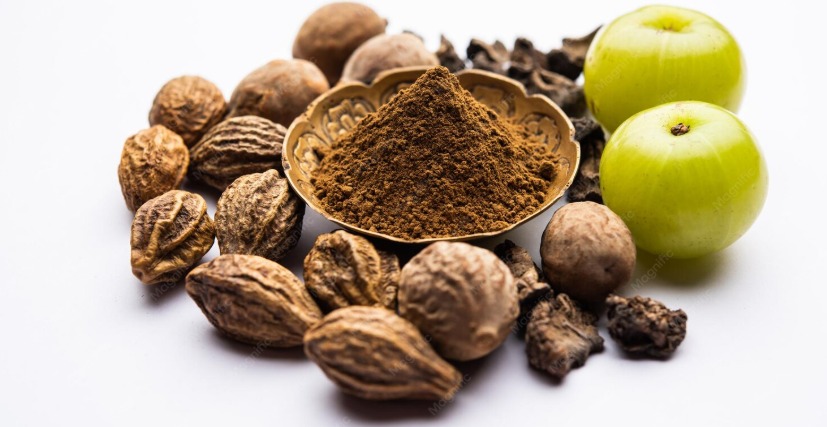
Triphala holds a special place in Ayurveda because people have trusted it for centuries as a simple, powerful blend for overall wellness. It combines three fruits, Amla, Haritaki, and Bibhitaki, and each one brings its own skin loving qualities.   Today, many people look at Triphala not only as a traditional herbal formula but also as a helpful part of a clean and natural skincare routine.   When you understand Triphala better, you can see why it works so well in skincare. It supports balance, helps cleanse gently, and offers antioxidant support that many modern skin routines need.   That is one reason products like Triphala face wash have become popular with people who want a natural, simple, and effective option.   What is Triphala?   Triphala means three fruits. Ayurveda uses this blend as a time tested formula that supports cleansing, balance, and rejuvenation. The three fruits work together in harmony, and that balance makes Triphala such a valuable ingredient in wellness and skincare.   Amla brings vitamin C and antioxidants, Haritaki supports cleansing and skin clarity, and Bibhitaki helps with balance and gentle exfoliation. Together, they create a powerful herbal blend that can support skin from the outside and from within.   Why Triphala matters in skincare   Skin faces a lot every day. Dust, oil, pollution, stress, and poor routines can all leave skin looking dull or tired. Triphala helps because it supports cleansing without making the skin feel harsh or stripped.   Many people want that kind of care now because strong cleansers often remove too much and leave the skin uncomfortable.   A good Triphala face wash can fit beautifully into this need. It helps remove daily impurities, supports freshness, and gives the skin a clean feeling while still keeping the routine gentle. That balance makes it useful for everyday skincare.   Benefits of Triphala for skin 1. It supports clearer looking skin   Triphala has natural cleansing properties that help the skin feel fresh and look more refined. It can support people who deal with excess oil, congestion, or frequent breakouts. Because of that, Triphala often appears in skincare products made for clearer looking skin.   A Triphala face wash can become a helpful first step in the routine. It helps wash away dirt and oil that collect on the surface through the day. Over time, that gentle cleansing can support a cleaner and more balanced complexion.   2. It offers antioxidant support   One of the biggest reasons people value Triphala is its antioxidant strength. Antioxidants help protect the skin from free radical damage, which can make skin look older, duller, or less lively. Amla especially brings strong antioxidant support because it contains vitamin C and other helpful nutrients.   When skin gets more antioxidant support, it can look healthier and more vibrant. That is why a Triphala face wash can work well in a daily routine focused on long term skin care, not just quick cleansing.   3. It supports a brighter appearance   Many people use Triphala because they want skin that looks fresh and naturally radiant. Amla brings brightness support, and the whole blend helps remove buildup that can make skin appear dull. This makes Triphala useful for people who want a more awakened and even looking complexion.   A Triphala face wash can help start that process each morning and night. When you cleanse properly and regularly, your skin has a better chance to look clean, fresh, and naturally bright.   4. It helps with oil balance   Triphala can suit oily and combination skin because it helps keep the skin feeling clean without using harsh ingredients. Haritaki and Bibhitaki especially support balancing and clarifying care. This matters because excess oil often leads to shine, clogged pores, and breakouts.   A gentle Triphala face wash can help remove extra oil while still respecting the skin barrier. That makes it a practical option for people who want daily cleansing without that tight, squeaky clean feeling.   5. It supports gentle exfoliation   Triphala can help lift away dead skin cells and surface buildup. This matters because dead skin can make the face look rough, uneven, or tired. Gentle exfoliation also helps skincare products work better because they can reach the skin more effectively.   When a Triphala face wash includes this kind of support, it can help the skin feel smoother with regular use. You do not need a strong scrub every day. You need consistent, gentle cleansing that keeps the skin fresh.   6. It may help calm the look of redness   Triphala has traditional use in soothing and balancing care. Some sources mention its anti inflammatory qualities, which can support skin that looks irritated or stressed. This makes it appealing for people who want a cleaner routine with less harshness.   A Triphala face wash can fit well into that goal because it supports cleansing without overly drying the skin. That helps the face feel calm, comfortable, and cared for after washing.   7. It supports a healthier looking skin barrier   Healthy skin does not just look clear. It also needs to feel comfortable and well cared for. Antioxidants, vitamin C, and gentle herbal cleansing can all support skin that feels stronger and more resilient.   People often look for a Triphala face wash when they want a more natural option that respects the skin barrier. That kind of product can work especially well in a regular morning and evening routine.   How to use Triphala in a skincare routine   You can use Triphala in skincare in simple ways. Many people prefer a cleanser because it gives them an easy daily habit. A face wash fits into a busy routine much better than a mask or paste that needs extra time.   Use your Triphala face wash on damp skin. Massage it gently in circular motions, then rinse with lukewarm water. Follow with a toner or moisturizer that matches your skin type. This simple… Continue reading Triphala and Its Benefits for Skin and Daily Care