
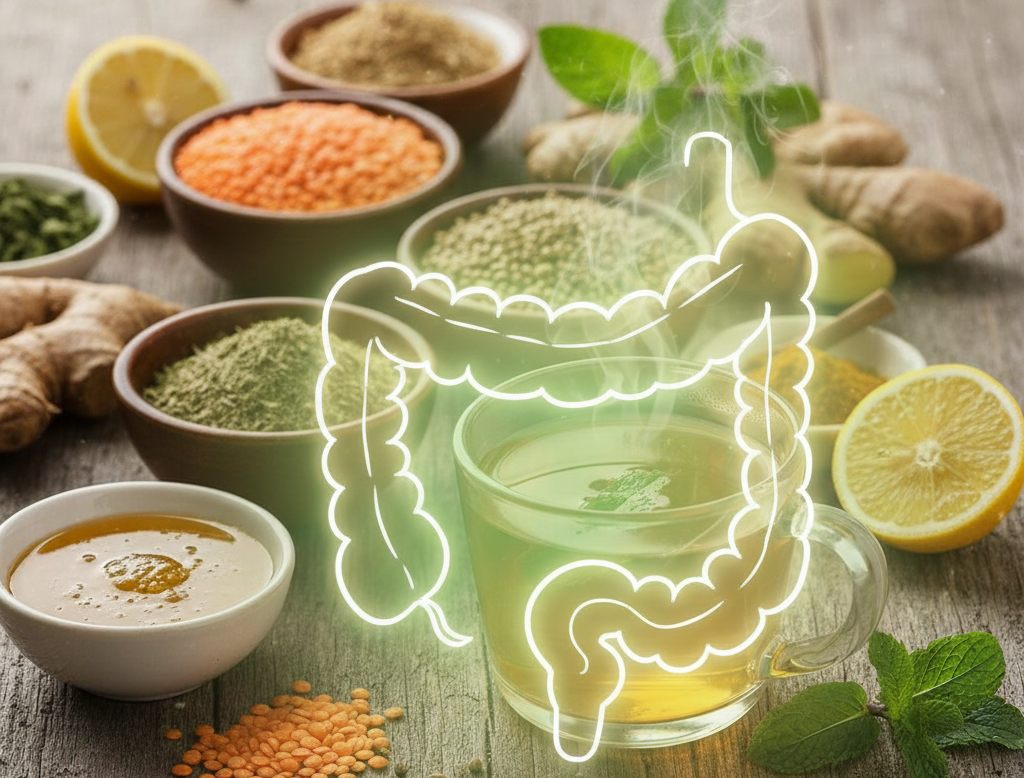
What is Agni and Why Every Disease Starts Here?

Once you start understanding Ayurveda deeply, and spend enough time studying it, you slowly realize that Ayurveda considers disturbed Agni to be one of the foundational factors behind many chronic diseases.   Even if you are completely new to Ayurveda, you have probably heard this word before.   Most people know Agni as “digestive fire.”   Something related to the stomach. Something related to appetite. Something related to food.   But it is much bigger than that.   Agni is transformation itself. This is the simplest way to understand it.   The food we eat must transform into energy. Energy must transform into tissues. Tissues must transform into strength, immunity, and vitality.   This entire process depends on Agni.   And when this transformation starts becoming weak, disturbed, irregular, or excessive, disease slowly begins developing over time.   Ayurveda gives Agni such importance because digestion is not just about comfort after meals. It is about the body’s ability to process everything it receives.   If food is not properly transformed, it does not become proper nourishment. Instead, it can remain partially digested and create strain in the system.   Over time, this can weaken the tissues, disturb the doshas, and reduce vitality.   And honestly, many times the disturbance starts much before reports become abnormal.   The body always gives signals first.   Loss of appetite. Bloating. Brain fog. Heaviness. Fatigue. Coated tongue. Irregular bowel movements.   In Ayurveda, we do not ignore these small signs because these are often the earliest indications that Agni is struggling.   Ama   Ama is one of the most misunderstood concepts in Ayurveda.   People often translate Ama simply as “toxins.”   But honestly, Ama is much more complex than that.   Ama is anything that the body could not properly digest, process, or eliminate.   Improperly digested food can become Ama.   Poor lifestyle habits can contribute to Ama.   Even unresolved emotions and chronic stress can create imbalance in the system.   Ayurveda describes Ama as: heavy, sticky, obstructive, clouding.   And clinically, this description makes a lot of sense.   When digestion weakens, the body slowly loses efficiency.   Channels become blocked. Inflammation increases. Metabolism slows down. Energy decreases. Tissues stop functioning optimally.   Then disease begins expressing itself differently in different people.   In one person it may become a skin disorder.   In another, hormonal imbalance.   In someone else, autoimmune disease, chronic fatigue, joint pain, or metabolic disorders.   The disease names may change.   But internally, disturbed Agni and Ama are often present somewhere in the background.   This is one reason Ayurveda places so much importance on digestion.   One thing I find fascinating is that Ayurveda does not see digestion as only stomach digestion.   Even the mind digests.   Have you noticed how stress affects your stomach?   How anxiety changes appetite?   How grief can make digestion weak?   The Four States of Agni   According to Ayurveda, Agni does not become disturbed in the same way in every person.   Sometimes it becomes weak. Sometimes excessive. Sometimes irregular. And sometimes perfectly balanced.   Understanding these patterns is very important because they explain why different people experience digestion and disease differently.   The healthiest state is called Sama Agni.   People with Sama Agni usually have: good appetite, comfortable digestion, stable energy, clear mind, healthy bowel movements, and overall balance in the body.   Food nourishes them properly.   There is no heaviness after eating. No burning. No excessive gas or discomfort.   In Ayurveda, this is considered the ideal state because the body is transforming nourishment properly.   Then there is Manda Agni.   Weak or slow digestion.   This is extremely common today.   These individuals often feel: heavy, sluggish, sleepy after meals, bloated, and mentally dull.   Their appetite may feel low, but even small amounts of food can create discomfort.   Ayurveda says this state allows Ama to accumulate very easily because the digestive fire is not strong enough to process food properly.   This pattern is commonly associated with Kapha imbalance.   Then comes Tikshna Agni.   Excessively sharp digestion.   In these individuals, the digestive fire becomes too intense.   They may experience: very strong hunger, acidity, burning sensation, irritability, heat intolerance, loose stools, or inflammation.   Even though digestion appears “strong,” Ayurveda does not consider this healthy either.   Because excessive fire can slowly start damaging tissues over time.   This state is commonly associated with aggravated Pitta.   And then there is Vishama Agni.   Irregular digestion.   One day digestion feels completely normal. The next day there is bloating, constipation, gas, or discomfort.   Appetite becomes unpredictable.   This is very commonly seen in people with: stress, anxiety, irregular schedules, poor sleep, overthinking, excessive travel, and disturbed routines.   In Ayurveda, this is strongly connected with Vata imbalance.   There is also something called Dhatvagni, which refers to the metabolic activity present within each tissue.   According to Ayurveda, digestion does not stop after food leaves the stomach.   Transformation continues throughout the body.   Food must eventually nourish blood, muscle, fat, bone, marrow, and reproductive tissues properly.   This is an incredibly sophisticated way of understanding metabolism.   One thing I deeply appreciate about Ayurveda is that it never separates the mind from the body.   We can clearly observe how emotional states affect digestion.   Stress creates acidity.   Fear disturbs appetite.   Grief weakens digestion completely.   Anxiety creates irregular bowel patterns.   Modern medicine is now studying the gut-brain connection very seriously.   But Ayurveda recognized this relationship thousands of years ago.   Ojas   Ayurveda says that when Agni functions properly for a long time, the final refined essence created in the body is called Ojas.   Ojas is considered the essence of vitality.   It is what gives the body strength, stability, resilience, immunity, and even emotional steadiness.   When Agni works well, it helps create… Continue reading What is Agni and Why Every Disease Starts Here?
Have We Been Looking at Cancer the Wrong Way?

While the modern world is still trying to understand the many factors that contribute to cancer, I feel like I may have understood something important through my experience with Ayurveda.   I am not saying this is written in any ancient Ayurvedic textbook. In fact, it is not mentioned in any of the Samhitas or classical Ayurvedic texts in the exact way I am going to explain it.   Nobody taught me this directly.   This understanding has come from years of observing patients, studying Ayurveda deeply, and trying to correlate what I see in practice.   And honestly, I just want to share my learning.   Whenever I asked my professors about cancer, they would say that cancer can be understood as Ojakshaya, which means depletion of ojas, or reduction in vitality and immunity.   Yes, that explanation made some sense to me.   But still, I always felt that there was something missing. There was no clear explanation about why cancer develops in the first place. No direct cause that was fully satisfying to me.   Over time, I started connecting dots on my own.   Let me explain this in the simplest way possible so that even if you don’t know much about Ayurveda, you will still understand.   Most people have heard about Vata, Pitta, and Kapha. These are the three doshas in Ayurveda.   Vata is mainly associated with the air element. Pitta is associated with fire. Kapha is associated with earth and water.   Now think about this carefully.   People who naturally gain weight easily, people who accumulate fat, people whose bodies tend to “build up” tissues, in Ayurveda, these are considered Kapha-dominant people.   Conditions like:   Polycystic ovaries (PCOS), Thyroid swelling (Galagandha), Diabetes, Fibroids,   all have strong Kapha involvement mentioned in Ayurvedic texts.   Why?   Because Kapha is all about accumulation, growth, nourishment, and building tissues.   In diabetes too, Ayurveda explains that toxins accumulate because digestion is weak.   Food is eaten but not properly digested, and over time, undigested material starts accumulating in the body.   In Kapha individuals, this accumulation tendency is naturally higher because their system is already more prone to storing and building.   Now here is where my thinking started becoming very clear.   What is cancer, fundamentally?   Cancer involves uncontrolled cell growth and multiplication. From an Ayurvedic lens, I began wondering whether this process could also reflect a tendency toward excessive accumulation and tissue build-up.   So logically, shouldn’t cancer also have a strong Kapha component?   Nobody taught me this directly. I arrived at this understanding by observing patterns repeatedly in patients.   And then I looked at modern research.   Today, modern medicine is increasingly talking about:   fasting, calorie restriction, not feeding the cancer, metabolic therapies.   You may have come across phrases like “starve the cancer,” often discussed in conversations around metabolism and cancer research.   And suddenly, it made sense.   Because in Ayurveda, the number one treatment mentioned for aggravated Kapha is Langhana.   Langhana means fasting.   It is eating less, lightening the system and decreasing accumulation.   When Kapha increases excessively, Ayurveda says the body needs reduction, not more nourishment.   And honestly, when I saw this parallel between modern research and Ayurvedic principles, it made complete sense to me.   Of course, our ancestors may have understood something this profound a long time ago.   Sometimes we assume ancient systems are primitive, but often they observed the body in incredibly intelligent ways.   Now, I want to make something very clear here.   I do not believe Ayurveda should replace modern cancer treatment.   Modern medicine is extraordinary when it comes to managing rapidly proliferating cancer cells. Cancer can spread aggressively, and modern interventions like chemotherapy, radiation, surgery, immunotherapy, these are fast-acting and lifesaving in many cases.   We cannot ignore that.   What we do through Ayurveda is different.   We work alongside modern medicine.   While modern treatment targets and destroys the actively multiplying cancer cells, Ayurveda focuses on reducing the internal environment that may be supporting that growth.   In simple words:   while one side is treating the disease directly, the other side is trying to reduce the tendency for accumulation.   That is where Kapha reduction becomes important.   Through this, we try to:   reduce excessive accumulation, improve digestion and metabolism, reduce toxins, support immunity, decrease heaviness in the body, improve overall vitality.   And more importantly, we focus heavily on reducing recurrence, slowing progression, improving quality of life and helping recovery.   This is not about “curing cancer overnight.” This is about changing the terrain of the body.   I openly acknowledge that my understanding may still be limited. Maybe my logic is incomplete. Maybe there are aspects I still do not understand.   But at the same time, I cannot ignore what I am seeing clinically.   I am seeing patients improve. I am seeing recovery happen beautifully alongside treatment. I am seeing people feel stronger, lighter, healthier, and more hopeful.   And for that, I feel deeply grateful.   Honestly, I feel like this understanding was given to me by the universe as a blessing. And I do not want to take that for granted. I want to acknowledge it with gratitude.   Because when you spend years studying, observing, questioning, and genuinely trying to help people, sometimes insights come quietly.   And I felt this understanding was worth sharing.   Even if this perspective helps one person think differently about their health, their lifestyle, or their healing journey, I will be happy.   I also want people to understand something important: Ayurveda is not only about herbs. It is not only about medicines.   It is also about understanding the body’s tendencies.   If the body is constantly in a state of accumulation, heaviness, sluggish digestion, toxin build-up, and excessive growth tendencies, then naturally we must ask: “How do we reduce… Continue reading Have We Been Looking at Cancer the Wrong Way?

Virechanam | The Ayurvedic Detoxification Technique

If you feel your body needs a good, deep cleanse — more than just drinking detox teas or juices, Ayurveda has a millennia-old, time-tested approach to detox your system from within – Virechanam.  It is one of the five therapies of Panchakarma, a powerful detoxification technique of Ayurveda that helps remove all the toxins, particularly associated with Pitta Dosha.  If you are experiencing skin issues (like acne or eczema), slow digestion, or even unexplained grumpiness, this therapy can break that cycle and help your body get back to balance. But before you even think about undergoing Virechanam, let’s break it down — what it is, how it works, who should and shouldn’t do it, and what you should eat before and after for maximum results.     What is Virechanam in Ayurveda ?     Virechana or Virechanam is a controlled purgation therapy used to clear excess Pitta Dosha and toxins (Ama) from the body through the GI (gastrointestinal) tract. It is  designed to eliminate toxins without weakening the body.    Rather, it leaves you more refreshed and rejuvenated.    Here’s how it works:   Preparation phase (Purva Karma)   Before the actual detox, the body is readied with Snehapana (internal oleation with medicated ghee) and Swedana (sweating therapy) to loosen toxins.   Main procedure (Pradhana Karma)   A carefully selected herbal purgative is administered to induce controlled bowel movements, flushing out toxins.   Post care (Paschat Karma)   The digestive fire (Agni) is weak after detox, hence, diet and lifestyle should be handled delicately to facilitate proper recovery.     Virechanam Ayurvedic Detox Benefits     Why should someone go through Virechanam? Here are some incredible benefits:   Liver detoxification    Virechanam eliminates excess Pitta, making it one of the best treatments for abdominal health. The stomach and small intestine are the seats of Pitta. Therefore, it can be beneficial for those with fatty liver, jaundice, or excessive heat in the body.   Skin diseases and allergies   According to Ayurveda, the root cause of major skin problems like acne, eczema, psoriasis, and urticaria (Sheetapitta) lies in poor liver health and Pitta aggravation. Virechanam helps balance Pitta dosha and restores liver health. This prevents the recurrence of skin conditions and promotes a healthy glow.   Weight loss   Since this therapy targets the intestines where major digestion happens, the healing starts immediately. As the gut gets rid of toxins, Agni increases resulting in better nutrient absorption and improved metabolism promoting weight management.   Mental clarity and emotional balance   Since Virechanam clears accumulated Pitta, it also helps to reduce anger, frustration, and irritability. A balanced Pitta fosters a sense of calm.   Digestive Health    As Virechanam cleans the gut, it helps to relieve chronic acidity, constipation, indigestion and bloating.     Virechanam Therapy for Liver Detox     In Kerala, if you really love someone, you say, “Ente Karale.”   It means ‘Oh, my dear liver.’   Yes, it is neither the heart nor the brain; but the liver that has been designated as the most important organ in the body.    The liver does multiple jobs – detoxification, blood purification, fat metabolism and so on.    According to Ayurveda, the liver is the seat of Pitta Dosha. Over time when we constantly consume unhealthy food, live in stress, and lead an unhealthy lifestyle; the liver suffers an overload. With its Pitta getting imbalanced, the liver becomes fatty and leads to inflammation in the body.    Virechanam is like a reset button as it helps the liver to function optimally. To be honest, I’ve seen patients with serious skin problems, stubborn acne, and sluggish digestion do wonders after Virechanam. It’s like unclogging a drain. The moment toxins are removed, everything flows better!     Who Should and Shouldn’t Undergo Virechanam Therapy ?     Virechanam is best suited for:   People with excess Pitta Dosha (heat-related issues) Chronic acidity, ulcers or poor digestion Liver disorders like fatty liver or jaundice Skin conditions like acne, eczema and psoriasis Frequent anger, irritability or stress due to Pitta imbalance Obesity and slow metabolism   You should avoid it, if:   Pregnant or lactating women People with extreme weakness or low body weight Those with severe diarrhea or dehydration issues Children and the elderly unless prescribed by an expert     Virechanam Diet: What to Eat Before and After     Before Virechanam, you are advised to eat light foods to prepare the body. After this therapy, digestion is weak, so again careful dietary management is required.   Before Virechanam:   Light khichdi or rice gruel (Peya) Warm, cooked foods with minimal spices Buttermilk for digestion (Takra)   After Virechanam:   Start with rice gruel (Peya) and gradually move to cooked vegetables Avoid spicy, oily, and heavy foods Sip on warm water or herbal teas to keep digestion smooth   This is just a basic guide. As you undergo the treatment, the doctor will guide you with a detailed diet plan that needs to be followed meticulously throughout the day.     Best Herbs for Virechanam Detox in Ayurveda     Many herbs are used in Ayurveda for Virechanam, depending on the Prakriti and condition of the patient. Some of the commonly used ones are: Triphala – A gentle detoxifier for the intestines and liver Aragvadha (Cassia fistula) – Best for clearing excess Pitta Haritaki – Improves digestion and prevents bloating Amalaki (Indian Gooseberry) – Strengthens the liver and boosts immunity Draksha (Raisins) – A mild laxative that nourishes the body     Virechanam vs. Vasti: Which Ayurvedic Detox is Better ?     Many people ask me—should I do Virechanam or Vasti? The answer depends on your Dosha imbalance. Virechanam is primarily performed for Pitta aggravation (heat, acidity, skin problems, liver problems) Basti is best for Vata disorders (joint pain, constipation, anxiety, dryness).     Key Differences: Virechana vs. Vasti Feature  Virechana Vasti Targets Dosha Pitta (Heat, inflammation, toxins) Vata (Dryness, constipation, joint issues) Detox Pathway Intestines (Bowel movements) Colon (Enema therapy) Treatment Type Purgation (Laxative-based cleansing) Medicated enema (Oil or herbal decoction) Best For… Continue reading Virechanam | The Ayurvedic Detoxification Technique