The World’s Healthiest Man Just Got an Autoimmune Disease. Here’s What Ayurveda Saw Coming.

By now, you’ve probably seen the headlines. Bryan Johnson, the man who spends $2 million a year trying not to die, who calls himself the healthiest person on Earth, whose entire movement is built around the slogan “Don’t Die,” has been diagnosed with a chronic autoimmune condition called autoimmune gastritis.   I want to walk you through this properly.   Not to mock him, there’s nothing funny about watching your own body turn against you.   But because his story is, painfully, one of the clearest modern illustrations I’ve seen of something Ayurveda has been saying for three thousand years: disease does not begin on the day it is diagnosed. It begins long before, quietly, in the digestion.   What Actually Happened Inside His Body   Here’s what we know from his own account.   For years, his medical team noticed his ferritin, the protein that stores iron in the body, was persistently low. They couldn’t explain it. He wasn’t anemic. He wasn’t bleeding. He simply wasn’t holding onto iron the way he should have been.   Eventually, that unresolved clue led to further testing: a colonoscopy, an endoscopy, biopsies of the stomach lining.   What they found was early-stage autoimmune gastritis.   His own immune system had begun attacking the acid-producing cells of his stomach lining. Left unaddressed, this kind of damage is progressive. It can impair the body’s ability to absorb vitamin B12 and iron, and over time, it raises the risk of stomach cancer.   He’s also spoken about the fact that this didn’t emerge on its own. He was diagnosed with hypothyroidism at 21.   He describes a childhood of sugar, soda, and fast food, followed by a stretch in his 20s marked by heavy stress, weight gain, and a deep depression while he was building his business.   What he now calls “thyrogastric syndrome,” his thyroid and his stomach’s autoimmunity feeding off each other, didn’t arrive out of nowhere. It had been building for decades.   Why Low Ferritin Was the Clue, Not the Cause   This is the part I want you to sit with, because it matters far beyond one man’s diagnosis.   Low ferritin wasn’t the disease. It was the smoke, not the fire. It was the first visible signal of something that had already been happening for years, invisible to every panel, every scan, every biomarker his team was tracking.   He had, by his own description, more data on his body than almost any human alive, and none of it caught this until the damage had already begun.   This is precisely where modern diagnostics and Ayurveda part ways. Modern medicine is extraordinary at identifying disease once it has a name, once there is a lesion, an antibody, a measurable marker.   But by the time something is measurable, it has usually already gone through years, sometimes decades, of a much quieter process. Ayurveda was built to look upstream of that, to ask not “what is wrong,” but “how long has something been going wrong.”   The Ayurvedic View: Where This Condition Actually Begins   In Ayurveda, a condition like this is never understood as a sudden immune malfunction. It is understood as a deeper disturbance, one where undigested metabolic waste (Ama), disturbed doshas, and a weakened Agni come together in the Amashaya, the stomach, and begin to block the body’s channels of circulation and elimination.   This is the real story behind autoimmune gastritis, from an Ayurvedic lens.   Agni, your digestive fire, is not just about breaking down food. It governs how well every tissue in your body is nourished, and how efficiently waste is cleared. When Agni weakens over years of poor digestive habits, food is no longer fully metabolized. What remains is Ama, a sticky, toxic residue that Ayurveda has described for millennia, long before the language of “inflammation” or “autoimmunity” existed.   This Ama doesn’t stay put. It circulates. It aggravates the doshas. And eventually, it lodges in a specific site of weakness, in this case, the lining of the stomach itself, the Amashaya, where it blocks the subtle channels (srotas) responsible for healthy tissue function. Over time, this is what creates the conditions for the body to begin attacking its own tissue.   So when Ayurveda looks at disease, it does not only ask what the diagnosis is.   It asks: how long has your Agni been struggling before the diagnosis finally appeared?   The Causes, And Why They Are Painfully Relevant Today   What causes Agni to weaken to this point?   Ayurveda is remarkably specific about this, and honestly, reading through these causes today feels less like ancient scripture and more like a description of how most of us are actually living.   Ajirna and Adhyashana: eating before the previous meal has been digested. Layering meal on top of meal, snack on top of snack, without ever letting Agni complete its work.   Viruddha, Guru, Sheeta, Ruksha, Ashuchi, and Vidahi Ahara: food that is incompatible in combination, heavy to digest, cold, dry, impure, or inflammatory in nature. This is your ice-cold smoothie after a heavy meal, your reheated leftovers eaten mindlessly, your ultra-processed food with no living Prana left in it.   Vishamashana and Samashana: eating at the wrong time, in the wrong quantity, or mixing suitable and unsuitable foods together in the same meal, so that Agni is asked to process contradictory signals at once.   Manasika factors while eating: eating while gripped by grief, anger, stress, or emotional exhaustion. Ayurveda has always understood that the mind digests the meal as much as the stomach does.   Vagbhata, one of the great classical authorities of Ayurveda, was explicit about this. He describes food that is unsuitable to the individual, heavy, dry, cold, unclean, or inflammatory to the system as a direct cause of digestive breakdown.   He also names the patterns around eating as equally dangerous: eating again before the previous meal is digested, eating at the wrong time, eating… Continue reading The World’s Healthiest Man Just Got an Autoimmune Disease. Here’s What Ayurveda Saw Coming.

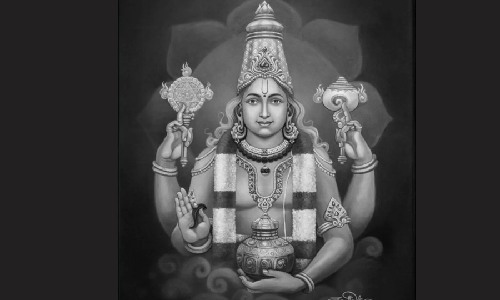
Lord Dhanvantari: The God of Ayurveda

According to Indian mythology, Lord Dhanvantari is the God of medicine and the God of Ayurveda.   This divine physician is also thought to be the 13th avatar of Lord Vishnu.   Lord Dhanvantari is often considered a symbol of health, healing, and longevity, not just in Ayurveda but also in the broader spiritual and cultural traditions of India. His teachings have been passed down through generations, influencing various aspects of both medical and spiritual practices.   In this blog, let’s explore the legend of Lord Dhanvantari, his relevance in the field of Ayurveda, and how he shaped the path of healing and health.   The Origin Story     The story of Lord Dhanvantari originates in Hindu mythology, particularly the legend of Samudra Manthan or the churning of the ocean.   According to the legend, Gods and demons churned the ocean of milk (Kshira Sagara) to get Amrita, the nectar of immortality. After a wearing trial period, Dhanvantari emerged from the sea, bringing with him the potion of immortality.   In images, artists often portray Lord Dhanvantari holding a conch in one hand and a pot full of Amrita in the second hand.  His third hand has a book titled “Ayurveda,” and the fourth hand has medicinal herbs.   The depiction of Lord Dhanvantari holding Amrita isn’t just a divine image. It is a symbol of Ayurveda’s power to sustain life and health. Ayurveda, when followed the right way, isn’t just about curing diseases, but about creating lasting well-being and balance.   Therefore, Lord Dhanvantari’s role is not just to ensure physical well-being, but also the divine alignment of mind, body, and soul, which is the crux of Ayurvedic principles.   This balance is vital in Ayurveda, as it integrates the mind, body, and spirit in a way that promotes overall harmony and vitality. Ayurveda doesn’t just treat symptoms; it works on the root causes to restore balance in the individual’s entire being.   One can see his emergence from the Ksheersagar, the ocean of life, as a metaphor for revealing hidden knowledge related to medicine or healing.     Lord Dhanvantari – God of Medicine and Ayurveda     Many people believe that Lord Brahma was the first person to teach and propagate Ayurveda. However, Lord Dhanvantari is the one worshipped as the god of Ayurveda.   Ayurveda pays attention to both treating illness and preventive health care through lifestyle, food, and natural remedies.   Lord Dhanvantari’s teachings emphasize herbs, therapies, and surgical knowledge as tools for achieving optimal wellness.   Lord Dhanvantari is known for bringing Ayurveda to the world, teaching the use of herbs, therapies, and surgical techniques for better health. His wisdom about healing and nature still guides Ayurvedic treatments today.   Ayurvedic doctors often seek Lord Dhanvantari’s blessings before starting any auspicious works.     Dhanvantari and the Vedas     People revere Lord Dhanvantari for his divine knowledge of surgery, medicinal herbs, and the importance of a balanced lifestyle.   Atharva Veda mentions his teachings through hymns and rituals associated with health and healing.   These hymns often include prayers for long life, peace, and freedom from disease, which reflect the broader spiritual goals of Ayurveda in promoting holistic wellness.   Many people think that Dhanvantari blesses many herbs and treatments used in Ayurveda.     Dhanvantari — Patron of Ayurveda and Surgery     One of the unique aspects of Lord Dhanvantari’s teachings is his focus on surgery.   Sushruta Samhita – the classical text of Ayurveda authored by Acharya Sushruta talks about surgery in detail.   People believe that Lord Dhanvantari reincarnated on earth as Divodasa – the king of Kashi.   Divodasa Dhanvantari was the master of surgery. He passed the knowledge of surgery and Ayurveda to Acharya Sushruta.   This included anatomy, use of surgical instruments, constructive operations such as removal of cataract, open heart surgery, brain surgery, and rhinoplasty.     Benefits of Worshipping Lord Dhanvantari     Since ancient times, people have been worshipping Dhanvantari for both physical and spiritual healing.   Many perform Dhanvantari Puja invoking his blessings for good health, and energy, and to remain guarded against diseases.   Every year, people celebrate Dhanvantari Jayanti on Dhanteras, two days before Diwali.  On this auspicious day, Ayurvedic doctors and followers pray to Lord Dhanvantari.   People also observe Dhanvantari Jayanti as International Ayurveda Day.   The celebration of Dhanvantari Jayanti serves as a reminder to all of us about the importance of good health, proper nutrition, and lifestyle choices. It is a day to reflect on our own health practices and seek guidance from Ayurveda.     Role of Lord Dhanvantari in New Age Wellness     Modern-day Ayurveda heavily follows Sushruta Samhita authored by Acharya Sushruta. In Sushruta Samhita, people also refer to Dhanvantari as Divodasa and Kasi Raja. Today, as more people prefer natural treatments over medicine, the lessons and teachings of Lord Dhanvantari make even more sense.   Here, his philosophy of using natural means to achieve balance links well with contemporary approaches to health and wellness that focus on holistic prevention, healthy eating, and mind-body balance.   In an era where people are increasingly turning to organic, natural alternatives, Lord Dhanvantari’s teachings on sustainable and gentle healing practices resonate deeply. People see his wisdom as a guide towards more conscious living.     Lord Dhanvantari — The Eternal Healer     Lord Dhanvantari’s expertise in Ayurveda inspires Ayurvedic doctors and followers of this ancient healing system.   For those seeking divine guidance regarding health, Lord Dhanvantari stands as the eternal symbol of hope, healing, and longevity.   Whether you follow an Ayurvedic lifestyle or just wish to live a healthier life, the teachings and insights from Lord Dhanvantari are relevant even today.   His eternal teachings inspire a life where physical health, mental peace, and spiritual growth are balanced, making his influence timeless.     Do you follow any Ayurvedic principles in your daily life? Tell us in the comments!  … Continue reading Lord Dhanvantari: The God of Ayurveda