
The Protein Obsession – You Are Not What You Eat

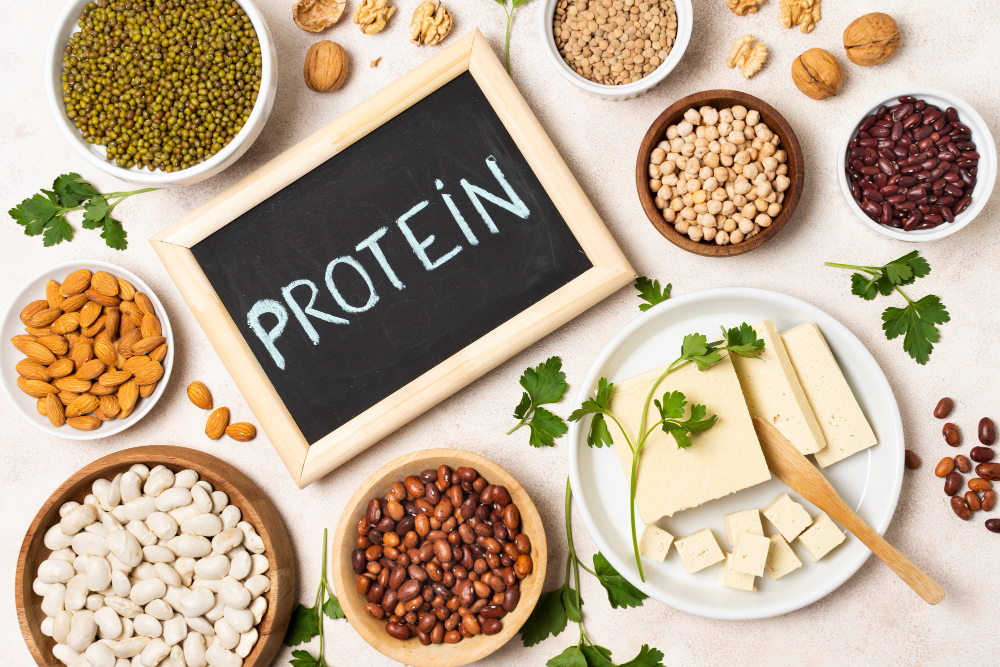
I want to talk about protein. Not because it doesn’t matter, because it does. But because we are being sold a deficiency most of us don’t have, and you deserve to know who is selling it, and why.   Walk through any store now and protein is everywhere. Protein water. Protein coffee. Bread, cereal, chips, yoghurt, all wearing the number on the front of the pack. It feels like science. It feels like progress. It is neither. It is marketing, and it has a history most people have never been told.   In 1974, a paper in The Lancet took apart the idea of a global “protein gap,” the belief, pushed for two decades by international agencies, that the world was starving for protein and needed industrial protein products to fix it. The scientist who had led that entire field admitted, the very next year, that the gap had never existed.   The recommended protein for infants was quietly revised down, again and again. One of the men involved later called it one of the greatest errors ever made in the name of nutrition science.   Fifty years later, the same myth is back. Bigger, and far more profitable. It is a thirty-billion-dollar industry now, doubling. And this time it has reached your morning coffee.   Here in India, the campaign working hardest to convince you that you are protein deficient is funded by an American soybean export council. That is not a conspiracy; it is stated openly on their own website. And the figure you have seen everywhere that seventy-three percent of Indians are protein deficient, comes from a 2017 market research survey of 1,800 people.   Not a health study. A marketing study.   The government’s own survey, of more than two hundred thousand households, tells a different story. On average, we already eat enough protein. What we are actually short on is not quantity. It is quality, diversity, and the part nobody is selling: digestion.   Because this is what the grams will never tell you.   You are not what you eat. You are what you digest and absorb.   In my tradition, this is not a metaphor. Digestion is agni, your metabolic fire. And there is a line I return to again and again: rogah sarve’pi mande’gnau. Nearly all disease begins in weak digestion.   You can drink three protein shakes a day. But if your agni is weak, that protein does not become muscle. It becomes ama, undigested, sticky residue that clogs your channels and quietly inflames you. More fuel on a low fire does not make a bigger flame. It makes smoke.   And here is the part I find most beautiful. My tradition knew, thousands of years ago, that food becomes flesh. The Chandogya Upanishad says it plainly: the coarsest part of food becomes waste, the middle part becomes flesh, and the subtlest part becomes the mind.   Read that again.   They knew food builds muscle. They simply refused to make muscle the goal. Flesh was the middle outcome, above waste, below mind.   The finest yield of what you eat was never meant to be a bigger body. It was meant to be a clearer one.   In Ayurveda, muscle, Mamsa, is the third transformation of your food, not the first. Food becomes plasma, then blood, then muscle, each step depending on a fire of its own. You cannot shortcut that by scooping more powder into the top. There is no supplement for a broken fire.   Now let me be honest, because I am a physician and not a contrarian.   There are people who genuinely need more protein. Women in perimenopause and beyond. Anyone over sixty losing muscle to age. People on the new weight-loss injections. Those recovering from illness, surgery, childbirth. Serious athletes in real training.   If you are one of them, this is not permission to eat less. But for most others, sitting at a desk, reaching for a third shake out of anxiety, it is the opposite.   So, before you count another gram, do this instead.   Rebuild the fire first. Warm, freshly cooked food, at regular hours. Fewer cold shakes. Your dal with rice and a spoon of ghee is a complete protein and an easily digested one, the combination our grandmothers understood long before it had a name.   And that fruit-and-milk smoothie you feel so virtuous about? Milk and fruit are two different digestions fighting in one glass. My texts call that combination harmful, and they are right. It is one of the most common causes of the bloating and congestion I see every single day.   Strength was never a number on a package. It is what your body can actually transform.   That is the real question. Not how much protein you can swallow, but how much of it you can become.

The Future of Ayurveda: Why Trust Matters More Than Tradition

Yoga was once misunderstood. Many people thought it was just stretching or a fitness trend.   Today, more than 300 million people practice yoga around the world. It has become a global industry worth over $100 billion.   What changed?   It wasn’t because yoga became less authentic.   It became more credible.   Teacher training programs were developed, certification bodies were established, and universities began researching its effects on stress, anxiety, and overall health. Most importantly, yoga was explained in a way that people around the world could understand without changing its core philosophy.   Ayurveda is now at a similar stage.   Interest in Ayurveda is growing rapidly across the world. The market is expanding every year, and millions of people are looking for natural ways to improve their health.   But popularity alone is not enough.   If Ayurveda wants to become a respected global healthcare system, it must build trust.   Ayurveda is Growing Faster Than Its Credibility   The business is growing.   The global Ayurveda market is expected to grow from about USD 24 billion in 2026 to more than USD 120 billion over the next decade.   This sounds impressive, but growth in sales is not the same as growth in trust.   Many healthcare professionals still hesitate to recommend Ayurvedic medicines because they want stronger scientific evidence. Others point to inconsistent regulations and varying quality standards across different countries.   In simple words, people are interested in Ayurveda.   They are just not always confident about it.   That confidence gap is the biggest challenge Ayurveda faces today.   The Quality Problem Cannot Be Ignored   This is an uncomfortable conversation, but it is an important one.   Several scientific studies have found that some Ayurvedic products sold in the market contain unsafe levels of heavy metals such as lead, mercury, and arsenic.   That does not mean Ayurveda itself is unsafe. It means poor manufacturing, lack of testing, and weak regulation have allowed low-quality products to reach consumers.   Authentic Ayurvedic medicines prepared according to proper classical methods are very different from poorly manufactured products sold without adequate quality checks.   The problem is that most people cannot tell the difference. If the industry does not clearly explain that difference, trust will continue to suffer.   Ignoring bad products does not protect Ayurveda.   Removing them does.   The World Is Already Moving Towards Better Standards   Good news is that this change has already started.   The World Health Organization has introduced a dedicated module for Ayurveda, Siddha, and Unani in the ICD-11 to support better documentation and research.   The WHO Global Centre for Traditional Medicine has also been established with support from the Indian government to strengthen research and international collaboration.   Many countries now officially recognize traditional medicine within their healthcare systems.   The world is preparing to take traditional medicine seriously.   Ayurveda must prepare as well.   Dubai is a good example.   Ayurvedic doctors cannot simply start practicing there. They must complete recognized education, pass licensing examinations, and meet strict regulatory requirements before treating patients.   Ayurveda is treated like any other healthcare profession.   That should not be seen as a barrier. It should be seen as a strength.   When patients know their doctor has met high professional standards, trust naturally follows.   What Does “Authentic Ayurveda Explained Simply” Mean?   It does not mean changing Ayurveda to make it fashionable. It means making it understandable without losing its authenticity.   That means: Explain which herb is being used and why.   Mention the correct dosage whenever appropriate.   Share available scientific evidence instead of relying only on tradition.   Clearly identify products that have undergone quality testing.   Explain that certain classical formulations require specialized purification methods before they are safe to use.   Be honest about what Ayurveda can do and where more research is still needed.   Simple language does not make Ayurveda weaker. It makes it accessible.   The Future of Ayurveda Depends on Trust   Yoga became a global movement because it invested in education, research, training, certification, and standards.   Ayurveda now has the opportunity to follow a similar path.   The goal should never be to simplify Ayurveda until it loses its identity.   The goal should be to preserve its authenticity while explaining it clearly, supporting it with research, maintaining high manufacturing standards, and holding practitioners accountable.   Popularity may bring attention but credibility is what earns respect.   The practitioners who focus on quality, transparency, and evidence today will shape what Ayurveda looks like for the next generation.   If you’re interested in evidence-based Ayurveda explained in simple language, subscribe to our newsletter. Every week, we break down Ayurveda into ideas you can actually understand and use, we explore what classical Ayurveda says, what modern research shows, and where the two meet.