
Atma (Soul) concept in Ayurveda

What  is  an  Atma ?     Atma or soul is one of the unique concepts of Ayurveda. It can not be seen, felt or heard, but its existence in the body means living, and its exit defines the death of a living being. It is the essence of life and a source of supreme knowledge.    When the soul departs from the body, the body becomes devoid of consciousness – just like a vacant house without its owner! Atma is the doer! But it cannot perform any action without coming into contact with the mind. And the mind cannot function alone without the soul. The Atma is omnipresent. But when put on a body, it becomes trapped in its sense organs and pleasures and bound by past-life Karma (good and bad). The soul is free to act the way it likes (free will). However, these actions are the fruits of one’s own Karma!   The divine vision is the only sense to comprehend this Atma or Soul. It is the aware element; it is everywhere, beyond the reach of the reasons, and it engages in attachment because of its association with the intellect and other things. It may enter into any physique, execute any action, and take on any shape. There is no alteration to the soul. It makes no difference in its presence among various animal species. It is  differentiated solely by the unique characteristics of different animal species’ bodies and minds.   But by controlling the mind (“manascha samadhanat”), Atma becomes powerful! An Atma is devoid of desires, and action attains salvation! Though Atma is present only in one body, closely knit with the mind and Karma, it is a part of the bigger, all-pervading Atma (a.k.a Brahman) – the universal consciousness! That’s why says, “Yatha pinde Tatha Brahmande”  in Yajurveda. As is the microcosm, so is the macrocosm.”   “Aham Brahmasmi” (I am Brahman!)     If you are struggling with any health issues, you can either book a consultation with us or send us a message via WhatsApp to +91 79074 89839. We have the best Ayurvedic doctors in Trivandrum who are always glad to help you. If you have any queries, contact us.  You can also visit us at our hospital.

Meals That Fit Your Lifestyle

Meals are structured times for eating, typically consisting of a variety of foods that provide essential nutrients and energy.   Do you know which animal that eats 7-8 small meals daily? The answer is “only humans!” Modern medicine and even many online sources say eating multiple small meals is beneficial. But what does Ayurveda have to say?   The Ayurvedic perspective   According to Ayurveda, contrary to the principles of modern nutrition, eating multiple small meals a day will not keep the metabolism strong. It works the opposite way – it lowers your “Agni” or digestive fire!    Eat when you are hungry   Ayurveda says you should only eat when hungry and stop when you feel full. When you feel hungry, it indicates that your digestive enzymes are fully produced to the highest extent. Therefore, your body will break down the food you eat properly.   Ayurveda advises eating proper full meals 4 hours apart, sitting down, without talking.   Eat mindfully   It also suggests enjoying food with all your senses – touch, feel, smell, look, and listen to it! Eating four times a day has proven to assist some people in controlling their blood sugar levels and avoiding overindulging in larger meals.. Remember that the caliber and amount of food eaten at these meals matters just as much as how often they occur.   Give time to digest   After eating a proper full meal, you should allow the body time to digest the food entirely and form hunger. Once hunger is created and the previous food is completely digested, and you see signs like udgarasuddhi (belching without the smell or taste of the last meal), you can have the next meal. This usually takes 3.5 to 4 hours. It is essential to wait for hunger to form well before the next meal as it allows you to understand your body’s natural hunger and fullness cues.   Be consistent   Eating on time is very important too, ideally around the same time every day! Eating on time every day helps your body adjust to a set routine. Maintaining a regular eating schedule encourages the body to acquire all the energy it needs and, in turn, reduces the intake of sugar, junk food, and fast food. Planning your meals and snacks can help you eat better and have more energy throughout the day. This keeps your body working at its best all day. Consistently eating at regular times each day helps our bodies recognize hunger cues. This enables you to identify your hunger better and satisfy it healthily.   Let’s start eating like real humans again! Will you still be eating 7-8 meals a day after this?   It’s not about how many times you eat in a day, but how you are consistent with your timings and what you eat that counts! This helps improve your digestion and your life expectancy.     If you are struggling with any health issues, you can either book a consultation with us or send us a message via WhatsApp to +91 79074 89839. We have the best Ayurvedic doctors in Trivandrum who are always glad to help you. If you have any queries, contact us.  You can also visit us at our hospital.

Makhana – Most loved snacks in Ayurveda

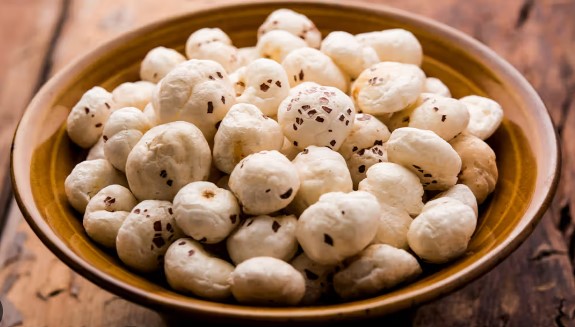
Roasted Makhana (lotus seeds or fox nuts) is crunchy, delicious and also healthy and is, therefore, one of the most loved Ayurveda snacks. The seed is full of nutritional benefits and is known as Ankhalodya in Sanskrit. Makhana is used in spiritual practices; moreover, the seed resembles a lotus. Additionally, you can find the plant and the fruit in ponds.   Consuming roasted makhanas with ghee, with a little bit of turmeric and cumin, is by far the most loved Ayurvedic snack by all my patients and me!! It urges a sweet taste conversion after digestion.    Ayurvedic benefits It has highly Pitta and Vata subsiding properties and is, hence, suitable for people with acidity, acid reflux, heartburn, and skin disorders. It improves strength, vigour, and hand immunity. Being highly absorbent, it is helpful in diarrhoea.    Diarrhoea  Diarrhoea, referred to as Atisar in Ayurveda, is caused by improper food, impure water, toxins, mental stress, and Agnimandya, which exacerbate Vata. Aggravated Vata causes fluid in the intestine from body tissues to mix with stool, causing loose, watery motions or diarrhoea. Due to its Grahi (absorbent) property, Makhana can aid in nutrient absorption and diarrhoea control.   Insomnia Consuming makhana can alleviate Anidra – a condition characterized by insomnia. Afterall, makhana is a Vata-balancing herb with a heavy Guru (heavy) nature.   Osteoarthritis Ayurveda explains that osteoarthritis, also known as Sandhivata, results from increased Vata Dosha, causing pain, swelling, and joint immobility. With its Vata-balancing property, Makhana relieves osteoarthritis symptoms such as joint pain and swelling.   If you are overweight, eat in moderation! You must avoid eating makhana if you have Kapha Dosha bodies and often experience bloating and constipation. It regulates hormones, improves fertility, and increases vigour in men. However, excessive consumption can cause bloating and constipation. Makhana is also beneficial for those with excess Pitta and excess Vata.   I love some makhanas at 4 pm with my Licorice-cinnamon tea!   If you are struggling with any health issues, you can either book a consultation with us or send us a message via WhatsApp to +91 79074 89839. We have the best Ayurvedic doctors in Trivandrum who are always glad to help you. If you have any queries, contact us.  You can also visit us at our hospital.

Nails – What Spoon-Shaped Nails Can Tell You

A nail that scoops in the middle and is flat or concave at the surface is called a “spooned” nail. Spoon-shaped nails or Koilonychia are conditions where the nail loses its natural convexity and becomes concave.   The degree of this varies; the nail may split in half in the worst situations. Iron deficiency anaemia is the most frequent cause of spooned nails. Additional possible reasons of spoon-shaped nails include vascular illness, trauma, genetic abnormalities, autoimmune conditions such as lichen planus, psoriasis, rheumatoid arthritis, or Raynaud’s disease.   However, the most common cause is iron deficiency!   Iron plays a crucial role in our body by carrying oxygen in the bloodstream and facilitating various bodily functions. Consuming foods rich in iron can help address an iron deficiency. Iron deficiency occurs when there is a lack of iron in the body. Commonly cited factors include insufficient iron intake, gradual blood loss, pregnancy, and intense physical activity. Certain foods can inhibit your body from obtaining the necessary amount of iron.   Stages of iron deficiency   Iron is most concentrated in the red blood cells, which deliver oxygen to your body. Your liver stores excess iron when your body does not obtain enough from food. If you fail to consume sufficient food with iron, your body’s iron levels will decrease.    Some common conditions related to iron are:   Iron depletion occurs when the body has low stored iron levels, even if the haemoglobin levels remain normal. It means you will soon deplete your iron supply. This phase often lacks noticeable symptoms.   When your body has a low amount of iron and insufficient red blood cells, it produces iron deficiency. Feeling tired and having other symptoms may be a possibility.   Iron deficiency anaemia occurs when the body lacks sufficient iron to transport oxygen to the cells properly. Symptoms may include being very pale, feeling breathless, experiencing dizziness, and feeling worn out. A low iron level in the bloodstream can make individuals more susceptible to illness due to weakened immune systems. Anaemia caused by a lack of iron can inhibit children’s growth and impact their brain development.   Ayurvedic ways to replenish iron stores   15 ml Amla shot with dry ginger added Draksharishtam – 15ml post food Avoiding spicy, slimy foods Soaked black raisins everyday   If your iron levels are not restored despite trying the above-mentioned tips, please consult an Ayurvedic doctor. The natural convexity of the nails will be restored once the iron levels are corrected.      If you are struggling with any health issues, you can either book a consultation with us or send us a message via WhatsApp to +91 79074 89839. We have the best Ayurvedic doctors in Trivandrum who are always glad to help you. If you have any queries, contact us.  You can also visit us at our hospital.

Three desires to fulfil in life

Caraka Samhita mentions three desires one should fulfil in their lifetime for a happy, successful life.    इह खलु पुरुषेणानुपहतसत्वबुद्धिपौरुषपराक्रमेण हितमिह चामुष्मिंश्च लोके समनुपश्यता तिस्र एषणाः पर्येष्टव्या भवन्ति । तद्यथा – प्राणैषणा, धनैषणा, परलोकैषणेति । । ३ ।।   Prana Eshana   The desire to live well with happiness and longevity. This is the consciousness initially confines and constrains within the body. The subconscious awareness that we are all born possessed of opened up.  Because of this awareness, we are able to continue living and take part in the play that is life.   Dhana Eshana   The desire to earn money legally, in the right way, therefore, is a fundamental aspiration for many individuals. Dhana eshana, the second kind of consciousness, connects the biological self and the phenomenal world, which is associated with the material world. The world’s material splendours now reflect the self. We pursue material possessions like designer clothes, spacious homes, real estate, land, and sizable savings accounts. This searching for outside things along with our yearnings, aspirations, desires, and dreams is a significant portion of our existence. We live through them, and in a daily sense, these material endeavours give our lives meaning.   Paraloka Eshana   The desire to attain Moksha or enlightenment, and consequently, to reach higher consciousness. Paraloka Eshana or Moksha is the playing out of an evolved awareness that has transcended the body and this bright, phenomenal world in its quest for transcendence and escape from whatever bonds that the first two may impose. This is the reason; consequently, the itinerant monk remains unconcerned about his physical form and, moreover, his worldly possessions Propelled by a spiritual inclination or awareness, he sings of realms beyond.   It is impossible to foresee when one instinct will become dominant over the others or which of the three desires in life will eventually take precedence over the others because each soul on a trip follows a road that is entirely unexplored and absolutely unique. At any given moment, the dominant instinct will trigger associated thoughts, wants, acts, and results of those actions (Karma). We can, therefore, deeply know and repair our biological, material, and spiritual selves by, in turn, letting our impulses play out.   If you are struggling with any health issues, you can either book a consultation with us or send us a message via WhatsApp to +91 79074 89839. We have the best Ayurvedic doctors in Trivandrum who are always glad to help you. If you have any queries, contact us.  You can also visit us at our hospital.

Three foods that should not be used in excess

Do you know in Ayurveda there are some foods that you should not consume in excess quantity as they can negatively affect your health? This is, in fact, mentioned in Caraka Samhita as “Trividha Varjya Dravya.   Trividha Atisevana Varjya Dravya means that, therefore, three substances should not be taken for a long time. The three substances are Pippali, Kshara and Lavanga. These foods, when used in excess, cause vitiation of all 3 Doshas. But what is the reason behind this? Let me explain one by one.   Pippali or long pepper   Long pepper is, in fact, one of the unique spices that, moreover, has medical benefits. It is used for treating asthma, cough, obesity, tuberculosis, rheumatoid arthritis, indigestion, spleen disorders etc. Despite having medicinal value, it is advisable to not consume it for a long time as it leads to the rise in Kapha. Long pepper is hot in nature and when ingested on a regular basis for a long time, it increases Pitta Dosha and reduces Vata balance. Overall it contributes to the rise of Tridosha. One should always take it, therefore, as per the instructions from your ayurvedic doctor.   Foods with Kshara properties like apple cider vinegar   Apple cider vinegar and all kinds of vinegar come under the category of ‘Kshara’ in Ayurveda.  The properties of Kshara as per Caraka Samhita include  Tikshna = Sharp Ushna Hot Laghu = Light Visoshana = Drying Kledayati = Blocks channels Dahana = Burning Bhedana = Penetrating   What happens when you use Kshara in excess? Bad for the eyes Bad for the hair Bad for the heart   An interesting quote from Caraka Samhita- “Ye hyenam grama nagara nigama janapada: satatamupayunjate te andhashandyakhalityapaalityabhajo hridayapakartinashcha bhavanti“ “People of villages, towns and cities where Kshara is used every day, suffer from blindness, impotency, baldness, grey hair and heart diseases!”   It is ok to have apple cider vinegar a little, as a medicine, if prescribed for a reason. However Ayurveda does not recommend everyday consumption.   Salt   It is one of the tastes every meal should have.    “Lunati iti lavanam“.    Salt has piercing properties; moreover, it helps with easy absorption. Additionally, it is hot, strong, and piercing, and furthermore, it improves digestion.  Salt taste dominates all the other tastes but overconsumption of salt is bad for the eyes, decreases the quality of blood and causes early ageing, baldness, graying and wrinkling. Salt should be minimal in your food if you have gastritis, hypertension, swelling in the body or high fever. Himalayan Pink Salt, in fact, is one of the best salts for everyday use. I advise my patients to use a mix of Himalayan Pink Salt and  normal sea salt to help with iodine needs as well!   If you are struggling with any health issues, you can either book a consultation with us or send us a message via WhatsApp to +91 79074 89839. We have the best Ayurvedic doctors in Trivandrum who are always glad to help you. If you have any queries, contact us.  You can also visit us at our hospital.

Kitchari Myths and the Truth About Its Ingredients

“Kitchari is a nutritious Indian dish consisting of rice and lentils or occasionally mung beans. Highly favored by Ayurvedic practitioners, Kitchari is an ideal dish for purifying the body. It is also comforting when you are not feeling well or bouncing back from overindulgence. Kitchari is unique because it provides both a cleansing and nourishing effect on the body. It is easily digestible, giving your body a chance to rest, assisting in removing toxins from the body and improving the health of the digestive system. Lentils and beans are rich in protein, which can help prevent hunger and reduce fat storage in the body. Kitchari is nourishing and helps keep you satisfied, making it easier to stay committed to the cleanse without feeling hungry. ”   The notion that I have described above is what I have found in Google elaborating all the benefits of Kitchari, but there are some quick facts that I would like to share related to this concept.   Kitchari is the most famous and hyped Ayurvedic Food on the internet. It is a typical Indian lunch dish.   Ayurveda is much more than a Kitchari! There are so many fantastic recipes (I will introduce a few in my future posts) in Ayurveda; why only Kitchari? The fact is, most Kitchari recipes I have come across on the internet and in many Western Ayurvedic cookbooks are totally wrong.    So why is Kitchari, not the real Kitchari?   Firstly, the name itself is wrong! Sanskrit name (Ayurvedic texts): Krsara Indian name (Hindi): Khichdi Internet name: Kitchari (Who named this?)   During my six years in Ayurveda College, I did not have Wi-Fi. I had no access to the outside world. Once I came to Dubai and started reading up things online, I had a revelation – Kichari is synonymous with Ayurveda! Whoever talks about Ayurvedic food talks about the dish!   I had to literally go back to my textbooks to see if I missed something so important! I just realized that’s how the Ayurvedic internet world works and also went through a few Western Ayurvedic books – they also mention the same Kitchari but got all that wrong!   First, it is not made with Basmati Rice (Basmati rice is the most inferior quality of rice according to Ayurveda)   Also, it is not made with coconut oil (Coconut oil is heavy, cold, and difficult to digest).    The new-age Kitchari is heavy and hard to digest, while the real Ayurvedic one is totally digestible, light, and suitable for all Doshas, especially Vata! It is excellent as a mono diet for detoxification, too!    The recipe   This is the (Real) recipe for preparing Kitchari.   Ingredients 12 parts unbroken Sona Masoori rice Eight parts mung beans, a.k.a green gram (soaked) Asafoetida Fresh ginger Ghee Salt to taste   How to prepare: Cook rice and soaked mung beans in water till it comes to a dry oatmeal consistency. In a pan, add one tablespoon of ghee, fresh ginger, asafoetida and turmeric. Add a little salt to taste if you wish, and add to the cooked rice beans mix. That’s it! Simple. Light. Digestive!   Kitchari is one of the most delicious and healthy foods for the diet, but you should focus on preparing it with the correct ingredients and cooking methods. I can name you the most famous western Ayurvedic author, giving Kitchari recipe with Basmati rice and coconut oil, making it totally wrong!! Try to learn and practice Ayurveda directly from authentic Ayurvedic textbooks written by Vagbhata, Caraka, or Susrutha. Trust me, your eyes will open to a whole new world!   If you are struggling with any health issues, you can either book a consultation with us or send us a message via WhatsApp to +91 79074 89839. We have the best Ayurvedic doctors in Trivandrum who are always glad to help you. If you have any queries, contact us.  You can also visit us at our hospital.

Is Brahmi good for kids’ brain development?

Bacopa monnieri is a plant that thrives in moist environments found in various regions around the globe. It goes by names like water hyssop, Brahmi, thyme-leafed gratiola, herb of grace, and Indian pennywort, and is employed in traditional Ayurvedic practices. It has a mild odour, and the plant’s foliage is dense, elongated and full of moisture that measures between 4 and 6 millimeters in width.   The leaves are elongated with a broader tip; furthermore, they are arranged in pairs on opposite sides of the stem. The flowers are small and white, each with four to five petals that are of the same shape. It can thrive in slightly saline water as well, and cuttings often propagate plants.   After discussing all the characteristics of Brahmi, let’s move on to understand its medical effects on kids.  Is Brahmi good for children? Brahmi is one of the very potent Ayurvedic medicines or supplements that you can give to your kids to improve their memory, intellect, and brain power or retain power. The best time to consume it is the night after you have dinner. Just one teaspoon or less than a teaspoon is fine.   If the baby is having more heat issues and digestive issues, try to reduce the dosage to a quarter teaspoon every night, but don’t give it for more than two months.    Personally, I am not in favour of medicines and supplements for kids. I strongly believe in the power of food as medicine. If your baby eats light digestive food and has good Agni, they don’t require supplements as the body will be able to absorb nutrients well from the food itself.   There was so much discussion recently about Swarnaprashana. But I don’t recommend as there are stringent protocols, dosages and purification processes to be followed to make it safe for babies – giving gold to babies is no joke. Imagine, therefore, how much the tender liver, kidneys, etc., need to work to detoxify it.  Never give it without consultation from an Ayurvedic doctor. Brahmi Ghrita is a much, much, much safer herbal medicine for boosting brain functions in kids. This is way better than giving metal-based heavy drugs (even if it has gold) to kids.    Make sure you give half a glass of warm milk or warm water after you give Brahmi ghee!   You can buy Brahmi Ghrita from any of the Kerala-based brands like Vaidyaratnam, Sitaram or Kerala Ayurveda. If you are outside India, you may, for instance, find it on Distacart.   People have utilized Brahmi, a powerful plant, for many years to enhance brain function and memory retention. It can also boost the immune system, reduce children’s anxiety and stress, and improve their ability to concentrate. Including Brahmi in your child’s meals can promote better health and well-being.   If you are struggling with any health issues, you can either book a consultation with us or send us a message via WhatsApp to +91 79074 89839. We have the best Ayurvedic doctors in Trivandrum who are always glad to help you. If you have any queries, contact us.  You can also visit us at our hospital.

Hypothyroidism Diet : Ayurvedic Recipe for Thyroid Balance

Do you have hypothyroidism ?    If yes, then this Ayurvedic recipe is for you!   You can include this Ayurvedic recipe for hypothyroidism in your everyday diet to get better effects. The main essence of the recipe is Moringa or Shigro. Drumsticks and the fresh leaves are the main ingredients of the recipe.    Moringa, the superhero plant, is packed with nutrients. It’s like a nutritional powerhouse, loaded with vitamins, minerals, antioxidants, and some compounds that might have anti-inflammatory properties. People in various cultures have traditionally used Moringa to boost energy and enhance overall health. The moringa plant grows in both Asia and Africa.  Another name for it is the “miracle tree” or “drumstick tree.” Its rise in popularity can be attributed to its positive impact on health; moreover, it is also due to its nutrient-rich composition   The recipe   Ingredients:    Washed fresh drumstick leaves (3 bunches around 500 g) Ghee/ coconut oil – 1 tablespoon Mustard seeds – 1/4 teaspoon Cumin seeds – 1/4 teaspoon Grated coconut – quarter to half cup Onion – 1 small Garlic – 3 one-inch piece Turmeric – 1 teaspoon Red chilli powder – 1/2 tablespoon Curry leaves – 5 Whole green chilly split – 2   Method of preparation:   First, wash fresh drumstick leaves, and then squeeze the water off completely. Finely chop them and place it over a clean cloth to absorb water else; the dish will turn mushy if there is water content in it. In a blender, add grated coconut, garlic, cumin, turmeric, and red chilly powder and make a coarse paste. In a pan, on medium flame, add ghee. To this, splutter mustard seeds, curry leaves, chopped onions, and then add the leaves and saute. Once the leaves soften, add the coconut paste prepared earlier. First, add salt; then, cover, and finally, cook for 10-15 minutes on a low flame You can have this as a side dish with rice.   Moringa is beneficial for hypothyroidism, but it should be noted that this ayurvedic recipe cannot provide a complete cure for hypothyroidism.   However, hypothyroidism can be reversed with dietary and lifestyle changes and Ayurvedic medicines. You won’t have to depend on thyroid medicines any more!    If you are struggling with any health issues, you can either book a consultation with us or send us a message via WhatsApp to +91 79074 89839. We have the best Ayurvedic doctors in Trivandrum who are always glad to help you. If you have any queries, contact us.  You can also visit us at our hospital.

Multitask in Ayurveda’s P.O.V

Multitask involves performing multiple tasks simultaneously. Many individuals believe that multitasking is a display of intelligence and should be practised for maintaining brain health. but can your mind really multitask?   The truth is that our brains are not built to handle multiple tasks simultaneously.   We focus on doing one thing at a time and giving it our complete attention. Our brains rapidly switch between various tasks when we engage in multitasking. The ever-shifting aspects of life stimulate our mental faculties, leading to exhaustion and reducing the efficiency of the brain. It becomes challenging for us to focus on a single task, even when we’re not juggling multiple tasks.   Though it may seem that the mind is capable of doing many things at a time, it cannot. Instead the mind can switch tasks quickly and that happens one after the other.   Ayurveda’s take on multitask   Kudos to modern science for discovering this after the 1900s, but total respect to Ayurveda and Indian philosophy to have spoken some 5000 years ago!   Ayurveda says that the mind has a quality know as “ekatwam” or oneness. The mind is only one. The mind can do only one job at a time. Think of seeing food in front of you. You see, hear, smell and taste the food. You feel the mind is into all of these thoughts at the same time. It is not. The mind is not invested in multiple things at a time, even if we feel it is.   Ayurveda quotes an interesting maxim for this – ‘Utpala satadala suchivedha nyayam.’   When a needle is pierced quickly through a hundred lotus petals arranged one over the other, it may seem the needle pieces all 100 petals simultaneously, but in reality, it makes piercing one after the other. The mind is like the needle here. Impressions happen one after the other.   So stop believing that your mind can multitask. Instead of doing many different things at a time, like having a coffee while typing on a laptop or talking on the phone to the boss, try to do one task at a time so that all your attention goes into one task, which means increased productivity!   Health effects of multitasking   Multitasking can lead to increased stress and elevated blood pressure and heart rate. It can lead to feelings of depression and anxiety. If your high blood pressure persists over time, it can have adverse effects on your brain, increasing the likelihood of cognitive problems.   According to Ayurveda, multitasking upsets Vata, the element that controls flow and movement. When we don’t let our minds focus on one activity at a time, we continuously disrupt our attention.  Among other symptoms, anxiety, disarray, overstimulation, and trouble sleeping are signs that Vata is out of balance. Ayurveda places a strong emphasis on giving crucial chores your whole, focused attention—yes, even eating. Ayurveda holds that we cannot perform two attentive actions at once. For example, we cannot drive and chat on the phone at the same time since doing so puts us at risk of an accident because both tasks require our mental focus. So, yes, your mind can multitask. But it does not fit your mental health.   If you are struggling with any health issues, you can either book a consultation with us or send us a message via WhatsApp to +91 79074 89839. We have the best Ayurvedic doctors in Trivandrum who are always glad to help you. If you have any queries, contact us.  You can also visit us at our hospital.