
Why Ayurveda Isn’t Just About Vata, Pitta, and Kapha

Macronutrients flat composition with woman cooking dishes with banana eggs oil milk and coconut with porridge vector illustration SSUCv3H4sIAAAAAAACA02RS0/DMAzHv4rlc8VD3HZmICEhTXDgMHHwEtNZTeMqSTvQ1O+O024I5eLH369fznigLA43Z5QQxlwSFdGIm/sG2UvRJBRwczc3mAuVMXM2rXmOCreWXfxrk/25xnGDT6oeKHp4TBI7tOLxYOFXyY5DoMg6Zpybq3zHOgT+k31ozxHnzwap5eh+6kQbmTgwLQvsLdWdCqf+ss0knnU1afRSTZzUUbD8Q93WLtO+RttEw1FckolT9T1nl+pq5JLGsdhFsWT4ClTAaT9olgoETlKOcNKeooW1k9iCl3zkvGYOFO0Bt20GlQC9hG4B4NTVtqtq0JTEtwwTO0ML/5HfwNZ40yEwbHfvS+0bR8+mivCye4YvTb3RarB8V2bYXOCtvfKtZ6e11VRBamdfOM/zL1jWrp3gAQAA

When most people hear the word Ayurveda, they think of herbs, oils, massages, or detox treatments. But Ayurveda is much more than that.   If you break the word down, “Ayu” means life and “Veda” means knowledge or science. So Ayurveda simply means “the science of life.”   At its core, Ayurveda looks at both the outer world and our inner world. It teaches that to stay healthy, understand ourselves, and live in harmony with nature.     Panchamahabhutas     One of the most important concepts in Ayurveda is the theory of the Panchamahabhutas.   “Pancha” means five, “Maha” means great, and “Bhutas” refers to the fundamental elements of existence. Just like modern science says everything is made of matter, Ayurveda explains the same idea using these five elements.   These five elements are: Prithvi (Earth) Ap (Water) Tejo or Tejas (Fire) Vayu (Air) Akasha (Space or Ether)   And this doesn’t just apply to the world around us; it applies to us too. Our body, mind, and all our functions are made from these same elements.   This is why Ayurveda says that every person is different. We are all made of the same elements, but in different proportions.     Understanding Your Prakriti     One of the most misunderstood concepts in Ayurveda is the idea of Doshas and Prakriti.   You’ve probably read or come across phrases on the internet like “know your dosha” or “find  your dosha.”   No. You cannot do that.   What you can do is instead is find your Prakriti, know your Prakriti, discover your Prakriti.   Prakriti means nature.   When a person is born, when the first cell of a person is formed by the coming together of the ovum and sperm, at that time Prakriti is fixed. It is given to the child by the parents.   This Prakriti or nature of that person does not change in the entire lifetime until that person dies.   Now what are these Prakritis?   For the ease of discussion, Ayurveda classifies people based on Prakriti.   There are seven Prakritis.   The three primary constitutions are: Vata Prakriti Pitta Prakriti Kapha Prakriti   Then there are three dual constitutions: Vata-Pitta Pitta-Kapha Vata-Kapha   Finally, there is: Vata-Pitta-Kapha, where all three doshas are present in equal proportions.   I have never found anybody having Vata-Pitta-Kapha Prakriti together. Maybe there is one person in the world who is lucky to be born with all these things put together in a single proportion, but it is very, very rare.   Most people are a mix of two doshas, with one being more dominant.   Understanding your Prakriti helps explain your personality, body type, habits, and even the kind of health issues you may be more prone to.     Vata: The Energy of Movement     It is made of air and space.   Vata people are people where vision means innovation. They are creative, innovative. These are the people who come up with ideas.   But because Vata is linked to movement, it can also bring restlessness, irregular routines, and anxiety when out of balance.   It’s important to remember being Vata by nature is not the same as having a Vata imbalance.     Pitta: The Energy of Transformation     Now we have the Pitta people.   Pitta people are the people who have another fire inside their body. That can cause a lot of issues. It can affect different systems in the body.   These are people who are driven. They are sharp. They are intense.     Kapha: The Energy of Stability     Now we have the Kapha people.   Kapha people are those loving, nurturing, loyal, lovable, very warm kind of people.   You just want to go and run to them and hug them. That kind of energy is the Kapha energy.   But they are very lazy. It is very difficult to move them.   They have the earth element and water element more in them.   These are people who tend to have oily skin. Kapha people are the people who have friends because they are very good with relationships.     Why Is Ayurveda Personalized?     One thing that you should understand is that Ayurveda is about individualized diet, individualized practices, individualized everything.   The body has different systems and different functions.   Sometimes there is dryness.   Sometimes there is coldness.   Digestion is involved.   Tissues are involved.   Sometimes other doshas are involved.   That is why Ayurveda is individualized. It is not just Vata, Pitta, and Kapha.   We have to understand which doshas are in imbalance and which systems are impacted.   What is health according to Ayurveda?   Every single thing in the system should be balanced.   The doshas should be balanced.   The tissues of the body should be balanced.   The digestive system should be balanced.   Not just that, the mind should be balanced.   When the body and the mind are working properly, when everything is having the best quality, when Atma, soul, Indriya, senses, and Mana, mind are all balanced, then you can call that person a healthy person.     The Truth About Panchakarma     In Ayurveda, Panchakarma is a purification technique actually meant for cleansing.   Only a very small percentage of diseases need Panchakarma.   The rest of the diseases do not require Panchakarma.   They require Ahara, Vihara, good diet, good lifestyle, good routine, and all of that.   Ayurveda does not start with detox. It starts with fixing your everyday habits.   Most health issues can actually be improved with:   Proper diet Daily routine Good sleep Stress management Simple lifestyle changes   The Real Message of Ayurveda   At the heart of Ayurveda is a simple idea: every person is unique.   There is no universal diet, no perfect routine for everyone.   The more you understand your own nature, the… Continue reading Why Ayurveda Isn’t Just About Vata, Pitta, and Kapha
What are Vata, Pitta and Kapha Doshas in Ayurveda?

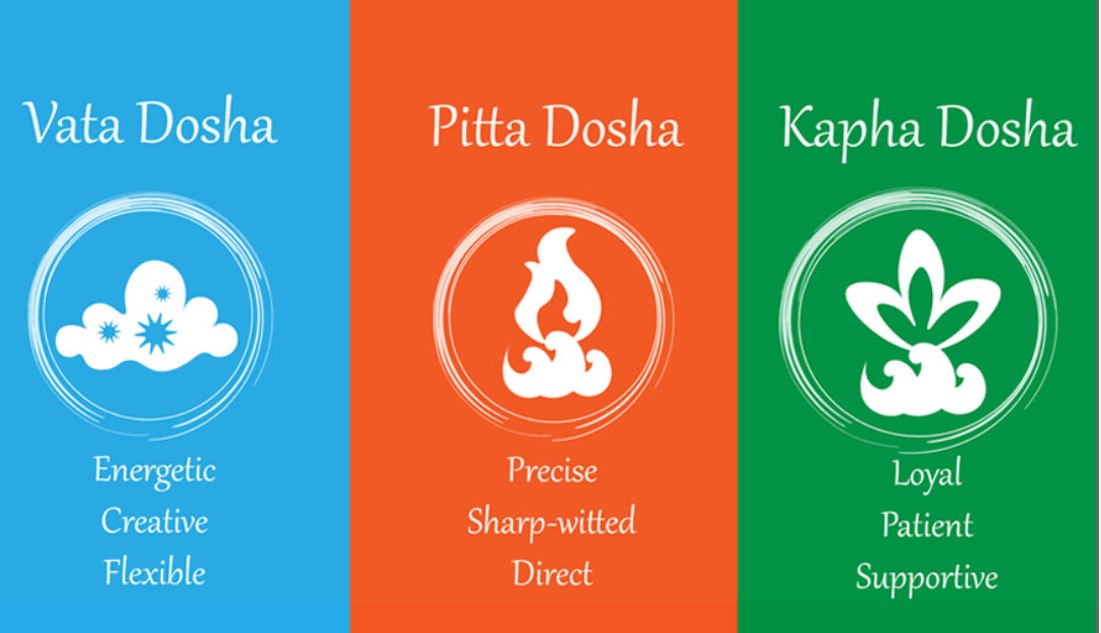
Ayurveda is a traditional system of medicine. Beyond that, it is a way of life that helps you reach the ultimate goal of overall wellness. In Ayurveda, the status of your health primarily  revolves around the balance of  your biophysical energies or Doshas.  There are three types of Doshas – Vata, Pitta and Kapha, collectively called Tridoshas.  They are derived  from the 5 basic elements known as “Panchamahabhutas.” The Panchamahabhutas are space or ether, air, fire, water and  earth. All these Doshas must be known to understand the unique constitution of one’s body and how to maintain a balanced manner to attain good health.    The Panchamahabhutas: The Basis of Doshas   The Panchamahabhutas are the fundamental elements that all matter in the universe is based on. These elements, in different combinations, make up the Doshas.  Knowing them can delve deeper into the Doshas’ nature and influence on our bodies and minds. Ether (Space): This is the most subtle of all the elements. It symbolizes emptiness and the possibility of creation. Air: Associated with motion, lightness, and actionability. Fire: Associated with transformation, heat, and metabolism. Water: Fluidity, cohesion, lubrication. Earth: Most solid elements are related to stability and structure. Each Dosha gets its uniqueness from a different combination of these elements, which explains their distinct characteristics and effects on our bodies.   What Are the Doshas?   Doshas are biophysical energies that govern our inner and  outer environments. These energies or Doshas, are present in everybody and everything. They are found in a unique ratio in each individual. This determines one’s Prakriti or physiological and psychological profile.  If your Doshas are in balance, you have health and well-being. They, when in imbalance due to diet, lifestyle, or environmental factors, give rise to diseases.   Vata   Vata is the energy of movement. It constitutes air and  ether.  Vata Dosha governs  bodily functions, like breathing, nerve impulses, and  circulation. When in balance, there is much creativity and vitality. If it’s out of balance, the result is anxiety, dryness, and irregularity in the functions. Characteristics: Light, cold, dry, irregular, quick. Physical Characteristics: Thin build, dry skin, cold hands and feet. Mental Characteristics: Imaginative, anxious, quick learner. Imbalances: Result in anxiety, insomnia, xerosis, and constipation. You can balance your Vata Dosha by following a routine that includes warm, nutrient packed food, proper sleep, and activities like yoga or meditation.   Pitta   Pitta is composed of fire and water. It governs your digestion and metabolism. This fuels the drive of appetite, intelligence, and body heat.  A balanced Pitta Dosha is marked by clarity and energy. However,when it’s out of balance, it results in anger, inflammation and digestive problems. Characteristics: Sharp, oily, hot, intense, and light Physical Traits: Medium build, warm skin, sharp features. Mental Traits: Intelligent, competitive, driven. Imbalances: Marked by symptoms, such as anger, indigestion, skin rashes, heartburn. Balancing the Pitta would require cooling food, relaxing exercises or techniques, and avoiding overwork. Fresh fruits, lots of vegetables and whole grains can nullify the inflamed nature of the Pittas.   Kapha   Kapha Dosha constitutes earth and water. It is the energy of body stability and structure. It controls growth, hydration and immune responses. A person with a proper and well-balanced Kapha will, consequently, be calm, patient, and, moreover, an endurance expert. A Kapha  imbalance will result in lethargy, weight increase, and congestion. Characteristics: Heavy, slow, steady, oily, and cool. Physical Traits: Compact, soft-skinned, big-eyed. Mental Traits: Loyal, patient, compassionate. Imbalances: Results in obesity, slowdown in digestion, depression, and allergies. Massage-reviving functions and a balanced diet with light spicy foods maintain Kapha. Exercise and abstinence from heavy, oily foods will keep Kapha in harmony.   What is Prakriti?   Your Prakriti is your constitution and  fixed at the moment of conception. This is a blueprint of your inborn strengths and weaknesses.  By knowing your Prakriti, you can devise your lifestyle in a manner that will maintain a balance of your Doshas. Are you looking for more valuable insights? Head onto our blog section!   How to Know Your Prakriti?   Knowing your Prakriti means knowing which Doshas are most operative in your constitution based on that knowledge. We can guess these by looking within ourselves or consulting an Ayurvedic professional. Here’s a brief overview of how the Doshas may manifest in your physical and mental attributes: Vata Dominant: Thin and lean, dry skin, quick mind, active, anxious, and sleepless. Pitta Dominant: Medium-built, warm-skinned, sharp intellect, ambitious, irritable, and easily inflamed. Kapha Dominant: Heavier in build, smooth skin, calm disposition, steady energy, tends to put on weight and become lethargic. Knowing your Prakriti helps you tailor a diet, exercise, and daily routines suitable for bringing out balance in life. Balancing the Doshas   Keeping your Doshas in balance is what keeps you healthy. The Doshas are particularly sensitive to continued influences, such as diet, lifestyle, stress and environmental elements that disturb your balance.   What to do to Balance Vata?   Diet: Have warm, freshly-cooked food with spices, such as ginger and cinnamon. Lifestyle: Follow a daily routine. Engage in activities that ground you in life, such as meditation and yoga. Season: Vata is provoked by a cold, dry & windy climate. Keep warm and moist.   Tips to Pacify Pitta   Diet: Consume cooling foods like greens, melons and cucumbers. Stay away from hot, spicy, and oily foods. Lifestyle: Moderate work and exercise. Moreover, engage in cool recreation activities like swimming or, alternatively, walking in nature to calm down Season: One shouldn’t disturb the natural order of Doshas. Avoid hot and humid seasons. Always be cautious at the seasonal end.   Tips for Balancing Kapha   Diet: Light, spicy foods; avoid dairy and heavy foods; include stimulating spices like black pepper and turmeric. Lifestyle: Be active & get regular exercise, but avoid too much sleeping and sedentary habits. Season: In cold, damp weather, Kapha Dosha is dominant. So, stay warm and dry.   Consult an Ayurvedic doctor to guide you regarding your right… Continue reading What are Vata, Pitta and Kapha Doshas in Ayurveda?