
The Future of Ayurveda: Why Trust Matters More Than Tradition

Yoga was once misunderstood. Many people thought it was just stretching or a fitness trend.   Today, more than 300 million people practice yoga around the world. It has become a global industry worth over $100 billion.   What changed?   It wasn’t because yoga became less authentic.   It became more credible.   Teacher training programs were developed, certification bodies were established, and universities began researching its effects on stress, anxiety, and overall health. Most importantly, yoga was explained in a way that people around the world could understand without changing its core philosophy.   Ayurveda is now at a similar stage.   Interest in Ayurveda is growing rapidly across the world. The market is expanding every year, and millions of people are looking for natural ways to improve their health.   But popularity alone is not enough.   If Ayurveda wants to become a respected global healthcare system, it must build trust.   Ayurveda is Growing Faster Than Its Credibility   The business is growing.   The global Ayurveda market is expected to grow from about USD 24 billion in 2026 to more than USD 120 billion over the next decade.   This sounds impressive, but growth in sales is not the same as growth in trust.   Many healthcare professionals still hesitate to recommend Ayurvedic medicines because they want stronger scientific evidence. Others point to inconsistent regulations and varying quality standards across different countries.   In simple words, people are interested in Ayurveda.   They are just not always confident about it.   That confidence gap is the biggest challenge Ayurveda faces today.   The Quality Problem Cannot Be Ignored   This is an uncomfortable conversation, but it is an important one.   Several scientific studies have found that some Ayurvedic products sold in the market contain unsafe levels of heavy metals such as lead, mercury, and arsenic.   That does not mean Ayurveda itself is unsafe. It means poor manufacturing, lack of testing, and weak regulation have allowed low-quality products to reach consumers.   Authentic Ayurvedic medicines prepared according to proper classical methods are very different from poorly manufactured products sold without adequate quality checks.   The problem is that most people cannot tell the difference. If the industry does not clearly explain that difference, trust will continue to suffer.   Ignoring bad products does not protect Ayurveda.   Removing them does.   The World Is Already Moving Towards Better Standards   Good news is that this change has already started.   The World Health Organization has introduced a dedicated module for Ayurveda, Siddha, and Unani in the ICD-11 to support better documentation and research.   The WHO Global Centre for Traditional Medicine has also been established with support from the Indian government to strengthen research and international collaboration.   Many countries now officially recognize traditional medicine within their healthcare systems.   The world is preparing to take traditional medicine seriously.   Ayurveda must prepare as well.   Dubai is a good example.   Ayurvedic doctors cannot simply start practicing there. They must complete recognized education, pass licensing examinations, and meet strict regulatory requirements before treating patients.   Ayurveda is treated like any other healthcare profession.   That should not be seen as a barrier. It should be seen as a strength.   When patients know their doctor has met high professional standards, trust naturally follows.   What Does “Authentic Ayurveda Explained Simply” Mean?   It does not mean changing Ayurveda to make it fashionable. It means making it understandable without losing its authenticity.   That means: Explain which herb is being used and why.   Mention the correct dosage whenever appropriate.   Share available scientific evidence instead of relying only on tradition.   Clearly identify products that have undergone quality testing.   Explain that certain classical formulations require specialized purification methods before they are safe to use.   Be honest about what Ayurveda can do and where more research is still needed.   Simple language does not make Ayurveda weaker. It makes it accessible.   The Future of Ayurveda Depends on Trust   Yoga became a global movement because it invested in education, research, training, certification, and standards.   Ayurveda now has the opportunity to follow a similar path.   The goal should never be to simplify Ayurveda until it loses its identity.   The goal should be to preserve its authenticity while explaining it clearly, supporting it with research, maintaining high manufacturing standards, and holding practitioners accountable.   Popularity may bring attention but credibility is what earns respect.   The practitioners who focus on quality, transparency, and evidence today will shape what Ayurveda looks like for the next generation.   If you’re interested in evidence-based Ayurveda explained in simple language, subscribe to our newsletter. Every week, we break down Ayurveda into ideas you can actually understand and use, we explore what classical Ayurveda says, what modern research shows, and where the two meet.
Onam: Celebrating Tradition with Ayurvedic Wisdom

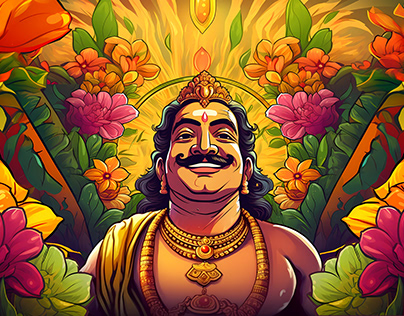
In the Indian state of Kerala, it’s Onam festival in a few days.    Onam is one of the festivals that everyone in Kerala anticipates.   The festival celebrates harvest, mythology and tradition.    Beyond that, it is also when many Ayurvedic practices hold significance and go hand in hand with the traditions.    Let us learn more about it in this blog.    Tradition and Mythology   Onam festival is a mixture of traditions and mythology.    Celebrations are held to commemorate the legendary Asura king, King Mahabali, who is believed to have ruled Kerala.   The time of his reign was believed to be of unity, happiness, truthfulness, peace and prosperity.    It is believed that King Mahabali returns to Kerala to meet his subjects every year on Thiruvonam (the 10th day of Onam celebrations).    His return is celebrated with grand festivities, highlighting Kerala’s culture and traditions.    Beyond that, Onam teaches us the importance of values that once prevailed during the rule of King Mahabali.    These values are essential to building a harmonious society, which impacts your physical and emotional health.   Onam also marks the end of the monsoon season and the start of harvest season in the state.    Hence, Onam is also known as a harvest festival. The festival is celebrated with many cultural rituals, like Pookalam or flower carpets and traditional games.    The best part is the elaborate feast or Sadhya which is a blend of many flavours and tastes.    Beyond all that, Onam is also a time when many Ayurvedic principles come to the forefront.    They play an important role in restoring your physical, mental and spiritual health. Also, considering how the climate is stable during Onam, it is the best time to seek Ayurvedic treatments.    You can try cleansing therapies like Panchakarma to detoxify your body. Also, Ayurvedic diet and lifestyle practices help balance your Doshas and Agni (digestive fire).   When Ayurveda Aligns with Tradition   Kerala’s culture and lifestyle have incorporated Ayurvedic practices for a long time without intention.   Ayurveda believes in maintaining the harmony between body and nature.    That’s the same principle that Onam follows. The festival encourages us to live in alliance with nature.    The pookalam or flower carpet is one example. It is one ritual that honours the soil that sustains us and reminds us of our connection with nature.      Onam and Ayurveda   Many of Onam’s practices naturally align with Ayurvedic principles.    Sadhya   Sadhya or feast is a major part of Onam.    It consists of rice, side dishes, curries and pickles – all that form a potpourri of flavours.    We use natural and seasonal ingredients to prepare sadhya dishes.   Also, Sadhya satisfies all six tastes (sweet, sour, salty, bitter, pungent, and astringent).    This is essential in maintaining a balanced diet according to Ayurveda.    Ayurveda recommends having foods that are warm, freshly cooked and easy to digest.  This holds true for Onam Sadhya.    The ingredients and spices used in the dishes are not only delicious, but they also have medicinal properties.    They help improve your digestion and boost your immunity.    Also, the sadhya is served in banana leaves, which is a sign of connection with nature.   Pookalam   Pookalam or the designs made of flowers on the ground is an important part of Onam.  People use ten varieties of flowers to make a pookalam. .    They include the following: Ceylon slitwort (Thumba) Little tree plant (Mukutti) Holy Basil (Tulsi) Hibiscus Ixora (Thechi) Butterfly pea (Shankhapushpi) Pagoda flower (Krishnakireedam) Golden trumpet flower (Kolambi poovu) White Orchid tree flower (Mandaram) Common Lantana (Aripoo)   Before,people used freshly plucked flowers to create pookalam. But now, most people buy them from the market.    The fresh flowers are rich in fragrance and colour, which is a way to connect us with nature.    Also, as you spend time creating pookalam, it makes you feel calm and mindful. This, in turn, helps your mental health.    Onam and Spirituality   Ayurveda is deeply rooted in spirituality.    The rituals of Onam have a spiritual connection and promote the messages of unity, love and balance. These qualities are all part of Ayurvedic philosophy.    Unity and harmony   Onam is a festival that is beyond the boundaries of religion, caste or financial status.    On the occasion of Onam, people from different walks of life, be it family or friends, get together to celebrate.    This unity and friendship displayed during the festival is equivalent to the Ayurvedic principle of Sattva which is the synonym of purity and balance.    This brings a significant impact on your mental health.    Gratitude   Onam is a celebration of harvest.    It is when the farmers receive the outcome of their months-long hard work.    Onam festival is, therefore, their way of expressing gratitude to nature.    The feeling of gratitude, therefore, stems from contentment. Consequently, this emotion reduces anxiety and stress.   Ayurvedic Principles in Modern Onam Celebrations   In today’s fast-paced world, Ayurvedic principles hold more significance than ever.    Onam has many Ayurvedic principles naturally integrated into its rituals.    Also, the festival being a symbol of unity, heritage and spirituality reminds us to live a balanced life in harmony with nature.    Consciously integrating Ayurvedic practices will help us further,    Going for Ayurvedic treatments around the time helps detoxify your body and strengthen your immune system.    It also helps boost your energy levels, which is very much needed during the festivities.    Onam is not just a festival that reflects Kerala’s culture, traditions and mythology, but also celebrates Ayurvedic principles.    The festival teaches us to experience a deeper connection with nature, harmony and togetherness.        If you are struggling with any health issues, you can either book a consultation with us or send us a message via WhatsApp to +91 79074 89839. We have… Continue reading Onam: Celebrating Tradition with Ayurvedic Wisdom