
Why Ayurveda Is More Relevant Than Ever in Modern Medicine

Homeopathy abstract concept vector illustration. Homeopathic medicine, alternative treatment, holistic approach, homeopathy method, natural drug, naturopathic healthcare service abstract metaphor.

The healthcare industry today is trying to solve problems that are very different from what it was trying to solve fifty years ago.   Because of advancements in technology across every sector and equally rapid changes in lifestyle, the health challenges people face today are completely different from what they were decades ago.   People are now far more prone and susceptible to chronic diseases, lifestyle disorders, stress-related illnesses and metabolic conditions.   Healthcare is no longer just about treating disease after it appears. It is also about understanding why these conditions develop in the first place, who may be more susceptible to them, and how they can be prevented or managed in the long run.   In many ways, healthcare has moved from simply treating disease to understanding the person behind that disease.   This is where Ayurveda comes into the picture.   Although Ayurveda is over two thousand years old, it has always approached health differently. It has always believed in treating the root cause instead of waiting for disease to become the focus of treatment.   According to Ayurveda, our body constantly sends signals about its state of health, and disease is often the final stage of a long-term imbalance rather than the beginning of an illness.   Every individual is unique. Ayurveda had already described health as something very personal.   The basic principles of Ayurveda are built around Prakriti, Dosha and Agni.   The first step in Ayurveda, even before diagnosing or treating disease, is understanding a person’s Prakriti, or individual constitution.   It is believed that every individual has a unique constitution that affects how their body functions, how they respond to food, lifestyle and the environment, and even their tendency to develop certain health conditions.   Doshas, Vata, Pitta and Kapha, are the three functional principles that regulate movement, transformation and structure in the body. Every individual has all three Doshas, but in different proportions, making every person’s physiology unique.   Agni refers to the body’s metabolic fire. According to Ayurveda, healthy Agni is essential for digestion, nutrient absorption and overall health. When Agni becomes weak or disturbed, it can lead to the formation of Ama, or toxins, which accumulate in the body over time and eventually contribute to disease.   Through these concepts, Ayurveda tells us that even two people with the same condition may require completely different treatments because it is not only treating the disease, but also understanding the person, their constitution, what is happening inside their body, and what they may be more susceptible to.   This is why Ayurveda becomes even more relevant when we look at chronic diseases.   In Ayurveda, chronic diseases are known as Chirakari Vyadhi, which means conditions that develop gradually because of long-standing imbalances caused by improper diet, unhealthy lifestyle, disturbed metabolism and psychological factors.   Disease is not viewed as something that suddenly appears. It is understood as the result of imbalances that have been developing over time.   That is why Ayurveda places equal importance on both physical and mental health because it recognises both as contributing factors to a person’s overall well-being.   Treatment is therefore not limited to medicines alone. Depending on the individual’s condition, it may include dietary changes, lifestyle modifications, therapies, herbal medicines, yoga, meditation and Panchakarma.   In essence, Ayurveda looks at the body, the mind and the spirit as interconnected, rather than treating them separately.   If all these ideas sound familiar today, it is because modern healthcare is increasingly moving towards personalised medicine, preventive healthcare and long-term disease management.   Yet despite this comprehensive philosophy, Ayurveda is still viewed by many people as a system of herbs, detoxes and supplements.   How did that happen?   Part of the answer lies in history.   During the colonial period, when the British came to India, they brought Western medicine with them and favoured it within the colonial healthcare system. Ayurveda was gradually pushed to the margins. Ayurvedic practitioners were discredited, traditional institutions lost support, and Western medical education became the preferred system.   Even then, Ayurveda did not disappear completely. States like Kerala continued to preserve classical Ayurvedic knowledge, with generations of Vaidyas passing it down through practice and teaching.   But history is only one part of the story.   Over time, Ayurveda also became commercialised. Instead of being understood as a complete healthcare system, it gradually became associated with the products it prescribed.   Today, when most people hear the word Ayurveda, the first thing that comes to mind are herbs, turmeric, detoxes and supplements, rather than physician consultation, constitutional  diet, lifestyle and preventive healthcare.   Somewhere along the way, an entire healthcare system came to be viewed merely as a supplement industry.   That perception, however, is beginning to change.   The NITI Aayog–PwC report released earlier this week highlights both Ayurveda’s global reach and its biggest challenge. Ayurveda is now formally recognised in nearly 30 countries, and India has more than 355,000 trained Ayurvedic practitioners. Yet almost 95% of them never practise outside India.   The report also notes that Ayurvedic product exports have doubled from US$1.09 billion in 2014 to US$2.16 billion in 2023, reaching nearly 150 countries. However, most of these products are still classified internationally as dietary supplements rather than medicines because of regulatory gaps.   That single statistic explains a lot.   The world is buying Ayurveda as a supplement because Ayurveda has not yet fully entered the medicine category globally.   At the same time, research is also moving forward.   For years, Ayurvedic clinical trials have been criticised for methodological limitations such as small sample sizes, single-centre studies and inadequate reporting. A 2025 update to the international CONSORT reporting standards is now encouraging Ayurvedic clinical research to follow the same level of rigour expected in modern medical research.   New fields such as Ayurgenomics are exploring whether concepts like Prakriti have measurable biological and genetic correlations that may help explain why individuals respond differently… Continue reading Why Ayurveda Is More Relevant Than Ever in Modern Medicine

Ativisha Health Benefits

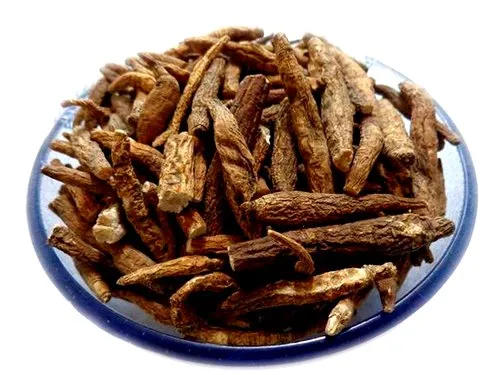
Ayurveda is a traditional system of medicine that incorporates the offerings of nature to help people heal. Ancient Ayurvedic texts have mentions of an array of herbs that help treat different health conditions. Ativisha is one of them.    The plant is known for its amazing medicinal properties and is especially used to treat diseases in children. According to Charaka, Ativisha is the best among all herbs for its digestive, anti-flatulent, absorbent and Dosha balancing properties.   Ativisha  – The Power Herb   Ativisha (scientific name -Aconitum heterophyllum) is a herb native to the Himalayan area. The roots of this plant have been used for a broad range of medicinal purposes, which makes them highly valuable. Ativisha has a hot and pungent taste and is  dry, light and penetrating in nature. The ability to balance the Tridosha and improve overall health is another essential characteristic of this power herb. As an Ayurvedic practitioner, I have seen a positive effect of this herb on my patients. I remember one child who had suffered from digestive problems and the constant increase of temperature several times a month. The conventional treatment did not bring results. However, after I began to use the herb, the issue was diminished. From this experience, I learned, once again, that every single philosophy holds some truth, and the power of nature may be undisputable.   Ayurvedic Perspective on Ativisha    In Ayurveda, Ativisha is classified as: Rasa (Taste): Bitter (Tikta) and Pungent (Katu) Guna (Qualities): Light (Laghu) and Dry (Ruksha) Virya (Potency): Cold (Shita) Vipaka (Post-Digestive Effect): Pungent (Katu) These properties make the herb effective in balancing Vata and Kapha Doshas while pacifying Pitta Dosha to a lesser extent.   Health Benefits of Ativisha   Here are a variety of health benefits that Ativish offers:    Digestive Health   Digestive issues are common, but they can significantly affect your quality of life. Ativisha is known for its ability to stimulate Agni, the digestive fire, which is essential for proper digestion and assimilation of food. By enhancing Agni, Ativisha helps in the breakdown of food, absorption of nutrients, and elimination of waste. It is particularly beneficial for individuals with weak digestion, loss of appetite, and abdominal discomfort.   Also read: Agni- Ayurvedic Secret to Health and Vitality   Fever Management   Ayurveda widely uses Ativisha for its antipyretic properties. It helps in reducing fever by lowering the body temperature. It is often included in formulations for treating fevers, especially in children. Its antimicrobial properties help in fighting the underlying infections that cause fever, thereby providing relief and promoting recovery.   Respiratory Health   Respiratory conditions, such as cough, cold and asthma can be debilitating. Ativisha’s expectorant properties help in clearing the respiratory tract, making it easier to breathe. It reduces inflammation in the airways and, consequently, helps expel phlegm, thereby providing relief from symptoms.  Regular use of Ativisha can improve respiratory health and prevent recurrent respiratory infections.   Anti-inflammatory and Analgesic Properties   Inflammation and pain are common symptoms in various health conditions, including arthritis and muscle pain. Ativisha has potent anti-inflammatory and analgesic properties; consequently, it helps reduce inflammation and, furthermore, alleviates pain. It, therefore, helps relieve joint and muscle pain and improves mobility.   Gastrointestinal Health   Diarrhoea and dysentery are common gastrointestinal issues that can lead to dehydration and weakness. Ativisha is highly effective in treating these conditions. It helps in controlling loose stools; furthermore, it also aids in reducing the frequency of bowel movements. Its antimicrobial properties combat the pathogens responsible for gastrointestinal infections, promoting faster recovery and improving gut health.   Paediatric Care   Children are often more susceptible to infections and digestive issues. Therefore, Ativisha is a safe and effective remedy for various childhood ailments. It helps in managing colic, fever, cough and diarrhoea in children. Besides, its gentle action ensures that it does not cause any adverse effects, making it suitable for paediatric use.   Boosting Immunity   A strong immune system is crucial for maintaining good health. Moreover, Ativisha has immunomodulatory properties that help in boosting the immune system. Regular use of the herb can enhance the body’s ability to fight infections and diseases, promoting overall health and well-being   Practical Uses of Ativisha   Some of the practical uses of Ativisha include the following:   Decoction: Boil the roots of Ativisha in water and consume the decoction. This helps improve digestion and reduce fever.   Powder: Consume it in powdered form with honey to treat respiratory problems and digestion.    Infusion: The infusion of Ativisha can treat diarrhea and can also improve immunity.   Uses in Ayurvedic Formulations   Ativisha is a part of many Ayurvedic formulations.    Churna: Ativisha, in its powdered form, can be mixed with other herbs to be consumed directly or mixed with honey or water.   Kwath: It is prepared by boiling the roots of Ativisha in water. Kwath helps, in addition, to cure the issues of digestion, fever, cough and cold, and, furthermore, other respiratory problems.    Taila: Applying Ativishaoil helps get rid of pain and inflammation in  joints and muscles.   Precautions and Safety   Though it has numerous health benefits, you must use Ativisha with caution. The herb is quite potent; therefore, it is best not to use it frequently. It is important to consult with an Ayurvedic doctor, primarily in the case of children and pregnant females. Moreover, it should be consumed in the prescribed amount and form to avoid any possibility of side effects.     If you are struggling with any health issues, you can either book a consultation with us or send us a message via WhatsApp to +91 79074 89839. We have the best Ayurvedic doctors in Trivandrum who are always glad to help you. If you have any queries, contact us.  You can also visit us at our hospital.