

What Ayurveda Can Actually Offer Autistic Children and What It Can’t

Parents of autistic children usually hear one of two things.   Either that nothing can be done, and they should simply learn to live with it. Or that someone, somewhere, has a cure.   Both of these are failures of honesty.   Autism is a neurodevelopmental difference. I cannot remove it, and I will never tell a parent otherwise. What I can say, based on years of clinical experience, is that many children show meaningful improvements in cognition, regulation, sleep, and digestion with individualized Ayurvedic care.   Where I Actually See the Pattern   Many of the autistic children I’ve worked with come in with gastrointestinal symptoms alongside everything else, constipation, restless sleep, real difficulty winding down at night.   Classically, this combination has a name: disturbed Vata and weak Agni, presenting together. In this framework, the digestive and nervous systems are not viewed as separate problems.   They’re two expressions of the same underlying imbalance.   That’s the starting point for how treatment gets built and here is what I actually do.   Dinacharya (Daily Routine and Rhythm)   Meals at the same time, every day. Sleep at the same time, every day.   This is, without question, the intervention parents underestimate the most.   Vata, the quality most associated with restlessness, irregularity, and difficulty settling, responds to consistency more than to almost anything else I can prescribe. A predictable rhythm to the day is not a minor lifestyle suggestion here.   Ahara (Food)   Warm. Cooked. Simple. Unhurried. And no restriction.   Most autistic children are already working with a narrow range of accepted foods. Taking things away tends to make that narrower still, not better. So, the approach isn’t to remove foods, it’s to change how the accepted foods are prepared, before changing what they are.   Same ingredients a child already trusts and eats, prepared in a way that’s easier on digestion.   Deepana and Pachana (Kindling Digestion, Clearing Ama)   This is the direct work of strengthening digestive fire and addressing Ama, the accumulation of incompletely digested material as described in Ayurveda. Everything here is gentle, matched to the child’s age and constitution, and prescribed individually, in person. There’s no standard protocol handed out uniformly, the dose and approach are unique to the child.   Medhya Medicines   This is a classical category of Ayurvedic preparations traditionally used to support memory, learning, and cognitive function. Many are prepared as medicated ghrita, with the specific preparation chosen according to the child’s constitution and clinical presentation.   That property is what allows herbs like Brahmi and Centella asiatica (Gotu Kola) to actually reach the brain and act on cognitive function, rather than being absorbed elsewhere in the body and doing little for the nervous system directly.   In my experience treating many autistic children, these preparations help. But there is no single herb you simply take and get uniform benefit from.   The combination, the dose, the vehicle, and the child’s own constitution all have to be individualized. What works well for one child can be entirely wrong for another.   Abhyanga (Daily Warm Oil Massage)   A daily practice, and one I’ve written about extensively. As a consistent, long-term habit, it supports overall well-being in a way that compounds over time rather than producing an immediate, isolated effect.   I’ve written a detailed guide on how to practice Abhyanga correctly, the oils to use, and its benefits. You can read it here.   What I Do Not Do   Boundaries matter as much as the treatment itself, so here they are, stated plainly.   I do not perform Panchakarma on young children. In my clinical practice, children under seven are not considered candidates for classical Panchakarma procedures such as Nasya, Vamana, or Virechana, or any of the other classical cleansing procedures.   If anyone tells you otherwise, don’t do it.   I do not put autistic children on restrictive diets. Many of them are already eating a very limited set of foods. Removing items from an already-narrow list isn’t a viable strategy. The work happens around preparation and ingredients, not elimination.   What Actually Happens   Every child is different. Some respond well. Some change slowly. Some continue to struggle with the same challenges despite consistent treatment. There are no guarantees here, and I won’t pretend otherwise.   What I can say, based on what I’ve seen across many cases, is this: a child receiving genuinely individualized Ayurvedic treatment will often be doing noticeably better over time.   If you’d like a deeper understanding of autism and how it’s approached through our Agni Awakening Programs, send a WhatsApp message to +91 99011 26331. Our team will guide you through the next steps.  
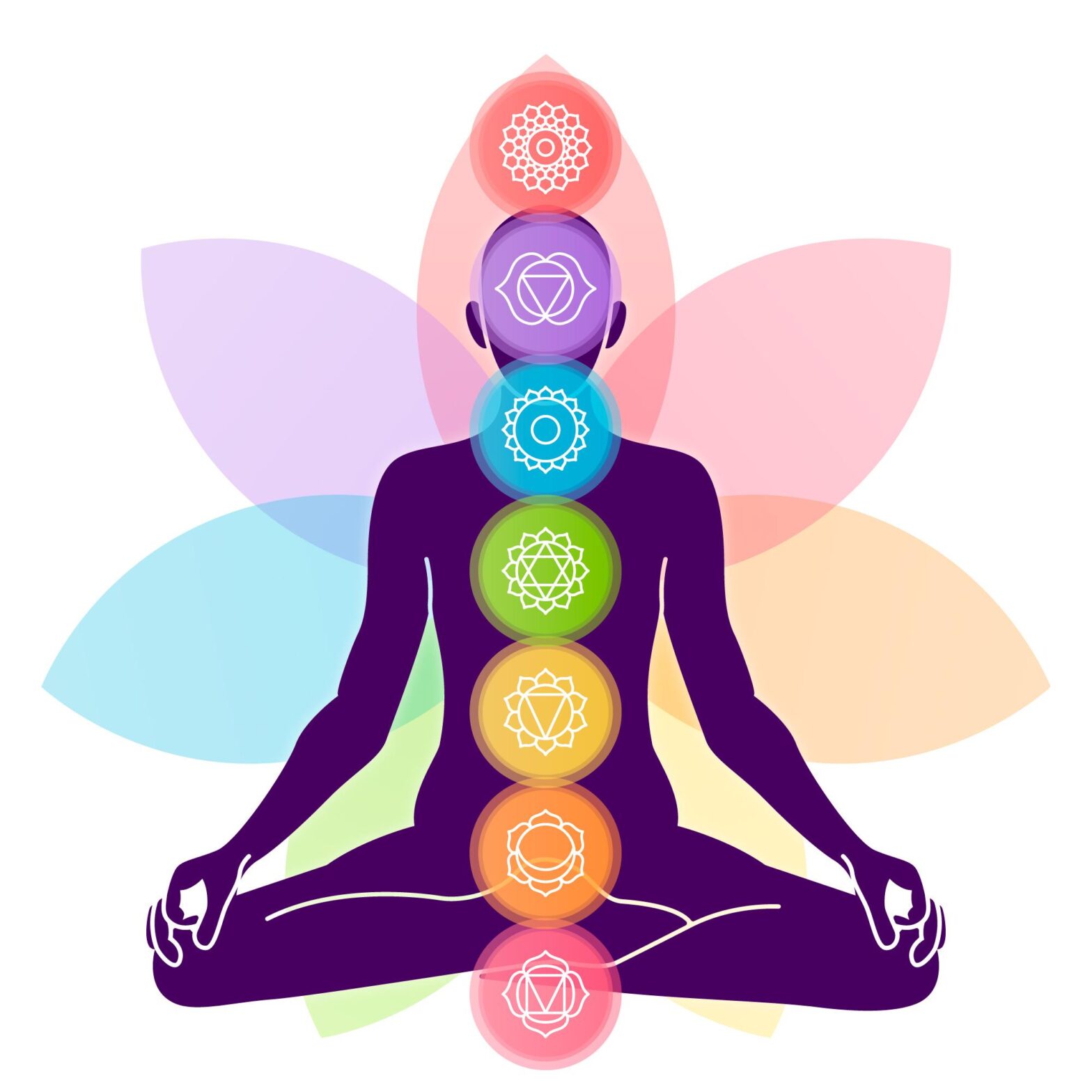
Prakriti and Dosha Balance: The Key to Health in Ayurveda

Ayurveda teaches that true health starts with understanding who you are at a constitutional level. When you know your Prakriti, or inherent body–mind type, you can care for yourself in a way that supports balance, resilience and long term wellbeing.   Many people try to follow general wellness advice and feel confused when it does not work for them. From an Ayurvedic perspective, this happens because the advice does not match their Prakriti, or natural constitution. When you first understand your Prakriti and the way Vata, Pitta and Kapha behave in your system, your choices start making sense. Diet, sleep, exercise and even the way you handle stress can then align with who you truly are rather than forcing you into a one size fits all model.   What Prakriti Really Means   Prakriti is your unique constitution; it is the “nature” you are born with. It reflects the combined state of Vata, Pitta and Kapha present at that exact moment, influenced by parental constitution, health, diet, lifestyle, climate and even emotional states.   In simple terms, Vata governs movement and communication, Pitta governs transformation and metabolism, and Kapha governs structure and stability.   All three must be present for life to exist, and nobody can function if even one dosha is completely absent. What changes from person to person is which dosha dominates and how these three interact to create your physical traits, mental tendencies and disease patterns.   Although Prakriti is fixed at conception, its outer expression becomes clearer only after growth and hormonal changes settle. Before around eighteen to twenty years of age, strong Kapha influence of childhood can mask or exaggerate certain features, which is why identifying exact Prakriti in very young people can be difficult and only becomes more reliable once development stabilizes.   How Ayurveda Organizes Knowledge: Prakaranas   Ayurvedic texts carry vast amounts of information, so teachers arrange them into Prakaranas, or thematic sections. These are meaningful categories that help students and practitioners study specific topics such as constitution, disease, diet or treatment in a structured way, rather than getting lost in scattered details.   Types of Prakriti: Single, Dual and Sama   Ayurveda describes different constitutional patterns based on the relative predominance of Vata, Pitta and Kapha. Single dosha Prakriti means one dosha is overwhelmingly dominant across body, physiology, psychology and disease tendency, while the other two express minimally.   This kind of pure Vata, Pitta or Kapha type exists in theory and appears occasionally, but in real life it is rare because genetics are mixed, parents rarely share identical dominance and modern diet, stress and lifestyle modify expression from birth.   Most people show dual dosha dominance, known as Dwidoshaja, for example Vata Pitta, Pitta Kapha or Vata Kapha. In such constitutions one dosha leads and the second supports, while the third remains present at a subordinate level, just enough to sustain essential functions but not enough to display strong traits.   Sama dosha Prakriti, where Vata, Pitta and Kapha exist in near equal proportions, is considered the most ideal state. Here none of the doshas dominate and each contributes roughly one third of the total constitutional makeup, creating a high potential for balance, stability and good health.   Sama, Uttama, Nindya and Hina: Quality of Constitutions   Classical texts use qualitative terms to describe the relative strength and stability of different Prakriti. Sama dosha Prakriti is called the absolute best because an equal presence of Vata, Pitta and Kapha gives the greatest harmony and adaptability.   Kapha Prakriti is described as having good quality, especially in terms of strength, stability and longevity. Kapha relates to creation, structure, lubrication and immunity, so individuals with Kapha dominance often have better natural reserves and resilience, even though Vata and Pitta are also present in lower proportions.   Vata Prakriti is referred to as lower quality, not because Vata is unimportant but because it is the most unstable of the doshas. It has qualities of dryness, coldness and constant movement, and while it is the hero of movement and change, it also drives depletion and destruction when not contained.   Dwidoshaja constitutions are termed less desirable compared to pure or Sama types. This does not mean any dosha is missing. It reflects the complexity of having two strongly dominant forces that can easily conflict and disturb each other, making balance more challenging to maintain over time.   Do We Ever Have Only Two Doshas?   Every person always has all three doshas present. Even in a Vata Pitta constitution, Kapha does not disappear. It simply remains in the background, present only to the degree required for basic survival and structural stability.   That background Kapha can still become imbalanced if diet, lifestyle or environment repeatedly promote Kapha qualities such as heaviness, coldness and stagnation.   The same logic applies to all combinations. Vata Pitta people can still develop Kapha disorders, and Kapha types still have Vata and Pitta operating in their systems. Constitution talks about dominance, not exclusivity.   Why Sama Prakriti Is Rare Today   Sama dosha constitutions are most often described in individuals born in regions where climate, land and lifestyle remain naturally balanced without a marked dominance of any single dosha. Parents with relatively balanced constitutions further support the chance of such offspring.   In the modern world, most regions and lifestyles lean toward one or two doshas. Irregular routines, processed food, chronic stress and disturbed sleep aggravate doshas and disturb nutrition from early life. These factors make perfectly balanced Sama Prakriti very uncommon today.   Can Parents Create the Best Prakriti through Rituals?   Traditional Ayurvedic culture includes various preparatory rituals for conception. These do not change the fundamental rule that Prakriti forms at the specific moment of union and cannot be chosen or redesigned through will alone.   However such practices play an important supportive role. They help parents purify, stabilize and balance their own doshas at the time of conception, which prevents extreme dominance and supports the… Continue reading Prakriti and Dosha Balance: The Key to Health in Ayurveda