
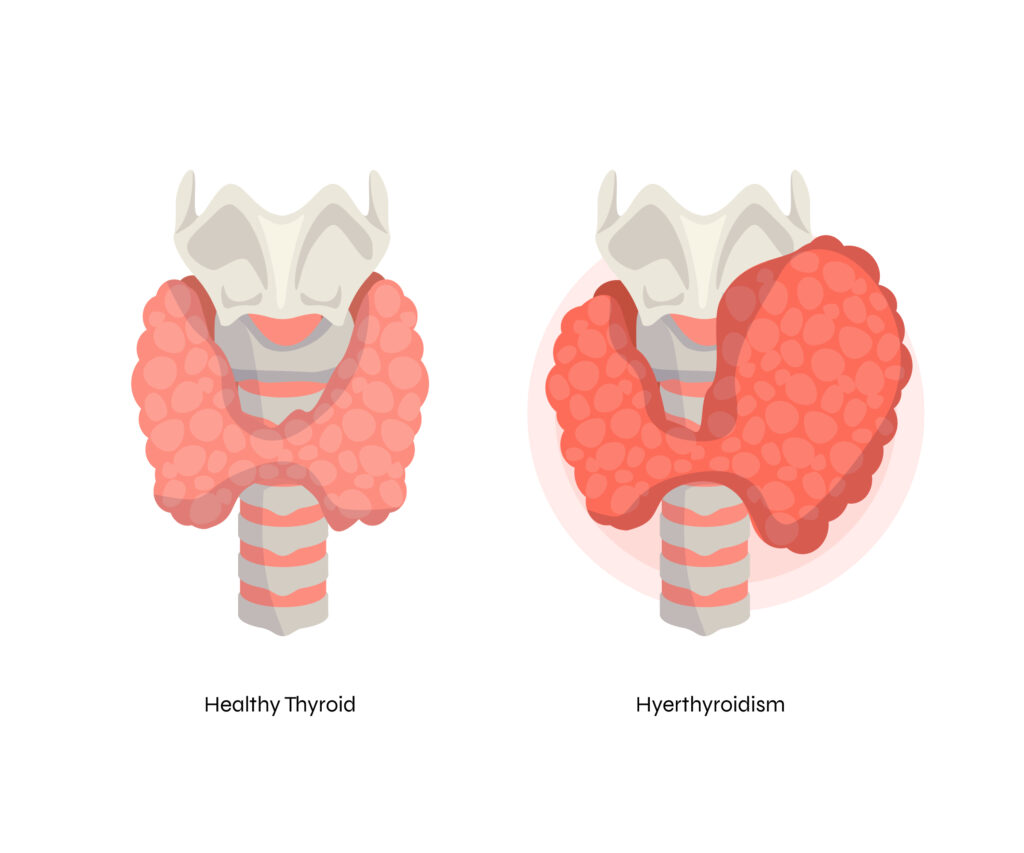
In the last ten years, I have seen a sudden increase in people suffering from hypothyroidism and Hashimoto’s thyroiditis.
Earlier, thyroid problems were not this common. Today, almost every family has someone dealing with it.
Many people ask me: “Why are thyroid problems increasing so much?”
I do not think hypothyroidism is only a lifestyle disease.
Yes, lifestyle matters. Stress matters. Sleep matters. Food matters.
But I also believe family history plays a very important role.
I have noticed this many times in my practice. If a mother has hypothyroidism or Hashimoto’s thyroiditis, there is a higher chance that her daughter may also develop thyroid problems later in life.
Some people tell me: “My mother has thyroid issues, but I don’t.”
This is important to understand.
Sometimes a person is emotionally relaxed. They are sleeping well. Life is peaceful. During that time, their thyroid reports may appear normal.
Their TSH, T3, and T4 levels may all look fine.
But that does not always mean that there is no underlying tendency toward thyroid imbalance.
Sometimes the imbalance stays hidden for years. Then stress, emotional trauma, poor sleep, or hormonal changes bring it out.
That is why I do not depend only on one blood test.
If there is a strong family history, regular monitoring becomes important.
I have also seen many people whose thyroid reports look normal, but they still feel unwell.
They complain of:
- Fatigue
- Low energy
- Cold hands and feet
- Weight gain
- Brain fog
- Forgetfulness
- Sleepiness after lunch
- Hair fall
- Slow metabolism
In such cases, routine thyroid tests may not tell the full story.
Sometimes additional tests like Anti-TPO and Anti-thyroglobulin (Anti-TG) antibodies are needed. These tests help detect autoimmune thyroid conditions like Hashimoto’s thyroiditis.
This is why I always say that thyroid disease is not just about lab reports.
We must look at the whole person.
Their symptoms matter.
Their stress matters.
Their sleep matters.
Their digestion matters.
Their emotional health matters.
One thing I have noticed very clearly is the strong connection between stress and thyroid health.
I remember one patient very well.
Her thyroid levels were mostly stable for a long time. Suddenly, one month, her TSH increased sharply.
I asked her, “What happened this month?”
She told me that her father-in-law was diagnosed with cancer and passed away within a few days.
She was under extreme emotional stress.
At that moment, everything became clear.
The body reacts strongly to stress.
Stress affects sleep, hormones, immunity, digestion, and metabolism.
When stress continues for a long time, the thyroid often gets affected too.
In many cases, the next step is simply increasing thyroid medication.
But I personally feel that this is not always enough.
I am not against thyroid medicines. Many patients genuinely need them.
And I never advise anyone to suddenly stop medication.
That can be dangerous.
But I believe the goal should be to keep the dosage at the minimum effective level while improving the body’s overall health.
If stress is the root cause, then stress must be treated.
If sleep is poor, sleep must improve.
If digestion is weak, digestion must improve.
Medication alone may not always address every contributing factor.
My approach to hypothyroidism is more holistic.
In Ayurveda, hypothyroidism is often seen as a metabolic imbalance.
It is linked with Kapha imbalance and weak Agni, which means low digestive and metabolic fire.
When metabolism slows down, the body starts showing symptoms like heaviness, fatigue, low energy, sluggishness, and weight gain.
This does not mean modern medicine is wrong.
I believe both systems can work together carefully.
In my practice, I usually see two types of thyroid patients.
The first group includes recently diagnosed patients.
These patients are often easier to manage because their system is still relatively untouched.
With proper diet, stress management, sleep correction, lifestyle changes, and individualized Ayurvedic support, many patients experience improvement in symptoms and overall wellbeing.
The second group includes people who have been taking thyroid medicines for many years.
In these cases, healing takes more time.
The body becomes used to external hormone support.
So, treatment must be gradual and structured.
I usually continue thyroid medication while starting supportive Ayurvedic treatment alongside it.
Every few months, thyroid levels are checked again.
We monitor TSH, T3, T4, symptoms, sleep, digestion, mood, and energy levels.
If improvement happens steadily, medications may sometimes be adjusted carefully under medical supervision.
But sudden withdrawal is never advised.
The main goal is long-term balance.
Not temporary relief.
I also believe patients must learn how to handle stress better.
Modern life is exhausting.
People are constantly worried, rushed, emotionally overloaded, and sleep-deprived.
The body struggles to stay balanced under constant pressure.
Over time, the body starts showing signs of imbalance.
Sometimes, the thyroid becomes one of the first systems to suffer.
This is why healing hypothyroidism is not only about controlling TSH. It is also about improving resilience.
We must learn how to calm the mind, improve sleep, nourish the body, and recover from stress properly.
Healing takes time. It requires patience, awareness, consistency, and proper guidance.
Most importantly, it requires listening to the body before the imbalance becomes severe.
This, in my experience, is one of the most important things people must understand about hypothyroidism.
Small Daily Habits That Can Make a Big Difference
Many people look for one magical solution. But in reality, healing usually happens through small daily habits repeated consistently.
Here are some practices I often recommend:
- Prioritize Deep Sleep
Sleep is one of the most powerful healing tools for hormonal balance.
Poor sleep increases stress hormones and worsens fatigue, cravings, mood swings, and metabolic dysfunction.
Aim for:
- Consistent sleep timing
- Less screen exposure at night
- 7–8 hours of quality sleep
- Learn Stress Recovery Techniques
Stress cannot always be avoided.
But recovery from stress can be improved.
Simple practices help more than people realize:
- Deep breathing
- Meditation
- Prayer
- Journaling
- Walking in nature
- Spending time with loved ones
The nervous system needs moments of calm.
- Eat Warm and Nourishing Food
Extreme dieting can sometimes worsen hormonal stress.
I usually encourage balanced meals with:
- Protein
- Healthy fats
- Fresh vegetables
- Warm homemade food
- Proper hydration
- Do Not Stop Thyroid Medication Suddenly
This is extremely important.
Some people misunderstand natural healing and abruptly stop their medication. That can be dangerous.
Any medication adjustments should always happen gradually under medical supervision.
The goal is intelligent healing, not reckless experimentation.
Most importantly, listen to your body early.
Fatigue, poor sleep, brain fog, low energy, and emotional exhaustion are not signals to ignore.
Healing begins when we stop fighting the body and start understanding it.