
India’s Ayurveda exports were worth USD 689 million in the 2024-25 financial year alone. That’s an increase of almost USD 200 million compared to just three years earlier, and a 6.11% growth over the previous year.
Sure, this graph shows that exports are growing.
But let’s put those numbers next to something real.
The global wellness and herbal supplement industry is worth hundreds of billions of dollars. The US herbal supplement market alone has more than doubled over the last two decades.
And yet India, the birthplace of Ayurveda and the only country with a 3,000-year-old clinical tradition of this system of medicine, holds only about 2% of the global herbal market.
Now, why is this important?
Let’s look at China.
Traditional Chinese Medicine accounts for roughly 13% of the global herbal market.
Yes, you heard that right.
We developed the pharmacology. China built the commercial model. Today, China holds around six times India’s global market share.
This is not a talent gap.
It’s a value creation gap.
India has more than 3,000 documented medicinal plant species, over 6,000 types of medicinal herbs, and more than 7,800 Ayurvedic manufacturing units.
No country has access to raw medicinal resources like India does.
So, if the ingredients are ours, but the market share isn’t, then the problem isn’t the herbs.
The problem is what we do with them before they leave the country.
Which brings us to what we’re actually exporting.
When we talk about Ayurveda exports, it’s important to look at what we’re really selling to the world.
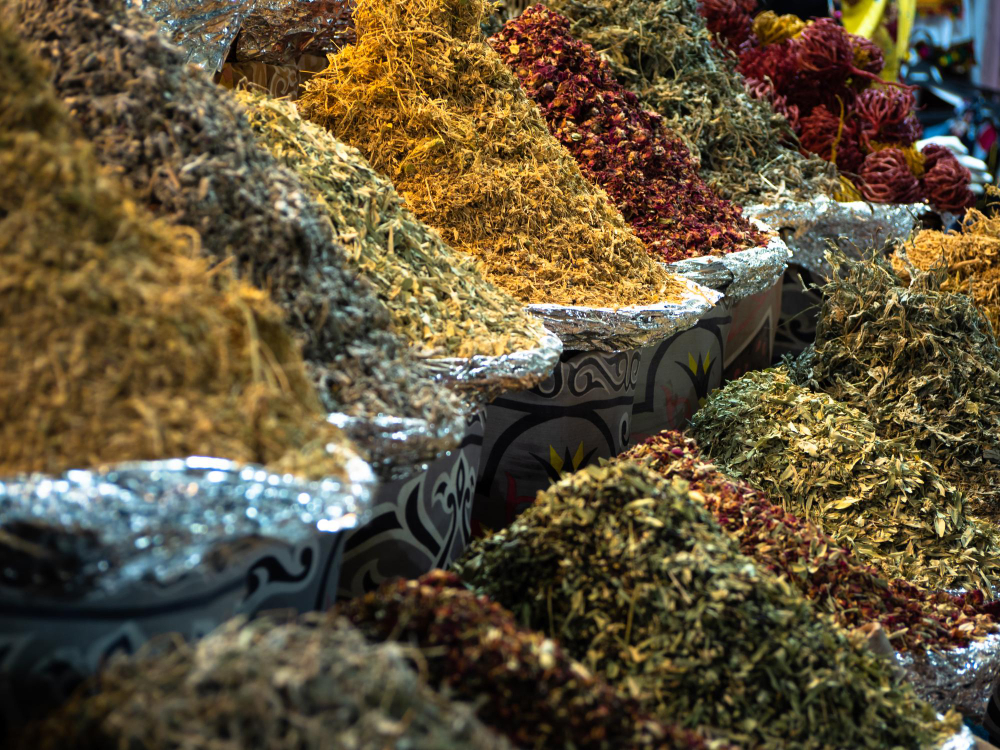
Most of our exports are not finished Ayurvedic medicines. Instead, they consist of raw materials such as turmeric, ashwagandha, neem, and herbal extracts that are shipped in bulk to companies overseas.
Those companies then take these ingredients, develop finished products, support them with research, package them, build trusted brands, and market them globally under names like adaptogens and superfoods.
Because they’re selling a complete product, they capture far more value than the country supplying the raw ingredients.
In simple terms, India is selling the ingredients.
Someone else is selling the final product.
And this isn’t just about Ayurveda.
Countries that export raw cotton earn much less than countries that turn it into branded clothing.
Countries that export crude oil earn much less than those that refine it into fuel, plastics, and chemicals.
Ayurveda is facing the same problem.
Selling ingredients is not the same as exporting healthcare.
Lately, there’s been a lot of discussion about Ayurveda diplomacy. The idea is that India can use Ayurveda as a form of soft power, just as it has with Yoga.
I agree with the ambition.
I completely disagree with the execution.
You cannot become a global healthcare leader simply by exporting bags of herbs.
To lead the world in healthcare, other countries must trust our knowledge, our standards, and our medicines.
They should look to India as the authority on Ayurveda.
But today, many companies in the US and Europe buy herbs from India, turn them into finished products, package them, build trusted brands, and sell them worldwide.
Consumers remember those brands.
They don’t remember the country where the herbs came from.
If Ayurveda is truly a system of medicine, then it must be exported as medicine.
That means standardized formulations.
Consistent dosages.
Strong quality certifications.
Scientific validation where required.
And well-trained practitioners who represent Ayurveda with the same professionalism with which doctors represent modern medicine.
Until that happens, we are not exporting healthcare.
We are mainly exporting agricultural products that someone else transforms into valuable healthcare brands.
Now, why does this matter?
Because this is not just an economic argument.
It shapes how the entire world sees Ayurveda as a system of medicine.
Today, many people around the world associate Ayurveda with herbal supplements or natural products, not as a complete system of medicine.
But Ayurveda is much more than herbs. Reducing Ayurveda to a few supplements completely overlooks the depth of this medical system.
One of the biggest reasons this is happening is because most people are introduced to Ayurveda through capsules, powders, and wellness supplements sold by global brands, rather than through qualified Ayurvedic practitioners or authentic Ayurvedic treatments.
Now compare this with Traditional Chinese Medicine.
China has invested heavily in presenting TCM as a healthcare system. It has trained practitioners, established acupuncture clinics across the world, standardized its medicines, and implemented clear quality standards.
As a result, many people see Traditional Chinese Medicine as a recognised medical system, not just a collection of herbs.
Ayurveda deserves to be viewed the same way.
But that will not happen if we continue exporting only raw herbs while other companies develop the finished products, build the brands, and earn the world’s trust.
So, what needs to change?
The solution is actually quite simple in principle, even though it will take time to achieve.
Instead of mainly exporting raw herbs, India should focus on exporting finished Ayurvedic medicines and formulations.
That means manufacturing high-quality finished products instead of simply supplying raw ingredients. It means meeting international quality and safety standards so Ayurvedic medicines can earn global trust.
The goal is not to stop exporting herbs. Raw materials will always have a place.
The goal is to ensure that India also creates and exports the products with the highest value, the strongest brands, and the greatest medical credibility.
After all, the knowledge behind Ayurveda originated in India thousands of years ago. The opportunity now is not just to grow these herbs, but to lead the world in developing, manufacturing, and delivering authentic Ayurvedic medicine.