
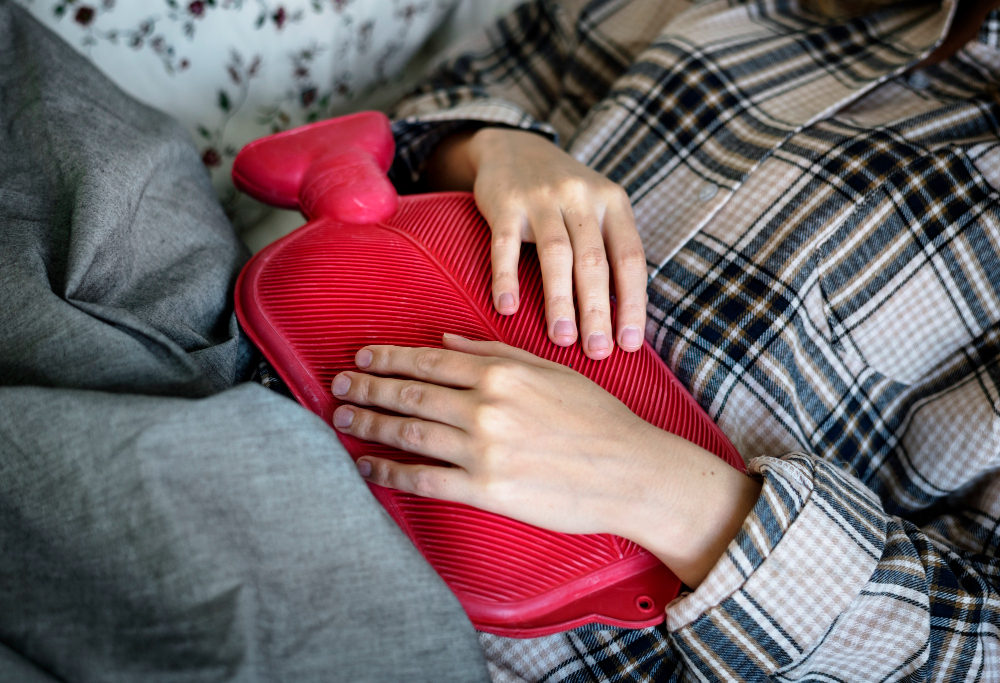
Menstrual pain, clots, and mood changes are very common, but they are not something every woman has to quietly suffer through. From an Ayurvedic perspective, these are signs that the body’s natural balance needs support. Ayurveda sees periods not as a “problem,” but as a reflection of how well digestion, hormones, and daily lifestyle are working.
Many women know the routine every month: lower‑abdomen cramps, passing clots, feeling bloated, tired, or suddenly emotional. In Ayurveda, these are not “just part of being a woman.” They are signals from the body that Vata and Pitta doshas are imbalanced, digestion is weak, and the reproductive system is under stress.
Instead of treating each symptom alone, Ayurveda looks at the whole picture: food, sleep, stress, emotions, and daily habits, and then offers gentle, natural ways to bring balance back.
Why Do Period Cramps Happen?
In Ayurveda, menstruation is seen as a natural downward movement controlled by an energy called Apana Vata. This energy helps the menstrual blood flow out smoothly.
When life is too fast, too stressful, or too cold for the body, this Apana Vata gets disturbed. The result is tightening, spasms, and cramping in the lower abdomen, back, and sometimes thighs.
Cramps usually start a few hours before the period or right when bleeding begins. They may come and go in waves and can be mild or very strong. Ayurveda views this as a sign that the body needs more warmth, rest, and calm routines, not just painkillers.
Are Clots and Heavy Bleeding Normal?
Passing small clots with your period is usually normal, especially if the bleeding is not too heavy and your cycle is otherwise regular. But large clots, very heavy bleeding, or periods lasting more than 7–8 days are signs that the body is out of balance.
Ayurveda links heavy, dark, or clotty flow mainly to Pitta dosha and disturbed Rakta dhatu (blood tissue). When Pitta is high, the blood can become hot, fast, and heavy, which leads to more bleeding and clots.
On the other hand, if the flow is very light, patchy, or very irregular, it is often linked to Vata imbalance, where the flow is weak and unsteady.
The goal in Ayurveda is to balance the doshas, support healthy digestion, and strengthen the reproductive tissues so that periods become regular, comfortable, and not painful.
Mood Swings, Anxiety and PMS
Many women feel more emotional, anxious, or easily irritated a week or two before their period. Ayurveda connects this to Vata and Pitta going out of balance in the mind and body.
Vata, which controls the nervous system, makes the mind restless and sensitive. Pitta adds intensity and sharpness to emotions. Together, they can create:
-
Feeling suddenly upset or tearful
-
Feeling angry over small things
-
Fear, anxiety, or racing thoughts
Stress, lack of sleep, and irregular eating make this worse. When the digestive fire (Agni) is weak, the body cannot digest food properly and also cannot handle stress and emotions, which leads to stronger PMS symptoms.
Simple Diet Changes During Your Period
During menstruation, the body is already delicate, so Ayurveda suggests eating light, warm, and easy‑to‑digest foods.
Here are some simple tips:
-
Eat warm cooked meals like khichdi, vegetable soups, rice, and soft lentils.
-
Sip warm water with ginger, fennel, or cumin to ease cramps.
-
Avoid cold drinks, ice cream, raw salads, and too much fried food, as they increase Vata and pain.
-
Have a light dinner early so the body can rest instead of digesting heavy food at night.
On bleeding days, it helps to avoid heavy exercise, intense workouts, and long travel and instead focus on rest, warmth, and gentle movement.
Lifestyle and Daily Habits for Better Periods
Your daily routine has a big impact on your periods. Ayurveda calls this Dinacharya (daily routine). A few simple changes can make a big difference:
-
Sleep and wake up around the same time every day, especially going to bed early.
-
Avoid staying up very late or working on screens till midnight, as this aggravates Vata and Pitta.
-
Take short gentle walks or practice mild yoga and stretching to improve blood flow in the pelvic area.
-
Use warm water or warm showers instead of very cold baths to soothe the body.
A gentle self‑massage (Abhyanga) on the lower abdomen with warm oil a few days before the period can also relax muscles and reduce cramps.
Breathing and Mind Calming for Pain and Mood
Breathing practices help calm the mind and balance hormones. Simple techniques recommended in Ayurveda include:
-
Nadi Shodhana (alternate‑nostril breathing): 5–10 minutes daily to reduce anxiety and mood swings.
-
Gentle Kapalabhati (quick exhalations): Helps clear the mind and improve circulation.
Spending 10 minutes each day in quiet breathing, without phones or screens, can greatly reduce stress‑related PMS and cramps.
Herbal Support, But Use Carefully
Ayurveda uses various herbs to support menstrual health, but they should always be taken under the guidance of a qualified Ayurvedic doctor. Some commonly used herbs include:
-
Shatavari: A gentle, cooling herb that nourishes the female reproductive system and helps with heavy or irregular bleeding.
-
Ashoka: Helps regulate periods, reduce pain, and support a healthy uterus.
-
Dashmoolarishta and similar herbal preparations: Used to balance hormones, reduce inflammation, and support long‑term menstrual health.
In chronic conditions like PCOD or endometriosis, trained Ayurvedic doctors may also suggest Panchakarma‑style therapies, such as gentle cleansing and special herbal treatments, over a few months.
When to Seek Help
Mild cramps and small mood changes are common, but severe pain, very heavy bleeding, large clots, or extreme mood swings are not normal. They can be signs of conditions like PCOD, endometriosis, fibroids, or hormonal imbalance.
If any of the following are true, it is important to see a doctor (Ayurvedic or modern):
-
The pain is so strong that it stops daily work or needs strong painkillers every cycle.
-
The bleeding is very heavy, lasts more than 7–8 days, or comes with very large clots.
-
Periods are very irregular or absent for long periods.
Ayurveda does not just treat the symptoms; it looks at the whole body, diet, sleep, stress, and emotions to correct the root cause.
Simple Habits You Can Start Today
Here are a few easy steps any woman can start to support healthier periods:
-
Follow a regular routine: Sleep, eat, and wake up at similar times every day.
-
Eat warm, freshly cooked food and avoid heavy, oily, or very spicy meals.
-
Practice 10–15 minutes of gentle yoga or stretching, especially poses like Baddha Konasana (butterfly pose) and Malasana (squat pose), which open the pelvis.
-
Massage your lower abdomen with warm oil a few days before your period.
-
Limit screen time before bed and avoid caffeine late in the day, which can aggravate both Vata and Pitta.
Conclusion
Menstrual pain, clots, and mood changes are not punishments; they are signals from the body that something needs care.
By slowly adopting better food habits, a calm routine, and mindful self‑care, many women find that their periods become less painful, more regular, and less emotionally draining.
WhatsApp +91 99011 26331 for enquiries! (Consulations, Products, Agni Awakening Program, Courses)