
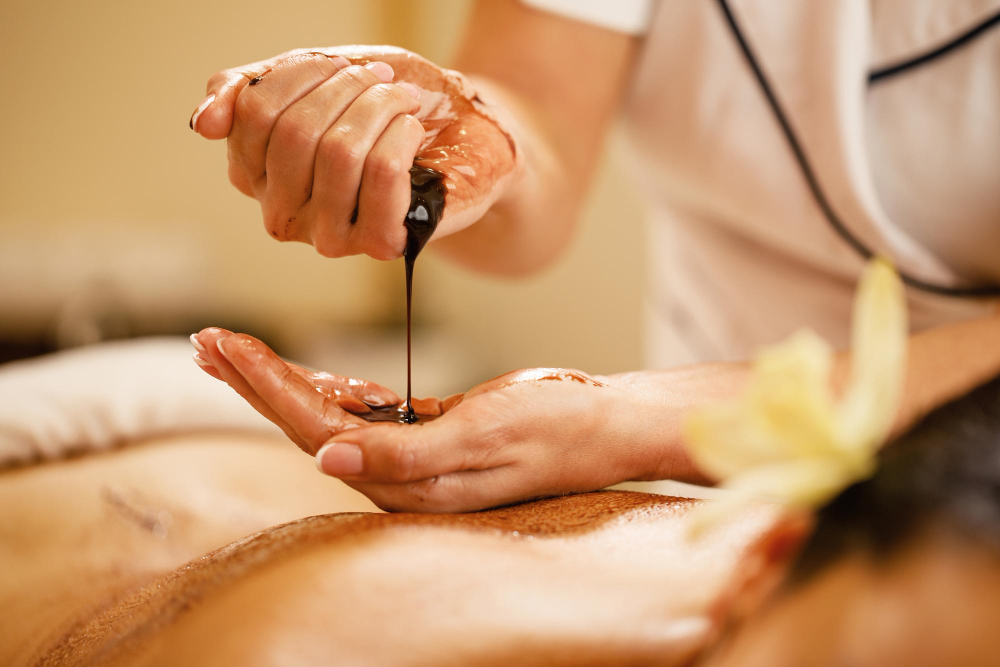
Abhyanga, or daily oil massage, is one of the simplest and most effective practices I recommend in Ayurveda. In fact, Ayurveda talks about Abhyanga as something you should do every single day of your life.
Just as we take care of our teeth every day by brushing them, Ayurveda recommends caring for the body daily through Abhyanga.
The best part is that Abhyanga does not require any special equipment or complicated techniques. With the right oil and a few minutes of your time, you can make it a valuable part of your daily routine.
It is good for your complexion, good for your skin health, and good for improving the flexibility and mobility of your joints. Overall, Abhyanga is a daily practice that can support your long-term health and well-being.
Why Should You Do Abhyanga?
Abhyanga is good for improving complexion. It is good for improving skin health. It is also good for improving the flexibility and mobility of your joints.
Ayurveda explains that Abhyanga helps reduce the pace at which you age. Because of these benefits, Abhyanga is something that Ayurveda recommends as a daily practice.
What Oil Should You Use for Abhyanga?
The best oil that can be used for Abhyanga is organic black sesame oil.
Different people use different oils and different varieties, but it is important to get the best quality oil possible.
The darkest oils are usually considered the best quality. Good organic black sesame oil is not cheap, but using a high-quality oil can make a difference.
How to Do Abhyanga?
Before starting Abhyanga, it is important to understand that Ayurveda gives special importance to certain parts of the body. These are the mandatory areas that should receive massage.
They include the head, especially the top of the head, the palms, the feet, the navel, the ears, and the face.
Start by taking oil in your palms and applying it to the top of your head. Massage the scalp with your fingers. If you wish, you can also massage the length of your hair. After that, massage your face, hands, feet, and then the rest of your body.
Ayurveda places special importance on the joints because they are areas where Vata accumulation happens easily. In every joint, bones come together and movement takes place. Whenever there is movement, Vata increases. If there is dryness, Vata also increases.
Because of this, the joints need regular oil application.
Applying oil to the joints every day is similar to using lubricant in a car or machine. A machine functions better and lasts longer when it receives the right amount of lubrication. In the same way, regular oil application supports the joints.
When massaging the joints, use circular movements. For the other parts of the body, use long strokes. While massaging the legs, move upward toward the heart because you want the blood flow toward the heart.
For the hands and legs, use folded movements along the length of the limbs to massage the long bones.
When Should You Do Abhyanga?
You can do Abhyanga in the morning or in the evening based on your convenience. However, the ideal time is in the morning.
After applying oil to the body, spending a little time outside in the sun can be beneficial. According to Ayurveda, this is especially useful when you are using sesame oil for your massage.
Who Should Do Abhyanga?
Every single person can do Abhyanga. This includes people with Vata Prakriti, who usually have a lean and thin body type, Pitta Prakriti, who generally have a medium body type, and Kapha Prakriti, who may have a heavier body type.
For Kapha Prakriti, you can apply oil to the body, but massage should be avoided. If you are extremely obese and your BMI is above 32 or 35, it is better not to use oil massage because it can increase Kapha in the body. If you are only slightly overweight, you can apply oil to the skin but skip the massage.
What Should You Do After Abhyanga?
After massaging your body with oil, leave the oil on the body for five to ten minutes if possible. This gives the body time to absorb the oil. If you do not have time, you can take a shower immediately.
Warm water is ideal for the body, while room-temperature water is ideal for the hair. To remove the oil, you can use herbal bath powders. You can also prepare your own herbal bath powder using ingredients such as green gram flour, besan flour, and bilva powder.
What If You Have Dry Skin?
If your skin feels dry throughout the day, there is one additional step you can follow.
After your shower, apply a small amount of oil to the skin while there is still a little moisture present. When the oil combines with the moisture on the skin, it forms an emulsion.
This helps the skin retain moisture for a longer period and can keep dryness under control throughout the day.
For people who struggle with persistent dry skin, this simple practice can be especially useful.
WhatsApp +91 99011 26331 for enquiries! (Consulations, Products, Agni Awakening Program, Courses)